
Why Is Customer Visit Planning Important?

For businesses that rely on field sales teams, every customer visit is an opportunity to build relationships, generate sales, and strengthen market presence. However, when sales representatives visit customers without a structured plan, they often waste valuable time, miss high-potential accounts, and fail to cover their assigned territories effectively.
This is where customer visit planning becomes essential. It helps businesses organize customer visits based on priorities, locations, visit frequency, and sales objectives. Instead of making random or reactive visits, sales representatives follow a planned schedule that ensures the right customers are visited at the right time.
An effective customer visit plan does more than improve daily schedules. It increases sales productivity, optimizes travel routes, improves customer coverage, and enables managers to monitor field activities more efficiently. Whether you're managing an FMCG distribution network, a pharmaceutical sales force, or a B2B field sales team, proper planning helps maximize every customer interaction.
With the support of modern field sales management software, businesses can automate visit planning, track completed visits in real time, and analyze sales performance across different territories. As a result, sales teams spend less time planning their day and more time engaging with customers.
In this guide, we'll explore what customer visit planning is, why it is important, its key benefits, best practices, common challenges, and how technology helps businesses execute customer visits more effectively.
What Is Customer Visit Planning?
Customer visit planning is the process of organizing and scheduling visits to customers, retailers, distributors, or business partners based on factors such as customer priority, location, visit frequency, sales opportunities, and business goals. It provides field sales representatives with a clear plan for whom to visit, when to visit, and what objectives to achieve during each visit.
Rather than making unplanned visits or relying on personal judgment, businesses create structured visit schedules that ensure consistent customer engagement and better territory management.
A customer visit plan typically includes:
- A list of customers or outlets to visit
- Daily, weekly, or monthly visit schedules
- Sales routes for efficient travel
- Visit objectives and priorities
- Customer history and previous interactions
- Follow-up actions after each visit
For example, an FMCG company may require sales representatives to visit supermarkets every week, wholesalers every two weeks, and small retailers once a month. This planned approach ensures that every customer receives the right level of attention while helping the business maintain strong market coverage.
Customer visit planning also enables businesses to allocate resources more effectively, reduce travel time, and ensure sales representatives focus on customers with the highest growth potential.
Customer visit planning transforms field sales from a reactive activity into a strategic process that improves efficiency, customer satisfaction, and business performance.
Importance of Customer Visit Planning
A well-designed customer visit plan helps businesses maximize the productivity of their field sales teams while ensuring every customer receives timely attention. Without proper planning, sales representatives may spend too much time traveling, repeatedly visit the same customers, or overlook important accounts altogether.
Here are the key reasons why customer visit planning is important.
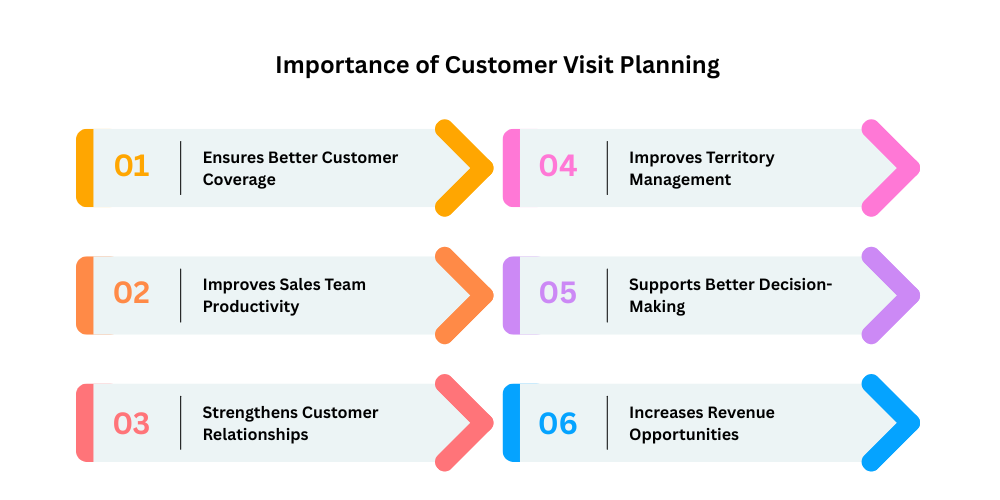
Ensures Better Customer Coverage
One of the biggest challenges for field sales teams is covering every assigned customer within a limited timeframe. Without a structured plan, some customers may receive frequent visits while others are unintentionally neglected.
Customer visit planning creates a balanced schedule that ensures all customers are visited according to their importance, business potential, and required visit frequency. This improves outlet coverage, strengthens customer relationships, and reduces missed sales opportunities.
Improves Sales Team Productivity
Sales representatives achieve better results when they spend more time meeting customers and less time planning routes or handling administrative tasks.
A structured customer visit plan helps them:
-
Organize daily schedules.
-
Prioritize high-value customers.
-
Minimize unnecessary travel.
-
Complete more productive visits.
-
Focus on sales activities.
As a result, businesses improve overall field sales productivity without increasing operational costs.
Strengthens Customer Relationships
Regular customer visits demonstrate commitment and help businesses build long-term relationships.
During scheduled visits, sales representatives can:
-
Understand customer requirements.
-
Resolve issues quickly.
-
Recommend suitable products.
-
Collect valuable feedback.
-
Build trust over time.
Consistent communication improves customer satisfaction and encourages repeat business.
Improves Territory Management
Managing hundreds or even thousands of customers across multiple territories can be challenging without a structured approach.
Customer visit planning helps businesses:
-
Allocate territories effectively.
-
Balance sales workloads.
-
Prevent overlapping visits.
-
Improve route planning.
-
Increase market coverage.
This leads to better utilization of sales resources and more efficient territory management.
Supports Better Decision-Making
A planned customer visit schedule generates valuable data about customer interactions, sales performance, and market conditions.
Managers can use this information to answer questions such as:
-
Which customers are visited regularly?
-
Which territories require additional support?
-
Which representatives complete the most productive visits?
-
Where are new sales opportunities emerging?
These insights enable businesses to make informed decisions based on actual field activities rather than assumptions.
Increases Revenue Opportunities
Every customer visit creates opportunities to generate new business.
Sales representatives can:
-
Capture new orders.
-
Introducing new products.
-
Upsell premium products.
-
Cross-sell complementary items.
-
Strengthen retailer partnerships.
The more effective visits are planned, the greater the chances of increasing sales and improving customer retention.
Key Benefits of Customer Visit Planning
Customer visit planning benefits both sales representatives and business leaders. It creates a structured sales process that improves efficiency, enhances customer engagement, and supports sustainable business growth.
Let's look at the most significant benefits.
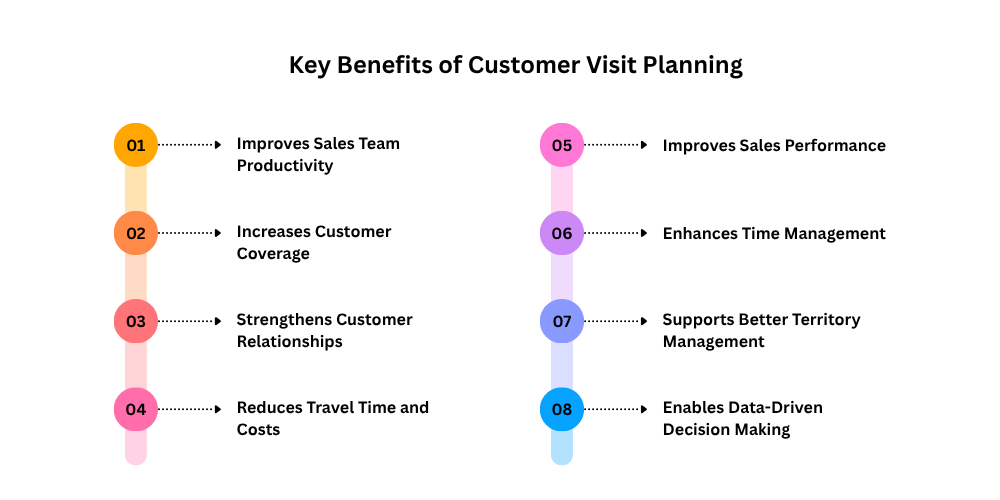
1. Improves Sales Team Productivity
A planned schedule helps field sales representatives make better use of their working hours. Instead of deciding which customers to visit each day, they follow a predefined plan that reduces idle time and improves focus.
Some key productivity benefits include:
-
More customer meetings per day.
-
Less time spent on travel.
-
Better daily planning.
-
Improved route efficiency.
-
Reduced administrative workload.
When sales representatives spend more time selling and less time organizing their schedules, overall team performance improves significantly.
2. Increases Customer Coverage
Businesses often lose potential revenue simply because some customers are not visited consistently.
Customer visit planning ensures:
-
Every assigned customer receives regular attention.
-
High-priority accounts are visited more frequently.
-
New customers are added systematically.
-
Sales territories remain balanced.
Improved customer coverage not only increases sales opportunities but also strengthens brand presence across the market.
3. Strengthens Customer Relationships
Strong customer relationships are built through regular and meaningful interactions rather than occasional visits.
With a structured visit plan, sales representatives can:
-
Follow up on previous discussions.
-
Address customer concerns promptly.
-
Introducing relevant products.
-
Share promotional offers.
-
Provide personalized service.
These consistent interactions build trust, improve customer satisfaction, and encourage long-term business relationships.
4. Reduces Travel Time and Costs
Unplanned customer visits often lead to inefficient travel routes, increased fuel expenses, and fewer productive meetings.
By organizing visits based on customer location and territory, businesses can:
-
Reduce unnecessary travel.
-
Lower transportation costs.
-
Increase the number of daily visits.
-
Improve route efficiency.
-
Maximize productive selling time.
Efficient sales route planning allows businesses to achieve more with the same resources.
5. Improves Sales Performance
An organized customer visit plan enables sales representatives to spend more time engaging with customers and less time on administrative tasks or unplanned travel. This leads to more productive conversations, stronger retailer relationships, and higher conversion rates.
When customer visits are planned strategically, businesses can:
-
Increase order frequency.
-
Identify upselling and cross-selling opportunities.
-
Promote new products more effectively.
-
Improve retailer engagement.
-
Generate consistent sales growth.
Over time, better planning results in higher sales performance and increased revenue across territories.
6. Enhances Time Management
Time is one of the most valuable resources for any field sales team. Without proper planning, representatives may spend hours traveling between customers or revisiting the same outlets unnecessarily.
A structured customer visit schedule helps sales teams:
-
Plan their daily activities.
-
Minimize idle time.
-
Prioritize important customer visits.
-
Complete more meetings in a day.
-
Maintain a healthy work routine.
Effective time management allows sales representatives to focus on building customer relationships instead of managing logistics.
7. Supports Better Territory Management
Managing multiple territories requires careful planning to ensure balanced workloads and consistent customer engagement.
Customer visit planning helps businesses:
-
Assign customers efficiently.
-
Balance workloads among sales representatives.
-
Eliminate duplicate visits.
-
Increase outlet coverage.
-
Improve market penetration.
Effective sales territory management ensures every region receives adequate attention while maximizing sales opportunities.
8. Enables Data-Driven Decision Making
Every customer visit generates valuable business information. When this data is collected and analyzed consistently, managers gain meaningful insights into sales performance and market conditions.
Businesses can monitor:
-
Customer visit frequency.
-
Sales representative productivity.
-
Territory performance.
-
Retailer feedback.
-
Customer buying patterns.
These insights help businesses optimize customer engagement strategies and improve overall business performance.
Essential Elements of an Effective Customer Visit Plan
Creating a customer visit plan involves much more than preparing a list of customers to visit. An effective plan aligns sales activities with business goals while ensuring field sales teams make the best use of their time and resources.
Below are the essential elements of a successful customer visit plan.
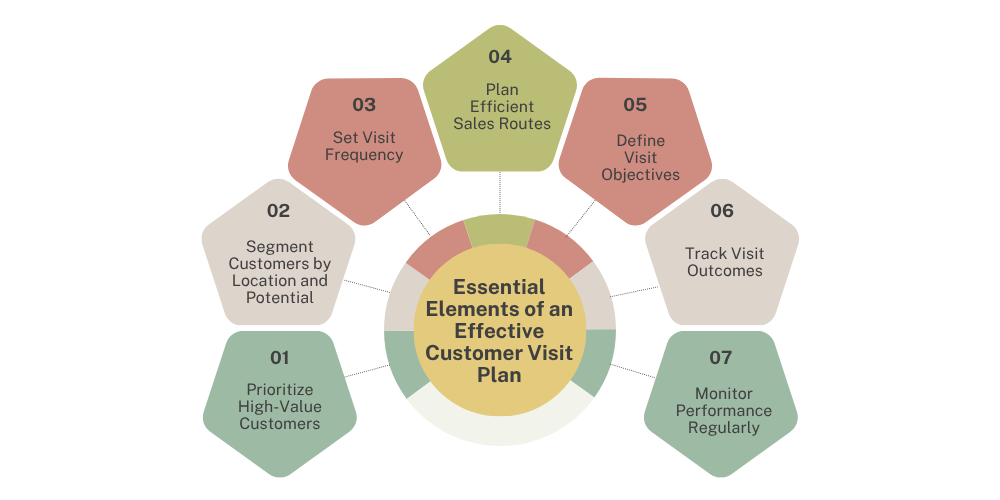
1. Prioritize High-Value Customers
Not every customer contributes equally to business growth. High-value customers often generate higher revenue, place frequent orders, or have greater long-term potential.
Businesses should prioritize visits based on factors such as:
-
Sales volume.
-
Revenue contribution.
-
Growth potential.
-
Purchase frequency.
-
Strategic importance.
This ensures that valuable customers receive the attention they deserve while maximizing return on sales efforts.
2. Segment Customers by Location and Potential
Customer segmentation helps businesses organize visits more efficiently.
Customers can be grouped according to:
-
Geographic location.
-
Business size.
-
Sales potential.
-
Industry.
-
Product demand.
-
Purchase history.
Segmenting customers simplifies route planning, reduces travel time, and enables more targeted sales strategies.
3. Set Visit Frequency
Different customers require different levels of engagement.
For example:
-
Key accounts may require weekly visits.
-
Medium-priority customers may be visited every two weeks.
-
Smaller retailers may only require monthly visits.
Defining visit frequency ensures consistent communication while preventing unnecessary visits that consume valuable selling time.
4. Plan Efficient Sales Routes
An optimized sales route helps representatives visit more customers while minimizing travel distance and fuel costs.
Effective route planning should consider:
-
Customer locations.
-
Traffic conditions.
-
Territory boundaries.
-
Appointment schedules.
-
Visit priorities.
Efficient route planning improves productivity and helps representatives complete more customer visits each day.
5. Define Visit Objectives
Every customer visit should have a clear purpose.
Objectives may include:
-
Taking new orders.
-
Introducing new products.
-
Following up on previous discussions.
-
Collecting payments.
-
Monitoring product availability.
-
Gathering retailer feedback.
-
Checking merchandising standards.
Clear objectives ensure each visit delivers measurable business value.
6. Track Visit Outcomes
Planning customer visits is only effective when businesses also measure the results.
Sales representatives should record:
-
Orders received.
-
Customer feedback.
-
Issues identified.
-
Follow-up actions.
-
Competitor activities.
-
Product availability.
Tracking outcomes enables managers to evaluate sales performance and improve future visit planning.
7. Monitor Performance Regularly
Customer visit planning should be reviewed regularly to identify areas for improvement.
Managers should analyze:
-
Visit completion rates.
-
Productive outlet visits.
-
Sales generated per visit.
-
Territory performance.
-
Customer retention.
-
Missed visits.
Regular performance reviews help businesses refine their visit strategy and improve sales productivity over time.
Common Challenges in Customer Visit Planning
Although customer visit planning offers significant benefits, many businesses struggle to execute it effectively. Without the right processes and technology, even well-designed plans can fail to deliver the expected results.
Here are some common challenges organizations face.
Unplanned Customer Visits
Many sales representatives decide whom to visit based on convenience instead of business priorities.
This often leads to:
-
Missed high-value customers.
-
Uneven outlet coverage.
-
Reduced sales opportunities.
-
Poor territory utilization.
A structured visit schedule helps eliminate random customer visits.
Inefficient Route Planning
Poor route planning increases travel time and operational costs while reducing the number of productive customer meetings.
Businesses that fail to optimize travel routes often experience:
-
Higher fuel expenses.
-
Longer travel times.
-
Fewer customer interactions.
-
Lower sales productivity.
Inconsistent Visit Frequency
Some customers receive excessive attention, while others are rarely visited.
Without clearly defined visit schedules, businesses may experience:
-
Weak customer relationships.
-
Reduced customer satisfaction.
-
Missed sales opportunities.
-
Poor account management.
Maintaining consistent visit frequency helps improve customer retention and market coverage.
Limited Visibility for Managers
Managers often struggle to determine whether planned visits were completed successfully.
Without real-time reporting, they cannot easily monitor:
-
Daily customer visits.
-
Sales representative productivity.
-
Territory coverage.
-
Customer interactions.
-
Missed appointments.
Limited visibility makes performance management much more difficult.

Manual Reporting Processes
Many organizations still rely on spreadsheets, notebooks, or messaging apps to manage customer visits.
Manual reporting creates challenges such as:
-
Delayed updates.
-
Data entry errors.
-
Lost information.
-
Duplicate records.
-
Time-consuming administration.
Digital reporting significantly improves accuracy and efficiency.
How Technology Improves Customer Visit Planning
As businesses grow, managing customer visits manually becomes increasingly difficult. Sales representatives often rely on notebooks, spreadsheets, or phone calls to organize their schedules, which can lead to missed appointments, duplicate visits, and inefficient travel.
Modern field sales management software simplifies customer visit planning by automating schedules, optimizing routes, and providing managers with real-time visibility into field activities. Instead of spending time on manual planning, sales teams can focus on building customer relationships and generating sales.
Here are some of the key ways technology improves customer visit planning.
Digital Beat Planning
Digital beat planning helps businesses create structured daily, weekly, or monthly visit schedules based on customer location, territory, and priority.
With digital beat plans, sales representatives can:
-
Follow predefined visit schedules.
-
Cover assigned territories efficiently.
-
Reduce missed customer visits.
-
Improve outlet coverage.
-
Increase daily productivity.
A well-organized beat plan ensures that every customer receives timely attention while maximizing the efficiency of field sales operations.
GPS-Based Route Optimization
Travel time is one of the biggest productivity challenges for field sales teams. Visiting customers in an inefficient order increases fuel costs and reduces the number of productive meetings.
GPS-based route optimization helps sales representatives:
-
Identify the shortest travel routes.
-
Reduce travel time.
-
Lower transportation costs.
-
Visit more customers each day.
-
Improve territory coverage.
Optimized routes allow businesses to increase customer interactions without expanding their sales team.
Real-Time Visit Tracking
Managers need visibility into field activities to ensure customer visits are completed as planned.
With customer visit tracking, businesses can monitor:
-
Completed customer visits.
-
Missed or skipped visits.
-
Time spent at each outlet.
-
Daily sales activities.
-
Territory performance.
Instant updates help managers respond quickly to issues and provide timely support to field sales teams.
Mobile Order Capture
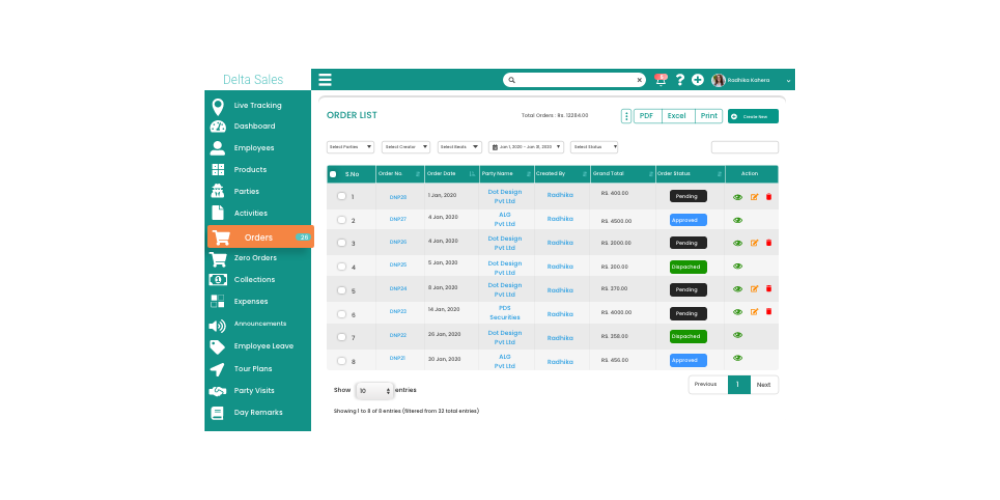
Collecting customer orders manually often leads to delays, paperwork, and data entry errors.
Using a mobile app, sales representatives can:
-
Capture orders during customer visits.
-
Update product quantities instantly.
-
Share orders with the office in real time.
-
Reduce manual paperwork.
-
Speed up the order fulfillment process.
This improves both customer experience and operational efficiency.
Visit Reports and Analytics
Customer visits generate valuable information that can be used to improve business performance.
Modern reports and analytics dashboards help managers monitor:
-
Visit completion rates.
-
Customer coverage.
-
Sales representative productivity.
-
Outlet performance.
-
Territory-wise sales trends.
-
Customer interaction history.
These insights enable businesses to refine their customer visit strategy and make informed decisions based on real-time data
How Delta Sales App Simplifies Customer Visit Planning
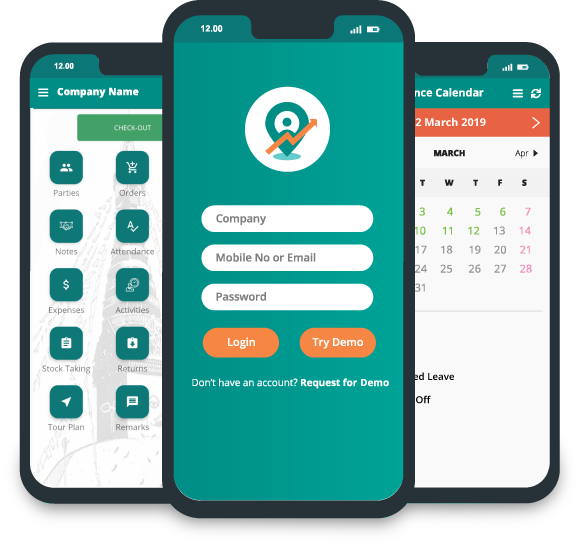
An effective customer visit planning process requires the right technology to ensure sales teams stay organized, productive, and focused on high-value customer interactions. Delta Sales App helps businesses streamline field sales operations by digitizing visit planning, improving route efficiency, and providing complete visibility into daily sales activities.
Using the mobile app, field sales representatives can:
-
Plan and manage daily customer visits.
-
Follow predefined beat plans and sales routes.
-
Mark attendance with GPS verification.
-
Record customer visits in real time.
-
Capture orders directly from customer locations.
-
Collect retailer feedback and market insights.
-
Add visit notes and follow-up actions.
-
Upload photos during outlet visits when required.
By replacing manual planning with digital workflows, Delta Sales App helps businesses improve customer coverage, strengthen field sales management, and ensure every customer visit contributes to business growth.
Conclusion
A well-planned customer visit strategy is essential for businesses that want to improve field sales performance, strengthen customer relationships, and maximize every sales opportunity. Instead of relying on unplanned visits or manual schedules, businesses can create a structured approach that ensures the right customers are visited at the right time with clear objectives.
Effective customer visit planning not only improves sales productivity but also enhances territory management, increases customer coverage, reduces travel time, and enables better decision-making through accurate field data. As businesses expand their customer base and distribution network, having a systematic visit planning process becomes even more important for maintaining consistent service and driving sustainable growth.
By adopting modern field sales management software like Delta Sales App, businesses can automate beat planning, optimize sales routes, track customer visits in real time, and gain valuable insights into field sales activities. This allows managers to improve team performance while ensuring every customer interaction contributes to stronger business results.
Ready to Make Every Customer Visit More Productive?
Discover how Delta Sales App helps businesses simplify customer visit planning, improve outlet coverage, optimize field sales operations, and increase team productivity with real-time insights.
Book a free demo today and see how Delta Sales App can help your sales team plan smarter, visit better, and sell more.
-1792906895-resized320.png)