
Why Field Sales Teams Resist Technology

In today’s fast-paced business world, technology plays a vital role in driving efficiency, improving communication, and boosting sales productivity. However, despite the clear benefits, many field sales teams resist adopting new technologies. This resistance often leads to missed opportunities, slower growth, and frustration for managers trying to modernize their sales processes.
Understanding why field sales reps resist technology is crucial for leaders aiming to introduce digital tools smoothly and effectively. In this blog, we’ll explore the common reasons behind this resistance and how companies can overcome these challenges to empower their field teams.
Fear of Change and Unfamiliarity
One of the most significant reasons field salespeople resist technology is fear of the unknown. Many reps are comfortable with their existing routines whether that’s paper-based orders, manual reporting, or traditional phone communication. When faced with new software or apps, uncertainty about how to use them can cause anxiety.
-
Change disrupts familiar workflows
Field sales reps rely on established routines. Introducing new technology breaks these habits, creating discomfort and hesitation as reps adjust to unfamiliar ways of working. -
Learning new systems takes time and effort
Sales reps already juggle tight schedules. Learning new tools feels time-consuming, especially when they fear it will reduce selling time during the adjustment phase. -
Fear of making mistakes or looking incompetent
Using unfamiliar technology can cause anxiety. Reps worry about errors, slower performance, or appearing less capable in front of managers or peers.
Managers should recognize that field sales management teams need clear training and reassurance during tech adoption. Showing them how digital tools simplify tasks and improve results can reduce resistance.
Lack of Proper Training and Support
One of the biggest barriers to adopting new tools is insufficient training. When sales reps receive a new tool without adequate support, frustration grows quickly. Complex interfaces, confusing workflows, and unclear instructions can make any app or software feel like a burden rather than a help.
Effective onboarding programs and continuous training can bridge this gap. When reps feel confident in their skills, they are more likely to embrace new technologies and use them effectively.
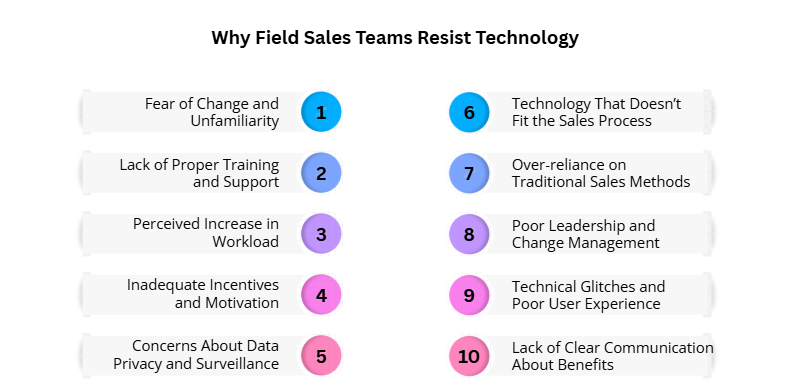
Perceived Increase in Workload
Many field salespeople see new technology as extra work rather than a time saver. Entering data into an app, managing multiple platforms, or learning a new system can seem like additional tasks on top of an already busy schedule.
This perception often comes from poorly designed systems that require duplicate data entry or do not integrate well with existing tools. Solutions that streamline processes and automate routine tasks, such as generating reports automatically or syncing customer data, help reduce workload and encourage adoption.
Inadequate Incentives and Motivation
Sales teams thrive on clear goals and rewards. If the use of technology is not linked to tangible incentives, reps may lack motivation to engage with it. Without seeing the direct impact on their commissions or daily productivity, technology adoption will remain low.
Incentivizing usage through recognition, performance bonuses, or gamified elements can motivate reps to learn and apply new tools, turning technology into a driver of success rather than a chore.
Concerns About Data Privacy and Surveillance
Field reps often worry that technology will be used to micromanage their activities or invade their privacy. GPS tracking, call monitoring, and constant data collection can feel intrusive, causing resistance to tech adoption.
Sales leaders should clarify how data is used and emphasize that tools are designed to empower reps with better insights and support not to control or punish them.
Technology That Doesn’t Fit the Sales Process
One common reason for resistance is the mismatch between technology capabilities and the actual sales process on the ground. A tool designed without input from field reps may ignore real-world challenges, such as poor internet connectivity, diverse client needs, or unique territory management dynamics.
Involving sales teams in the selection and customization of technology solutions ensures better alignment, making the tools feel relevant and useful instead of cumbersome.
Over-reliance on Traditional Sales Methods
Many field sales reps rely heavily on personal relationships and face-to-face interactions. They may view technology as impersonal or believe it detracts from building genuine connections with customers.
While relationship-building remains essential, technology can enhance this process by providing timely customer insights, automating follow-ups, and enabling more meaningful interactions.

Poor Leadership and Change Management
Resistance to technology often reflects broader organizational issues. Lack of leadership support, unclear digital transformation strategies, or failure to address employee concerns can doom technology initiatives from the start.
Strong leadership that champions technology, listens to feedback, and models its use can shift mindsets and build a culture where innovation is welcomed.
Technical Glitches and Poor User Experience
No matter how advanced a tool is, if it’s buggy, slow, or difficult to use, sales reps will quickly abandon it. Technical problems frustrate users, disrupt workflows, and reduce trust in the technology’s value.
Investing in user-friendly, reliable software and addressing issues promptly is essential for sustained adoption.
Lack of Clear Communication About Benefits
If the “why” behind technology adoption is unclear, reps will be skeptical. Explaining how tools can increase sales, reduce errors, and free up time makes the benefits tangible.
Using success stories, demos, and pilot programs helps illustrate real-world advantages and encourages buy-in.

Conclusion
Field sales teams resist technology due to fear, workload, poor training, and misfit tools; strong leadership, clarity, training, and simplicity drive adoption.
For sales teams ready to boost productivity and embrace innovation, leveraging tools with seamless integration, automated analytics & reporting, real-time analytics, and mobile sales tool accessibility can transform the sales journey. These features empower reps to spend more time selling and less time on admin tasks.
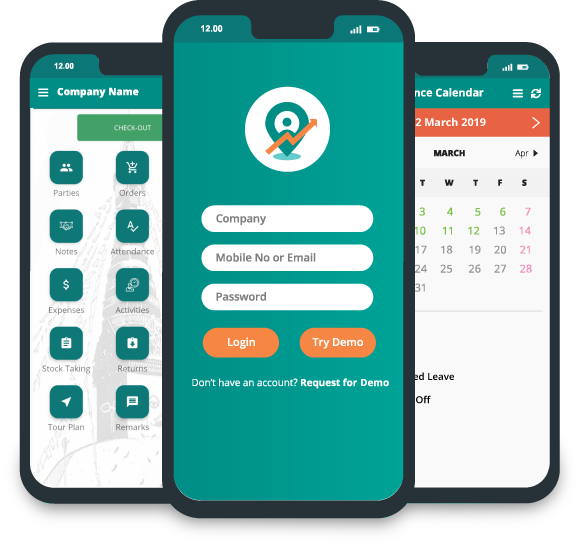
Solutions like the Delta Sales App are built specifically for modern field sales teams, focusing on ease of use, minimal data entry, and real-time visibility. It helps sales reps manage daily activities, track visits and orders, access customer insights, and generate automated reports—all from a single mobile platform. By reducing manual work and improving transparency, it empowers reps to spend more time selling and less time on admin tasks.
Book a quick demo of the Delta Sales App and see how it can simplify your field sales operations and boost team performance.