
Why Field Salespeople Submit Inaccurate Reports (And How to Fix It)

Data accuracy is not just an operational detail in field sales operations. It is the backbone of revenue planning, distributor management, and FMCG sales performance. However, a common problem that many businesses are still facing is the inaccurate reporting of field sales.
These data gaps create serious issues in sales forecasting, inventory planning, and distributor efficiency, from lost customer visits to wrong order entries and delayed reporting. In fast-moving sectors like FMCG, even a slight reporting error can lead to stock-outs, excess inventory, or lost sales opportunities.
The issue is often not the sales team but the lack of real-time visibility, manual reporting systems, and disconnected field processes. Field executives reporting through WhatsApp or paper notes or memory-based updates naturally increases the chance of errors.
That is where modern sales force automation solutions come into play. It enables real-time data capture, GPS-based visit tracking, digital order management, and structured reporting workflows to help businesses eliminate guesswork and improve field sales accuracy at any level.
What Does "Inaccurate Field Sales Reports" Mean?
Inaccurate field sales reports refer to any mismatch between actual field activity and what gets recorded in the system. An inaccurate field sales report occurs when the information recorded by a field salesperson does not accurately reflect what actually happened during their market visits. These inaccuracies can range from minor data entry mistakes to significant reporting gaps that affect business decisions.
For example, a sales representative may forget to record an outlet visit, enter the wrong order quantity, report outdated inventory information, or submit reports hours after completing their route. In some cases, businesses may even encounter duplicate entries, incomplete customer data, or unverified visits due to the absence of proper field sales tracking systems.
This may include:
- Incorrect customer visit data
- Missing orders or partial order entry
- Delayed reporting after field visits
- Fake or estimated data entries
- Wrong GPS or route tracking data
These issues may seem small individually, but at scale they lead to major revenue leakage and poor decision-making.
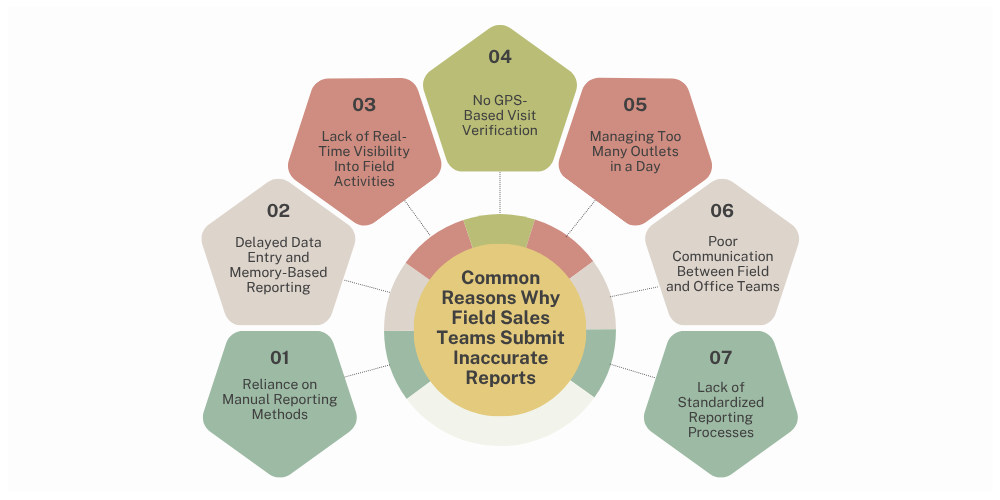
Common Reasons Why Field Sales Teams Submit Inaccurate Reports
Accurate field sales reporting is critical for effective sales plan, inventory management, distributor coordination and business growth. But many organizations face challenges with inconsistent or inaccurate data coming from their field teams. These reporting problems are usually not intentional. Legacy processes, manual data entry, lack of visibility into field activities and the challenges of handling multiple customer visits every day often lead to them.
When sales reps spend most of their time on the road, small inefficiencies in reporting can lead to significant data inaccuracies. Understanding the root causes of these issues helps businesses improve the accuracy of their reporting and make better decisions.
Some of the most common reasons for inaccurate field sales reports are:
-
Reliance on Manual Reporting Methods
Many field sales teams still use paper notes, spreadsheets, phone calls, or messaging apps to record sales activities. These manual methods increase the chances of human error, missing information, duplicate entries, and delayed updates. As a result, managers often receive incomplete or inaccurate reports that do not reflect actual market activities.
-
Delayed Data Entry and Memory-Based Reporting
Instead of logging information immediately after a customer visit, field reps often update reports at the end of the day. When reporting is based on memory, important details such as order quantities, customer feedback, stock availability, and visit outcomes can easily be forgotten or entered incorrectly, reducing overall data accuracy.
-
No GPS-Based Visit Verification
In organizations that do not use GPS-enabled field employee tracking, there is often no reliable way to verify whether customer visits actually took place. This can result in inaccurate visit records, missed outlet coverage, and reduced accountability. GPS-based tracking helps businesses validate field activities and maintain trustworthy reporting.
-
Managing Too Many Outlets in a Day
Field sales representatives often handle dozens of customer visits daily. As workloads increase, reporting can become a secondary priority. The pressure to cover more outlets may lead to rushed updates, skipped entries, or incomplete records, which negatively impacts the quality of sales data.
-
Poor Communication Between Field and Office Teams
When field teams and office staff rely on separate systems or manual communication channels, information can easily become outdated or misunderstood. Miscommunication regarding orders, collections, customer requests, or inventory status often results in reporting errors and operational inefficiencies.
-
Lack of Real-Time Visibility Into Field Activities
Without real-time reporting tools, managers can’t see what their sales teams are up to all day long. This often results in late decision-making and issues in identifying reporting anomalies. A real-time field sales tracking system ensures activities are logged as they occur, improving accuracy and transparency.
-
Lack of Standardized Reporting Processes
When every salesperson follows a different reporting format, maintaining data consistency becomes difficult. Variations in how customer visits, orders, collections, and sales activities are recorded can create confusion and make performance analysis less reliable. Standardized reporting processes help ensure that all field data is accurate, structured, and easy to analyze.
How to Fix Inaccurate Field Sales Reports
You need more than just telling sales reps to be more careful to improve accuracy in field sales reporting. Businesses need the right combination of processes, accountability, and technology to ensure field data is captured accurately and consistently. Organizations can greatly reduce reporting errors and gain real-time visibility into field operations by implementing modern sales force automation tools and standardized workflows.
Some of the most effective ways to improve field sales reporting accuracy include:
-
Implement Real-Time Reporting
One of the most effective ways to reduce reporting errors is to encourage sales representatives to record information immediately during or after customer visits. Real-time reporting eliminates the need for memory-based updates and ensures that customer interactions, order details, collections, and market feedback are captured accurately. Businesses that adopt real-time sales reporting gain faster access to reliable data and can respond more quickly to market changes.
-
Automate Order Management and Data Capture
Manual order entry is one of the leading causes of inaccurate sales reports. Automating order management helps eliminate duplicate entries, missing information, and data entry mistakes. A digital order management system allows field sales representatives to place orders directly through a mobile application, ensuring that order data is captured accurately and instantly synchronized with the business.
-
Enable GPS-Based Field Sales Tracking
GPS-enabled field sales tracking improves accountability and helps verify customer visits. Instead of relying on manual visit records, businesses can track outlet visits, route completion, and field activities automatically. GPS verification helps ensure that reports accurately reflect actual market coverage and provides managers with better visibility into field operations.
-
Use Digital Attendance and Visit Monitoring
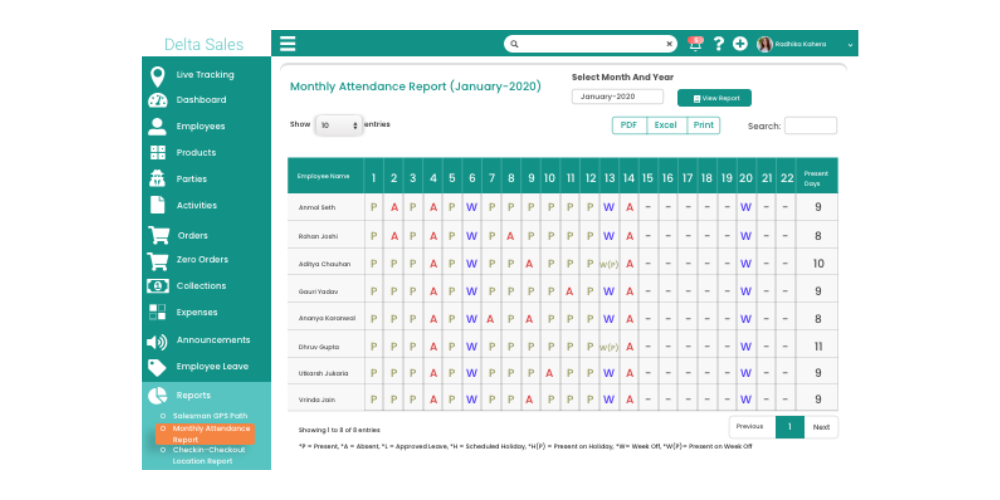
Attendance tracking and customer visit tracking through digital systems help eliminate manual reporting inconsistencies. Features such as geo-tagged attendance, check-ins, check-outs, and visit verification allow managers to monitor field activities more effectively while improving reporting transparency across the sales team.
-
Standardize Reporting Processes
A standardized reporting structure ensures that all sales representatives capture information in a consistent format. Whether it is customer visits, order bookings, collections, product availability, or merchandising activities, having a uniform reporting process improves data quality and makes performance analysis more reliable.
-
Improve Communication Between Field and Office Teams
Good records depend on good communication. Information flows more efficiently and reporting discrepancies are reduced, as field teams and office staff work from a centralized platform. A connected system synchronizes orders, collections, inventory updates, and customer info across departments.
-
Use Analytics and Performance Dashboards
Sales managers can identify reporting issues more quickly when they have access to real-time dashboards and field sales analytics. Performance reports, visit summaries, route tracking insights, and sales activity dashboards help organizations monitor data quality, identify gaps, and take corrective action before reporting issues affect business performance.
By combining real-time reporting, field sales tracking, order management automation, route monitoring, and performance analytics, businesses can significantly improve the accuracy of their field sales reports and make better decisions based on reliable market data.
How Delta Sales App Helps Fix Inaccurate Field Sales Reports
While inaccurate field sales reports often stem from manual processes, delayed updates, and limited visibility into field activities, these challenges can be significantly reduced with the right technology. Delta Sales App is a comprehensive Sales Force Automation (SFA) solution designed to help businesses improve reporting accuracy, increase field team accountability, and gain real-time visibility into sales operations.
By digitizing field sales activities and automating data collection, Delta Sales App ensures that businesses receive accurate, timely, and actionable information from the field.
Some of the key ways Delta Sales App helps eliminate inaccurate field sales reporting include:
-
Real-Time Field Sales Reporting
One of the primary reasons for inaccurate reports is delayed data entry. Delta Sales App enables sales representatives to capture customer visits, orders, collections, and market feedback in real time using a mobile sales application. This eliminates memory-based reporting and ensures that field data is recorded accurately at the point of activity.
-
GPS-Based Field Sales Tracking
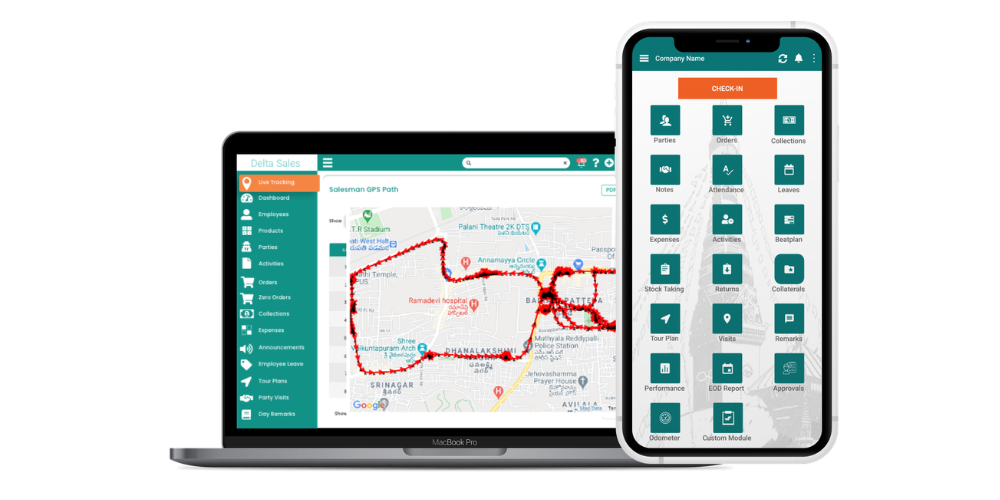
Delta Sales App includes GPS tracking capabilities that help managers verify customer visits and monitor field movement. Every visit can be validated based on location data, improving accountability and ensuring that sales reports accurately reflect actual field activities. GPS-enabled field sales tracking also provides greater visibility into route coverage and sales team productivity.
-
Attendance and Visit Monitoring
Accurate reporting starts with accurate activity tracking. The app offers digital attendance management and visit monitoring features that allow businesses to track check-ins, check-outs, working hours, and customer visits. This creates a reliable record of field activities and reduces the chances of inaccurate reporting.
-
Digital Order Management
Manual order booking often leads to missing information, duplicate entries, and reporting errors. With Delta Sales App's order management system, field sales representatives can place orders directly through the mobile application. This ensures accurate order capture, faster processing, and seamless synchronization between field teams, distributors, and back-office operations.
-
Route Planning and Beat Management
When sales representatives handle multiple outlets daily, it becomes difficult to maintain reporting consistency. The platform helps streamline field operations through route planning and beat management tools that guide representatives through their assigned territories. Structured route execution improves outlet coverage, reduces missed visits, and ensures that field activities are reported systematically.
-
Centralized Communication and Data Access
Disconnected communication channels often result in outdated information and reporting discrepancies. Delta Sales App provides a centralized platform where field teams and managers can access customer data, sales records, order information, and activity updates from a single source. This improves coordination and reduces data inconsistencies across the organization.
-
Sales Analytics and Performance Dashboards
Accurate data becomes valuable only when it can be analyzed effectively. Delta Sales App provides real-time sales dashboards, performance reports, field activity summaries, and analytics tools that help managers identify trends, monitor productivity, and detect reporting gaps quickly. Better visibility leads to better decision-making and continuous improvement in reporting accuracy.

-
Offline Functionality for Uninterrupted Reporting
Many field sales teams operate in remote areas where internet connectivity is unreliable. In such situations, sales representatives may delay reporting or miss critical updates altogether, resulting in incomplete or inaccurate sales reports. Delta Sales App's offline functionality allows users to continue recording customer visits, orders, collections, attendance, expenses, and other field activities even without an internet connection. Once connectivity is restored, the data automatically syncs with the system. This ensures continuous field sales reporting, prevents data loss, and helps maintain accurate records regardless of network availability.
-
Expense Management
Field sales representatives often incur travel, accommodation, and other business-related expenses while performing their daily activities. When expense tracking is handled manually through paper receipts or spreadsheets, errors and discrepancies can easily occur. The app simplifies expense management by allowing field teams to record and submit expenses directly through the mobile application. This creates a centralized and transparent expense tracking process, improves reimbursement accuracy, and ensures that expense records are properly linked to field activities and sales operations.
Conclusion
Inaccurate field sales reporting is not just a data problem; it is a business performance problem. It affects forecasting, supply chain efficiency, and revenue growth. Most of these issues come from outdated manual processes and lack of real-time visibility. By adopting structured processes and modern tools like Delta Sales App, businesses can significantly improve data accuracy, boost accountability, and make smarter sales decisions.
Accurate field data is no longer optional. It is the foundation of scalable and profitable sales operations. If your business is still relying on spreadsheets, paper-based reporting, or disconnected systems, now is the time to modernize your field sales operations.
Book a free demo today and discover how Delta Sales App can help your team eliminate inaccurate reports and drive better business results.