
Why Mobile Marketing Automation Is Becoming Essential for Modern Sales Teams

Sales reps used to get by with a desk, a phone, a spreadsheet, and a stack of customer files. That's not enough anymore. Today's sales teams cover territories, visit customers, chase down opportunities, collect orders, update records, and follow up with prospects, usually away from their desks. When all of that depends on manual entry and systems that don't talk to each other, hours get lost to busywork instead of selling. Mobile marketing automation is meant to fix that.
It puts customer data, communication, and sales workflows on the device reps already carry, so responses are faster, fewer follow-ups get dropped, and decisions are based on what's happening now instead of what was sitting in a spreadsheet last week.
For field sales teams in particular, mobile automation can connect activities that were traditionally handled separately, from customer visits and lead follow-ups to order collection and sales reporting. But what exactly is mobile marketing automation, and why is it becoming an increasingly important part of modern sales operations? Let's explore.
What Is Mobile Marketing Automation?
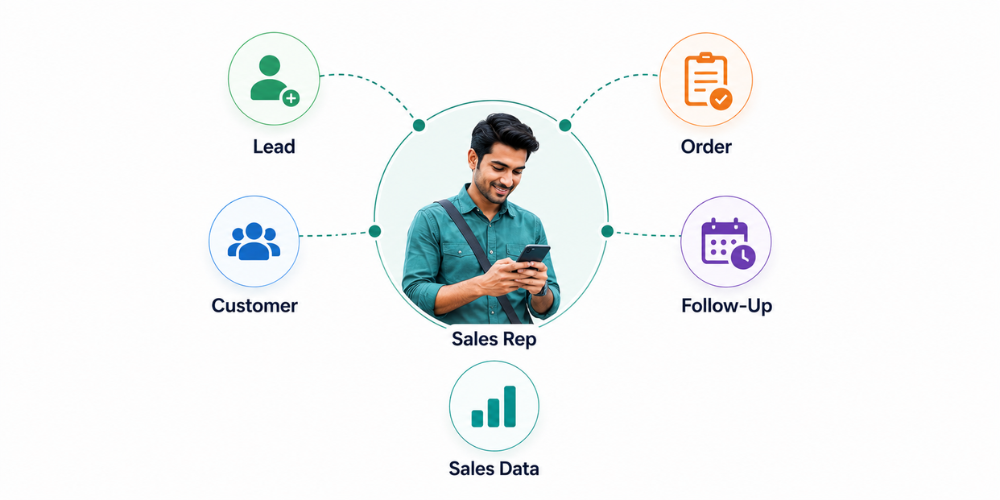
Mobile marketing automation means using software and mobile technology to handle marketing and customer engagement tasks from a phone or tablet. Traditional marketing automation usually covers things like email campaigns, lead scoring, customer segmentation, and automated follow-ups. Mobile marketing automation takes those same capabilities and puts them in the hands of people who aren't sitting at a desk. For sales teams, that can include:
-
Automated lead follow-ups
-
Customer data synchronization
-
Mobile CRM access
-
Sales activity tracking
-
Automated reminders and notifications
-
Customer visit management
-
Order collection
-
Real-time sales reporting
-
Location-based sales activities
-
Lead and opportunity management
-
Customer communication workflows
The point isn't to automate more tasks for the sake of it. It's to put sales information and workflows where salespeople actually work, in the field, at customer sites, and on the road. That's why it matters most to businesses running distributed sales teams: field reps, distributors, wholesalers, and territory-based operations.
Why Modern Sales Teams Are Shifting to Mobile-First Automation
The modern sales process happens mostly on the move now. A rep might start the morning reviewing their beat plan, visit several retailers, check product availability, collect orders, update customer records, log payments, and file an end-of-day report. Doing all of that by hand creates a pile of admin work nobody asked for. Mobile-first automation fixes this by putting sales workflows on the device the rep is already carrying. Instead of waiting until evening to update a spreadsheet or fill out paperwork, reps can log information during or right after a customer visit. Field activity turns into usable business data almost immediately, instead of sitting in a notebook until someone types it up later.
For sales managers, that also means better visibility into:
-
Customer visits
-
Sales orders
-
Territory performance
-
Representative activity
-
Retailer interactions
-
Sales targets
-
Collection activities
-
Product movement
-
Field productivity
As a business adds more territories, keeping that kind of visibility without automation gets harder fast.
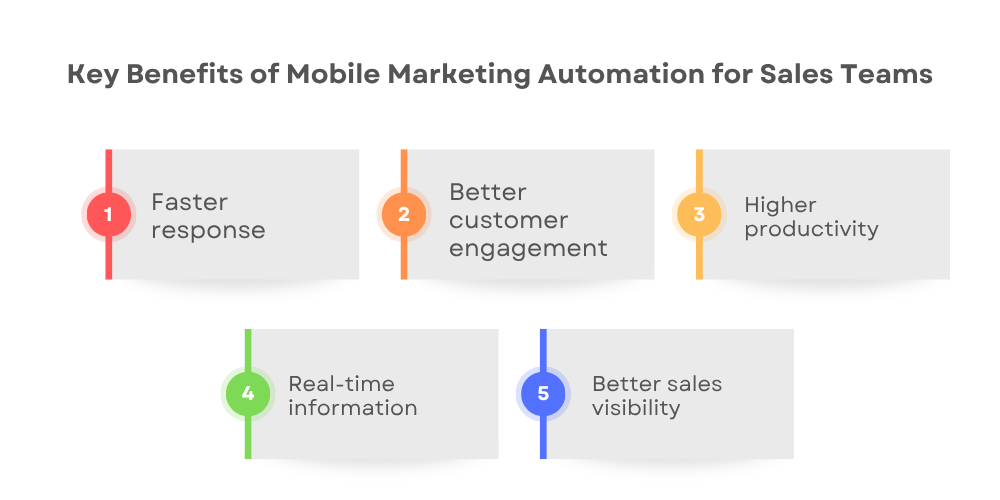
Key Benefits of Mobile Marketing Automation for Sales Teams
Mobile marketing automation plays a crucial role in enhancing the sales workflow at every stage. Its greatest strength lies in minimizing repetitive tasks, allowing salespeople to access important information on the go, making their work more efficient and effective.
Faster Lead Response and Nurturing
Speed matters in sales. When a lead or customer inquiry requires a response, delays can reduce the likelihood of conversion. Manual processes often make it difficult for representatives to know which leads require immediate attention. Mobile automation can help sales teams create timely follow-up workflows through notifications, reminders, task assignments, and customer activity updates. Sales representatives can access customer information directly from their mobile devices and take action without returning to the office. Automated lead nurturing can also help maintain consistent communication throughout the customer journey. Instead of relying entirely on memory, salespeople can receive reminders for:
-
Follow-up calls
-
Customer visits
-
Pending opportunities
-
Order confirmations
-
Payment collection
-
Reorders
-
Customer inquiries
This creates a more structured sales follow-up process and reduces the chances of opportunities being forgotten.
Improved Sales and Marketing Alignment
Sales and marketing often end up working from different data with different priorities. Marketing generates leads and engagement data, and sales deals with customers face to face, and without connected systems, that information splits apart instead of flowing between teams. Mobile marketing automation closes some of that gap by putting customer and sales information in front of the people who actually need it.
When a field rep has current customer records, sales history, and product details on their phone, they can walk into a conversation actually knowing something instead of guessing. It also gives managers a clearer line from a marketing-generated lead to what actually happened with it in the field. None of this fixes sales and marketing alignment by itself, but better data sharing is usually a big part of what makes it work.
Increased Productivity for Field and Remote Sales Reps
Admin work eats up a big chunk of a field rep's day. Entering orders into a spreadsheet, writing up reports, updating customer records, calculating expenses, and tracking visits by hand, none of that is selling, but it still has to get done. Mobile sales automation cuts into that by letting a rep handle most of it from one app.
After visiting a retailer, for example, a rep can log the visit, capture the order, update the customer's record, check what's still owed, and submit everything without jumping between five different tools. That saves time in the field and gives managers activity data that's actually accurate instead of reconstructed from memory at the end of the week.
Real-Time Customer Engagement
Customers expect more now. They want a rep who already has the answer, not one who says, "Let me check and get back to you." A mobile sales app can hand reps access to things like
-
Previous orders
-
Customer purchase history
-
Product catalogs
-
Pricing information
-
Available inventory
-
Outstanding payments
-
Sales activity
-
Customer notes
That means a rep can actually deal with what the customer needs on the spot. It matters even more for FMCG and distribution businesses, where visits tend to be short and frequent. If the rep has the right information right there, that five-minute visit is worth a lot more.
How Mobile Marketing Automation Improves Sales Conversions
Automation doesn't create sales by itself. What it actually does is help sales teams act at the right moment with better information behind them. Take a rep visiting a retailer they already work with. Without a connected system, they might have no real visibility into that retailer's past orders, what's still unpaid, or what tends to sell there. With mobile sales automation, that's all sitting there during the visit.
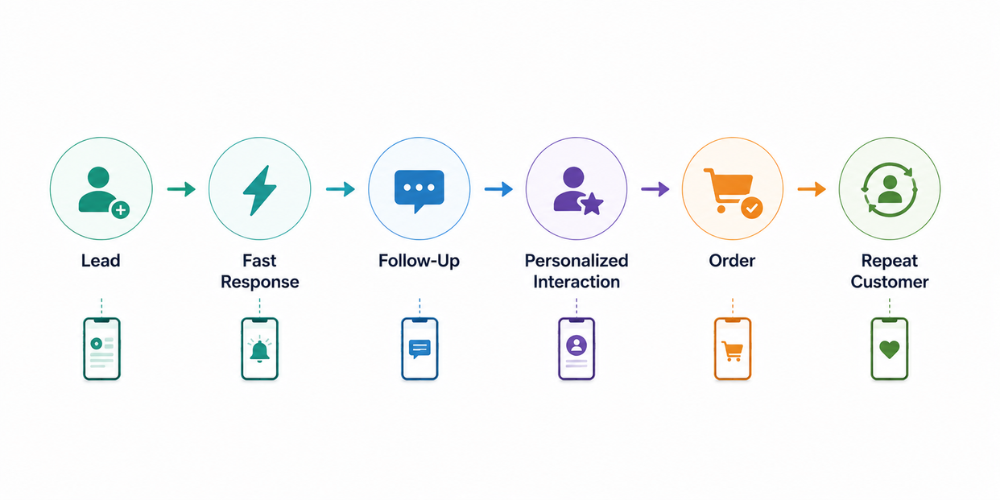
The rep can spot what needs restocking, suggest the right items, check what's in stock, take the order, and log the whole interaction on the spot. That closes the gap between knowing something about a customer and actually acting on it. Mobile automation can lift conversions by helping teams:
-
Respond to Opportunities Faster
Mobile marketing automation lets sales teams jump on new opportunities without heading back to the office or digging through a spreadsheet first. When a lead, inquiry, or opportunity is assigned, the rep receives a notification and can pull up the relevant customer info right from their phone. Responding faster matters because it means talking to a prospect while they still care, not three days later once the interest has cooled off.
-
Follow Up Consistently
A potential customer may require several interactions before making a purchase. Without a structured follow-up process, sales representatives can easily forget calls, visits, or messages. Mobile automation can create reminders and follow-up tasks based on customer activity, ensuring that important opportunities continue moving through the sales pipeline.
-
Personalize Customer Interactions
Customers respond better when the conversation actually fits what they need. Mobile sales tools give reps access to previous orders, purchase history, preferences, notes, and past interactions before or during a visit. That means recommendations can be based on what a customer has actually bought before, not a guess about what they might want.
-
Access Real-Time Customer and Product Information
Sales representatives frequently require precise information when engaging with customers. Mobile automation empowers them to easily retrieve customer profiles, product catalogs, pricing details, inventory status, order history, and payment data while on the go. With up-to-date information readily available, representatives can respond to inquiries promptly and minimize any potential delays.
-
Reduce Missed Follow-Ups
Missed follow-ups can lead to significant missed chances, especially when sales representatives juggle numerous clients. Automated reminders and task alerts assist salespeople in monitoring outstanding tasks. Rather than relying solely on memory or manual notes, representatives can easily identify which customers need follow-up and when the next engagement should occur.
-
Improve Sales Territory Coverage
Effectively managing a large sales territory involves thoughtful strategy and a personal touch. Mobile sales automation can empower representatives to plan customer visits more intuitively, adhere to their routes, and keep track of their interactions. This technology also allows managers to gain a clearer understanding of territory dynamics, helping them spot areas that may need more attention and ensuring that every customer feels valued and well-served.
-
Identify High-Value Opportunities
Not all customers or leads possess equal sales potential. By consolidating customer history, order trends, purchase frequency, and sales activities into a unified system, sales teams can pinpoint accounts that may present enhanced revenue prospects. For instance, a retailer experiencing a rise in order frequency could signify a chance for cross-selling, upselling, or broadening product distribution.
-
Track Customer Interactions More Accurately
Every interaction with a customer yields insights that can enhance future sales efforts. Mobile sales automation empowers representatives to log visits, orders, notes, follow-ups, payments, and various activities directly from their locations. This approach builds a comprehensive customer history while minimizing reliance on paper documentation and manual data entry. Additionally, managers can leverage this data to gauge customer engagement and assess sales performance across different regions.
Must-Have Features to Look for in a Mobile Marketing Automation Tool
Selecting a mobile marketing automation tool goes beyond simply finding software that functions on a smartphone. The ideal platform should empower sales teams to gather valuable information, streamline repetitive tasks, nurture customer relationships, and make quicker, informed decisions while on the go. For companies with field sales representatives, distributors, and teams operating in specific territories, certain features become essential to enhance their effectiveness and connection with customers.
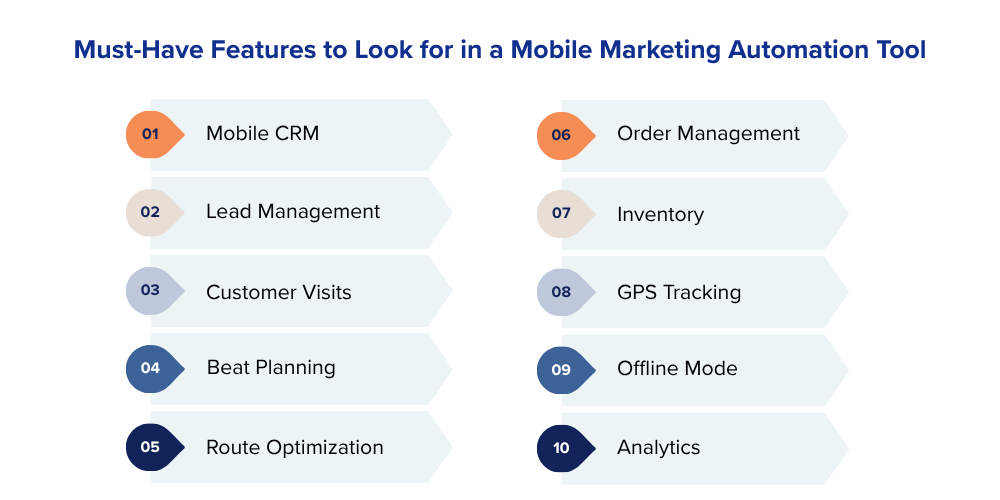
Mobile CRM and Customer Management
A mobile CRM provides sales representatives with immediate access to customer data from any location. Teams can easily access customer profiles, past orders, purchase history, contact information, notes, and interaction logs via their mobile devices. This streamlines the process, removing the necessity to sift through spreadsheets or reach out to various departments for essential customer details. It also equips representatives with the necessary context prior to making sales calls or visiting clients.
Automated Lead Management and Follow-Ups
An effective automation platform should empower sales teams to nurture leads from the first interaction all the way through to follow-up and conversion. By incorporating features like friendly reminders, task assignments, updates on lead status, and timely follow-up notifications, it ensures that no opportunity slips through the cracks. This way, sales managers can keep a close eye on lead progress, fostering a collaborative environment without relying solely on manual updates from their team members.
Customer Visit and Field Activity Tracking
For field sales teams, connecting with customers through visits is essential to building relationships and driving sales. A user-friendly mobile platform should empower representatives to easily log their visits, gather important insights, jot down personal notes, and update customer interactions right from the field. By tracking customer visits, managers gain valuable insights into the completion of scheduled visits and can better understand how effectively their sales representatives are engaging with clients in their territories.
Beat Planning and Route Management
Sales representatives frequently oversee numerous customer sites within a designated area. In the absence of effective planning, significant time may be wasted commuting between these sites. A mobile automation solution should facilitate beat planning, route optimization, and territory oversight, enabling representatives to schedule visits more effectively. Additionally, managers can leverage this data to enhance territory coverage and minimize unnecessary travel.
Mobile Order Management
For FMCG, distribution, and retail sales teams, order taking is one of the most important field activities. A mobile order management feature allows representatives to create and submit customer orders directly from their phones. Instead of writing orders on paper and entering them into another system later, representatives can capture orders during the customer interaction. This can reduce manual data entry and improve order accuracy.
Real-Time Inventory and Product Information
Sales representatives rely on precise product details when engaging with customers. An effective mobile sales platform should offer easy access to product catalogs, pricing, stock levels, promotional schemes, and other essential information. For instance, if a retailer inquires about the availability of a specific product, the salesperson can quickly verify the details on the spot, eliminating the need to wait for confirmation from the office.
Automated Notifications and Alerts
Automation becomes much more useful when the system can proactively remind salespeople about important activities. Notifications can be used for:
-
Scheduled customer visits
-
Pending follow-ups
-
New leads
-
Outstanding payments
-
Reorder opportunities
-
Sales targets
-
Assigned tasks
-
Important customer activities
These alerts help representatives stay organized without constantly checking multiple applications or spreadsheets.
GPS Tracking and Location-Based Insights
For organizations with field teams, a GPS-based tracking system offers a more personal touch by enhancing visibility into the movements of sales representatives and their interactions with customers. Managers gain insights into where sales activities occur, allowing them to better understand their team's efforts and ensure that territories are effectively covered. By comparing planned visits with actual field activity, they can foster a more supportive environment for their representatives. When utilized thoughtfully, location data not only aids in optimizing routes but also boosts the overall productivity of the field team, making their work more efficient and impactful.
Offline Functionality
Field sales representatives often face challenges with consistent internet connectivity. Therefore, a mobile automation tool must enable offline data collection. This offline capability allows representatives to document customer visits, orders, and various sales activities even in low-connectivity situations. Once a connection is restored, the captured data can seamlessly sync with the central system.
Sales Reporting and Analytics
Automation should ultimately help managers make better decisions. Real-time dashboards and sales reports can provide visibility into sales performance, orders, customer activity, territory performance, representative productivity, collections, and other important metrics. Instead of waiting for representatives to compile end-of-day spreadsheets, managers can access updated information and identify issues earlier.
Integration With Existing Business Systems
A mobile marketing automation platform should fit into the existing technology ecosystem rather than creating another isolated database. Depending on the business, useful integrations may include ERP systems, accounting software, CRM platforms, inventory systems, payment solutions, and other business applications. The goal is to create a connected sales workflow where information can move smoothly between sales representatives, managers, distributors, and back-office teams.
How Delta Sales App Helps Sales Teams Automate Smarter
Mobile automation reaches its full potential when it seamlessly integrates the various tasks that sales representatives engage in daily. For field sales teams, merely possessing a mobile CRM falls short. They require a comprehensive solution to effortlessly handle customer visits, orders, routes, payments, targets, and reporting, all within a single platform, eliminating the hassle of juggling multiple tools.
-(1)-1787029208.png)
Delta Sales App unifies field sales processes into a single mobile platform, enabling businesses to streamline daily sales tasks while providing managers enhanced insight into field operations.
-
Automate Customer Visits and Field Activities
Sales managers can efficiently organize customer visits, delegate tasks, and oversee field representatives as they navigate their territories. The Delta Sales App offers immediate insights into customer interactions, detailing the locations visited and the duration spent at each site. This functionality simplifies the identification of missed visits, enhances territory management, and provides clarity on how sales representatives allocate their working hours.
-
Simplify Mobile Order Taking
Manual order taking using traditional paper forms or spreadsheets can lead to an excessive workload and a higher chance of mistakes. The Delta Sales App allows field representatives to seamlessly capture customer orders directly from their mobile devices and submit them on-site. Managers can monitor orders in real time, applying filters by employee, date, or customer, all from a single platform. The system accommodates both primary and secondary order management, fostering a quicker link between customer engagement and order fulfillment.
-
Make Customer Information Available on the Go
Sales representatives need customer information when they are actually talking to customers, not hours later when they return to the office. Delta Sales App keeps customer information organized in one place, including customer details and location information. Sales teams can use this information during field visits, while managers can identify customers who have not been visited recently or have not placed orders. This supports more informed customer conversations and helps sales teams prioritize their activities.
-
Improve Route and Territory Management
A thoughtfully organized sales territory enables representatives to connect with more customers while minimizing travel time. The Beat Plan feature of the Delta Sales App empowers managers to design personalized route plans and delegate specific activities to their representatives. This way, teams can engage in planned customer visits and keep track of their completed tasks. For companies overseeing extensive field teams, this approach fosters a more organized and efficient method of managing sales territories and planning routes.
-
Automate Sales Reporting and Analytics
Sales managers shouldn't have to wait until the end of the day for their representatives to gather spreadsheets and send reports. The Delta Sales App offers automated reporting and analytics that cover important aspects like field representative activities, customer details, orders, and sales performance. This tool enhances managers' visibility into sales operations, allowing them to spot issues more swiftly. By eliminating the hours spent on compiling data, managers can dedicate more time to analyzing performance and enhancing sales strategies.
-
Keep Teams Productive Even Without Constant Connectivity
Field representatives often operate in areas with inconsistent internet access. The Delta Sales App provides offline capabilities, enabling sales tasks to proceed even without an internet connection, and it syncs data automatically when connectivity is reestablished. This feature is especially beneficial for sales teams spread across various regions.
The Future of Mobile Marketing Automation in Sales
Mobile marketing automation is evolving beyond just sending reminders, notifications, and automated follow-ups. The next phase focuses on creating sales systems that are more intuitive, insightful, and adaptable. By 2026, artificial intelligence is set to play a significant role in sales technology. According to Salesforce's 2026 State of Sales research, 87% of sales organizations are already leveraging some form of AI, and 54% of salespeople report having utilized AI agents. Almost 90% intend to incorporate these agents by 2027.

This transformation is expected to shape the future of mobile sales automation in the years ahead.
1. AI-Powered Sales Assistance
Mobile sales platforms are expected to evolve into more intuitive tools by leveraging AI to understand customer behavior, sales trends, purchasing habits, and on-the-ground insights. Rather than just presenting a salesperson with a customer profile, an AI-enhanced system could pinpoint which customers require follow-up, recommend the most effective next steps, or flag accounts that may be ready to reorder. For sales representatives in the field, this transformation could turn a mobile sales application into a supportive AI-driven assistant that helps them focus on what matters most throughout their day.
2. Predictive Lead and Opportunity Management
Future automation will shift towards anticipating future events instead of merely documenting past occurrences. Sales platforms will be able to evaluate historical purchases, customer interactions, order patterns, payment behaviors, and various indicators to pinpoint high-potential accounts. Consequently, sales teams can dedicate less time to sifting through customer databases and more time to pursuing opportunities that are more likely to convert. A study by Oliver Wyman indicated that sales leaders utilizing agentic AI experienced beneficial effects on sales growth, productivity of sales representatives, and lead conversion rates.
3. More Personalized Customer Engagement
As generic customer communication loses its impact, buyers increasingly seek interactions that resonate with their individual needs. Future mobile marketing automation tools are expected to harness real-time customer signals, enabling salespeople to tailor their conversations, product suggestions, offers, and follow-ups more personally. For instance, a system might detect a rise in a retailer's orders for a specific product and encourage the sales representative to suggest complementary items during their next visit. While the salesperson ultimately decides, this technology enriches the interaction with valuable context, making it feel more relevant and engaging for the customer.
4. Real-Time Sales Intelligence
The future of mobile sales automation will also involve moving from static reports to real-time sales intelligence. Instead of waiting for end-of-day reports, managers could see emerging changes in sales performance, customer activity, territory coverage, and order patterns as they happen. This can help managers identify problems earlier and respond before they affect overall sales performance.
5. Automation of More Administrative Work
One of the most significant advantages of mobile automation lies in alleviating the administrative burden on sales representatives. Sales teams are increasingly embracing AI and automation to take care of repetitive tasks like researching prospects, updating CRM systems, following up with leads, and preparing for sales meetings. According to Salesforce, sales professionals anticipate that AI tools will greatly cut down the time they spend on research and creating content. For field sales teams, this kind of automation can also streamline processes such as reporting visits, processing orders, logging activities, managing expenses, and summarizing sales. The goal is straightforward: allow technology to manage more of the mundane tasks, enabling salespeople to dedicate their time and energy to building relationships with customers.
6. Connected and End-to-End Sales Workflows
A significant shift we’re seeing is the transition from using isolated automation tools. In the future, sales platforms will increasingly integrate marketing, CRM, field sales, customer engagement, order management, analytics, and other sales processes into a cohesive workflow. This is crucial because the effectiveness of automation relies heavily on the quality of the data it uses. According to McKinsey's 2026 research, fragmented data and disconnected processes are major obstacles to realizing the full potential of AI in sales. For companies with field sales teams, this suggests that the future won’t just be about piling on more applications. Rather, it will focus on building a connected mobile sales ecosystem where customer information and sales activities can flow effortlessly throughout the organization.
Conclusion
If your sales team is still running on spreadsheets, paper orders, manual reports, or a handful of tools that don't talk to each other, mobile marketing automation is a reasonable next step. The real benefit isn't automation for its own sake; it's putting information and tools in front of salespeople exactly when they need them. For field sales, that tends to show up as faster follow-ups, better customer conversations, less time lost to admin, more reliable sales data, and managers who can actually see what's happening in the field instead of waiting for a weekly summary.
Sales work keeps moving further out of the office, and the businesses that connect automation to actual field workflows are the ones that will keep up with that.
If you want to simplify field sales management and bring your operations into one mobile platform, book a free demo of Delta Sales App and see how it works for your team.