
Why Is Product Availability Critical for Retail Success?

Imagine going to your favorite store and finding an empty shelf for an item you buy every month. More likely, you will delay your purchase or buy a competing brand. For a retailer, that one stockout may seem small, but across hundreds of products and thousands of customers, it amounts to a lot of missed revenue.
The IGD says product availability remains one of the biggest drivers of customer satisfaction, while research from McKinsey suggests stockouts can reduce sales by as much as 10% in some retail categories. In the competitive market we face today, it’s more than filling empty spaces to keep products on the shelves; it’s about protecting revenue, maintaining customer trust, and creating loyal shoppers who keep coming back.
In this blog, you will learn what product availability is, why it is important, the hidden costs of stockouts, practical strategies to improve availability, and how Delta Sales App helps retailers keep products available when customers need them.
What Is Product Availability in Retail?
Product availability in retail refers to a retailer’s ability to have the right products in stock, available for their customers to purchase when they want to purchase them. In simple terms, if a customer walks into a store or shops online and the product they want is in stock, the retailer has good product availability. This may sound similar to inventory management, but product availability is customer-centric. A business may have inventory in a warehouse, but if that product is not on the store shelf or at the right sales location, then it is essentially unavailable to the customer. This is why retailers and distributors need to monitor inventory levels closely, restock promptly, and have visibility across warehouses, stores, and distribution channels.
-1786339713.png)
Several retail metrics are commonly used to gauge product availability:
-
Product Availability Rate: This metric reflects how many products are ready for customers when they decide to make a purchase.
-
In-Stock Rate: This measures how frequently a product is found on store shelves during a given timeframe.
-
Fill Rate: This indicates the percentage of customer orders that are completely fulfilled without any delays, substitutions, or backorders.
While these metrics are interconnected, they each have distinct roles. A retailer may have a high in-stock rate in their warehouse, yet still face challenges with product availability if items aren’t restocked on the shelves promptly. Likewise, a strong fill rate shows effective order fulfillment but doesn’t necessarily mean that products are reliably available in stores.
For retailers, distributors, and fast-moving consumer goods (FMCG) companies, ensuring high product availability goes beyond just holding extra inventory. It requires precise demand forecasting, real-time visibility into inventory levels, efficient restocking processes, and seamless collaboration among sales, warehouse, and supply chain teams. This way, customers can consistently find the products they are looking for.
Why Product Availability Matters for Retail Success
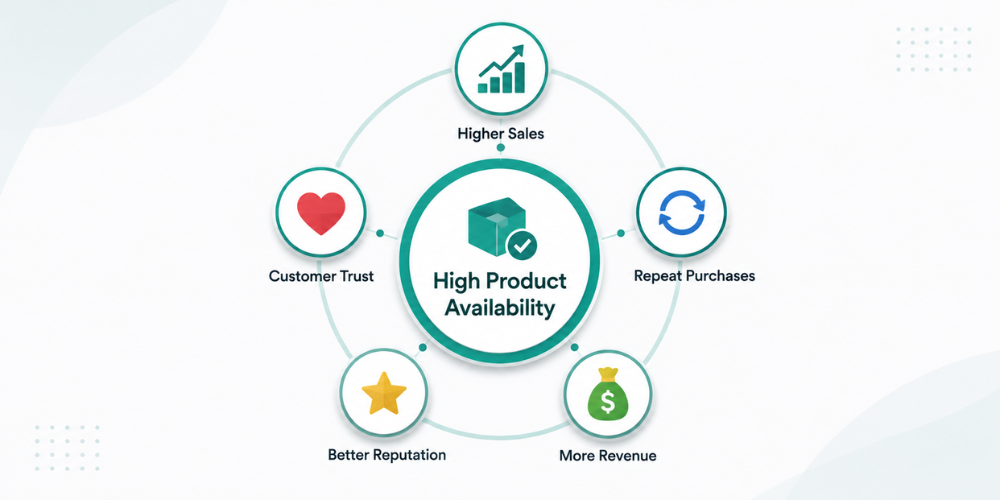
Product availability directly influences how much a retailer sells, how customers perceive the business, and whether shoppers return for future purchases. Even the best pricing, promotions, or marketing campaigns can fail if customers consistently find empty shelves or unavailable products. In today's competitive retail landscape, where consumers have countless alternatives, ensuring products are available when and where they're needed has become a key competitive advantage. Let's dive into why product availability matters for retail success:
-
Increases Sales and Revenue
Every unavailable product represents a missed sales opportunity. When customers cannot find the item they came to buy, they often leave without making a purchase or choose a competitor instead. This results in immediate revenue loss and can also reduce the overall value of a shopping basket, as customers may abandon other planned purchases. For businesses managing hundreds or thousands of SKUs, even a small improvement in product availability can have a significant impact on revenue. Monitoring stock movement through inventory management software and tracking product demand with secondary sales tracking software enable businesses to replenish inventory before stockouts occur, ensuring sales opportunities are not lost.
-
Builds Customer Trust
Shoppers naturally hope that retailers will have the products they need on hand. When a store consistently offers essential items, customers start to feel a sense of trust, believing they can rely on it for their future shopping needs. This trust is particularly crucial for everyday essentials like groceries, drinks, personal care items, and other fast-moving consumer goods. Conversely, when stockouts happen repeatedly, it can lead to frustration and doubt. Customers might begin to question whether they can count on the retailer and may start to look for alternatives. By ensuring that products are consistently available, retailers can build customer confidence and enhance their reputation for reliable service.
-
Improves Customer Loyalty and Repeat Purchases
Ensuring that products are readily available is crucial for keeping customers coming back. A great shopping experience goes beyond just friendly service; it hinges on whether customers can find the items they need. When stores consistently stock the products shoppers are looking for, it encourages them to return, make additional purchases, and share their positive experiences with friends and family. Moreover, loyal customers often spend more over time, making their continued patronage much more beneficial than constantly seeking new customers. By effectively managing inventory and utilizing Sales Force Automation Software, retailers can foster better collaboration among sales teams, distributors, and inventory managers, ensuring that products are always on hand for customers across all locations.
-
Strengthens Brand Reputation
A retailer known for consistently keeping products in stock earns a reputation for reliability. Customers associate dependable product availability with professionalism, efficient operations, and high-quality service. Over time, this strengthens brand perception and differentiates the business from competitors that frequently experience stock shortages. Conversely, frequent out-of-stock situations can damage a retailer's image. Negative shopping experiences often lead to poor reviews, reduced customer confidence, and lost referrals. Maintaining high product availability helps protect a brand's reputation while creating a more satisfying shopping experience for every customer.
-
Supports Better Business Performance
High product availability not only enhances the customer experience but also boosts operational efficiency. When businesses have the right products in stock, they can manage their inventory more thoughtfully, cut down on last-minute restocking costs, reduce the chances of lost sales, and make informed purchasing choices based on current demand. By leveraging accurate sales and inventory data, retailers can swiftly adapt to shifts in market trends, seasonal fluctuations, and local buying habits. This agility enables them to keep just the right amount of stock on hand, avoiding the pitfalls of overstocking, which ultimately leads to improved profitability and smoother operations.
The Real Cost of Stockouts
A stockout may seem like a temporary issue, but its impact often extends far beyond a single missed sale. Every time a customer cannot find the product they want, the retailer risks losing revenue, damaging customer relationships, and weakening its competitive position. According to industry research, global retailers lose billions of dollars each year due to stockouts, making inventory availability one of the most important factors in retail performance. While some customers may return later, many will simply purchase from a competitor or switch to another brand. Over time, repeated stockouts can create long-term financial and reputational challenges that are much more expensive than the cost of carrying the right inventory.
-1786339465.png)
-
Lost Sales and Revenue
The most immediate consequence of a stockout is lost revenue. If a product isn't available when a customer is ready to buy, the sale cannot happen. This is particularly costly for high-demand or fast-moving products, where every missed transaction directly affects daily sales. The impact doesn't stop at one item. Customers who cannot find the product they came for may leave the store without buying anything else, reducing the overall basket value. For businesses with multiple retail outlets, even a small stockout rate across popular products can translate into substantial revenue losses over time.
-
Customer Switching to Competitors
In today's world, shoppers enjoy an abundance of choices. If they can't find a product at one store, they can easily search for it at another location, be it a local shop, a grocery store, or an online platform. Often, they won’t hesitate to look elsewhere rather than wait for the item to be restocked. This trend is particularly prevalent in the fast-moving consumer goods (FMCG) sector, where similar items are offered by various brands. Once customers find a retailer that reliably has the products they need in stock, they are likely to continue shopping there, even after their original go-to store has restocked its shelves.
-
Damage to Brand Reputation
Frequent stockouts can gradually erode customer trust and damage a retailer's reputation. Shoppers expect reliable service, and consistently finding empty shelves creates the impression of poor inventory management and operational inefficiency. Over time, dissatisfied customers may leave negative reviews, share their experiences with others, or stop recommending the business altogether. For retailers operating in competitive markets, reputation can be a significant differentiator, and repeated stock shortages can undermine years of brand-building efforts.
-
Higher Operational Costs
When stockouts occur, retailers often find themselves making hasty decisions that can drive up their operating costs. They might have to rush to place replenishment orders, incur extra charges for expedited shipping, or shuffle inventory between stores to quickly satisfy customer needs. These urgent measures tend to be significantly more costly than regular inventory restocking. Moreover, employees end up dedicating precious time to handle customer complaints, search for inventory across different locations, and manage last-minute stock transfers, diverting their attention from what truly matters: enhancing sales and providing excellent customer service.
How Product Availability Impacts Customer Experience
Product availability significantly influences how customers feel about their shopping experience. Regardless of how inviting a store is, how low the prices are, or how friendly the staff might be, customers often leave feeling let down if the items they desire are out of stock. In the world of retail, convenience plays a crucial role in the shopping journey, and ensuring that products are consistently available fosters positive interactions that make customers want to come back. Today’s shoppers have elevated expectations. They look for retailers to offer precise stock details, swift order processing, and a smooth shopping experience across all platforms. To meet these rising expectations, it’s essential to prioritize high product availability.
-1786339369.png)
-
Improves Customer Satisfaction
Customers enter a store anticipating that the items they seek will be in stock. When they successfully locate their desired products, the shopping experience transforms into a swift, convenient, and enjoyable one. This favorable interaction boosts the chances of repeat purchases and deepens the bond between the customer and the retailer. Conversely, facing empty shelves or out-of-stock items leads to disappointment. Customers might need to go to another store, postpone their purchase, or opt for a substitute they didn't initially prefer. Such recurring situations diminish satisfaction and decrease the likelihood of their return.
-
Builds Long-Term Customer Loyalty
Building customer loyalty is all about creating positive experiences that keep shoppers coming back. A key part of this is ensuring that products are readily available. When customers trust that a retailer will have the essentials they need, it fosters a sense of confidence in the brand, making them more inclined to return time and again. This is particularly crucial for fast-moving consumer goods (FMCG) retailers, where shoppers often buy the same items repeatedly. If a customer frequently finds shelves empty, they might start looking for a more dependable option elsewhere. Consistent product availability is essential for nurturing that ongoing relationship with customers.
-
Supports Omnichannel Shopping Expectations
Today's shoppers no longer differentiate between online and offline shopping; they simply desire a smooth and integrated experience, no matter how they choose to make a purchase. They might explore products on a website, verify stock through a mobile app, and then head to a brick-and-mortar store to finalize their transaction. When inventory information isn't aligned across different platforms, customers may find items marked as available online, only to be disappointed when they discover they're out of stock in the store. Such discrepancies lead to frustration and erode trust in the retailer.
-
Creates a Competitive Advantage
In today's bustling retail landscape, having the right products available can truly sway a customer's shopping decision. Even if two stores offer comparable prices and similar items, shoppers tend to gravitate towards the one that reliably stocks what they need. When retailers ensure that products are consistently available, they not only prevent lost sales but also foster loyalty among their customers. This dependable service builds a strong reputation, making it easier for shoppers to trust them. Over time, this reliability transforms into a significant competitive edge, one that rivals struggling with frequent stockouts find hard to replicate.
How to Improve Product Availability in Retail
Enhancing product availability goes beyond simply stocking up on inventory; it's about making sure that customers can find the right products exactly where and when they need them. Retailers who embrace data-driven inventory management, precise demand forecasting, and streamlined replenishment processes are in a stronger position to satisfy customer needs while steering clear of both empty shelves and excess stock. Here are some practical and effective strategies that retailers can adopt to boost product availability.
-
Real-Time Inventory Tracking
You can't manage what you can't see. Real-time inventory tracking gives retailers complete visibility into stock levels across warehouses, distribution centers, and retail outlets. Instead of relying on manual stock counts or outdated spreadsheets, businesses can monitor inventory as products are sold, transferred, or replenished.
With real-time visibility, managers can quickly identify low-stock items, prevent unexpected stockouts, and make informed replenishment decisions before shelves become empty. It also enables field sales representatives to check product availability before taking orders, reducing order cancellations and improving customer satisfaction.
-
Better Demand Forecasting
Consumer demand for products fluctuates due to various factors such as seasonal changes, promotional events, market trends, holidays, and individual shopping habits. When retailers lack precise forecasting, they risk either running low on popular items or having too much of those that don’t sell well. Effective demand forecasting relies on analyzing past sales data, current market trends, and valuable insights to anticipate future inventory needs. This approach helps retailers ensure they have the right amount of stock, minimize excess inventory, and enhance product availability throughout the year.
-
Build Strong Supplier Relationships
Dependable suppliers are essential for keeping products in stock. No matter how precise inventory planning is, it can fall short if suppliers are unable to deliver on schedule. Retailers should foster open communication with their suppliers, share insights on demand trends, keep an eye on supplier performance, and have backup suppliers ready for popular items. Building strong relationships with suppliers enhances the reliability of restocking, shortens lead times, and reduces the chances of unexpected stock shortages.
-
Maintain Safety Stock and Reorder Points
Unexpected demand fluctuations or supply chain disruptions can quickly lead to stockouts if retailers operate with minimal inventory. Maintaining safety stock provides a buffer that helps businesses continue meeting customer demand during unforeseen circumstances. At the same time, setting appropriate reorder points ensures replenishment begins before inventory reaches critically low levels. Instead of waiting until products run out, businesses can automate purchase decisions based on predefined stock thresholds.
-
Integrate Inventory Across All Sales Channels
In today's retail landscape, businesses engage with customers through various channels, including brick-and-mortar stores, online marketplaces, mobile applications, and direct sales teams. However, juggling separate inventories for each of these channels can create challenges, such as inaccurate stock levels, overselling, and ultimately, disappointing customer experiences. By adopting an integrated inventory system, retailers can gain a unified, real-time perspective of their stock across all sales avenues.
-
Use Data to Continuously Optimize Inventory
Enhancing product availability is an ongoing journey rather than a one-off task. Retailers need to keep a close eye on various factors like how quickly inventory moves, how often items run out, changing customer demands, products that aren’t selling well, and overall sales performance. By diving into this data, businesses can fine-tune their stocking methods, make better predictions about what customers will want, prevent frequent stock shortages, and make smarter investments in their inventory.
Benefits of Maintaining High Product Availability
Maintaining high product availability benefits both retailers and their customers. While its most obvious advantage is preventing lost sales, the long-term impact goes much further. Consistently keeping products in stock improves customer satisfaction, strengthens loyalty, enhances operational efficiency, and gives businesses a competitive edge. Retailers that prioritize product availability are better positioned to respond to customer demand, maximize revenue, and build lasting relationships with shoppers.
-1786339165.png)
-
Increased Sales and Revenue
One of the key advantages of having products readily available is the boost in sales. When customers can easily find what they're looking for, they're much more inclined to go through with their purchases instead of walking away empty-handed or choosing to shop elsewhere. This not only enhances individual sales but also raises the average amount spent per transaction, as shoppers often feel encouraged to add extra items to their carts during their visit.
-
Stronger Customer Loyalty
Shoppers appreciate dependability. When a retailer reliably stocks the items they seek, customers feel a sense of trust in the brand and are more inclined to come back for future buys. This reliability fosters enjoyable shopping experiences that nurture lasting connections instead of just fleeting transactions.
-
Competitive Advantage
In the bustling world of retail, competition is fierce, and having products readily available can make all the difference for shoppers deciding where to spend their money. When two stores offer comparable prices and product choices, customers tend to favor the one that reliably has the items they want in stock.
-
Improved Brand Reputation
A retailer's reputation thrives on the experiences customers have, and having products available is crucial in creating those experiences. Stores that keep their shelves well-stocked are often seen as trustworthy, welcoming, and attentive to customer needs. This favorable view not only enhances the brand's credibility but also fosters a sense of loyalty, encouraging customers to return time and again.
-
Better Inventory Efficiency and Lower Costs
Ensuring high product availability doesn't require holding onto too much inventory. With the right tools for accurate forecasting and real-time inventory management, retailers can strike a balance, keeping just the right amount of stock on hand. This approach not only reduces waste but also helps avoid the extra costs that come with overstocking.
-
Higher Customer Satisfaction
Product availability is essential for creating a positive shopping experience. Shoppers love the convenience of easily finding what they need, without any frustrating delays. Whether they’re browsing in a physical store or shopping online, having consistent access to products makes the entire buying journey smoother, quicker, and more satisfying.
How Delta Sales App Helps Retailers Maintain Product Availability
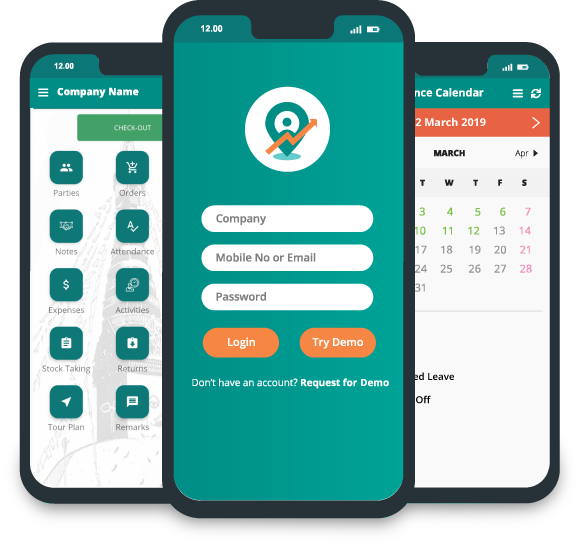
Ensuring that products are readily available goes beyond just keeping an eye on inventory. Retailers must have a clear, real-time view of stock levels, accurately predict customer demand, and foster smooth collaboration between sales and warehouse teams. They also need insightful data to make quick replenishment decisions. The Delta Sales App combines all these essential features into one user-friendly platform, empowering businesses to minimize stockouts, enhance inventory accuracy, and guarantee that products are always on hand when customers want them.
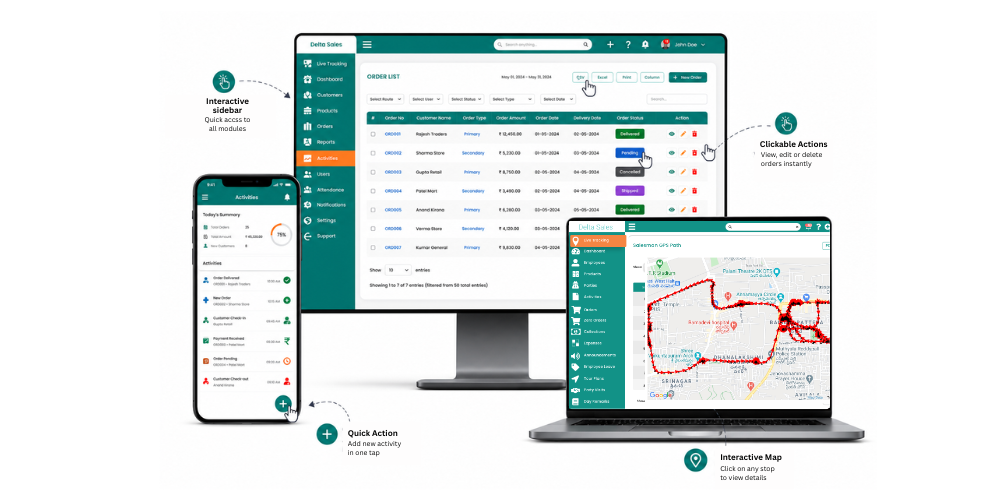
Whether you're overseeing a distribution network, managing several retail locations, or leading a field sales team, the Delta Sales App equips you with the necessary tools to maintain a steady flow of inventory throughout the supply chain.
-
Real-Time Inventory Visibility Across Stores
Delta Sales App's Inventory Management Software offers a comprehensive and user-friendly perspective on inventory across all locations, including warehouses, distributors, and retail outlets. As products are sold, transferred, or restocked, stock levels are updated instantly, enabling managers to keep a close eye on inventory without the hassle of manual counts or spreadsheets. This enhanced visibility empowers businesses to swiftly spot low-stock items, track popular products, and make informed restocking choices, ensuring that products are always available when customers need them most.
-
Automated Stock Alerts to Prevent Stockouts
Automating inventory management can feel like a breath of fresh air for retailers juggling hundreds or thousands of products. The Delta Sales App takes the stress out of this task by sending friendly reminders to teams when stock levels dip below set limits. Rather than waiting until customers are disappointed by out-of-stock items, businesses get timely notifications that help them restock before shelves run dry. This thoughtful approach not only cuts down on last-minute orders but also enhances planning for replenishment and helps prevent revenue loss from stock shortages. By staying ahead of inventory needs, retailers can ensure that products are consistently available, all while streamlining their operations for greater efficiency.
-
Demand Forecasting Made Simple
By leveraging insights from sales reporting software, retailers can better understand which products are gaining popularity and make informed purchasing decisions. This enhanced forecasting allows businesses to keep just the right amount of inventory on hand, ensuring they meet customer needs without overstocking. Consequently, retailers can boost their inventory turnover, lower carrying costs, and ensure that products are readily available for customers throughout the year.

-
Seamless Integration with Sales and Order Data
By incorporating order management software into field sales management tools, sales representatives can easily verify product availability before finalizing customer orders. This proactive approach helps prevent the acceptance of orders for items that are out of stock, reduces the likelihood of delivery delays, and enhances the accuracy of order fulfillment. As a result, customers receive their orders promptly, while businesses enjoy a smoother process with fewer changes and cancellations.
-
Data-Driven Insights for Smarter Restocking Decisions
By utilizing secondary sales tracking software, businesses gain valuable insights into which products are often out of stock, regional demand patterns, inventory turnover rates, and sales performance across different products, outlets, or territories. This information empowers managers to make more informed restocking choices, optimize inventory allocation, and better predict future demand. Ultimately, this leads to improved product availability, minimized inventory waste, and a retail operation that is more agile and responsive to customer needs.
Conclusion
Ensuring product availability is crucial for retail success. When items are out of stock, it’s not just a lost sale; it can erode customer trust, diminish loyalty, and drive shoppers to competitors. Retailers who prioritize real-time inventory insights, accurate demand predictions, efficient restocking methods, and cohesive sales operations are much better equipped to meet customer needs. The Delta Sales App combines these essential features: inventory management, order processing, field sales automation, secondary sales automation, and real-time reporting, making it easier for retailers to minimize stockouts and enhance their operational efficiency.
If you want to boost product availability, simplify your inventory processes, and increase retail sales, schedule a free demo of the Delta Sales App. Experience firsthand how improved inventory visibility can support your business growth.