
Automated Field Expense Tracking: Eliminating Fraud Without the Enterprise Paperwork

Your field sales team may be generating more expenses than you realize, and not because they're Your field sales team may be spending more than you know, not because they are spending more.
The real issue is often how expenses are monitored.
Paper receipts get lost. Days after visits, Excel sheets are filled. Managers spend hours reviewing bills, while finance teams manually verify claims before processing reimbursements. By the time an expense gets approved, it can be hard to tell if it was genuine, duplicated, or even related to an official customer visit. These manual processes are increasingly difficult to manage as field teams spread across territories. What begins as a handful of reimbursement requests can rapidly escalate to hundreds of expense claims each month, leading to delays, more administrative work, and potential errors and expense fraud.
Automated field expense management solves these problems by moving the entire reimbursement process online. Sales reps can input expenses on the fly with a mobile app, managers can review and approve claims in real time, and finance teams can gain full visibility into field spending without relying on stacks of paper or disconnected spreadsheets.
In this blog, we will look into the shortcomings of traditional expense management, how automation can help prevent fraud, and how businesses can simplify expense tracking to improve transparency, compliance, and operational efficiency.
Why Traditional Field Expense Management Fails

Many companies still use manual processes for field expenses. Sales representatives collect paper receipts all day, enter expenses into notebooks or spreadsheets, and submit claims for reimbursement at week’s or month’s end. The claims are then manually checked by managers and sent to the finance team for approval. This approach may work for a small team but becomes inefficient as field operations grow to multiple territories. Hundreds of expense claims, paper receipts, and email approvals mean unnecessary administration and the risk of mistakes.
There is also no real-time visibility for manual expense management. Management cannot immediately determine whether an expense is for a real customer visit or under company policies. Instead of focusing on financial planning, finance teams are wasting valuable time checking receipts, fixing mistakes, and chasing employees for missing information.
Therefore, many businesses face a number of common challenges:
-
Lost or destroyed paper receipts
-
“Late expense submissions and reimbursements”
-
Duplicate or fraudulent claims for expenses
-
Hand-entered data errors
-
Challenges in applying refund policies
-
Poor visibility into spend in the field.
-
Lengthy approval procedures
-
Long audit and verification procedures
These barriers are not only increasing operational costs but also lengthening reimbursement cycles, decreasing employee satisfaction, and preventing companies from keeping accurate financial records. Manual expense tracking just can’t keep up with the speed, transparency, and control that today’s sales operations require, especially with field teams still on the growth track.
The Hidden Cost of Expense Fraud
Expense fraud is often considered an occasional problem, but it can silently eat away at a company’s profits over time. Expense fraud, in general, is committed through small, seemingly innocent claims that are hard to identify in a manual process, unlike big financial frauds that are obvious right away.

For example, an employee may submit the same receipt twice, report a personal expense as a business expense, inflate travel costs, or request reimbursement for a customer visit that never occurred. While these claims might be for small sums individually, they can add up to a significant financial hit when spread across dozens or even hundreds of field reps.
The problem is, these discrepancies are easy to miss in manual verification. Managers review expense reports, among other things. Finance teams spend hours verifying receipts, cross-referencing spreadsheets, and verifying approvals. Without real-time verification or a central system, identifying fraudulent claims is time-consuming and inconsistent.
Besides the immediate financial loss, expense fraud presents a number of other problems for businesses:
-
Higher reimbursement cost
-
Time spent in manual verification
-
Delays in approving legitimate expense claims
-
Delays in processing legitimate expense claims by teams
-
Budgeting and expense reporting errors
-
Risks to compliance and audit
-
Lack of transparency around overall field spend
These problems can eventually impact how well the business runs and make it difficult to keep business costs under control. Automated field expense tracking mitigates these risks by offering real-time verification, standard approval flows, and complete visibility into every expense submitted by field employees.
What Is Automated Field Expense Tracking?
Automated field expense tracking is a digital solution that allows businesses to record, verify, approve, and manage employee expenses without paper receipts or manual spreadsheets. Instead of filling out reimbursement forms at the end of the week or month, field representatives can log expenses on the spot via a mobile app while on the go.
Each claim can be logged as soon as it happens, from fuel, parking, tolls, meals, and accommodation to customer meeting expenses. Employees just take a picture of the receipt, choose an expense category, key in an amount if necessary, and submit for approval in a few taps.
The system will automatically record the important details, such as:
-
Date/time of the expense
-
GPS position
-
Employee details
-
Expense category
-
(Expense type)
-
Receipt or Invoice Support
-
Amount claimed
Managers can quickly approve or deny requests because they can review claims digitally in real time, check the supporting documents and have faster access to information than traditional methods.
Automated expense tracking with employee location tracking, customer visit tracking, and attendance & leave management as part of an expense management system gives complete visibility of whether an expense was incurred on an actual field visit. This enables a transparent, accountable reimbursement process while also dramatically reducing paperwork, manual verification and risk of fraudulent claims.
How Automated Expense Tracking Prevents Fraud
It’s hard for companies that rely upon paper receipts, spreadsheets and manual approvals to stop expense fraud. Managers don’t always have the data they need to validate an expense and finance teams waste valuable time checking claims instead of analyzing business performance.
Automated field expense tracking avoids these problems because there is a transparent and verifiable process from the moment an expense is submitted. All claims are digitally logged, so discrepancies can be easily identified, company policies complied with and erroneous reimbursements stopped prior to approval.
Real-Time Receipt Capture
One of the easiest ways to reduce expense fraud is to record expenses when they happen, not days later. Automated expense tracking allows field reps to snap a receipt at the time of the expense with their mobile device. Real-time submission minimizes the chances of:
-
Lost or broken receipts
-
Ignored expenses
-
Recreated or fake bills
-
Filing of claims late
A digital format for receipts helps businesses maintain a solid record for approvals and future audits.
GPS-Based Expense Verification
-1784435042.png)
In a manual system, travel expenses are among the most difficult to verify. There is no way for managers to verify that an employee actually went to the location they claimed to go to. By combining GPS-based employee location tracking with expense tracking, businesses can confirm the location and time of an expense incurred. GPS data supports the veracity of travel claims against actual field movements and authorized customer visits. This increases accountability and minimizes false mileage claims and unauthorized travel reimbursements.
-
Customer Visit Validation
Filing an expense is just half the story. Businesses also need to know if the expense was tied to a real customer interaction. When paired with customer visit tracking, each expense can be linked to a particular retailer or customer visit. That gives managers more context when they’re reviewing claims and makes it much harder to submit expenses for visits that never happened.
-
Automated Approval Workflows
Manual approval processes often involve emails, printed forms, or spreadsheets that can delay reimbursements and increase the risk of oversight. Automated workflows automatically route expense claims to the right manager to approve. Managers can see receipts, check supporting information, and approve or deny requests directly in the system. This speeds up reimbursements and ensures a consistent process for approving each expense.
-
Policy-Based Expense Validation
Each organization has some sort of reimbursement policy, whether it is a daily meal allowance, a fuel allowance, or a hotel budget. Manual enforcement of these policies can be time consuming and inconsistent. Systems can be automated to verify submitted expenses against a set of company rules. If a claim is over the limit allowed or not according to policy guidelines, it can be automatically flagged before approval. This avoids unnecessary reimbursement and ensures consistent policy adherence throughout the organization.
-
Digital Audit Trail
All expenses claimed through an automated system are safely logged along with supporting information. This includes receipt images, time stamps, approval history, employee information, and any changes made during the approval process. Having a complete digital audit trail makes it easier to investigate disputes, prepare for audits, and spot unusual spending patterns without having to search through paper files.
Expense Analytics and Fraud Detection
Automation doesn’t just log expenses; it helps businesses find trends in spending. Managers can check reports to see:
-
Employees who have unusually high expenses claims
-
Frequently claimed expense categories
-
Duplicate reimbursement requests
-
High-spending territories
-
Unexpected increases in travel costs
These insights help businesses detect potential fraud early while improving overall expense management and financial planning.

Benefits of Automated Expense Tracking for Field Sales Teams
Automating field expense tracking is more than simply reducing the paperwork. It simplifies reimbursement, improves financial visibility, and gives businesses greater control of field operations. It also makes expense reporting faster and more convenient for field reps, managers, and finance teams alike. So, here are the main benefits of automated expense tracking for field sales teams.
-
Faster Expense Submission and Reimbursements
If you ask your employees to submit receipts, fill out forms, and wait for approvals from multiple levels, reimbursement can take days or even weeks to get through. Automated expense tracking means you can submit expenses instantly from a mobile device, so managers can review and approve claims much faster. This reduces the time it takes to get reimbursed and makes sure employees get paid on time and not delayed for no good reason.
-
Reduced Administrative Work
Managers and finance teams are spending a lot of time on paper receipt processing and manual entry of expense data. Automation digitizes receipt collection, expense categorization, approvals, and recordkeeping, reducing the tedium of administrative work. That means that teams can spend less time on paperwork and more time on higher value business activities.
-
Better Accuracy and Fewer Errors
Manual entry of data can result in incorrect amounts, duplicate claims and missing information. With automation systems, it is easy to standardize the expense submission process so that all the required details are captured before a claim is submitted. It increases data accuracy, reduces corrections during the approval process.
-
Greater Visibility into Field Expenses
Without a centralized system, it’s hard to know the extent of spending across the different territories, employees or expense categories. Automated expense tracking gives managers real-time visibility into field spending, allowing them to monitor expenses as they happen rather than waiting for month-end reports. This results in faster decisions and improved financial control.
-
Better Reporting and Decision Making
Good expense data provides valuable insights that help in making better business decisions. By integrating expense records with automated reports & analytics, businesses can increase operational efficiency and monitor costs. It can help the business to keep track of reimbursement trends, compare expenses territory wise, identify high-cost activities, and make data-driven decisions.
-
Improved Policy Compliance
Manually reviewing expense reports can be tough to ensure employees are following company reimbursement policies. Automation can help enforce these policies by checking that expense limits, required documentation, and approval workflows are followed before a claim is processed. This encourages consistent compliance and helps to reduce unauthorized reimbursements.
-
Better Fraud Prevention
It’s much more difficult to submit fraudulent or duplicate claims with digital expense tracking. Receipts are captured and time-stamped, GPS is verified, and approvals are recorded. All of these multiple layers of verification increase accountability and reduce the risk of expense fraud.
-
Smarter Budget Management
By providing expense data in real-time, businesses can see where their money is going and identify ways to cut unnecessary costs. Managers can view spending by territory, team or expense category to better budget, improve travel plans and better control operational expenses.
-
Improved Employee Experience
Field reps should be spending their time visiting customers, not filling out reimbursement forms. A mobile-based expense management process allows employees to take pictures of receipts and submit claims in minutes. They can also follow the status of their reimbursements without having to chase managers or the finance team repeatedly, which is a better, more transparent experience.
How Delta Sales App Simplifies Field Expense Management
Integrating your expense tracking system with the rest of your field sales operations simplifies the management of field expenses. Businesses can manage reimbursements, attendance, customer visits and reporting all in one platform, rather than using separate tools for each.
Delta Sales App allows organizations to digitize the entire expense management process while providing managers with complete visibility into field activities. Field reps submit expenses from the mobile app, managers review and approve claims instantly, and finance teams receive accurate records to process reimbursements more quickly.
When used in conjunction with other modules, the platform offers a complete view of all field employee activities, speeding up and improving the reliability of expense verification.
-
Digital Expense Submission
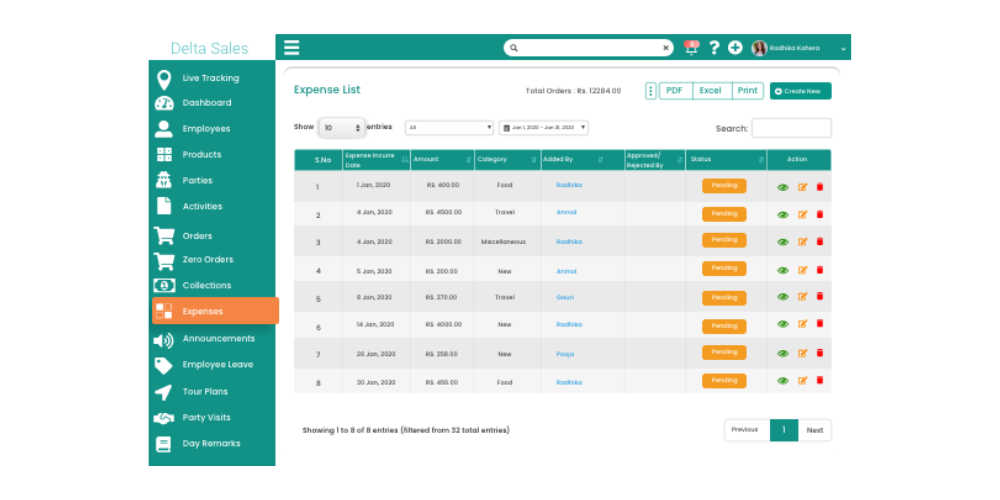
Field representatives can record business expenses as they occur instead of waiting until the end of the week. They can upload receipts, enter expense details, and submit claims directly through the Expense Management module, reducing paperwork and speeding up reimbursements.
-
Verify Travel with GPS Tracking
Travel-related costs become more transparent when associated with employee location tracking. Managers can also verify travel claims against the employee’s actual travels and field movements, thus decreasing any false or inaccurate reimbursement requests.
-
Connect Expenses to Customer Visits
Customer visit tracking integration enables you to validate expenses against actual customer visits. It is further evidence that the costs of travel or meeting were incurred on actual business visits.
-
Improve Accountability with Attendance Records
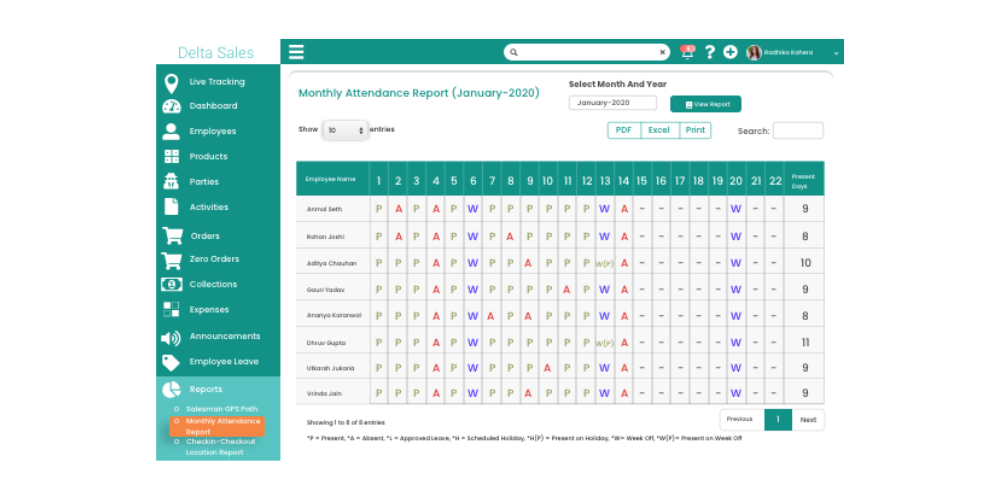
Expenses integrated with attendance & leave management enable managers to verify whether the expenses are submitted on approved working days. This enhances compliance and increases the accuracy of reimbursement determinations.
-
Monitor Spending Through Reports and Analytics
Add reports & analytics, and expense data becomes even more valuable. Managers can see trends in reimbursements, compare expenses between territories, spot high-spend areas and make decisions to optimize field operations and control costs.
-
Manage Everything from One Platform
Combine expense management and field sales operations into one central system with Delta Sales App so you don’t need to jump between spreadsheets, emails, and other software solutions. From expense submissions and approvals to GPS verification, attendance, customer visits, and reporting, every process works together to increase efficiency, reduce fraud and simplify expense management.
This end-to-end approach saves businesses time when modernizing their field operations, while creating a more transparent, accountable, and scalable expense management process.
Conclusion
No more hunting for paper receipts, meticulously checking claims, or spending days processing expense reimbursements. Traditional methods don’t scale with field teams, become inefficient, increase the risk of fraud and put undue pressure on managers and finance teams.
Automated field expense tracking makes the entire process easier by digitizing expense submission, streamlining approvals and providing real-time visibility into employee spending. With GPS verification, customer visit tracking, attendance and reporting, businesses have the ability to take control of their expenses with greater transparency, compliance and operational efficiency.
If you're looking to eliminate paperwork, reduce fraudulent claims, and simplify expense management for your field sales team, Delta Sales App provides everything you need in one platform.
Book a free demo today and see how the Delta Sales App can help you automate field expense tracking, speed up reimbursements, and give your business complete visibility over field operations.