
How Can Businesses Stay Competitive in FMCG Distribution?
-1786076831.png)
In the fast-moving FMCG distribution business today, competition is not only about quality products or attractive prices. The challenge for businesses is to get the right product to the right retailer at the right time while controlling costs and reacting quickly to market shifts. If you’re a manufacturer, distributor, or wholesaler, small inefficiencies in your distribution process can result in lost sales, stockouts, delayed deliveries, and unhappy retail partners.
The FMCG sector is in the midst of a profound transformation. Changes in consumer buying habits, the growth of modern trade and e-commerce, and retailers looking for faster restocking and reliable product availability. Meanwhile, logistics costs are increasing, competition is getting tougher, and demand is unpredictable, and that's putting more pressure on distribution networks. In this competitive arena, companies that cling to manual processes or legacy systems often find it difficult to sustain both efficiency and profitability.
But a strong product range alone is not sufficient to thrive. They need supply chains that are finely tuned, route-to-market strategies that are effective, real-time insight into field operations, and decisions that are data-driven. Leveraging technologies such as sales force automation software, distributor management software, and real-time sales analytics can help businesses streamline operations, improve retailer relationships, and make faster, more informed decisions.
In this blog, we’ll explore the common roadblocks companies face in FMCG distribution, provide actionable strategies to navigate these challenges, discuss emerging industry patterns, and look at how the right technology can enable companies to build a more competitive and resilient distribution network.
Common Challenges Businesses Face in FMCG Distribution
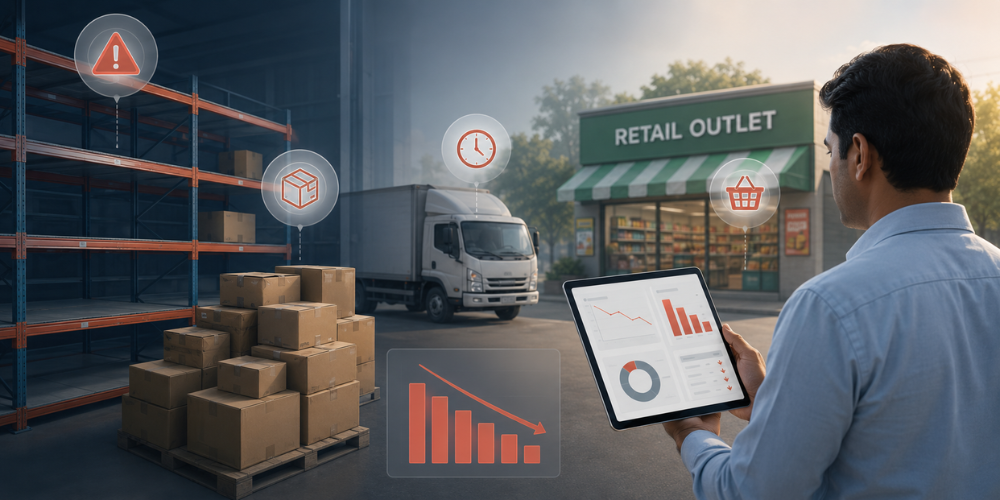
The FMCG distribution landscape is becoming increasingly complex. Businesses are expected to deliver products faster, maintain consistent stock availability, control operating costs, and meet the growing expectations of retailers and consumers. However, achieving all of this is easier said than done. Several operational and market challenges can reduce efficiency, impact profitability, and make it difficult to compete. Understanding these challenges is the first step toward building a stronger and more resilient distribution network.
-
Increasing Market Competition
The FMCG sector is a bustling marketplace where established brands, local manufacturers, and private-label products vie for the attention of consumers. With new entrants constantly emerging, businesses face the challenge of standing out by providing dependable distribution, ensuring products are always available, and delivering exceptional customer service. Retailers often juggle multiple suppliers with similar offerings, which makes it crucial for businesses to prioritize timely deliveries, maintain competitive pricing, and foster strong relationships with distributors. Those who fall short of meeting retailer expectations may find themselves losing precious shelf space to their competitors.
-
Rising Logistics and Transportation Costs
Transportation plays a crucial role in the FMCG distribution landscape, often representing one of the most significant costs for businesses. As fuel prices rise, along with vehicle maintenance expenses and labor shortages, companies find their profit margins squeezed tighter. When businesses lack effective route optimization and delivery planning, they may face unnecessary travel, delayed shipments, and inflated operational costs. These challenges not only lead to increased expenses but also impact customer satisfaction, especially when deliveries do not arrive as promised.
-
Demand Volatility and Changing Consumer Preferences
Consumer preferences in the FMCG sector fluctuate swiftly, influenced by seasonal patterns, marketing initiatives, economic shifts, and evolving purchasing behaviors. Items that are popular one month might see a decline in demand the following month, complicating inventory management. In the absence of precise demand predictions and up-to-the-minute sales insights, companies risk either accumulating excess stock of slow-moving goods or depleting their inventory of high-demand products. These scenarios can result in lost sales, increased holding costs, and diminished customer satisfaction.
-
Growing Retailer Expectations
Retailers today are looking for more than just the usual product deliveries. They desire quicker order fulfillment, reliable stock availability, precise billing, flexible payment options, and attentive support from their distributors. Companies that face challenges like delayed deliveries, stock shortages, or inconsistent service may struggle to earn and keep the trust of retailers, jeopardizing long-term partnerships. Building and nurturing strong relationships with retailers has become an essential competitive edge in the fast-moving consumer goods (FMCG) distribution landscape.
-
Limited Visibility Across Field Operations
Many companies continue to depend on spreadsheets, manual reporting, and outdated updates to oversee their field sales activities. This reliance creates challenges in tracking the performance of sales representatives, confirming outlet visits, monitoring secondary sales, and spotting potential issues before they impact revenue. Without real-time visibility, decision-making becomes sluggish. Managers often find themselves unaware of underperforming territories, product shortages, or distributors needing urgent support until it’s too late to implement corrective measures.
-
Inventory Management Challenges
Striking the perfect balance in inventory levels across warehouses, distributors, and retail outlets can feel like a juggling act. When there's too much inventory, it can drain working capital and rack up storage costs. On the flip side, not having enough stock can result in frustrating stockouts and lost sales opportunities. Without precise inventory tracking and prompt restocking, businesses may find it challenging to keep products available, particularly during busy seasons or special promotions.
-
Managing a Complex Distribution Network
As businesses expand into new regions, managing multiple distributors, sales teams, warehouses, and delivery routes becomes increasingly difficult. Coordinating operations across different territories while ensuring consistent service and performance requires careful planning and real-time oversight.
Without standardized processes and digital tools, communication gaps, delayed reporting, and operational inefficiencies can quickly impact the entire distribution network.
Key Strategies to Stay Competitive in FMCG Distribution
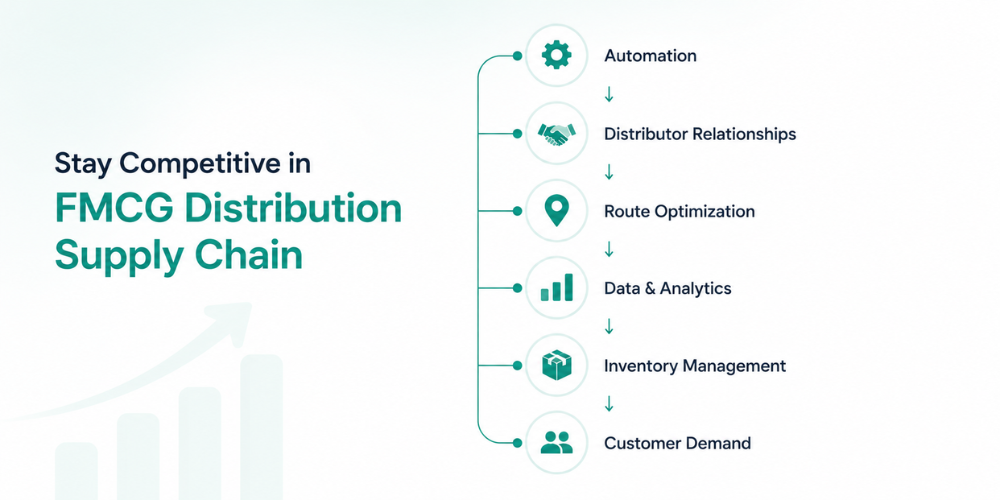
Thriving in the current FMCG landscape goes beyond simply adding new products or boosting your sales force. Businesses need to cultivate a distribution network that is not only efficient and agile but also responsive to the ever-changing market dynamics. By enhancing supply chain processes and leveraging real-time sales insights, every aspect of distribution contributes to staying ahead of the competition. Here are some practical strategies that can empower manufacturers, distributors, and wholesalers to enhance operational efficiency, foster stronger relationships with retailers, minimize distribution costs, and promote sustainable growth.
1. Optimize the Supply Chain for Greater Efficiency
A well-functioning supply chain is the backbone of a thriving FMCG distribution business. When products transition seamlessly from manufacturers to distributors and retailers, companies can minimize delays, enhance product availability, and cut down on operational expenses. Optimizing the supply chain begins with pinpointing inefficiencies in areas like procurement, warehousing, transportation, and order fulfillment. Even minor adjustments, such as speeding up order processing or reorganizing warehouse layouts, can significantly boost overall distribution effectiveness.
It's also crucial for businesses to enhance collaboration among warehouses, distributors, and field sales teams. Improved communication ensures that inventory is restocked promptly, deliveries are organized efficiently, and retailers receive their products without unnecessary holdups. By utilizing digital tools to track inventory flow, order statuses, and delivery performance, businesses can spot potential bottlenecks early and take proactive measures before they impact customers. A streamlined supply chain not only boosts operational efficiency but also elevates customer satisfaction by guaranteeing that products are accessible when and where they are needed.
2. Leverage Technology and Automation in Distribution
In today's fast-paced FMCG distribution landscape, technology plays a crucial role in setting businesses apart. Companies that still depend on manual paperwork, spreadsheets, and slow reporting often find it challenging to meet the rising expectations of customers and the demands of the market. By adopting sales force automation software and distribution management tools, businesses can streamline everyday tasks like collecting orders, tracking attendance, visiting retailers, reporting expenses, and managing sales data. This shift not only minimizes human errors and saves valuable time but also allows sales representatives to focus more on nurturing customer relationships rather than getting bogged down by administrative duties.
Moreover, automation grants managers immediate insight into field operations. Rather than waiting for end-of-day or weekly updates, they can keep an eye on sales activities, monitor order statuses, and assess team performance in real-time. This capability leads to quicker decision-making and more agile responses to any operational challenges. As companies expand, technology simplifies the management of larger sales teams, multiple distributors, and broader territories without a significant increase in administrative burdens.
3. Build Stronger Relationships with Distributors and Retailers
Building strong relationships with distributors and retailers is crucial for achieving lasting success in FMCG distribution. Even the most outstanding products can falter if distribution partners lack trust in the supplier's dependability or service. Businesses need to engage in regular conversations with distributors, offer timely assistance, and maintain clear processes for orders, deliveries, and payments. Cultivating trust encourages distributors to prioritize your products and work together more effectively.

Retailers appreciate reliable service as well. Sales representatives should make it a point to visit stores frequently, understand the needs of retailers, address concerns swiftly, and ensure that products are consistently available on shelves. These personal interactions not only strengthen partnerships but also create opportunities to introduce new products, promotions, and merchandising strategies. Companies that focus on nurturing long-term relationships with their channels often enjoy greater retailer loyalty, improved product placement, and enhanced market presence.
4. Improve Route-to-Market and Last-Mile Delivery
A well-crafted route-to-market (RTM) strategy is essential for ensuring that products connect with the right customers through the most effective distribution channels. When route planning is poor, territories are inefficient, or deliveries are delayed, it can lead to higher operational costs and unhappy retailers. To enhance delivery efficiency and reduce unnecessary travel, businesses should routinely assess their delivery routes, sales territories, and distribution channels. By optimizing routes, sales representatives and delivery teams can reach more outlets while minimizing fuel consumption and travel time.
Equally crucial is last-mile delivery. Retailers rely on timely restocking to prevent stockouts and satisfy customer demand. Any delays in this final delivery stage can harm product availability and strain relationships with retailers. By fine-tuning both route-to-market strategies and last-mile delivery, businesses can elevate service quality while keeping logistics costs in check.
5. Use Data and Analytics for Smarter Decision-Making
Successful FMCG businesses thrive on understanding their customers and the market rather than making assumptions. By leveraging real-time sales data and performance analytics, managers gain valuable insights that empower them to make quicker and more informed decisions. Analyzing key metrics like sales performance, distributor productivity, retailer orders, product demand, and territory performance allows businesses to spot opportunities and tackle potential challenges before they grow.
For instance, sales reports and analytics can highlight which products are seeing a drop in sales, which territories might need extra attention, or which retailers are consistently ordering more. These insights help businesses refine their sales strategies, enhance forecasting, and allocate resources more wisely. By utilizing real-time dashboards instead of just historical reports, companies can adapt to market changes with greater agility and confidence, fostering a more responsive and customer-centric approach.
6. Manage Inventory and Reduce Distribution Costs
Inventory management has a direct impact on profitability and customer satisfaction. Maintaining excessive stock increases storage costs and ties up working capital, while insufficient inventory can lead to stockouts and lost sales. To thrive in today's market, businesses need to keep a close eye on their inventory levels across warehouses, distributors, and retail outlets. Having real-time visibility into inventory helps identify products that aren't selling well, anticipate when to restock, and avoid running out of popular items.
Cutting down on distribution costs also means being vigilant about transportation expenses, how warehouses operate, delivery timelines, and how orders are fulfilled. Even small tweaks in these areas can lead to a noticeable boost in profitability. By blending smart inventory management with effective cost-control measures, businesses can enhance their efficiency while still providing top-notch service to their customers.
7. Adapt to Changing Consumer Demands and Buying Behavior
Consumer preferences are always changing, shaped by the rise of digital shopping, shifts in lifestyles, pricing strategies, and new market trends. Companies that don’t keep up risk losing their edge to more nimble competitors. To remain relevant, businesses need to stay attuned to what customers want, how buying habits vary by region, seasonal fluctuations, and feedback from retailers. These insights empower companies to fine-tune their inventory, create meaningful promotions, and roll out products that resonate with evolving consumer desires.
Adaptability is crucial as well. Businesses should be ready to adjust their distribution methods, explore new sales avenues, and react swiftly to unforeseen market changes. Organizations that welcome innovation and respond quickly are more likely to foster strong customer loyalty and achieve sustainable growth over time.
How Delta Sales App Helps Businesses Stay Competitive
Finding the right strategies is just one piece of the puzzle. To truly thrive in the fast-paced world of FMCG distribution, businesses must also embrace technology that allows them to put those strategies into action seamlessly. Relying on manual processes, outdated systems, and slow reporting can create hurdles in managing expanding distribution networks and hinder quick responses to shifts in the market.
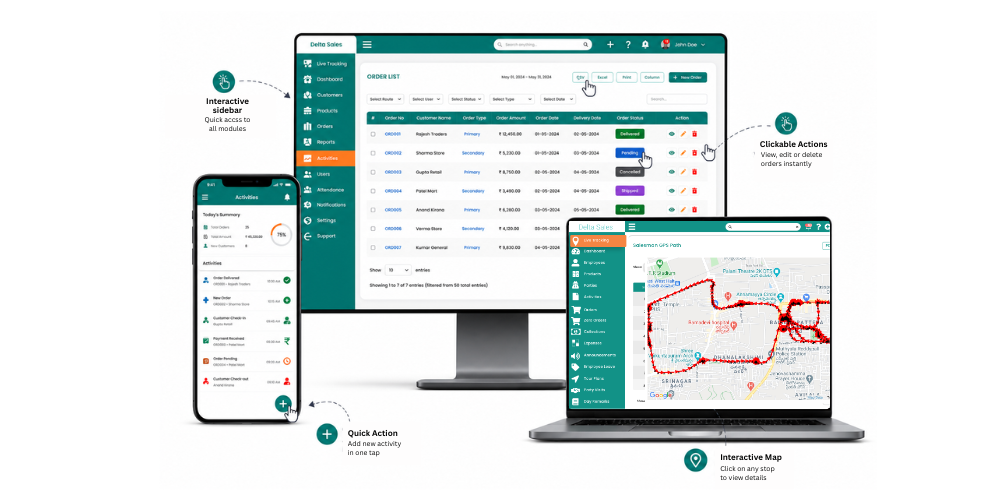
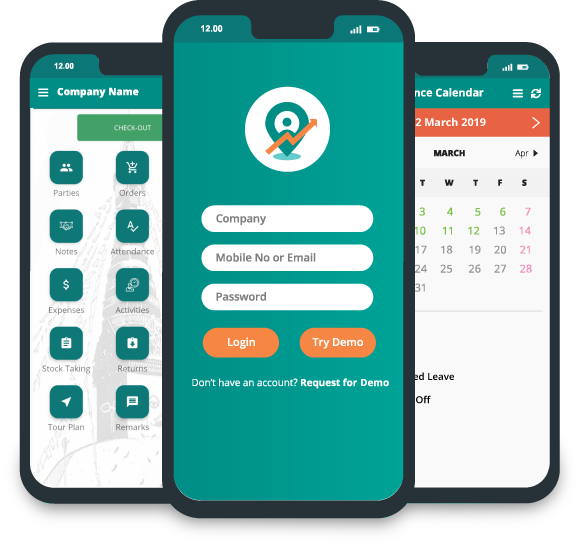
Delta Sales App is an all-in-one solution for sales force automation (SFA) and distribution management, crafted to support FMCG manufacturers, distributors, wholesalers, and field sales teams in enhancing their operational efficiency. By transforming daily sales tasks into digital processes and offering real-time insights into distribution activities, this platform empowers businesses to make quicker decisions, cut down on expenses, and provide exceptional service to retailers.
-
Streamline Order Management
Manually collecting orders can be a cumbersome process that not only slows down the sales cycle but also heightens the chances of mistakes. With the Delta Sales App’s order management software, field sales representatives can easily capture orders digitally during their visits to retailers. This means that as soon as an order is taken, it’s shared instantly with distributors or back-office teams, allowing for quicker processing. By reducing the reliance on paperwork, the app minimizes the likelihood of errors, accelerates fulfillment, and ensures that retailers receive their products right when they need them.
-
Optimize Routes and Improve Field Productivity
Creating efficient sales routes by hand can be a tedious task that often results in wasted travel time, missed opportunities to connect with outlets, and increased fuel expenses. The Delta Sales App transforms this process through route optimization and beat planning, allowing businesses to craft smarter sales routes that enhance territory coverage. This means sales representatives can visit more retailers in less time, making their days more productive. Managers gain the ability to oversee field activities in real time, ensuring that planned visits are fulfilled and that sales teams stay engaged throughout the day. By optimizing routes, businesses not only reduce transportation costs but also enhance the service provided to retailers, leading to more reliable and timely visits.
-
Gain Real-Time Visibility into Field Operations
In the fast-paced world of FMCG distribution, one of the most significant hurdles is the limited visibility into field operations. The Delta Sales App bridges this gap by offering managers a real-time glimpse into sales activities, outlet visits, order statuses, and team performance through an intuitive dashboard. With features like GPS-based tracking, digital attendance, and visit verification, managers can effortlessly keep an eye on operations without waiting for outdated reports or manual updates. This not only speeds up decision-making but also empowers businesses to tackle challenges proactively, ensuring that sales performance and customer satisfaction remain high.
-
Simplify Van Sales Operations
For businesses that depend on direct store delivery, van sales automation is essential. The Delta Sales App makes this process easier for sales teams by enabling them to handle inventory, log sales, create invoices, and accept payments right from their mobile devices.
With real-time inventory updates, businesses can avoid stock discrepancies, while digital records enhance accuracy and lessen administrative burdens. This leads to quicker service for retailers and improved oversight of mobile distribution operations.
-
Make Better Decisions with Reports and Analytics
To remain competitive, businesses must go beyond merely gathering data; they need to transform that data into meaningful insights. The Delta Sales App offers intuitive real-time dashboards and comprehensive reports that empower managers to keep a close eye on vital performance indicators throughout their distribution network. Companies can easily monitor sales performance, retailer productivity, distributor effectiveness, inventory flow, and field team activities, all from one user-friendly platform. These insights simplify the process of spotting sales opportunities, refining territories, enhancing forecasting accuracy, and evaluating the success of distribution strategies. Rather than waiting for end-of-day or weekly summaries, decision-makers can access current information that enables quicker and more informed business choices.
Conclusion
Competing in FMCG distribution is not about expanding your sales force or increasing your product portfolio. Companies need to create an agile distribution network that can respond quickly to changes in the market, control operating expenses, and deliver reliable value to distributors, retailers, and end consumers. In an era of heightened competition and consumer demands, businesses can improve distribution performance and achieve a sustainable competitive advantage by focusing on supply chain efficiency, leveraging automation, strengthening relationships with distributors and retailers, optimizing route-to-market strategies, using real-time data to make decisions, and adapting to changing consumer demands.
Ready to stay ahead in the competitive FMCG market? Book a free demo of Delta Sales App today and discover how our Sales Force Automation solution can help you streamline distribution, empower your field sales team, and accelerate business growth.