
Strategies to Convert Lost Opportunities into Sales Gains

In sales, losing a deal often feels like the end of the road. The proposal was sent, meetings were held, follow-ups were done and yet, the prospect chose a competitor, delayed the decision, or simply went silent. These “lost opportunities” can be discouraging, especially when teams are under pressure to meet targets.
But here’s the truth many high-performing sales teams understand: a lost opportunity isn’t always a failure. In many cases, it’s a pause, a misalignment, or a matter of timing. When approached strategically, these missed chances can become some of your strongest future wins.
This blog explores practical, proven strategies to convert lost opportunities into measurable sales gains without starting from scratch.
Understanding Lost Opportunities in Sales
A lost opportunity refers to a deal that progressed through your sales pipeline but didn’t convert. This might happen at any stage after the demo, during pricing discussions, or even right before closing.
What makes lost opportunities valuable is context. Unlike cold leads, these prospects already know your brand, understand your offering, and have engaged with your sales team. That familiarity dramatically reduces the effort required to restart the conversation if done correctly.
Think of lost opportunities as doors that didn’t close fully. With the right approach, many of them can be reopened.
Why Sales Opportunities Are Commonly Lost
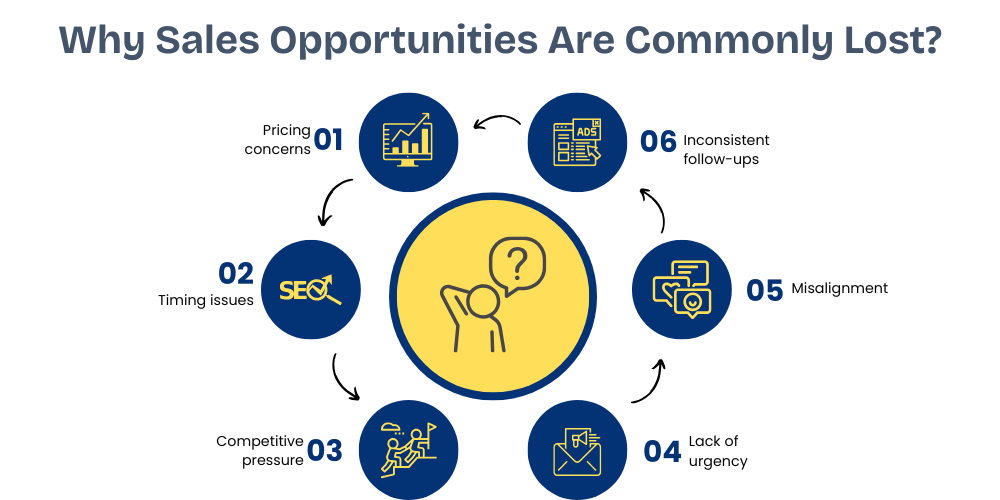
Before you can recover lost deals, you need to understand why they slipped away in the first place. Some of the most common reasons include:
-
Pricing concerns where value wasn’t clearly communicated
-
Timing issues, such as budget cycles or internal approvals
-
Competitive pressure from similar or cheaper solutions
-
Lack of urgency on the buyer’s side
-
Misalignment between the solution and actual business needs
-
Inconsistent follow-ups or delayed responses
Sales teams that fail to document and analyze these reasons often repeat the same mistakes. On the other hand, teams that actively track lost reasons using a sales tracker app are far better positioned to improve future outcomes.
Why Lost Deals Deserve a Second Look
Many sales reps move on quickly after losing a deal, focusing all energy on new leads. While this feels productive, it can be inefficient. Research consistently shows that re-engaging a warm prospect costs less and converts faster than acquiring a brand-new one.
Lost opportunities often resurface when:
-
Budgets are approved later: Many prospects delay purchases due to budget constraints. Once new budgets are approved in the next quarter or financial year, previously lost deals can quickly reopen.
-
Current vendors underperform: When existing vendors fail to deliver expected results, prospects actively seek better alternatives, creating an opportunity to reintroduce your solution at the right moment.
-
Business priorities change: Shifting market conditions, growth plans, or internal challenges can make a previously low-priority solution suddenly essential, reviving interest in earlier sales conversations.
-
Decision-makers change roles: New decision-makers often reassess existing tools and partnerships, providing a fresh opportunity to present your solution without earlier objections or biases.
Sales teams that maintain structured follow-up using End-to-End Customer Journeys with Sales Tracking Software stay top-of-mind and are ready when the timing shifts.
Learning from Lost Opportunities
Every lost deal contains insights that can improve your sales process.
-
Analyze Loss Patterns: Instead of treating losses individually, look for patterns across deals. Are you losing most opportunities at the pricing stage? After demos? During negotiations? Using field sales performance dashboards helps identify recurring friction points and training gaps.
-
Collect Honest Feedback: When done respectfully, post-loss conversations can deliver powerful insights. Many prospects are willing to share why they chose a different path especially if they don’t feel pressured to buy. These conversations also keep relationships alive and open the door for future discussions.
-
Improve Messaging and Positioning: If multiple prospects walk away citing “unclear value,” the issue may not be your product but how it’s being positioned. Teams that continuously refine their pitch using field sales management app see steady improvements in win rates.
Strategies to Reduce Future Lost Opportunities
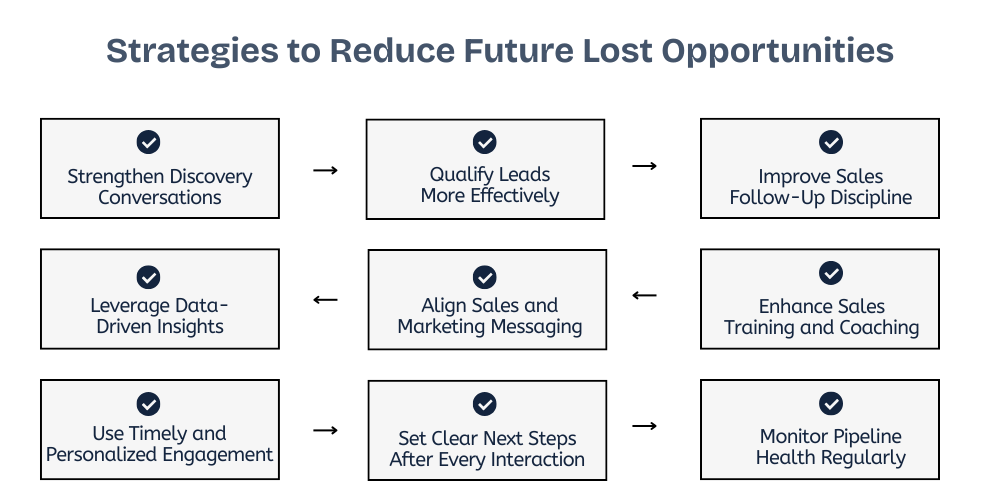
Before focusing on recovery, it’s essential to minimize preventable losses.
-
Strengthen Discovery Conversations: The more deeply reps understand prospect challenges early on, the better they can tailor solutions. Strong discovery reduces misalignment and builds trust.
-
Qualify Leads More Effectively: Not every lead is worth pursuing. Clear qualification criteria ensure reps focus on opportunities with genuine intent and readiness. Organizations using smart lead management frameworks often report shorter sales cycles and fewer dead-end deals.
-
Improve Sales Follow-Up Discipline: Delayed or inconsistent follow-ups can quietly kill promising opportunities. A structured cadence supported by automated sales follow-up systems ensures no prospect slips through the cracks.
-
Leverage Data-Driven Insights: Analyze past lost deals to identify common patterns such as pricing objections, timing issues, or competitor influence. Data-backed insights help teams adjust strategies proactively.
-
Align Sales and Marketing Messaging: Misalignment between marketing promises and sales delivery can create confusion and mistrust. Consistent messaging ensures prospects receive a clear, unified value proposition throughout the funnel.
-
Enhance Sales Training and Coaching: Regular training equips reps to handle objections, negotiate confidently, and communicate value effectively. Well-trained teams are better prepared to convert challenging opportunities.
-
Use Timely and Personalized Engagement: Generic outreach often fails to resonate. Personalized communication based on prospect behavior, industry, and pain points increases relevance and keeps opportunities moving forward.
-
Set Clear Next Steps After Every Interaction: Unclear outcomes lead to stalled deals. Defining specific next actions and timelines after each conversation maintains momentum and reduces deal drop-off.
-
Monitor Pipeline Health Regularly: Routine pipeline reviews help identify stalled or at-risk deals early. Proactive intervention allows sales leaders to course-correct before opportunities are lost.
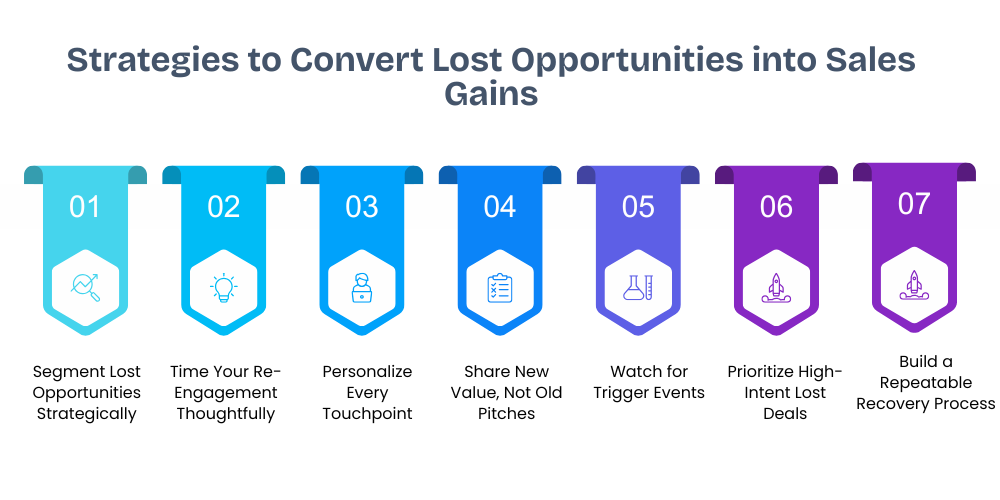
Strategies to Convert Lost Opportunities into Sales Gains
Now let’s focus on turning missed chances into revenue.
-
Segment Lost Opportunities Strategically
Not all lost deals are equal. Segment them by:
-
Reason for loss: Grouping lost opportunities by why they were lost pricing, timing, competition, or fit helps sales teams tailor re-engagement messages that directly address previous objections.
-
Industry or company size: Segmenting by industry or business size ensures outreach reflects specific challenges, buying behaviors, and decision cycles, making follow-ups more relevant and credible.
-
Engagement level: Organizing prospects based on past interactions calls, demos, or emails helps prioritize leads who showed strong interest and are more likely to respond again.
-
Deal value: Segmenting by deal size allows sales teams to allocate effort wisely, focusing personalized attention on high-value opportunities while automating follow-ups for smaller deals.
This allows personalized re-engagement instead of generic outreach. Teams using deal re-engagement workflows often see higher response rates and renewed conversations.
-
Time Your Re-Engagement Thoughtfully
Reaching out too soon can feel pushy; waiting too long risks being forgotten. The right timing depends on why the deal was lost.
For example:
-
Budget-related losses revisited later: Deals lost due to budget constraints often reopen when new budgets are approved, making the next quarter or financial cycle an ideal time to restart conversations.
-
Timing-related losses need periodic check-ins: When prospects aren’t ready to buy, regular, value-driven check-ins help maintain relationships without pressure until the timing aligns with their priorities.
-
Competitive losses require patience: If a competitor wins the deal, waiting for signs of dissatisfaction allows sales teams to re-engage with stronger positioning and relevant proof points.
-
Structured timing improves results: Using a structured re-engagement approach ensures follow-ups are planned and purposeful, helping sales teams reconnect at the right moment instead of relying on guesswork.
A structured approach supported by sales opportunity management platforms keeps timing intentional rather than random.
-
Personalize Every Touchpoint
Personalizing every touchpoint means moving beyond generic follow-ups and reconnecting with context. Referencing past conversations, objections, and goals shows attentiveness and preparation. When prospects receive relevant insights tailored to their situation, they feel understood and respected, increasing trust, engagement, and the likelihood of restarting meaningful sales conversations.
-
Share New Value, Not Old Pitches
When re-engaging lost opportunities, don’t repeat the same message. Bring something new:
-
Updated case studies: Sharing recent, relevant case studies demonstrates proven results, builds credibility, and shows how similar businesses are achieving success using your solution in real-world scenarios.
-
New features or services: Highlighting newly added features or services gives prospects a reason to reconsider, especially if previous limitations or objections have been addressed since the last discussion.
-
Industry insights: Providing industry-specific insights positions your sales team as knowledgeable advisors who understand market challenges, helping prospects see value beyond just the product or price.
-
Market trends affecting their business: Connecting your outreach to current market trends shows awareness of the prospect’s environment, making your message timely, relevant, and harder to ignore.
Sales teams that re-enter conversations with fresh value, supported by context-driven sales engagement tools, position themselves as partners not vendors.
-
Watch for Trigger Events
Many lost opportunities convert after a significant change:
-
New leadership: When new leaders join an organization, they often reassess existing tools and strategies, creating fresh opportunities to introduce solutions without prior preferences or objections.
-
Business expansion: Growth initiatives like entering new markets or scaling operations increase operational complexity, making prospects more open to solutions they previously postponed or declined.
-
Regulatory changes: New regulations can create urgent compliance or process needs, prompting businesses to seek improved tools or partners that help them adapt quickly and avoid risks.
-
Vendor dissatisfaction: When current vendors fail to meet expectations, prospects actively explore alternatives, making it an ideal moment to re-engage with a stronger, value-driven message.
Tracking these moments through real-time sales intelligence systems allows reps to reach out at exactly the right time.
-
Prioritize High-Intent Lost Deals
Some lost deals show stronger buying signals than others. Focus on prospects who:
-
Engaged frequently: Prospects who consistently interacted through calls, emails, or demos showed genuine interest, making them more likely to respond positively when re-engaged at the right time.
-
Asked pricing questions: Pricing discussions indicate serious buying intent, as prospects are evaluating feasibility and ROI, not just exploring options, increasing the chances of future conversion.
-
Involved multiple stakeholders: Deals that included several decision-makers reflect organizational interest, suggesting higher commitment levels and better potential to restart discussions successfully.
-
Focused prioritization boosts results: By prioritizing high-intent lost deals, sales teams allocate time and resources more effectively, improving conversion rates and maximizing revenue opportunities.
Prioritization ensures sales energy is invested where conversion potential is highest.
-
Build a Repeatable Recovery Process
Converting lost opportunities shouldn’t rely on memory or individual effort. A defined process ensures consistency:
-
Clear follow-up timelines: Defined follow-up schedules ensure lost opportunities are revisited at the right time, preventing premature outreach or missed chances due to delayed or inconsistent contact.
-
Documented loss reasons: Recording why deals were lost helps sales teams personalize re-engagement strategies, identify recurring issues, and continuously refine messaging, pricing, or qualification approaches.
-
Automated reminders: Automated reminders remove dependency on memory, ensuring timely follow-ups and consistent outreach across the team without increasing manual effort or administrative workload.
-
Performance tracking: Tracking re-engagement outcomes helps measure what strategies work best, enabling data-driven improvements and more effective recovery of lost sales opportunities.
Teams that rely on centralized sales process automation consistently outperform those using ad-hoc methods.
Turning Persistence into Competitive Advantage
Sales success isn’t just about persuasion, it's about patience, timing, and insight. Many deals are lost not because the solution was wrong, but because the moment wasn’t right. By treating lost opportunities as future possibilities rather than past failures, sales teams create a powerful second pipeline, one filled with warm, informed prospects.

Conclusion
Converting lost opportunities into sales gains requires a mindset shift supported by the right strategy and systems. When sales teams actively analyze losses, personalize re-engagement, and act on real-time insights, missed deals often return as stronger, more informed wins.
This is where Delta Sales App plays a critical role. By enabling structured opportunity tracking, intelligent follow-ups, actionable analytics, and seamless field sales execution, this app helps sales teams reduce losses, re-engage prospects effectively, and turn overlooked opportunities into consistent revenue growth. In sales, a “no” today often just means “not yet.” The teams that recognize this and act on it are the ones that win tomorrow.
Ready to turn lost deals into wins? See how Delta Sales App helps you track, follow up, and convert missed opportunities with ease. Book your demo today!