
CPG Marketing Strategies That Drive Sales in a Digital-First World
In today's fast-paced marketplace, Consumer Packaged Goods (CPG) companies are facing unprecedented challenges and opportunities. The digital revolution has transformed how consumers discover, evaluate, and purchase products. For CPG brands, adapting marketing strategies to a digital-first world is no longer optional, it's essential for growth and survival.
However, digital visibility alone does not guarantee sales. CPG brands must also ensure that products are available at the right retail outlets, supported by effective distribution, and backed by strong sales execution apps.
This makes modern CPG marketing more than digital advertising. The most effective CPG marketing strategies connect consumer insights, digital engagement, retail visibility, distribution, and on-ground sales execution.
In this guide, we explore 11 CPG marketing strategies that can help brands attract consumers, strengthen retail presence, improve customer engagement, and drive sustainable sales in a digital-first world.
What Are CPG Marketing Strategies?
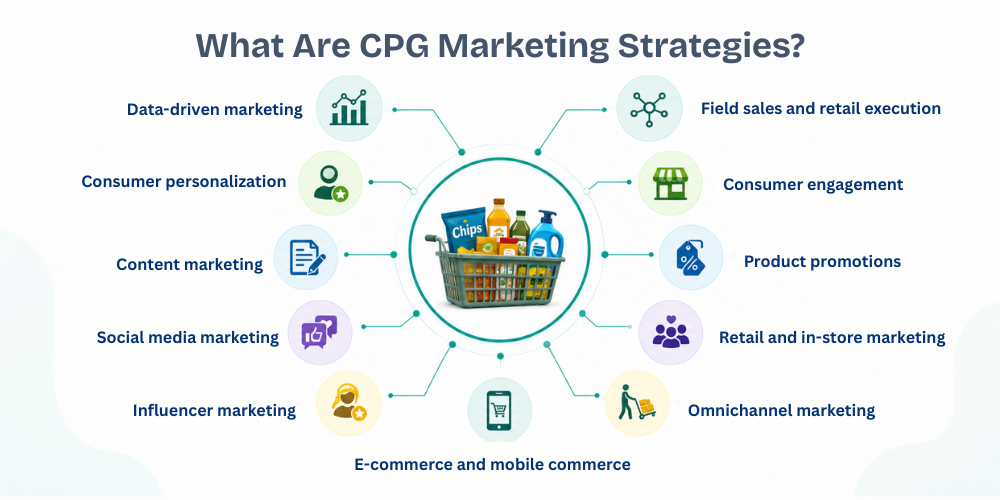
CPG marketing strategies are the methods consumer packaged goods companies use to attract consumers, build brand awareness, increase product demand, and drive sales across digital and physical retail channels.
These strategies can include:
-
Data-driven marketing
-
Consumer personalization
-
Content marketing
-
Social media marketing
-
Influencer marketing
-
E-commerce and mobile commerce
-
Omnichannel marketing
-
Retail and in-store marketing
-
Product promotions
-
Consumer engagement
-
Field sales and retail execution
Unlike many other industries, CPG brands operate within a complex ecosystem involving consumers, retailers, distributors, wholesalers, and field sales teams. As a result, a successful CPG marketing strategy must connect consumer demand with strong retail availability and effective sales execution.
The goal is not simply to make consumers aware of a product. It is to ensure that when consumers are ready to buy, the product is visible, available, accessible, and supported across the channels where they shop.
Why CPG Marketing Is Changing in a Digital-First World
The traditional CPG marketing model relied heavily on television advertising, print media, in-store promotions, and other offline channels. While these channels remain relevant, the consumer journey has become increasingly digital.
Today, consumers may discover a product through social media, read reviews online, compare prices on their smartphones, visit an e-commerce marketplace, and eventually purchase the product from a nearby retailer.
This fragmented journey creates both opportunities and challenges for CPG brands.
Modern CPG companies need to:
-
Understand changing consumer preferences
-
Use data to make informed marketing decisions
-
Create consistent experiences across channels
-
Build strong digital engagement
-
Improve product visibility
-
Maintain retail availability
-
Coordinate marketing with sales and distribution teams
-
Measure campaign and sales performance
The most effective CPG marketing strategies therefore combine digital engagement with strong execution across retail and distribution networks.
Understanding the Digital-First Consumer
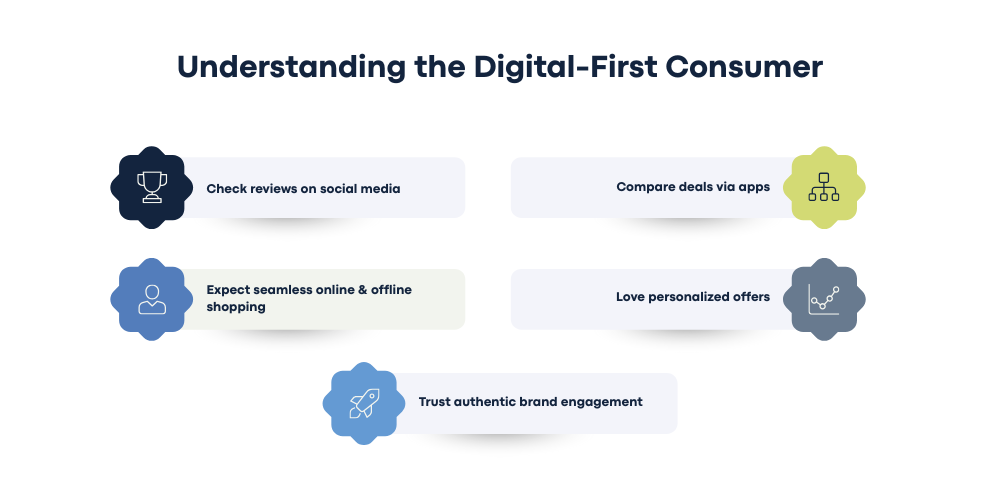
Before diving into strategies, it's important to understand who the digital-first consumer is. These are shoppers who rely heavily on online information and digital tools during their purchase journey. They:
-
Research products on social media and review sites: Digital-first consumers heavily rely on social platforms and online reviews to gather trustworthy information before making purchase decisions.
-
Compare prices and promotions through mobile apps: They use mobile apps to quickly find the best deals and compare prices, ensuring they get value for their money.
-
Expect seamless online and offline shopping experiences: These consumers want smooth, consistent interactions whether shopping online, in-store, or switching between both channels.
-
Value personalized offers and relevant content: They appreciate marketing that is tailored to their preferences, showing relevant products, discounts, and messages that feel personal and useful.
-
Prefer brands that engage authentically on digital channels: Trust is earned by brands that communicate honestly and transparently through digital platforms, creating genuine connections with their audience.
For CPG brands, this means marketing must be relevant, accessible, and integrated across all digital touchpoints. To win over digital-first buyers, CPG brands need cohesive marketing that’s easy to find, engaging, and consistent across every online and offline platform.
CPG Marketing Strategies which Drive Sales in a Digital-First World
1. Use Data-Driven CPG Marketing
In a digital-first landscape, data is king. Collecting and analyzing consumer data allows CPG companies to:
-
Understand buying behaviors and preferences: Analyzing data helps CPG brands uncover what motivates customers to buy, enabling them to predict and meet consumer needs more effectively.
-
Identify trending products and seasonal demands: Data reveals which products are gaining popularity and when demand spikes, allowing brands to plan inventory and marketing efforts accordingly.
-
Optimize marketing campaigns for maximum ROI: By measuring campaign performance through data, brands can refine strategies, reduce waste, and invest in tactics that generate the highest returns.
Using data analytics tools helps brands tailor their messaging and promotions precisely to customer needs. For example, brands can segment customers based on purchase history or online activity and serve personalized ads or emails, increasing conversion rates.
2. Personalize the Customer Experience
Personalization goes beyond just adding a customer’s name in an email. It means delivering relevant product recommendations, promotions, and content based on individual consumer profiles.
CPG brands that master personalization can:
-
Increase repeat purchases: Personalized marketing encourages customers to come back by showing products and offers tailored to their tastes and past buying habits.
-
Build stronger emotional connections: When brands deliver relevant experiences, customers feel understood and valued, fostering trust and long-term loyalty.
-
Enhance the overall customer experience: Personalization creates smoother, more enjoyable shopping journeys by anticipating needs and simplifying decision-making.
Digital platforms enable personalized offers through programmatic advertising and AI-powered chatbots, helping consumers find exactly what they want effortlessly.
3. Build an Omnichannel Marketing Strategy
Today's consumers interact with brands across multiple channels — social media, websites, physical stores, mobile apps, and more. Omnichannel Strategy marketing ensures a consistent and seamless experience across all these touchpoints.
For CPG brands, this means:
-
Synchronizing promotions across online and offline channels: Ensuring consistent offers and discounts whether customers shop in-store or online creates a unified brand experience that avoids confusion and builds trust.
-
Integrating inventory and pricing information: Real-time syncing of stock levels and prices across all channels prevents overselling and ensures customers get accurate information wherever they shop.
-
Offering click-and-collect or easy returns for online orders: Convenient options like buying online and picking up in-store or hassle-free returns enhance customer convenience and satisfaction.
An effective omnichannel strategy can increase customer satisfaction and boost sales by meeting consumers wherever they prefer to shop.
4. Create Educational and Engaging Content
Content is a powerful tool for building trust and brand authority. Instead of just pushing product promotions, successful CPG brands focus on creating valuable, educational, and entertaining content that resonates with their audience.
Examples include:
-
How-to videos and recipes using the product: Demonstrating product use through videos or recipes helps consumers understand benefits and inspires them to incorporate products into daily life.This is where a product video creator can help your brand deliver engaging, informative content that directly appeals to consumer needs.
-
Blog posts on health benefits or sustainability efforts: Informative articles educate consumers about product advantages and brand values, building trust and strengthening brand reputation.
-
Interactive social media challenges: Engaging customers with fun, participatory campaigns increases brand interaction, awareness, and encourages user-generated content.
By providing useful content, brands foster engagement, enhance brand recall, and encourage consumers to choose their products over competitors.
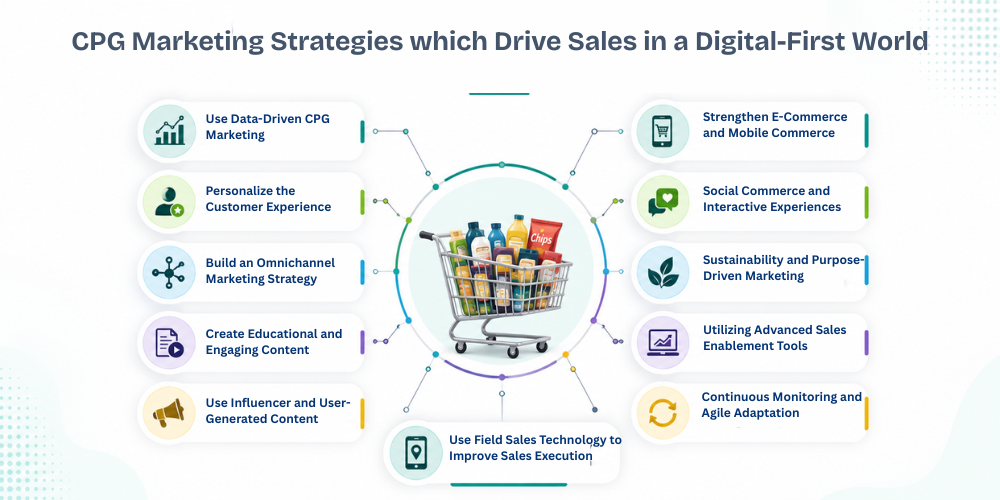
5. Use Influencer and User-Generated Content
Influencer marketing remains a critical strategy in the digital-first world. Consumers trust recommendations from influencers they follow more than traditional ads.
CPG companies can:
-
Collaborate with micro and macro influencers relevant to their niche: Partnering with influencers of all sizes helps brands reach targeted, engaged audiences who trust their recommendations.
-
Use influencers to launch new products or limited editions: Influencers create buzz and excitement around new releases, driving awareness and early sales.
-
Encourage authentic reviews and user-generated content: Genuine testimonials and content from influencers and customers boost credibility and social proof.
This approach helps brands tap into new audiences and create authentic brand stories that drive sales.
6. Strengthen E-Commerce and Mobile Commerce
The rise of e-commerce has shifted the retail landscape dramatically. For CPG brands, investing in online sales channels is a must. Mobile shopping, in particular, continues to grow, with many consumers browsing and purchasing directly from their phones.
To capitalize on this trend, brands should:
-
Optimize their websites and product pages for mobile devices: Mobile-friendly sites ensure fast loading, easy navigation, and better user experience, crucial for converting mobile shoppers.
-
Provide multiple payment options and easy checkout processes: Offering diverse, secure payment methods and simple checkout reduces cart abandonment and improves purchase completion rates.
-
Promote online-exclusive deals and bundles: Special online offers encourage customers to buy directly from digital channels, boosting e-commerce sales.
By making the shopping experience smooth and accessible, brands can capture more sales and foster customer loyalty.
7. Social Commerce and Interactive Experiences
Social commerce shopping directly via social media platforms is revolutionizing how CPG brands sell their products. Features like shoppable posts, live streams, and augmented reality (AR) filters allow consumers to interact with products in new, engaging ways.
Brands that embrace social commerce can:
-
Drive impulse purchases: Shoppable posts and live streams create instant buying opportunities, encouraging consumers to make quick, unplanned purchases.
-
Collect instant feedback and reviews: Social platforms allow brands to gather real-time customer opinions and testimonials, helping improve products and build trust.
-
Enhance brand visibility among digital natives: Engaging with younger, tech-savvy audiences on social media increases brand awareness and relevance in competitive markets.
Interactive experiences make shopping fun and memorable, increasing the chances of repeat purchases.

8. Sustainability and Purpose-Driven Marketing
Modern consumers increasingly expect brands to stand for something beyond profit. Sustainability and corporate social responsibility (CSR) play a big role in purchase decisions, especially among younger demographics.
CPG brands that:
-
Showcase eco-friendly packaging: Using sustainable, recyclable materials demonstrates environmental responsibility, attracting eco-conscious consumers and reducing brand impact on the planet.
-
Highlight fair trade or ethical sourcing: Promoting ethically sourced ingredients reassures customers that products are made with respect for workers and communities.
-
Support social causes transparently: Openly backing meaningful causes builds trust and resonates with consumers who value brand authenticity and social impact.
can differentiate themselves and build a loyal customer base that aligns with their values.
9. Utilizing Advanced Sales Enablement Tools
Behind every successful CPG marketing strategy lies efficient execution. Sales teams need real-time access to product information, pricing, promotions, and customer insights to engage effectively with distributors and retailers.
Advanced sales enablement app help streamline communication and automate routine tasks, empowering sales reps to focus on closing deals and driving revenue growth.
10. Continuous Monitoring and Agile Adaptation
The digital marketplace evolves rapidly, making it crucial for CPG brands to continuously monitor performance and adapt strategies accordingly. This involves:
-
Tracking key metrics like conversion rates, engagement, and ROI: Measuring performance indicators helps brands understand what’s working and where to improve marketing efforts for better results.
-
Testing different marketing messages and channels: Experimenting with various content and platforms allows brands to find the most effective ways to reach and engage their audience.
-
Responding quickly to market trends and consumer feedback: Being proactive in adjusting strategies based on new trends and customer input keeps brands aligned with market demands.
Agility enables brands to stay relevant and ahead of competitors in a fast-changing environment.
11. Use Field Sales Technology to Improve Sales Execution
For CPG brands, effective marketing strategies need strong execution in the field, making it essential to use technology to improve sales team visibility and productivity. This involves:
- Tracking field sales visits and outlet coverage: GPS-based tracking helps managers monitor sales representatives' market visits, identify coverage gaps, and ensure that priority retailers and outlets are being visited regularly.
- Capturing orders directly from the market: Digital order capture enables sales representatives to record retailer orders accurately during visits, reducing manual paperwork and helping businesses process orders faster.
- Monitoring sales team activities and performance: Daily activity reports and real-time dashboards give managers better visibility into field sales operations, helping them understand team productivity and identify areas that need improvement.
- Improving route planning and market execution: Route planning and beat management help sales representatives organize their daily visits efficiently, improve outlet coverage, and spend more time engaging with retailers.
By combining field sales technology with effective CPG marketing strategies, brands can improve market visibility, strengthen retail execution, and turn consumer demand into measurable sales growth.
How CPG Brands Can Connect Digital Marketing With Field Sales
One of the biggest opportunities for CPG companies is connecting digital demand generation with physical sales execution.
Consider a simple example.
A CPG brand launches a digital campaign promoting a new product in a specific region. Consumers see the campaign and begin searching for the product at nearby retailers.
If the product is available, properly displayed, and supported by the sales team, the campaign has a greater chance of generating actual sales.
But if retailers do not have sufficient stock, sales representatives have not visited the outlets, or the product is poorly displayed, the company may lose potential sales.
This is why CPG brands should think beyond digital marketing.
A successful strategy should connect:
-1785049016.png)
Digital Campaigns → Consumer Demand → Retailer Availability → Distributor Supply → Field Sales Execution → Order Capture → Sales Growth
When marketing and field sales teams share better visibility, companies can identify gaps faster and respond more effectively.
Key Metrics to Measure CPG Marketing Performance
Tracking the right metrics helps CPG companies understand whether their marketing strategies are generating meaningful business results. Brand awareness measures how familiar consumers are with the brand, while website traffic and engagement rate show how effectively digital channels attract and engage audiences. Conversion rate measures how many users take a desired action, while customer acquisition cost helps businesses understand the cost of gaining new customers. Repeat purchase rate indicates customer loyalty and retention, and return on ad spend (ROAS) measures the effectiveness of paid advertising.
For CPG brands, e-commerce sales and retail sales provide insights into product performance across online and offline channels. Outlet coverage shows how effectively sales teams reach targeted retailers, while product availability helps ensure products are accessible when customers want to buy them. Finally, sales rep productivity measures the effectiveness of field sales activities and helps managers identify opportunities to improve sales execution.
Common CPG Marketing Mistakes to Avoid
Even well-funded CPG marketing campaigns can underperform when businesses overlook important parts of the customer and sales journey. Here are some common mistakes to avoid:
-
Focusing Only on Digital Marketing: Digital campaigns need strong distribution, retail presence, and field execution to convert consumer interest into actual sales.
-
Ignoring Product Availability: Creating demand without ensuring product availability can result in missed sales opportunities and frustrated customers.
-
Using the Same Strategy in Every Market: Regional differences in consumers, competition, pricing, and retail conditions require localized marketing strategies.
-
Failing to Measure Marketing ROI: Without tracking performance, companies may continue investing resources in campaigns that deliver limited business results.
-
Keeping Marketing and Sales Teams Separate: Collaboration between marketing and field sales teams helps businesses share insights and improve overall market performance.
-
Ignoring Retailer Feedback: Retailers and sales representatives provide valuable insights into customer preferences, competitor activities, and changing market demand.
-
Relying on Outdated Market Information: Timely and accurate market data helps CPG companies respond quickly to changing consumer needs and trends.
-
Neglecting Retail Visibility: Strong consumer awareness cannot generate sales if products are unavailable, poorly displayed, or difficult to find.
-
Using Generic Customer Messaging: Personalized and relevant communication helps CPG brands connect better with consumers and improve engagement.
-
Not Connecting Marketing With Sales Execution: Combining consumer demand generation with strong on-ground sales execution helps CPG brands maximize growth opportunities.
How Delta Sales App Supports CPG Sales Execution
For CPG companies, successful marketing does not end when a consumer sees an advertisement or discovers a product online. The product must also be available at the right retail outlets, supported by effective distribution, and followed up through strong field sales execution.
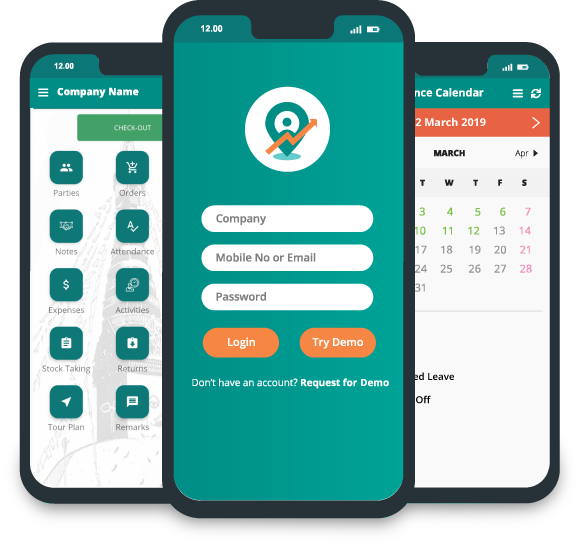
Delta Sales App helps businesses improve this last-mile sales execution by giving managers better visibility into field sales activities and helping sales representatives manage their market visits more efficiently.
With capabilities such as:
-
Outlet and retailer management
-
Order capture from the field
-
Outlet coverage monitoring
-
Daily sales activity reporting
-
Manager dashboards
businesses can better understand where their sales teams are working, which outlets are being visited, and what orders are being generated from the market.
By connecting marketing initiatives with on-ground sales execution, CPG companies can improve visibility, strengthen retailer coverage, and make better decisions based on real market activity.
Conclusion
Navigating the digital-first world requires CPG brands to embrace innovative marketing strategies that prioritize data, personalization, omnichannel presence, and authentic engagement. But equally important is the ability to execute these strategies efficiently on the ground.
Delta Sales App helps bridge this gap by enabling businesses to track field visits, monitor outlet coverage, capture market orders, and access daily sales activity reports. By connecting digital marketing with real-world sales execution, CPG brands can improve market visibility, strengthen retailer coverage, and drive sustainable sales growth.
See How Delta Sales App Transforms Digital Campaigns into Real-World Sales - Book a Demo Now