
The Ultimate Distributor Management FAQ: 45 Questions Answered
A great product isn't enough for business success. A business could spend heavily on manufacturing, branding, and marketing, but if products aren't reaching retailers and customers on time, growth becomes difficult. Distributors are the link from brands to the marketplace. They make sure that products move efficiently from warehouses to retailers, wholesalers, and customers. Managing distributors, however, is much more than simply supplying products. Brands need to track inventory levels, sales performance, credit exposure, and territory coverage and ensure distributors are executing sales strategies correctly.
As distribution networks grow in size, manual processes become harder to manage. Many companies face challenges such as limited visibility into secondary sales, delayed reporting, inventory discrepancies, stock-outs, and poor tracking of distributors' performance. This is where technology solutions like Distributor Management Systems (DMS), Sales Force Automation (SFA), Order Management Software, route planning tools, and secondary sales tracking platforms can be helpful.
In this comprehensive FAQ guide, we answer 50 of the most common questions about distributor management, covering everything from distributor selection and performance measurement to inventory control, finance management, and digital transformation.
Let's begin with the basics.
1. What is a distributor and how is it different from a wholesaler?
The terms “distributor” and “wholesaler” are often used interchangeably by many people, but they are not exactly the same.
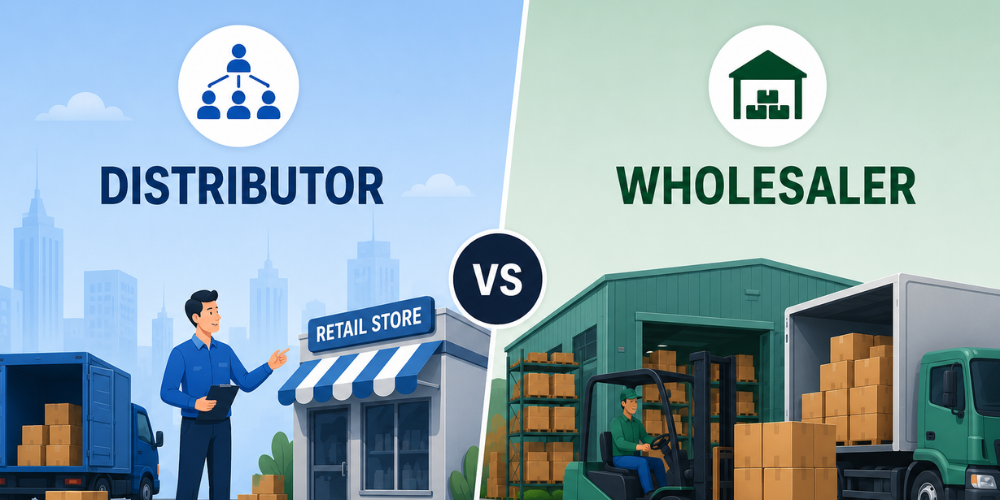
A distributor is generally very close to the brand and does more than just buy and sell product. Distributors also hold stock, maintain retail relationships, achieve sales targets, implement promotional schemes, give feedback from the market, and assist in growing the brand in their territory.
A wholesaler is a company or person that sells goods to retailers, usually in large quantities. Wholesalers usually have fewer obligations to the manufacturer and are able to stock products from several competing brands.
2. What is the role of a super stockist in FMCG distribution?
A super stockist serves as a central warehouse between the manufacturer and a number of distributors. Many FMCG brands use super stockists to simplify their logistics and inventory management instead of delivering their products directly to tens or even hundreds of distributors in a country.
Key responsibilities of a super stockist include:
- Receiving inventory from manufacturers
- Maintaining adequate stock levels
- Supplying distributors quickly
- Managing regional inventory movement
- Reducing stock-out risks
- Supporting market expansion initiatives
Super stockists are especially valuable in large geographical markets where direct distribution from the manufacturer would be expensive or difficult to manage.
3. What is the difference between a C&F agent and a distributor?
A Carrying and Forwarding (C&F) agent and a distributor are both important parts of a distribution network, but their responsibilities are very different.
A C&F agent primarily focuses on logistics and warehousing activities. Their role is to receive products from the manufacturer, store inventory, and dispatch goods according to instructions.A distributor, however, purchases inventory from the manufacturer and becomes responsible for selling products within a specific territory. Some key differences include:
In many FMCG companies, both C&F agents and distributors work together. The C&F agent ensures efficient inventory storage and dispatch, while distributors ensure products reach retailers and customers.
4. What is exclusive distribution vs. non-exclusive distribution?
In an exclusive distribution model, a brand appoints only one distributor for a particular region. This distributor gets full rights to sell and distribute the brand’s products in that area without competition from other authorized distributors. This model helps create stronger control over pricing, better focus on market development, and more accountability for performance within the territory.

In a non-exclusive distribution model, a brand appoints multiple distributors in the same region. This helps improve product availability, increase market coverage, and reduce dependency on a single distributor. However, it can also create challenges in tracking performance and managing channel efficiency.

While both models are widely used in FMCG and retail businesses, one of the biggest challenges for brands is maintaining visibility and control over distributor performance, especially in non-exclusive markets.
This is where technology becomes important. With a Distributor Management System (DMS), It becomes easier to compare multiple distributors operating in the same territory, identify top performers, and ensure fair distribution of targets and schemes.
Additionally, features like order management, retailer-wise sales tracking, and analytics dashboards help brands understand how each distributor is performing, whether the distribution is exclusive or non-exclusive.
5. How do brands appoint a new distributor in a territory?
Choosing the right distributor is one of the most important decisions a manufacturer can make. Choosing the right distributor can boost sales and market penetration, while a poor choice can dampen growth and cause operational issues.
Brands typically follow a structured distributor appointment process. They begin by looking for areas where there is a need for more market coverage. Potential distributors are then screened for financial strength, infrastructure, sales experience, market reputation, and strength of retailer network.
Common selection criteria include:
- Financial stability and working capital
- Warehouse and storage facilities
- Existing retailer relationships
- Sales team size and experience
- Distribution fleet availability
- Industry expertise
- Technology adoption capability
Many organizations also conduct field audits and background checks before finalizing appointments.
6. What is a distributor margin and how is it typically structured?
A distributor margin is the profit a distributor earns by purchasing products from a manufacturer and selling them to retailers or dealers. The margin is typically expressed as a percentage of the selling price and serves as the distributor's primary source of income. For example, if a distributor purchases goods worth $90 and sells them for $100, the distributor earns a margin of $10.
Distributor margins vary depending on factors such as:
- Product category
- Industry competition
- Logistics costs
- Territory size
- Sales volume
- Service requirements
In the FMCG world, margins are often enhanced through incentive programs and trade schemes. They may include performance bonuses, target achievement awards, display incentives, retailer promotion reimbursements, and seasonal sales schemes. Many brands use margin structures as an incentive for distributors to expand into new markets.
7. How do brands decide how many distributors to appoint per region?
There is no magic formula as to the perfect number of distributors in a territory. The right number depends on the size of the market, the density of the population, the concentration of retailers, logistics needs, and expected sales volume.
Generally brands start with the market potential and the geographical coverage requirements.
Key factors considered include:
- Number of retail outlets
- Population size
- Urban vs. rural distribution
- Product demand patterns
- Transportation infrastructure
- Competitive intensity
- Service expectations
Appointing too few distributors can result in poor coverage and stock shortages. Appointing too many can create channel conflicts and reduce profitability. Many modern organizations use sales analytics, territory management tools, and distributor performance dashboards to optimize distributor allocation and market coverage.
8. When should a brand terminate a distributor relationship?
Distributor relationships are meant to be long-term partnerships, but there are circumstances where termination becomes necessary. Brands will usually want to terminate a distributor relationship when the distributor repeatedly fails to meet performance targets, despite being offered assistance and opportunities to improve.
Typical reasons include:
- Failure to meet sales quotas
- Poor coverage by retailers
- Delayed payments over time
- Poor inventory control
- Unauthorized territory selling
- Violated policies
- Business practices that are unethical
- Bad customer servicet authority
Most companies will review performance and develop a corrective action plan before terminating a distributor. This provides an opportunity for the distributor to improve his performance. If the results remain unsatisfactory, replacing the distributor may be necessary to protect market share and customer relationships.
9. How do you onboard a new distributor efficiently?
Bringing on a distributor is the foundation for future success. An effective onboarding program helps new distributors become productive faster and reduce operational issues.
First, make sure that all legal agreements, pricing and territories are agreed and finalized. Then the distributor should be given detailed training on products, sales processes, promotional schemes and reporting requirements.
A successful onboarding program often includes:
- Distributor agreement completion
- Product knowledge training
- Territory planning
- Initial inventory allocation
- Pricing and scheme education
- Sales target communication
- Retailer mapping
- Technology setup
- Reporting process training
Many organizations now digitize onboarding through distributor management systems and sales force automation platforms. These tools allow distributors to start placing orders, reporting sales, managing inventory, and sharing business data immediately.

10. What KPIs should a brand track for each distributor?
Key Performance Indicators (KPIs) help brands measure distributor effectiveness and determine whether their distribution network is contributing to business growth. While every company may have slightly different objectives, some KPIs are considered essential across most FMCG and distribution businesses.
Important distributor KPIs include:
- Primary sales value
- Secondary sales value
- Retail outlet coverage
- Fill rate
- Inventory turnover
- Stock availability
- Collection efficiency
Don’t rely on one KPI to power your brand. Rather, they should use a balanced scorecard approach that combines sales, inventory, operational, and financial metrics to assess distributor performance.
11. What is fill rate and why does it matter for distributors?
Fill rate measures the percentage of customer demand that can be fulfilled immediately from available inventory. It is one of the most important supply chain and distributor performance metrics because it directly impacts retailer satisfaction and product availability.
The basic formula is:
Fill Rate = (Orders Fulfilled ÷ Total Orders Received) × 100
For example, if retailers order 1,000 units and the distributor can immediately supply 950 units, the fill rate is 95%.
A high fill rate indicates:
- Strong inventory planning
- Good stock availability
- Better retailer satisfaction
- Reduced lost sales opportunities
A low fill rate often suggests:
- Frequent stock-outs
- Poor forecasting
- Inventory management problems
- Supply chain disruptions
In FMCG distribution, even a small drop in fill rate can result in retailers switching to competing brands. Consumers who cannot find a product often choose alternatives rather than waiting for restocking. This is why brands closely monitor fill rates and use inventory management tools to ensure distributors maintain optimal stock levels.
12. What is a distributor scorecard and how is it used?
A distributor scorecard is a structured performance evaluation framework used to measure and compare distributor effectiveness. Instead of evaluating distributors based only on sales volume, scorecards provide a broader view of overall business performance.
A typical distributor scorecard may include:
- Sales achievement
- Outlet coverage
- Secondary sales growth
- Inventory health
- Collection performance
- Scheme execution
- Reporting accuracy
- Retailer servicing quality
13. How do you compare distributor performance across territories?
Comparing distributors across different regions can be challenging because market conditions are rarely identical. A distributor operating in a major metropolitan city may naturally generate higher sales than a distributor serving a rural territory. Therefore, comparing total sales alone can produce misleading conclusions.
Brands should evaluate distributors using normalized metrics such as:
- Sales growth percentage
- Market penetration rate
- Retail outlet coverage
- Product availability
- Secondary sales growth
- Inventory turnover
- Sales per outlet
- Collection efficiency
Territory benchmarking becomes more effective when supported by distributor management software that consolidates data from multiple regions into a single dashboard.
14. What is distributor sell-through rate?
Distributor sell-through rate measures how quickly products move from the distributor to retailers or end customers after being purchased from the manufacturer. This metric helps brands understand whether products are actually being consumed by the market or simply accumulating in distributor warehouses.
A strong sell-through rate indicates:
- Healthy consumer demand
- Efficient inventory movement
- Effective retailer coverage
- Strong distributor performance
A weak sell-through rate may indicate:
- Excess inventory
- Poor demand forecasting
- Weak retailer engagement
- Product availability issues at retail level
15. How do you identify an underperforming distributor early?
One of the biggest challenges in distributor management is identifying performance issues before they become serious business problems. Waiting until sales collapse often means lost market share, declining retailer relationships, and reduced product availability.
Some early warning signs include:
- Declining secondary sales
- Reduced retailer coverage
- Frequent stock-outs
- Low fill rates
- Increasing inventory age
- Missed sales targets
- Delayed payments
- Poor reporting compliance
For example, a distributor may continue placing large orders while secondary sales decline. This could indicate inventory accumulation and future sales problems. Regular KPI reviews, distributor scorecards, and automated reporting systems help brands detect these warning signs earlier. Technology plays a major role in early detection.
16. What is the ideal inventory days-on-hand for an FMCG distributor?
Inventory Days-on-Hand (DOH) measures how many days a distributor can continue selling products using existing inventory levels. The ideal inventory level varies depending on product category, demand patterns, supply chain lead times, and market conditions.
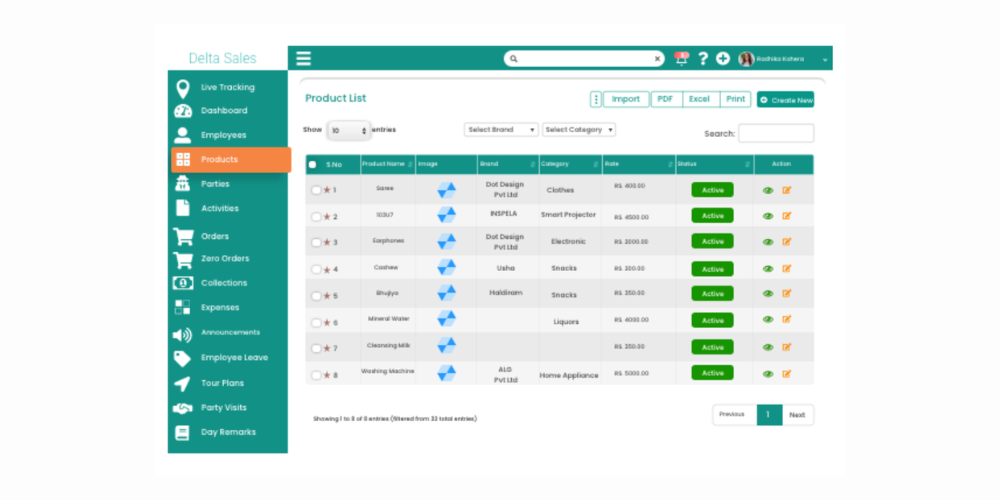
In many FMCG businesses, distributors typically maintain inventory levels ranging between 15 and 45 days. Maintaining too little inventory can lead to:
- Stock-outs
- Lost sales
- Retailer dissatisfaction
- Reduced market availability
Maintaining excessive inventory can result in:
- Higher storage costs
- Increased working capital requirements
- Expiry risks
- Slow-moving stock accumulation
The goal is to strike the right balance between availability of products and not tying up unnecessary capital. Distributors can benefit from healthier stock positions by monitoring their inventory days on hand on a regular basis.
17. How do you measure distributor outlet reach vs. total market potential?
Outlet reach measures how many retail outlets a distributor actively serves compared to the total number of potential outlets within the territory. This KPI helps brands assess market penetration and identify untapped growth opportunities.
The calculation is relatively simple:
Outlet Reach = Active Outlets Served ÷ Total Potential Outlets
For example, if a territory contains 5,000 potential retail outlets and the distributor serves 3,500, the market reach is 70%. This metric is particularly important because strong sales alone do not always indicate strong market coverage.
A distributor may achieve sales targets by focusing only on large retailers while neglecting smaller stores that represent future growth opportunities.
By measuring outlet reach, brands can identify:
- Coverage gaps
- White-space opportunities
- Expansion potential
- Sales team effectiveness
Route planning software and field sales tracking solutions can help distributors increase outlet coverage while improving productivity. Greater outlet reach often leads to stronger brand visibility and higher long-term sales growth.
18. What is secondary sales target vs. primary sales target for a distributor?
Primary sales refer to sales made from the manufacturer to the distributor. Secondary sales refer to sales made from the distributor to retailers, dealers, or other customers.
Both metrics are important, but they serve different purposes. Primary sales targets focus on:
- Manufacturer revenue
- Distributor replenishment
- Production planning
- Supply chain forecasting
Secondary sales targets focus on:
- Market demand
- Retail execution
- Product movement
- Consumer consumption
A secondary sales app helps companies understand what is truly happening at the retail level and supports better forecasting, inventory planning, and growth strategies.
19. How do you track scheme execution at the distributor level?
Trade schemes and promotional programs represent significant investments for manufacturers. However, these initiatives only generate value if they are executed correctly. Tracking scheme execution helps brands ensure that incentives reach retailers and contribute to sales growth.
Common methods include:
- Distributor sales reports
- Retail audit programs
- Field sales verification
- Retailer feedback surveys
- Digital claim management systems
- Secondary sales tracking platforms
Effective scheme execution tracking ensures trade investments drive measurable business outcomes rather than becoming uncontrolled expenses.
20. How should a distributor manage minimum stock levels?
Minimum stock levels refer to the lowest quantity of inventory a distributor should maintain before reordering products. These levels act as a safety buffer to prevent stock-outs and ensure uninterrupted supply to retailers.
Setting minimum stock levels is important because demand can fluctuate unexpectedly. Retailers may place larger orders during promotions, festivals, seasonal peaks, or local events. Without sufficient inventory, distributors risk losing sales and damaging retailer trust.
To determine appropriate minimum stock levels, distributors should consider:
- Historical sales trends
- Lead time from suppliers
- Seasonal demand patterns
- Product shelf life
- Market growth expectations
- Promotional activities
Many distributors now use inventory management software and Distributor Management Systems (DMS) to automate stock monitoring and generate alerts when inventory falls below predefined thresholds. Maintaining the right minimum stock levels helps improve product availability, increase fill rates, and reduce emergency replenishment costs.
21. What is FIFO and why is it critical for distributors?
FIFO stands for "First In, First Out." It is an inventory management method where products received first are sold or dispatched first. FIFO is especially important for FMCG products, pharmaceuticals, beverages, cosmetics, and other items with expiration dates.
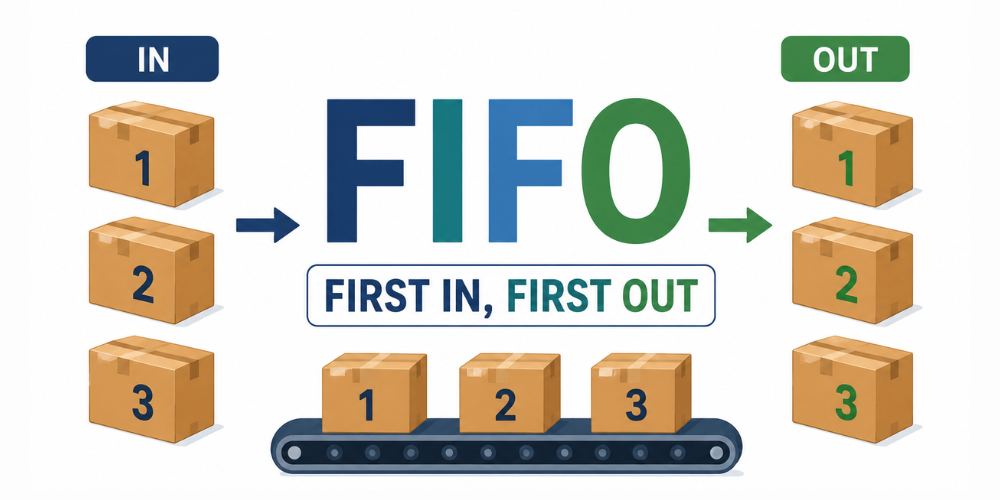
For example, if a distributor receives one batch of products in January and another in March, the January inventory should be sold before the March inventory. This prevents older products from sitting in storage while newer stock moves through the market.
The benefits of FIFO include:
- Reduced expiry losses
- Better inventory rotation
- Improved stock accuracy
- Lower write-off costs
- Enhanced customer satisfaction
22. How do distributors handle near-expiry stock?
Near-expiry stock is stock approaching the end of its shelf life, which may be difficult to sell through normal distribution channels. If not managed properly, inventory close to its expiration date can lead to returns, financial losses, and damage to the brand's reputation. Successful distributors keep a close eye on aging products and are able to identify at-risk inventory early on.
Common strategies for handling near-expiry stock include:
- Offering promotional discounts
- Running retailer incentive schemes
- Redistributing inventory to high-demand areas
- Prioritizing sales efforts
- Returning products based on brand policies
- Bundling products with fast-moving items
The goal is to ensure products reach consumers while they still have sufficient shelf life, protecting both distributor profitability and consumer satisfaction.
23. What is dead stock and how can it be reduced?
Dead stock refers to inventory that remains unsold for an extended period and has little or no likelihood of being sold under normal market conditions.
Common causes of dead stock include:
- Poor demand forecasting
- Excessive ordering
- Product discontinuation
- Weak market demand
- Pricing issues
- Ineffective promotions
To reduce dead stock, distributors should regularly analyze inventory movement and identify slow-moving products early. Many distributor management systems provide inventory aging reports that help identify slow-moving products before they become dead stock.
24. How does a distributor manage stock for seasonal demand spikes?
Seasonal demand fluctuations are common in many industries. Products such as beverages, festive goods, school supplies, personal care items, and agricultural products often experience significant increases in demand during specific periods. Managing seasonal inventory requires careful planning because both understocking and overstocking carry risks.
Distributors typically prepare by analyzing:
- Historical sales data
- Previous seasonal trends
- Market forecasts
- Promotional calendars
- Weather patterns
- Regional demand variations
Demand forecasting tools and sales analytics help distributors predict seasonal requirements more accurately. By preparing in advance, distributors can maximize revenue opportunities while avoiding stock shortages during peak demand periods.
25. What is a stock audit and how often should it happen?
A stock audit is the process of physically verifying inventory and comparing actual stock levels with system records. The purpose of a stock audit is to identify discrepancies, improve inventory accuracy, and ensure proper inventory control.
Stock audits help uncover issues such as:
- Inventory theft
- Data entry errors
- Damaged products
- Counting mistakes
- Unrecorded transactions
- Process weaknesses
How Often Should a Stock Audit Be Conducted?
The ideal frequency depends on the size and complexity of the business:
- Monthly audits for fast-moving FMCG products and high-value inventory
- Quarterly audits for medium-sized distributors
- Annual comprehensive audits for regulatory and financial reporting purposes
- Cycle counts throughout the year for continuous inventory verification
Many successful distributors combine regular cycle counting with periodic full stock audits to maintain high inventory accuracy.
26. How do you prevent stock diversion between distributor territories?
Stock diversion occurs when products intended for one distributor territory are sold into another territory without authorization. Brands typically prevent stock diversion through:
- Territory monitoring
- Distributor agreements
- Batch tracking
- Invoice verification
- Retail audits
- Geo-tagged sales reporting
Technology has become increasingly important in addressing diversion issues. Distributor management systems and sales force automation platforms can provide location-based visibility into sales activities and identify unusual inventory movement patterns.
27. How do you manage multi-brand inventory at the same distributor?
Many distributors handle products from multiple brands simultaneously. While this can increase revenue opportunities, it also introduces inventory management complexity. Challenges often include:
- Warehouse space allocation
- Inventory visibility
- Demand forecasting
- Stock rotation
- Resource prioritization
To manage multi-brand inventory effectively, distributors should establish clear inventory control processes and categorize products based on factors such as:
- Sales volume
- Profitability
- Shelf life
- Demand patterns
Technology becomes particularly valuable when managing large product portfolios. Inventory management systems help distributors:
- Track stock by brand
- Monitor inventory turnover
- Analyze sales performance
- Identify slow-moving products
- Improve replenishment decisions
Without proper inventory visibility, distributors may unintentionally overstock certain brands while understocking others. Effective multi-brand inventory management ensures balanced operations and maximizes overall profitability.
28. What causes inventory mismatches between system records and physical stock?
Inventory mismatches occur when actual physical inventory differs from what is recorded in the system. These discrepancies can create operational disruptions, inaccurate reporting, and poor decision-making. Common causes include:
- Manual data entry errors
- Unrecorded transactions
- Inventory theft
- Damaged products
- Incorrect stock counts
- Return processing mistakes
- System integration issues
Modern distributor management systems integrate inventory, sales, and order management systems, reducing manual intervention and improving stock accuracy. Maintaining accurate inventory records is essential for efficient supply chain management, better forecasting, and higher distributor profitability.
29. What is a distributor's working capital cycle?
A distributor's working capital cycle refers to the time it takes to convert invested money into cash through sales and collections. In simple terms, a distributor purchases products from a manufacturer, stores them in inventory, sells them to retailers, and eventually collects payments. The entire process forms the working capital cycle.
The cycle typically includes three stages:
- Inventory Holding Period – The time products remain in stock before being sold.
- Receivables Period – The time retailers take to pay outstanding invoices.
- Payables Period – The time distributors have to pay manufacturers.
A shorter working capital cycle generally indicates better financial efficiency because cash is recovered more quickly. Brands often evaluate distributor working capital health because financially stable distributors are better positioned to maintain inventory levels, invest in growth, and service retailers effectively.
30. How do brands manage credit exposure to distributors?
Credit exposure refers to the financial risk a manufacturer assumes when allowing distributors to purchase products on credit. If distributors fail to make payments on time, manufacturers may face cash flow challenges and potential bad debt losses.
To manage credit exposure, brands typically establish:
- Credit limits
- Payment terms
- Risk assessment procedures
- Collection policies
- Distributor credit ratings
31. What is a trade discount vs. a cash discount for distributors?
A trade discount is a reduction in the product price given to distributors at the time of purchase. It is already adjusted in the invoice price and is usually offered based on business factors like order volume, product category, or long-term agreements. Its main purpose is to set the distributor’s buying price and ensure they earn their margin when selling to retailers.
A cash discount, on the other hand, is an extra discount given if the distributor pays the invoice earlier than the agreed credit period. For example, if payment terms are 30 days, the distributor may get a small discount for paying within 10 or 15 days. Its main purpose is to encourage faster payments and improve cash flow for the company.
In simple terms:
- Trade discount = Discount on purchase price (built into invoice)
- Cash discount = Reward for early payment

32. What is a distributor advance payment scheme?
A distributor advance payment scheme is when distributors pay for future purchases in advance and receive special incentives for doing so. These schemes are often used when manufacturers want to improve the cash flow, secure inventory commitments, or support production planning.
Benefits for distributors may include:
- Additional discounts
- Bonus stock
- Exclusive promotional offers
- Higher incentive eligibility
For example, a manufacturer may offer a distributor an additional 2% incentive for making advance payments before a major festive season.
33. How do brands manage distributor payment terms (30/45/60 days)?
Payment terms define the period distributors have to pay manufacturers after receiving products. Common payment structures include:
- 30-day payment terms
- 45-day payment terms
- 60-day payment terms
The choice depends on factors such as:
- Industry practices
- Distributor financial strength
- Market competition
- Product category
- Business strategy
Longer payment terms provide distributors with greater flexibility and can support market expansion. However, they also increase financial risk for manufacturers. To manage payment terms effectively, brands often:
- Establish clear credit limits
- Monitor outstanding balances
- Track payment behavior
- Conduct regular account reviews
- Use automated collection reminders
Many organizations segment distributors based on risk profiles and assign payment terms accordingly.
34. How do you reconcile accounts between a brand and its distributor monthly?
Account reconciliation is the process of comparing financial records maintained by the manufacturer and the distributor to ensure both parties agree on outstanding balances and transactions. Monthly reconciliation helps identify discrepancies before they become major disputes.
The reconciliation process typically includes reviewing:
- Sales invoices
- Payments received
- Credit notes
- Debit notes
- Returns
- Promotional claims
- Outstanding balances
Field Sales App and ERP integrations significantly improve reconciliation accuracy by ensuring both parties have access to consistent financial data.
Regular reconciliation strengthens trust and improves financial transparency across the distribution network.
35. What is a distributor's ROI and how is it calculated?
A distributor's return on investment (ROI) measures how much profit the distributor generates compared to the money invested in inventory, operations, warehousing, vehicles, and sales activities. It helps determine whether the distribution business is operating profitably and efficiently.
The basic formula is:
ROI = (Net Profit ÷ Total Investment) × 100
Several factors influence distributor ROI, including sales performance, inventory turnover, collection efficiency, logistics costs, and operational expenses. While increasing sales is important, controlling costs is equally critical. Expenses such as fuel, travel, retailer visits, and delivery operations can significantly impact profitability if left unmanaged. This is why many businesses use expense management solutions to track and monitor field expenses in real time.
36. What is a distributor management system (DMS)?
A Distributor Management System (DMS) is a software platform designed to help distributors and brands manage inventory, orders, sales, collections, retailer information, and business operations from a centralized system.
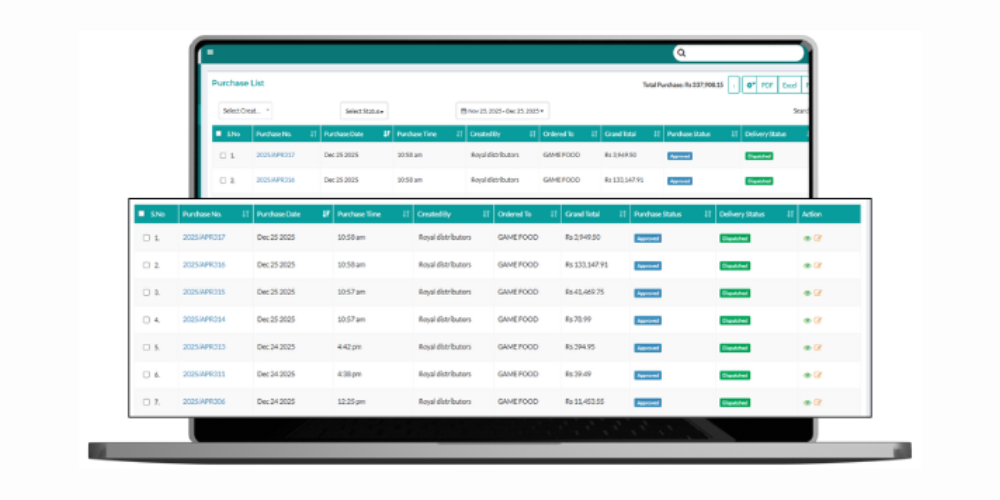
Traditionally, distributors relied on spreadsheets, phone calls, paper invoices, and manual reporting to manage daily operations. While these methods may work for small-scale businesses, they quickly become inefficient and difficult to manage as the business grows and transactions increase. A Distributor Management System (DMS) helps overcome these challenges by digitizing and centralizing key processes such as order management, inventory tracking, secondary sales reporting, billing and invoicing, retailer management, scheme management, collection tracking, and business analytics, enabling distributors and brands to operate more efficiently with better visibility and control.
One of the biggest advantages of a DMS is visibility. Instead of waiting for weekly or monthly reports, brands can access near-real-time information about distributor performance, stock levels, and sales activity.
37. What is the difference between a DMS and an SFA tool?
A Distributor Management System (DMS) and a Sales Force Automation (SFA) tool are both important technologies used in the distribution and FMCG industry, but they serve different purposes.
A Distributor Management System (DMS) is primarily designed to manage distributor operations. It helps track inventory, process orders, manage billing, monitor secondary sales, handle collections, and provide visibility into distributor performance. A DMS focuses on what happens within the distributor's business and helps brands maintain control over inventory and sales across their distribution network.
A Sales Force Automation (SFA) tool is designed to improve the productivity of field sales teams by helping sales representatives plan routes, manage beat planning, capture orders, track outlet visits, conduct retail audits, record merchandising activities, and monitor field performance in real time.
While both systems can operate independently, they deliver the greatest value when used together. A DMS provides visibility into distributor inventory and sales data, while an SFA tool ensures field sales teams execute effectively at the retail level.
38. How does a DMS integrate with a brand's ERP system?
An Enterprise Resource Planning (ERP) system serves as the central business platform for many manufacturers. It typically manages finance, procurement, production, inventory, and supply chain operations.
A DMS becomes even more valuable when integrated with the manufacturer's ERP system.
Integration allows data to flow automatically between systems, eliminating duplicate data entry and improving accuracy.
Common data exchanges include:
- Product master data
- Price lists
- Inventory information
- Sales transactions
- Credit limits
- Customer records
- Collection data
39. Can a small distributor with limited IT capability use a DMS?
Yes. Modern distributor management systems are designed to be user-friendly and accessible even for distributors with limited technical expertise.
In the past, software implementation often required expensive hardware, dedicated IT teams, and extensive training. Today, cloud-based platforms have made technology much easier to adopt.
Many modern DMS solutions offer:
- Mobile applications
- Web-based access
- Simple user interfaces
- Minimal setup requirements
- Remote support
- Role-based access controls
Small distributors can often begin with core functions such as order management and inventory tracking before gradually expanding to more advanced features.
40. What data should a DMS capture for a brand to view remotely?
One of the primary reasons brands invest in distributor management systems is to improve visibility into distributor operations. A well-designed DMS should capture comprehensive data that helps management teams monitor business performance remotely.
Important data points include:
- Distributor inventory levels
- Primary sales
- Secondary sales
- Retailer orders
- Product movement
- Outstanding payments
- Collections
- Scheme utilization
- Returns and claims
- Market coverage metrics
41. How does digital ordering from retailers improve distributor efficiency?
Traditional retailer ordering often involves phone calls, handwritten notes, messaging applications, or in-person visits. These methods can create delays, errors, and inefficiencies. Digital ordering allows retailers to place orders directly through mobile apps, web portals, or sales applications.
Benefits include:
- Faster order processing
- Reduced order entry errors
- Improved order accuracy
- Better inventory visibility
- Shorter fulfillment cycles
- Higher retailer satisfaction
42. What is secondary sales visibility and why do brands need it from distributors?
Secondary sales visibility refers to a brand's ability to see sales made by distributors to retailers or other downstream customers. Historically, many manufacturers focused only on primary sales, which represent sales from the manufacturer to the distributor.
However, primary sales alone do not reveal actual market demand. Secondary sales data helps brands understand:
- Product movement
- Retail demand
- Inventory consumption
- Market trends
- Product availability
- Territory performance
Today, secondary sales visibility is considered one of the most valuable capabilities in modern distribution management.
43. How do distributors manage multiple delivery routes digitally?
As distributor operations expand, managing delivery routes manually becomes increasingly difficult. Multiple drivers, hundreds of retailers, changing delivery schedules, and traffic conditions can create operational complexity.
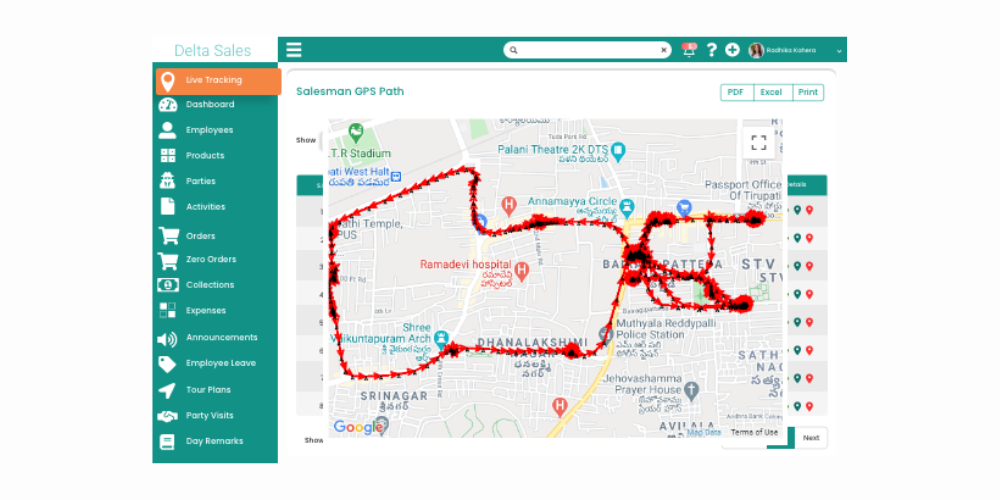
Digital route management solutions help distributors plan and execute deliveries more efficiently by automatically assigning delivery routes, reducing travel distances, tracking deliveries, monitoring vehicle utilization, and improving overall delivery efficiency. Advanced route management systems often include features such as GPS tracking, route optimization, real-time delivery status updates, driver performance monitoring, and electronic proof of delivery, enabling distributors to reduce transportation costs, improve on-time deliveries, and provide better service to retailers.
44. What reports should a distributor share with the brand every week?
Weekly reporting helps brands monitor distributor performance, track market demand, and make informed business decisions. By reviewing key reports regularly, manufacturers can identify growth opportunities, address potential issues early, and ensure products remain available across the market.
Some of the most important reports a distributor should share include:
- Secondary sales reports
- Inventory and stock availability reports
- Stock aging and near-expiry reports
- Outstanding payment and collection reports
- Retail outlet coverage reports
- Product-wise sales performance reports
- Order fulfillment reports
- Returns and claims reports
- Scheme and promotion performance reports
These reports provide valuable insights into sales trends, inventory health, retailer coverage, and distributor efficiency. For example, secondary sales reports help brands understand actual market demand, while inventory reports help prevent stock-outs and excess inventory.
45. How do you evaluate whether a distributor needs a DMS upgrade?
Evaluating whether a distributor needs a DMS (Distributor Management System) upgrade depends on how well the current system supports growth, reporting accuracy, and operational efficiency. As distribution networks expand, older systems or manual processes often struggle to keep up with increasing data, transactions, and reporting requirements.
Common signs that a DMS upgrade is required include:
- Heavy reliance on manual spreadsheets or offline reporting
- Lack of real-time inventory and secondary sales visibility
- Poor integration with ERP or other business systems
- Difficulty tracking field sales or retailer orders
- Inaccurate or delayed performance reports
- Limited mobile access for distributors and sales teams
- High dependency on manual reconciliation and data entry
Conclusion
Effective distributor management is about much more than moving products from a manufacturer to a retailer. It involves building strong partnerships, maintaining healthy inventory levels, tracking distributor performance, managing credit risk, improving market coverage, and leveraging technology to gain visibility across the supply chain. Organizations that invest in distributor performance management and digital transformation are better positioned to reduce inefficiencies, improve product availability, increase retailer satisfaction, and drive sustainable growth.
For brands looking to gain deeper visibility into distributor operations, automate field sales activities, track secondary sales, optimize inventory, and improve retail execution, solutions like Delta Sales App can help create a more connected and efficient distribution ecosystem.
Book a free demo of Delta Sales App today to see how you can simplify distributor management, improve visibility, and boost sales performance in real time.