
Field Sales App + ERP: Why The Integration Matters For Distributors
In the fast-moving world of FMCG distribution, success is no longer about how much stock you carry or how many retailers you cover; it is about how fast and accurately you execute every single order in the market. Today’s distributors work in an environment of rapidly changing consumer demand, intense competition, and the need for retailers to receive instant service. Here, a small delay in transmitting communication between the field team and back office can result in lost sales, stock mismatches, and missed opportunities on the retail shelf. But in this fast-paced reality, many distribution companies still operate in two disconnected systems.
This gap creates a silent but costly inefficiency inside the business. A sales representative may take an order in the field, but it takes hours or sometimes even a full day for that data to reflect in the ERP system. By then, inventory decisions are already delayed. Research in enterprise systems consistently shows that companies using integrated ERP and sales automation solutions can achieve 20–30% greater operational efficiency, along with significant improvements in order accuracy and speed of execution.
This blog explores why this integration is becoming essential, how it reshapes field sales execution, and why distributors who continue to rely on disconnected systems risk falling behind in an increasingly competitive market.
To understand the growing importance of Field Sales App + ERP integration in today’s distribution management, let’s first break down what each system does on its own and where they sit in the FMCG ecosystem.
What is a Field Sales App?
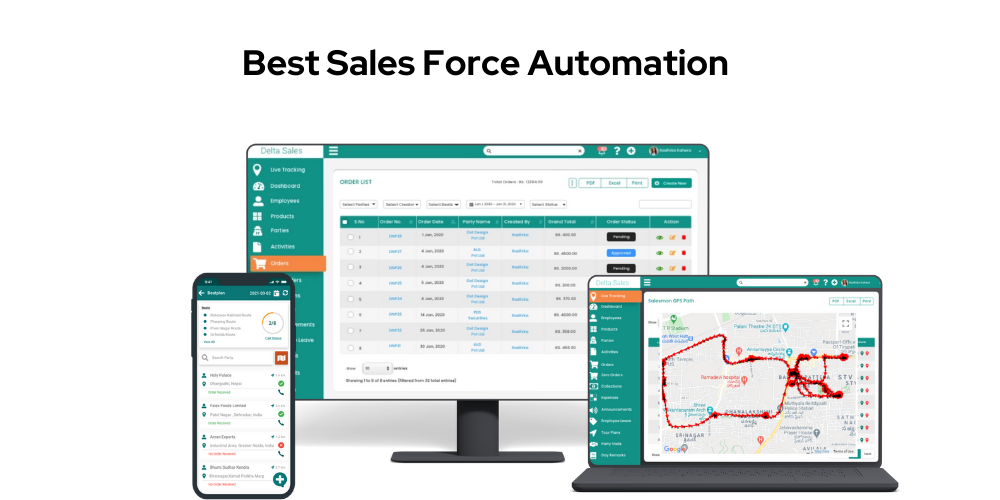
A Field Sales App is a mobile-based sales automation tool used by field sales representatives to manage and record all their on-ground activities in real time. It helps convert field operations into structured digital data that can be tracked and analyzed by the company.
Key Functions of a Field Sales App
- Real-time order taking from retailers
Sales representatives can capture customer orders instantly during outlet visits using a mobile device. This eliminates paper-based orders and reduces the chances of errors or missed entries. - Outlet visit tracking and beat management
The app records which retailers were visited, when they were visited, and how frequently. This ensures that every assigned outlet is properly covered according to the planned sales route. - Secondary sales data collection
Field reps can log actual sales happening at the retail level. This helps distributors understand real market demand instead of relying only on primary sales data. - Payment collection and outstanding tracking
Sales executives can record payments collected from retailers and update outstanding balances instantly, improving cash flow visibility. - Product availability and stock updates
Field teams can check and report stock availability at retail stores, helping distributors understand which products are fast-moving or facing shortages. - Sales force attendance and activity monitoring
The app tracks login time, working hours, and field activity, ensuring better accountability and performance management of sales teams.
What is an ERP (Enterprise Resource Planning)?
An ERP system is a centralized business management software that distributors and companies use to manage their internal operations, finances, and supply chain processes.
While a field sales app is about on-ground execution, ERP is the back-office and operational control side of the business.
In distribution and FMCG businesses, an ERP system typically handles:
- Inventory and stock management
- Order processing and billing
- Accounting and financial reporting
- Warehouse and dispatch operations
- Purchase and supply chain planning
- Credit and receivables management
ERP is the one system of record for the entire enterprise, ensuring that all transactions and operations are properly recorded and structured.
Why ERP Alone is No Longer Enough
ERP systems have been the backbone of distribution businesses for years. They helped companies organize inventory management, billing, accounting, and warehouse operations. But in the fast-paced world of today’s FMCG, where decisions have to be made in real time, ERP by itself is no longer enough to manage the complexity of modern distribution.
The key constraint of ERP is not the capacity but the reliance on lagged or manually collected field data. Most ERP systems are back-end record systems, not real-time execution tools. This disconnects what is happening in the marketplace with what the business sees on the screen.
Here’s why excessive reliance on ERP is a growing challenge for distributors:
-
Delayed Field Data Entry Slows Down Decision-Making
Most ERP systems for distributors are based on field data entered after sales activities are completed, often at the close of the day. This lag creates a gap between the market activity and system visibility. In FMCG distribution management, the demand changes very fast, and even a few hours of delay can affect the stock replenishment and order fulfillment. Without real-time data, companies face slow decision-making, delayed dispatches, and lost sales opportunities, all of which have a direct impact on the revenue.
-
No Real-Time Visibility of Market Demand
Traditional ERP platforms are designed to track historical sales data rather than live market activity. They show what has already been sold but fail to capture real-time demand from retailers and the field. This is a major limitation of modern FMCG sales tracking systems, where an understanding of current market demand is critical. Distributors can’t accurately forecast demand or align inventory planning with real-time retailer needs. Without integration with field sales automation software, distributors can experience stockouts and inefficient supply chain operations.
-
Dependence on Manual Updates Creates Errors
In many distribution setups, back-office teams often manually enter field sales data into the inventory management system or ERP software. This manual dependency increases the risk of human errors such as duplicate order entries, incorrect pricing, missing SKUs, or unmatched stock records. Over time these errors affect the accuracy of reporting and the transparency of financial information. A modern sales force automation app removes this dependency, allowing field data to be captured directly, reducing manual intervention and improving data accuracy across the FMCG distribution network.
-
Weak Field Force Accountability
ERP systems do not provide visibility into the real-time activities in the field, making it difficult to track the performance of the sales representatives in the market. They log results, not the behavior of the execution. This limits the monitoring of outlet visits, beat plan adherence, and productivity in field sales operations. Without a connected real-time sales tracking system, managers have to assume and not use actual field performance data, which limits their ability to control the sales force and overall execution efficiency.
-
Slow Response to Competitor Movements
The FMCG industry is highly competitive, with frequent changes in pricing strategies, retailer schemes, and promotional offers. Since ERP systems rely on delayed data entry, businesses often fail to respond quickly to these market changes. By the time reports reflect competitor activity, the opportunity to react may already be lost. Without a connected FMCG field sales automation system, distributors cannot capture real-time competitor insights or adjust strategies fast enough to protect shelf space and market share.
-
Lack of Integration with Field Execution
ERP systems are primarily designed to support internal operations such as accounting, inventory control, billing, and warehouse management. They are not intended for direct use in the field or to take orders in real time. This is causing a disconnect between field sales teams and back-end systems, resulting in a fragmented flow of data. The lack of integration between field sales apps and ERP systems prevents a single view of operations, leading to delayed reporting, inefficiencies, and lower visibility across the distribution chain.
The Real Power: Field Sales App + ERP Integration
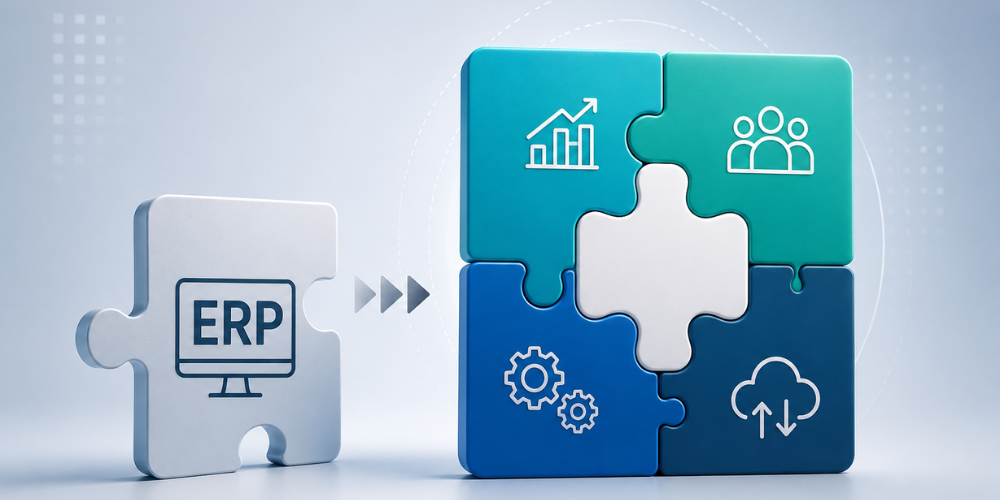
The real evolution in today’s FMCG distribution management software happens when the field sales automation system and an ERP system for distributors are no longer two separate tools, but are instead merged into one connected ecosystem. It eliminates delays, takes out manual dependencies and allows for a real-time flow of information between the field execution and back-end operations.
When done right, the integration between field sales apps and ERP software means what is done in the field is immediately updated in the ERP system. This gives a unified digital backbone to the entire distribution business, improving speed, accuracy and decision making at all levels. By integration You can experience :
-
Real-Time Order Synchronization Between Field and ERP
One of the most powerful outcomes of integration is real-time sales order processing. When a sales representative takes an order using a field sales automation app, it is instantly pushed into the ERP system without manual entry. This removes delays in order approval, billing, and dispatch.
For FMCG distributors, this means faster order cycles, reduced processing time, and improved retailer satisfaction. It also ensures that the inventory management system in ERP is always updated with the latest demand from the field.
-
Seamless Payment and Collection Updates
Connecting field sales apps with ERP systems provides real-time updates to the financial system for payment collection data. When a payment is received from a retailer by a field executive, it automatically gets reflected in the ERP ledger.
This improves cash flow visibility, reduces outstanding payment issues, and enhances credit control management, a critical part of any ERP system for FMCG distributors.
-
End-to-End Field Force Tracking with ERP Alignment
A major advantage of integration is the complete transparency of field force activity management. The field sales app records sales reps' outlet visits, beat plan execution, working hours and route tracking and syncs them with ERP dashboards.
This allows managers to monitor performance in real time, drive productivity and ensure better execution discipline on the sales team. It also enhances accountability in sales force automation systems.
-
Automated Secondary Sales Tracking
“Historically, secondary sales data in legacy systems is either delayed or keyed in manually, making it tough to get a feel for actual market demand. The secondary sales tracking is automated and in real-time through integrated systems, because every retail transaction in the field is directly updated in the ERP.
This allows distributors to analyze SKU-level performance, identify fast-moving products and optimize supply chain planning with accurate market data.

-
Data-Driven Decision Making with Unified Dashboards
Distributors have a single source of truth by integrating field sales data and ERP data. This enables powerful FMCG analytics dashboards, in real-time, showing:
-
Sales performance by territory
-
Product-specific demand trends
-
Performance of field teams
-
Inventory movement data
This consolidated visibility enables business owners to make quicker, better decisions based on live market conditions, rather than stale reports.
-
Reduced Manual Work and Error-Free Operations
Integration eliminates the need for manual data entry between field teams and back-office ERP systems. This significantly reduces human error, such as double orders, incorrect billing or mismatched inventory records.
Distributors achieve greater operational accuracy, less work and more efficiency in all departments by automating the data flow through a connected field sales automation and ERP ecosystem.
-
Live Inventory Visibility and Stock Accuracy
The integration with ERP and field sales app keeps inventory data updated real time with the orders and secondary sales activity. This means that the distributors are always aware of the actual picture of the stock availability at the warehouses and distribution points.
This integrated approach avoids the usual problems of stock-outs and overstocking, which are some of the biggest issues facing FMCG distribution software systems. Field teams can also see product availability before placing orders, ensuring sales execution matches actual stock levels.
Impact on Field Sales Teams
The integration of a field sales automation app with ERP systems has a direct and powerful impact on the way field sales teams operate in FMCG distribution. It improves visibility, simplifies daily operations, and increases overall productivity of the sales force by removing manual dependencies and allowing real-time workflows.
-
Higher Productivity with Less Manual Work
A sales force automation app helps field reps get rid of paper notes and re-typing data. Orders, visits and updates are captured once and synchronized directly to the ERP system. This reduces the manual workload and provides more time for actual selling and retailer engagement, thereby improving FMCG field productivity overall.
-
Real-Time Order Booking and Faster Confirmation
With integrated systems the orders can be booked in real time from the retail outlets and the orders are immediately reflected in the ERP. This accelerates billing, dispatch and confirmation, resulting in faster delivery cycles and improved retailer satisfaction in FMCG distribution.
-
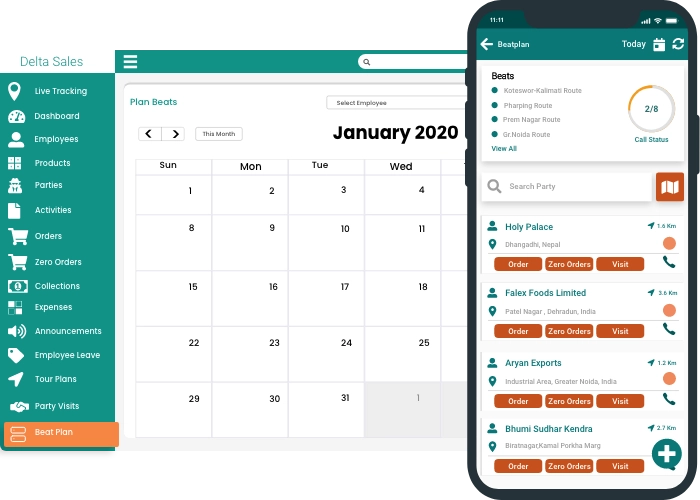
Smarter Route Planning and Beat Optimization
GPS tracking and beat planning tools enable field teams to stay on optimized routes while ensuring proper outlet coverage. This enhances efficiency, cuts down on travel time and guarantees uniform visits to retailers across territories, which improves FMCG sales execution.
-
Better Visibility of Stock and Schemes
The integrated system gives field reps real-time access to inventory levels, product availability and promotional schemes. This helps them in taking accurate orders at the outlet level and helps in avoiding stock mismatch issues while FMCG order booking.
-
Increased Accountability and Performance Tracking
GPS-based field tracking and activity monitoring registers every outlet visit, order and working hour in real-time. Managers can monitor the performance transparently ensuring better discipline, accountability and productivity in the sales force.
-
Faster Feedback Loop from Market to Management
The app lets field teams capture retailer feedback, competitor activity and stock issues instantly on their mobile devices. This real-time data sync with ERP systems helps management to make faster decision making based on live FMCG market insights.
-
Improved Motivation and Simplified Workflows
Field reps have a better flow without repetitive reporting and manual updates. With automated sales tracking and mobile field execution tools, they can spend more time selling, which improves job satisfaction and overall performance.
Real-World Scenario: How Distribution Changes With vs Without Integration
To understand the real impact of Field Sales App + ERP integration in FMCG distribution, let us take a simple scenario: a day in the life of a distributor who manages field sales, orders and inventory.
"The difference is not just operational, it changes the speed and accuracy of the business altogether."
Scenario: A Typical Sales Day in FMCG Distribution
Imagine a sales representative visiting 10–15 retail outlets in a day, taking orders, checking stock, and updating the system.
Now let’s see how this same workflow looks in two different setups.
Without Integration (Disconnected System Flow)
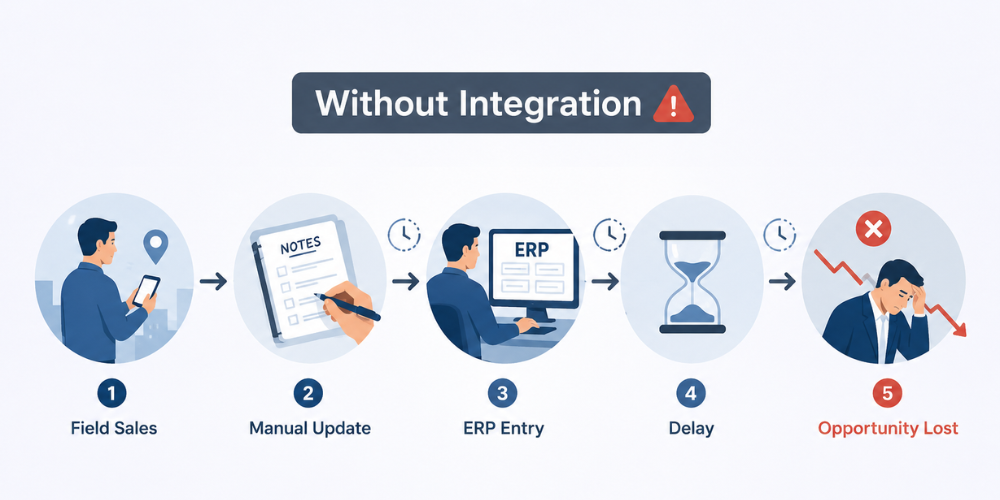
In a traditional setup, the sales rep uses a field sales app or manual method, but the ERP system is not connected in real time.
- Orders are captured in the field but updated later in ERP
➝ Leads to delayed order processing and billing - Inventory is not updated instantly
➝ Causes stock mismatch and dispatch delays - Managers receive end-of-day reports only
➝ No real-time sales tracking or visibility - Beat plan and outlet visits are not monitored live
➝ Weak field force accountability and GPS tracking visibility - Retailers face delays in confirmation and delivery
➝ Reduces trust and repeat orders
Result: The entire system works in delayed cycles, causing inefficiency and missed sales opportunities.
With Integration (Connected Real-Time System)
Now imagine the same sales rep using a field sales automation system fully integrated with ERP software.
- Orders are booked and instantly synced to ERP
➝ Enables real-time sales order processing and billing - Inventory updates automatically after every order
➝ Ensures accurate inventory management and stock visibility - Managers see live dashboards of field activity
➝ Enables real-time FMCG sales tracking and decision-making - GPS-based beat tracking monitors every outlet visit
➝ Improves beat planning and field execution control - Retailers get faster confirmation and delivery updates
➝ Improves satisfaction and repeat purchases
Result: A fully synchronized system where field execution and backend operations work as one real-time engine.
Why Delta Sales App is Ideal for Integration?
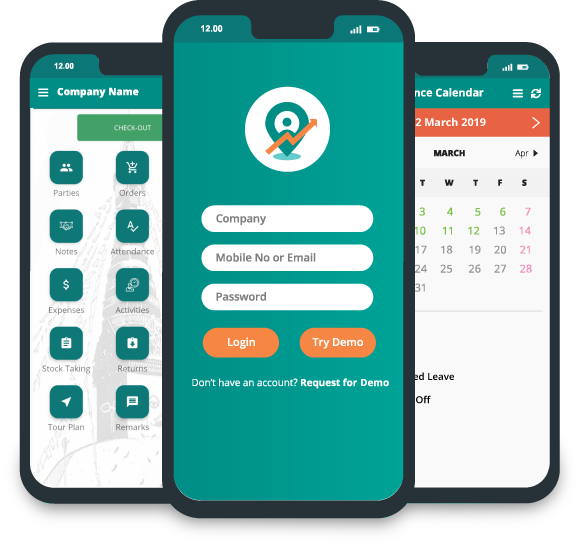
Delta Sales App is a field sales automation software solution for FMCG distributors and sales team to handle end-to-end field execution in real-time. It helps businesses digitize their sales operations, allowing field representatives to capture orders, track outlet visits, manage collections and update sales data directly from the field using a mobile device. It is crucial for seamless Field Sales App + ERP integration and links field execution and backend operations in a synchronized workflow.
Field sales activities, inventory updates, and financial records are exchanged seamlessly between the field and the ERP system, rather than in isolation, creating a truly connected distribution ecosystem. Here is why Delta Sales App is worth choosing for integration:
-
Real-Time Field Order Sync with ERP Systems
The Delta Sales App allows for instant order booking at retail outlets, with each order booked by the sales representative immediately synced with the ERP system. It eliminates manual data entry and reduces delays in order processing, billing and dispatch management. This helps FMCG distributors to reduce the turnaround time and improve retailer satisfaction with faster fulfillment cycles.
-
Seamless Inventory Synchronization
Live integration with ERP and field operations keeps inventory data up to date as orders are made. This provides visibility of stock levels across warehouses and distribution channels, enabling distributors to avoid stockouts, overstocking, and mismatch between demand and supply. It also improves inventory planning and FMCG supply chain efficiencies by correlating field demand with backend stock levels.
-
Automated Secondary Sales Visibility
All sales transactions captured in the field automatically flow into ERP dashboards for precise secondary sales tracking in FMCG distribution. This gives distributors real-time visibility into SKU-level performance, product movement trends and retailer demand patterns, enabling better forecasting and smarter stock allocation decisions.
-
Instant Payment and Collection Updates
The field executives can record payments during visits to the retailers and update the same immediately in the ERP system. It improves credit control, receivables tracking and cash flow management and reduces delays in financial reconciliation. And it also boosts transparency between field teams and back-office finance operations.
-
Offline Functionality for Uninterrupted Field Execution
Offline Functionality is one of the most important features. This allows field sales teams to keep working even in areas where there is poor or no internet connection. Offline orders, visit updates and collections can still be taken by sales reps. When connectivity is restored, all data is automatically synchronized with the ERP system, with no duplication or data loss. This makes the system very reliable for FMCG distribution in rural areas and for remote field operations where network issues are a common occurrence.
-
Unified Dashboard for Real-Time Decision Making
The system integrates field data with ERP data to provide a single dashboard with real-time information on sales performance, inventory movement and field activity. Faster, data-driven decisions for FMCG distributors enabling them to respond quickly to changes in market demand and competitor activity.
-
Reduced Manual Work and Error-Free Operations
The integration removes the need for data entry between field teams and office staff. This goes a long way in preventing errors such as duplicate orders, incorrect billing, and mismatched inventory records. Distributors achieve improved accuracy, efficiency, and control over operations by automating workflows with a connected field sales automation and ERP integration system.
-
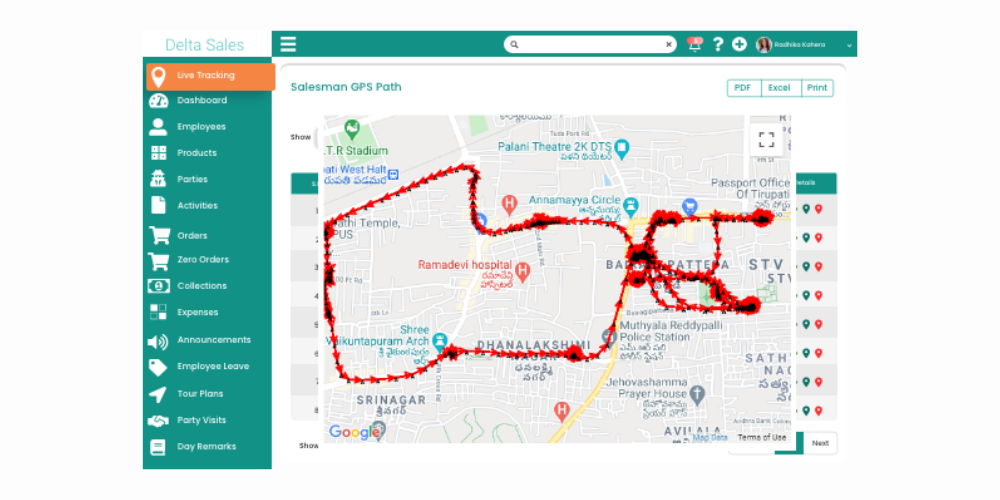
GPS-Based Field Tracking and Beat Planning
The platform provides gps tracking, route optimizing and structured beat planning, giving managers real time visibility of field sales operations. All outlet visits, route coverage and working hours are automatically logged and synced with the system. This increases field force accountability, territory coverage and sales execution discipline ensuring that no outlet is missed in the day to day operations.
Conclusion
In today’s competitive FMCG distribution landscape, speed and accuracy are no longer an option, they are the keys to survival and growth. Distributors that continue to operate with siloed systems often face delays in order processing, poor visibility into field activity, and inefficiencies in inventory and sales tracking. That’s why the integration of a field sales app and ERP has become a core requirement for building a winning distribution network.
Connecting field execution to backend ERP systems offers businesses real-time visibility and control over orders, inventory, payments, and field force performance. It improves operational efficiency, enables better decision-making, reduces manual errors, and ensures that every sales opportunity in the market is captured effectively. This results in a more agile, responsive, and data-driven FMCG distribution system. As competition intensifies, distributors that embrace integrated solutions will always win through faster execution, greater retailer satisfaction, and increased visibility in the market.
Book a free demo today and experience a more efficient, faster, and smarter way to manage FMCG distribution.