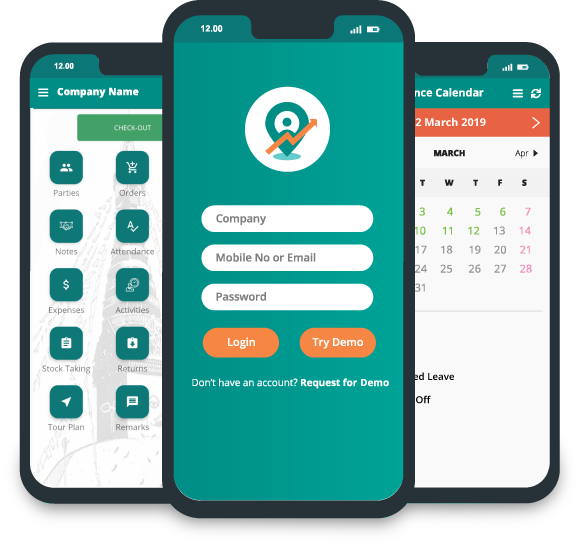

Field Sales Tracking: Complete Guide for Sales Managers

Field sales tracking has become essential for organizations that rely on field sales teams for customer acquisition, relationship building, and revenue growth across industries such as FMCG, pharmaceuticals, manufacturing, consumer goods, telecom, and distribution. However, managing a distributed field sales workforce comes with significant challenges. Sales managers often struggle to track employee locations, customer visits, territory coverage, and daily productivity, leading to reduced visibility and missed opportunities.
This is where field sales tracking becomes essential.
Field sales tracking enables organizations to monitor field activities, track employee locations, verify customer visits, analyze performance, and improve overall operational efficiency. Modern field sales tracking solutions combine GPS technology, mobile applications, attendance management, reporting tools, and automation capabilities to provide real-time visibility into sales operations.
In this comprehensive guide, we will explore everything sales managers need to know about field sales tracking, including its benefits, features, best practices, challenges, and future trends.
What Is Field Sales Tracking?
Field sales tracking refers to the process of monitoring, recording, and analyzing the activities of sales representatives while they perform their duties outside the office.
The primary objective of field sales tracking is to provide managers with complete visibility into field operations while helping sales representatives stay productive and organized throughout their working day.
Instead of relying on manual reports or end-of-day updates, managers can access real-time information about field operations through centralized dashboards.
Organizations increasingly use Field Sales Tracking App to streamline monitoring processes, improve accountability, and gain better control over field operations. Businesses looking to understand the broader management perspective can explore Field Sales Management Software, which explains how modern solutions help sales leaders manage distributed teams effectively.
Why Field Sales Tracking Is Important for Modern Sales Teams
Modern sales teams operate in a fast-paced environment where customers expect quick responses, personalized service, and timely follow-ups. At the same time, sales managers need better visibility into field activities to improve productivity and ensure effective territory coverage.
Field sales tracking helps businesses meet these demands by providing real-time insights into team performance and customer interactions.
Key benefits include:
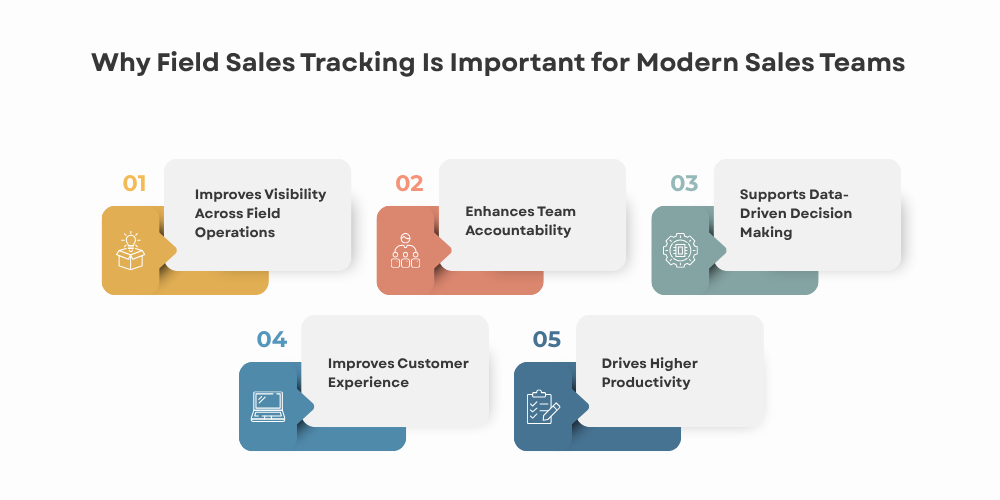
Improves Visibility Across Field Operations
Field sales tracking app provides real-time insights into employee activities, customer visits, and territory coverage, enabling better operational control.
Enhances Team Accountability
Automated tracking creates transparency by recording field activities, helping managers verify performance and ensure responsibility across teams.
Supports Data-Driven Decision Making
Accurate field data helps managers identify trends, evaluate performance, optimize resources, and make informed business decisions.
Improves Customer Experience
Field sales tracking ensures timely visits, consistent follow-ups, and better service delivery, leading to stronger customer relationships. Businesses can improve Customer Engagement Through Field Tracking through field operations.
Drives Higher Productivity
Real-time monitoring helps reduce inefficiencies, optimize workflows, and increase the time sales representatives spend engaging customers.
Key Challenges in Managing Field Sales Teams Without Tracking
Managing field sales teams without a dedicated tracking system often leads to operational inefficiencies and reduced performance.
Let's examine some of the most common challenges organizations face.
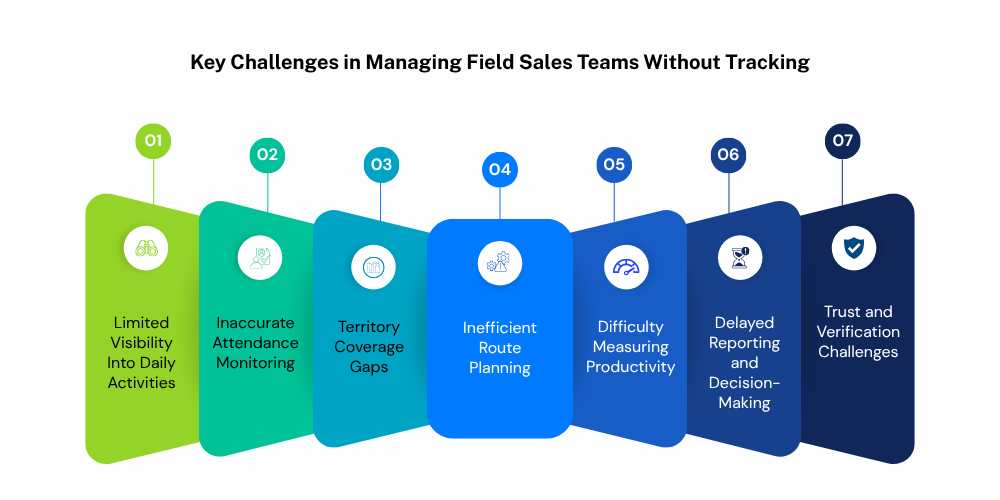
Limited Visibility Into Daily Activities
Without field sales tracking, managers rely on manual reporting, resulting in limited visibility, delayed updates, inaccurate information, and challenges in monitoring field sales activities.
Inaccurate Attendance Monitoring
Remote field teams make attendance tracking difficult, creating challenges in verifying work hours, customer visits, and activity completion without reliable monitoring systems. Implementing Attendance and Activity Tracking helps organizations maintain accurate records while improving workforce accountability.
Territory Coverage Gaps
Lack of location visibility often leads to uneven territory coverage, missed sales opportunities, lower market penetration, and ineffective field sales management.
Inefficient Route Planning
Without route optimization and field sales tracking, representatives spend more time traveling, increasing operational costs and reducing productive customer-facing hours.
Difficulty Measuring Productivity
Traditional reporting methods provide limited insights into field sales performance, making it difficult to measure productivity, customer visits, and territory effectiveness.
Delayed Reporting and Decision-Making
Manual reporting delays access to critical field sales data, slowing decision-making and preventing managers from responding quickly to emerging opportunities. Organizations using Real-Time Reporting and Sales Visibility gain immediate access to critical performance data, enabling faster and more informed decisions.
Trust and Verification Challenges
Organizations often struggle to verify customer visits and field activities, making GPS tracking and location-based reporting essential for transparency and accountability.
How Field Sales Tracking Works
Field sales tracking combines mobile technology, GPS services, cloud-based platforms, reporting systems, and automation tools to provide complete visibility into field operations.
Although specific features vary between platforms, most tracking systems follow a similar workflow.
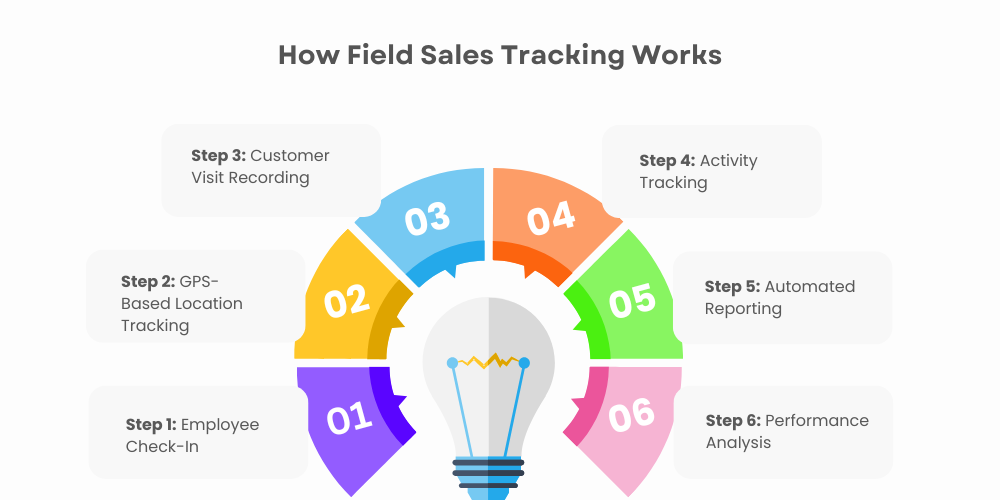
Step 1: Employee Check-In
Field sales representatives begin their day by checking into the field sales tracking app, allowing managers to monitor attendance, work schedules, and daily field activities accurately.
Step 2: GPS-Based Location Tracking
The system continuously captures GPS location data during working hours, enabling real-time field sales tracking, route monitoring, territory coverage analysis, and customer visit verification.
Step 3: Customer Visit Recording
Whenever a sales representative visits a customer, the field sales tracking system records visit details, helping managers gain visibility into customer interactions and engagement.
Step 4: Activity Tracking
Throughout the day, field sales activities are updated through the mobile app, providing managers with real-time insights into sales execution and productivity.
Step 5: Automated Reporting
The system automatically generates field sales reports, providing instant visibility into attendance, customer visits, territory coverage, productivity, and overall sales performance.
Step 6: Performance Analysis
Managers use dashboards and analytics to evaluate field sales performance, identify improvement opportunities, optimize operations, and make data-driven business decisions.
Core Components of a Field Sales Tracking System
An effective field sales tracking system consists of multiple interconnected components that work together to provide complete visibility into field operations. While GPS tracking is often considered the most visible feature, modern tracking platforms include a much broader set of capabilities that help managers monitor performance, improve productivity, and optimize customer engagement.
Understanding these core components can help organizations select the right solution and maximize the value of their field sales operations.
- GPS Tracking: Enables real-time field sales tracking by monitoring employee locations, customer visits, route progress, and territory coverage.
- Attendance Tracking: Helps organizations manage field employee attendance accurately through location-based check-ins and automated work-hour records.
- Activity Tracking: Provides visibility into daily field sales activities, helping managers monitor productivity, task completion, and sales execution.
- Customer Visit Tracking: Records customer interactions and visit details, improving accountability, customer engagement, and relationship management.
Benefits of Field Sales Tracking for Sales Managers
Field sales tracking provides advantages that extend beyond simple location monitoring. It empowers managers with the information needed to improve performance, increase accountability, and drive business growth.
Let's examine the key benefits:
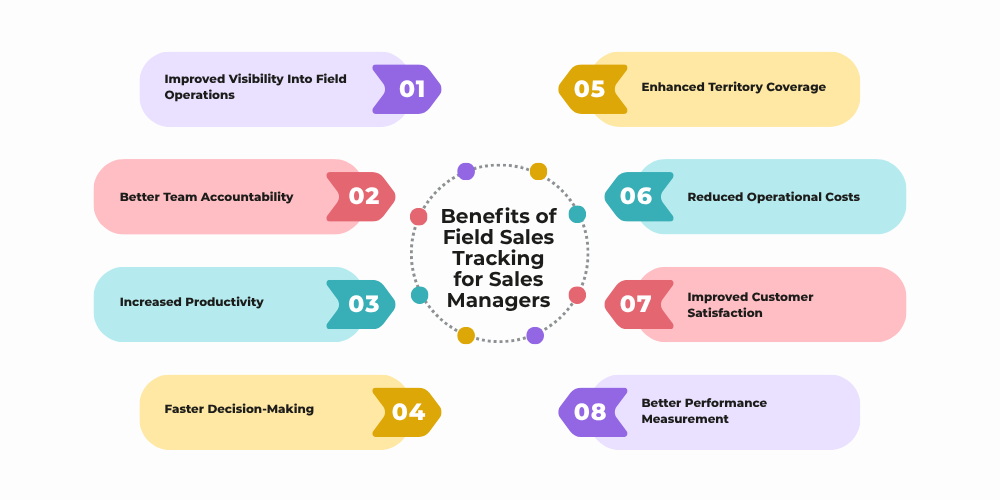
Improved Visibility Into Field Operations
Field sales tracking provides real-time visibility into employee locations, customer visits, territory coverage, and daily activities, enabling sales managers to monitor operations effectively and make informed decisions.
Better Team Accountability
Field sales tracking automatically records activities and customer visits, improving accountability, ensuring task completion, enhancing transparency, and helping managers maintain consistent performance standards across teams. Organizations implementing Field Employee Location Tracking often find that accountability improves without negatively impacting employee morale when implemented correctly.
Increased Productivity
By identifying inefficiencies in travel, scheduling, and customer visits, field sales tracking helps organizations optimize workflows, increase productive selling time, and improve overall sales productivity. Businesses focused on Improving Field Sales Productivity often use tracking data to optimize workflows and improve results.
Faster Decision-Making
Real-time field sales data enables managers to respond quickly to operational changes, resolve issues faster, optimize resources, and make more accurate business decisions.
Enhanced Territory Coverage
Field sales tracking helps managers analyze territory performance, identify coverage gaps, monitor customer engagement, and ensure balanced distribution of sales efforts across markets.
Reduced Operational Costs
By improving route planning, reducing unnecessary travel, and increasing visit efficiency, field sales tracking helps businesses lower operational expenses and maximize resource utilization.
Improved Customer Satisfaction
Field sales tracking supports timely customer visits, better follow-ups, and consistent communication, helping organizations deliver superior customer experiences and strengthen long-term relationships.
Better Performance Measurement
Field sales tracking provides accurate performance data, allowing managers to evaluate productivity, customer engagement, territory coverage, and sales outcomes using measurable insights.
Field Sales Tracking vs Traditional Sales Monitoring Methods
Many organizations still rely on manual monitoring methods such as spreadsheets, phone calls, paper reports, and end-of-day updates.
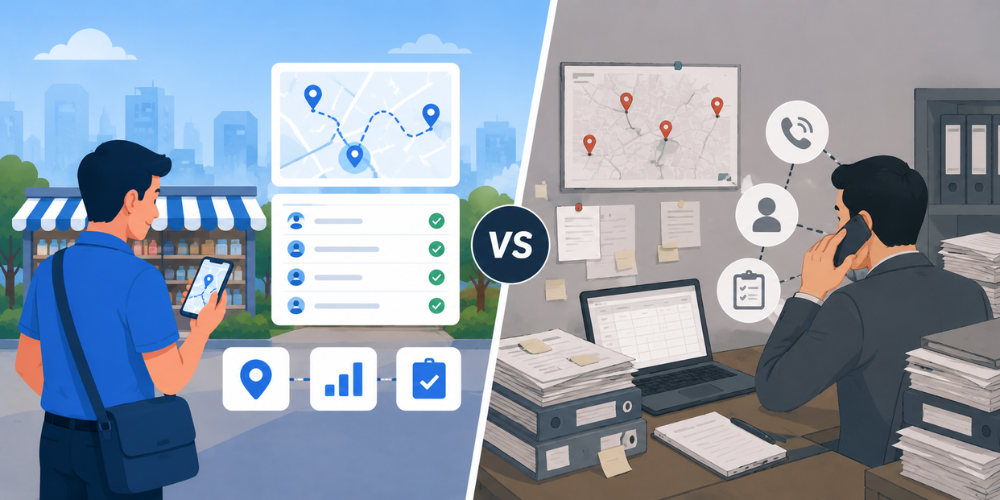
While these approaches may have worked in the past, they often fail to meet the demands of modern sales environments.
Traditional Sales Monitoring Methods
Traditional sales monitoring relies on manual processes such as phone calls, spreadsheets, paper-based reports, and end-of-day updates. These methods often provide limited visibility into field operations, making it difficult for managers to verify customer visits, track employee activities, and monitor territory coverage accurately. As a result, reporting delays and data inconsistencies can impact decision-making and overall sales performance.
Field Sales Tracking
Field sales tracking uses GPS technology, mobile applications, automated reporting, and real-time dashboards to provide complete visibility into field operations. Managers can monitor employee locations, customer visits, attendance, territory coverage, and sales activities instantly. This improves accountability, enhances productivity, enables data-driven decision-making, and helps organizations optimize field sales performance more effectively.
Why Modern Businesses Are Switching to Field Sales Tracking
As competition increases and customer expectations evolve, businesses require better visibility into field operations.
Modern tracking systems help organizations:
- Improve Workforce Efficiency: Field sales tracking streamlines daily operations by reducing manual tasks, optimizing workflows, and helping teams manage field activities efficiently.
- Increase Sales Productivity: Real-time visibility into sales activities helps representatives spend more time selling and less time on administrative work.
- Strengthen Accountability: Automated tracking records attendance, customer visits, and task completion, creating greater transparency and responsibility across field teams.
- Enhance Customer Engagement: Field sales tracking enables timely customer visits, better follow-ups, and consistent communication, improving overall customer relationships.
- Support Data-Driven Decisions: Accurate field sales data helps managers analyze performance trends, optimize resources, and make informed strategic decisions.
Essential Features to Look for in Field Sales Tracking Software
Not all field sales tracking solutions offer the same capabilities. While basic systems may provide location monitoring, modern businesses require a comprehensive platform that supports workforce management, customer engagement, reporting, automation, and performance optimization.
When evaluating a field sales tracking solution, sales managers should focus on features that improve visibility, accountability, productivity, and decision-making.
Below are the most important features to consider.
GPS Tracking
GPS tracking enables real-time field sales tracking by monitoring employee locations, verifying customer visits, improving territory management, and enhancing workforce accountability.
Route Optimization
Route optimization helps field sales teams reduce travel time, improve territory coverage, increase customer visits, and maximize daily productivity.
Attendance and Activity Tracking
Attendance and activity tracking automatically records field employee attendance, work hours, and daily activities, improving visibility and accountability.
Customer Visit Tracking
Customer visit tracking confirms customer interactions through location-based tracking, helping managers ensure visits are completed and accurately documented.
Mobile Reporting
Mobile reporting allows field representatives to submit updates instantly, providing managers with real-time visibility into field sales operations.
Analytics and Performance Dashboards
Reports and Analytics dashboards transform field sales data into actionable insights, helping managers evaluate productivity, territory performance, and customer engagement.
Task and Workflow Automation
Task and workflow automation reduces manual work by automating routine processes, improving operational efficiency and overall field sales productivity.
CRM Integration
CRM integration connects customer information with field sales activities, enabling better customer management, follow-ups, and relationship building.
Offline Functionality
Offline functionality allows field representatives to continue recording activities without internet connectivity, ensuring uninterrupted field sales operations.
Scalability and Customization
Scalable field sales tracking software supports business growth, workflow customization, territory expansion, and evolving operational requirements effectively.
The Role of GPS Tracking in Field Sales Management
GPS technology has transformed the way organizations manage field sales teams. What was once a manual process dependent on phone calls and paper reports has become a highly transparent and data-driven operation. GPS tracking provides managers with real-time visibility into field activities while helping sales representatives operate more efficiently.
It enables organizations to monitor field movements, verify customer visits, optimize routes, and improve overall field sales performance.
Why GPS Tracking Matters
Real-Time Visibility: GPS tracking allows managers to monitor employee locations and field activities in real time, improving operational visibility and control.
Accurate Customer Visit Verification: It helps verify customer visits through location-based tracking, ensuring field representatives complete planned interactions.
Improved Territory Management: GPS tracking provides insights into territory coverage, helping managers identify gaps and distribute resources more effectively.
Enhanced Workforce Accountability: By recording field movements and activities automatically, GPS tracking promotes transparency and accountability across sales teams.
Better Route Optimization: GPS data helps reduce travel time, improve route planning, and increase the number of productive customer visits each day.
Faster Decision-Making: Real-time field sales tracking enables managers to respond quickly to customer requests, operational issues, and changing business needs.
How Attendance and Activity Tracking Improve Workforce Accountability
Attendance and activity tracking provide a clear picture of how field representatives spend their working hours. Rather than relying on assumptions or manual updates, managers gain access to objective performance data.
Accurate Attendance Monitoring
Mobile attendance tracking helps organizations accurately record employee work hours, locations, and check-ins, improving workforce accountability and reducing attendance-related discrepancies.
Visibility Into Daily Activities
Activity tracking provides real-time visibility into field sales activities, helping managers monitor productivity, customer interactions, and overall field workforce performance.
Encouraging Accountability
Automatically recorded field activities create transparency, encourage responsibility, improve performance measurement, and help employees maintain consistent standards across daily operations.
Supporting Performance Reviews
Attendance and activity tracking data provide measurable performance insights, enabling managers to conduct fair evaluations and identify employee development opportunities.
Customer Visit Tracking and Its Impact on Sales Performance
Customer visits remain one of the most critical activities in field sales. The quality and frequency of customer interactions often determine sales success, customer retention, and market growth. Customer visit tracking helps organizations ensure that these interactions are executed effectively.
Why Customer Visit Tracking Matters
Customer visit tracking provides visibility into customer interactions, helping managers monitor visit frequency, schedule adherence, and overall field sales performance.
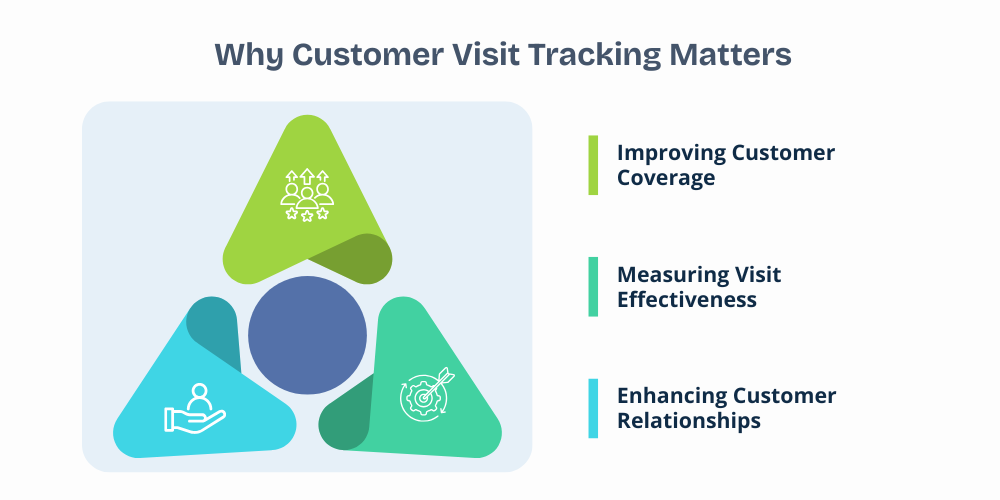
Improving Customer Coverage
Customer visit tracking helps organizations identify coverage gaps, balance territory management, improve customer engagement, and maximize market opportunities effectively.
Measuring Visit Effectiveness
Visit tracking captures valuable customer interaction data, enabling managers to evaluate outcomes, improve sales strategies, and enhance field sales productivity.
Enhancing Customer Relationships
Regular customer visit tracking supports consistent communication, timely follow-ups, and stronger customer relationships, improving customer satisfaction and long-term retention.
Field Sales Automation and Tracking: How They Work Together
Field sales automation and field sales tracking work together to improve productivity, visibility, and operational efficiency. While field sales tracking provides real-time insights into employee activities and customer visits, automation streamlines routine processes such as reporting, task management, and follow-ups.
Together, they help organizations manage field sales operations more effectively and make data-driven decisions.
Improved Operational Visibility
Field sales tracking provides real-time visibility into employee locations, customer visits, and daily activities, enabling better monitoring and control.
Reduced Manual Work
Field sales automation eliminates repetitive administrative tasks by automating attendance, reporting, follow-ups, and activity management processes.
Enhanced Sales Productivity
Combining field sales tracking with automation helps representatives spend more time selling and less time managing manual tasks.
Faster Decision-Making
Real-time tracking data and automated reports provide managers with actionable insights, supporting quicker and more informed business decisions.
Better Customer Management
Field sales automation and tracking improve customer engagement through timely follow-ups, structured visit schedules, and consistent communication.
How Field Sales Tracking Supports Multi-Industry Growth
Field sales tracking plays a vital role in helping businesses improve operational efficiency, customer engagement, and workforce management across industries. Whether in FMCG, pharmaceuticals, manufacturing, telecom, distribution, or consumer goods, organizations need accurate visibility into field operations to drive growth and maintain a competitive advantage. By providing real-time insights into employee activities, customer interactions, and territory performance, field sales tracking helps businesses optimize resources and improve overall sales effectiveness.
Visibility
Field sales tracking provides real-time visibility into employee activities, customer visits, and territory coverage, helping managers make informed operational decisions.
Accountability
Automated field sales tracking improves accountability by recording attendance, customer interactions, and task completion, ensuring responsibilities are fulfilled consistently.
Productivity
Field sales tracking reduces administrative effort, optimizes daily workflows, and increases customer-facing time, helping organizations achieve higher sales productivity.
Common Field Sales Tracking Challenges and How to Overcome Them
While field sales tracking delivers significant business benefits, successful implementation requires careful planning. Organizations often face challenges related to technology adoption, employee concerns, data accuracy, and operational processes.
Understanding these challenges can help sales managers create a smoother implementation strategy and maximize return on investment.
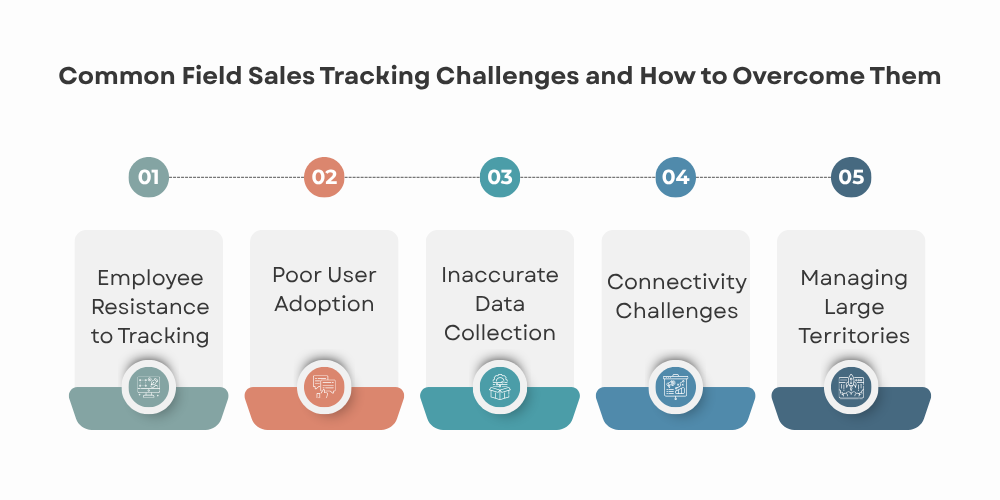
Employee Resistance to Tracking
Some field employees may view field sales tracking as surveillance. Clear communication about productivity, transparency, and operational benefits helps improve acceptance and adoption.
Poor User Adoption
Field sales tracking software delivers results only when used consistently. User-friendly interfaces, proper onboarding, and training encourage higher adoption across field teams.
Inaccurate Data Collection
Poor-quality field sales data can affect reporting and decisions. Automated tracking, GPS verification, and standardized processes help improve data accuracy and reliability.
Connectivity Challenges
Field representatives often work in low-network areas. Field sales tracking software with offline functionality ensures uninterrupted activity recording and seamless data synchronization.
Managing Large Territories
Managing extensive sales territories becomes challenging without visibility. Field sales tracking helps optimize routes, balance coverage, and improve territory management efficiency.
How to Build Trust While Implementing Employee Location Tracking
Trust plays a critical role in successful field sales tracking initiatives. Organizations that implement tracking without proper communication often encounter resistance and morale issues.
The goal should be transparency and collaboration rather than surveillance.
Communicate the Purpose Clearly
Organizations should clearly explain how field sales tracking improves productivity, customer service, route optimization, and operational efficiency to increase employee acceptance.
Focus on Productivity, Not Surveillance
Field sales tracking should be positioned as a productivity tool that reduces paperwork, improves efficiency, and supports fair performance measurement.
Establish Transparent Policies
Clear tracking policies regarding data collection, usage, access, and monitoring practices help build trust and encourage employee confidence.
Use Data Responsibly
Organizations should use field sales tracking data for coaching, productivity improvement, territory optimization, and customer service enhancement rather than excessive monitoring.
Best Practices for Successful Field Sales Tracking
Organizations that achieve the greatest success with field sales tracking typically follow a structured implementation strategy.
Below are several proven best practices.
Define Clear Business Objectives
Organizations should establish clear field sales tracking goals such as improving productivity, customer coverage, reporting accuracy, accountability, and operational efficiency before implementation.
Choose User-Friendly Technology
A user-friendly field sales tracking solution encourages adoption by offering simple navigation, mobile accessibility, intuitive dashboards, and seamless daily usage.
Automate Wherever Possible
Field sales automation reduces manual work by streamlining attendance tracking, reporting, visit verification, and task management, improving operational efficiency.
Monitor Meaningful Metrics
Organizations should focus on key field sales metrics such as customer visits, territory coverage, route efficiency, attendance compliance, and productivity.
Provide Continuous Training
Regular training helps field sales teams effectively use tracking software, adapt to updates, improve productivity, and follow operational best practices.
Review Performance Regularly
Periodic performance reviews using field sales tracking data help identify improvement opportunities, optimize workflows, and support continuous business growth.
How to Choose the Right Field Sales Tracking Software
Selecting the right field sales tracking software is essential for improving workforce visibility, productivity, customer management, and overall sales performance. Businesses should carefully evaluate solutions based on their operational requirements and future growth plans.
Assess Your Business Requirements
Organizations should evaluate team size, territory coverage, industry requirements, and reporting needs to select the most suitable field sales tracking software.
Prioritize Core Features
An effective field sales tracking solution should include GPS tracking, attendance management, activity monitoring, customer visit verification, and real-time reporting.
Evaluate Scalability
Businesses should choose scalable field sales tracking software that supports future team growth, territory expansion, workflow customization, and evolving business needs.
Consider Integration Capabilities
Field sales tracking software should integrate seamlessly with CRM systems, inventory management tools, reporting platforms, and sales automation solutions.
Analyze Reporting and Analytics
Strong reporting and analytics capabilities help managers gain real-time insights into field sales performance, productivity, customer engagement, and territory coverage.
Select a Proven Solution
Organizations should evaluate customer reviews, implementation support, training resources, and industry experience when selecting a reliable field sales tracking platform.

How Delta Sales App Helps Businesses Track and Manage Field Sales Teams
Modern businesses require more than basic location tracking. They need a comprehensive solution that provides visibility, automation, reporting, customer management, and workforce optimization.
Delta Sales App helps organizations manage field sales operations through features such as:
- GPS-based field employee tracking: Enables real-time employee location monitoring, improving route visibility and supporting field sales GPS tracking software initiatives.
- Attendance management: Automates attendance recording and work-hour tracking, helping businesses improve field force attendance and leave management.
- Activity monitoring: Provides visibility into daily field activities, helping managers enhance productivity through field sales management software solutions.
- Customer visit tracking: Records and verifies customer interactions, improving relationship management and strengthening customer engagement through field tracking efforts.
- Route management: Improves route planning and territory coverage, helping field teams reduce travel time, increase customer visits, and enhance productivity through field sales tracking software.
- Real-time reporting: Delivers instant access to field data and performance insights through real-time reporting and sales visibility tools.
- Order management: Efficient order management helps field teams capture, process, and track customer orders accurately, improving sales execution through field sales automation.
- Sales automation: Automates repetitive sales tasks and workflows, enhancing efficiency through ideal field sales automation strategies.
- Performance analytics: Provides actionable insights into team productivity and sales outcomes using advanced field sales team performance.
The platform helps managers gain complete visibility into field operations while enabling representatives to work more efficiently.
Organizations looking to improve productivity, accountability, and customer engagement can leverage Delta Sales App to streamline daily operations and support long-term business growth.
Final Thoughts
Field sales tracking has become an essential tool for businesses looking to improve visibility, accountability, productivity, and customer engagement. By combining real-time tracking, reporting, automation, and analytics, organizations can optimize field operations, make faster decisions, and drive better sales performance.
As field sales environments become more competitive, investing in the right field sales tracking software can help businesses improve efficiency, strengthen customer relationships, and achieve sustainable growth.
Ready to Improve Your Field Sales Performance?
Book a free demo today and see how Delta Sales App helps businesses track field teams, automate workflows, and improve sales productivity.