
How to Build a Market Visit SOP That Every Sales Rep Actually Follows

Your sales people may go to 20 or more stores in a day. Are they all doing the same things? One sales person checks how much stock is on the shelves before they take an order. Another sales person just starts taking orders away. Someone forgets to check if a product's in stock. They also do not take photos of the shelves. They miss getting comments from the store manager. By the end of the day every sales report looks different. This makes it hard for managers to know what really happened in stores. This is a problem that a lot of companies have, like the ones that make things, the ones that deliver things, and the ones that sell food and other daily items. Even when salespeople are experienced, if they do not visit stores in a way that can mean they miss out on sales, do not do a good job in the stores, send in wrong reports, or do not have good relationships with store owners.
Having a plan for sales people to follow when they visit stores solves this problem. This plan is called a Market Visit Standard Operating Procedure. It gives every sales person the steps to follow when they visit a store. By just doing what they think is best, every salesperson follows the same plan, so every store owner gets the same treatment, and every visit gives the company good information.
Making a plan is only part of the job. The hard part is making a plan that sales people can easily follow when they are busy. If the plan is long, too hard to understand, or requires salespeople to write everything down by hand, they will not follow it.
In this blog, we will talk about how to make a plan for sales people to follow when they visit stores. We will also talk about the steps, common mistakes to avoid, and how using a special kind of software can help make sure salespeople visit stores in a consistent way, follow the rules, and give managers a clear view of what is happening in the field with the sales team and the Market Visit Standard Operating Procedure and the market visits.
What Is a Market Visit Standard Operating Procedure?
A market visit standard operating procedure is a set of guidelines that tells a sales representative what to do during and after visiting a retailer. This helps to make sure that every market visit is the same no matter who is visiting the store or where it is located.
Instead of letting each sales representative decide what to do, a market visit standard operating procedure makes sure everyone follows the same steps. This way, important tasks like checking if products are available, looking at how products are displayed, seeing what competitors are doing, taking orders, and getting feedback from retailers are always done.
A typical market visit standard operating procedure includes things like
- Following the plan for which stores to visit
- Checking if products are in stock and how they are displayed
- Looking at how products are shown on shelves
- Writing down what competitor products and promotions are available
- Taking orders correctly
- Collecting payments if needed
- Getting feedback from retailers
- Sending proof of the visit like a picture of the store or its location
- Finishing up the days reports
Having a Market Visit Standard Operating Procedure helps both sales representatives and managers. Sales teams know what they need to do on each visit, and managers get information that helps them see how sales teams are doing, check if things are being done right in stores, and find ways to improve sales.
When sales representatives use field sales automation software to help with their work in the field, following a market visit standard operating procedure is even easier. It has features like lists of things to do, ways to track where sales representatives are, and automatic reports that help sales representatives with each step of the visit and give managers a view of what is happening in the field. This reduces paperwork and makes people more accountable. Helps make sure every market visit is done to a high standard.
Why Most Market Visit SOPs Fail
Many businesses spend time creating market visit SOPs. Only a few sales reps follow them. The problem is not the SOP itself. It's that the process isn't practical for real-world field conditions.
Sales reps work fast. They visit retailers, handle orders, answer customer questions, and travel between locations. If an SOP is too long, hard to remember, or needs a lot of reporting, it gets ignored. Over time each salesperson develops their way of working. This leads to market execution and unreliable field data. Understanding why SOPs fail is the step to building one that your sales team will actually follow.
The SOP Is Complex
One big reason SOPs fail is that they try to cover every scenario. Long manuals with instructions look comprehensive but are hard to apply during a busy market visit. A sales representative does not have time to read lots of pages before going into a store. The sales representative needs a step-by-step process for the sales representative to follow when the sales representative is in the retail store. This step-by-step process should be easy for the sales representative to do without having to think about it much
There Is No Standard Process Across the Team
Without a workflow every sales rep develops their own routine. For example:
- One rep checks inventory before taking orders.
- Another focuses on order collection.
- Someone else records competitor activity. Skips retailer feedback.
- Another forgets to capture shelf images.
When every rep follows a process, market data quality becomes inconsistent. Managers can't compare field performance accurately. A successful SOP ensures that every retailer visit follows the sequence of activities.
Manual Reporting Creates Extra Work
Manual reporting is a hassle. A lot of companies still use old-fashioned notebooks, spreadsheets, or paper forms to write down what happens during market visits. The thing is, sales reps usually fill out these reports after they are done with the visits or at the end of the day. This means sales reps have to do work with manual reporting. Manual reporting creates work for sales reps.
Managers Cannot Verify Market Visits
An SOP only works if managers can confirm that every required activity was completed. Without verification, managers rely on verbal updates or manually submitted reports. This makes it hard to know whether reps visited assigned outlets, followed the planned route, or completed all tasks. This lack of visibility creates accountability issues. Makes coaching harder. Using features like GPS-based field employee tracking, GPS check-ins, and visit image capture helps managers verify visits.
The SOP Doesn't Fit Real Field Conditions
When we make an operating procedure in the office it does not always work out in the field. The sales representatives have to deal with a lot of things like being stuck in traffic stores being closed, and retailers not being available. They also get requests, from customers.
Sales Representatives Don't Understand the Purpose
When an SOP is introduced as another rule, employees may see it as extra paperwork. If reps understand how following the SOP improves their work, they're more likely to adopt it. Proper onboarding, training, and explaining the "why" behind each step improve compliance.
There Is No Way to Measure SOP Compliance
Many businesses keep an eye on how much money they make from sales. They often do not check if their teams are following standard operating procedures. Without numbers to track performance, managers do not know where their teams are not following the rules. Managers need to find out where their teams are struggling to follow SOPs. This helps them to take action and make sure everyone is doing things correctly.
Characteristics of a Sales Plan that Sales Teams Really Use
Not all sales plans are useful. Some are documents that people look at when they start a new job and then forget about. Others become a regular part of what the sales team does every day. The difference is in how easy it's to use the plan when you are out in the field.
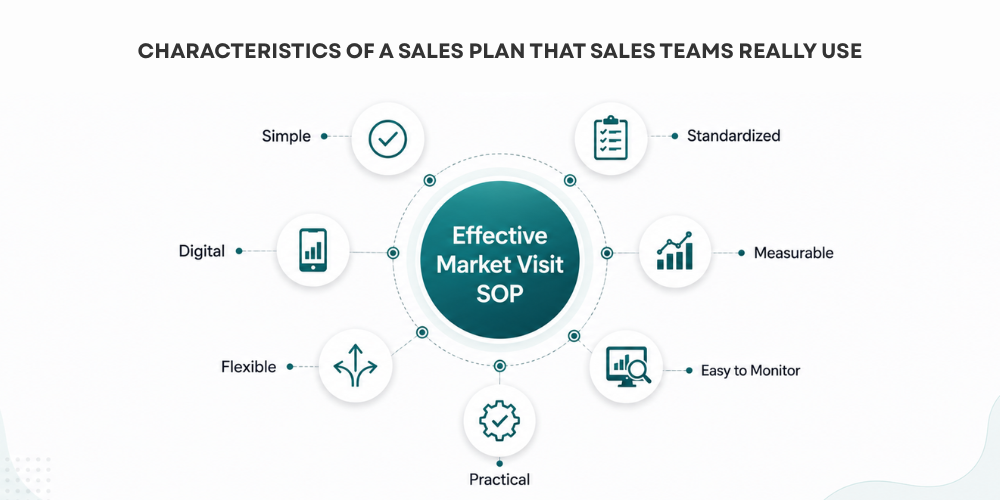
A good sales plan should make a salesperson's job easier, not harder. It should give them instructions, fit in with what they do every day, and be easy for their managers to check on. When a plan is made with the world in mind, salespeople are more likely to use it all the time, which means they will do a better job in stores and get more reliable information from customers. Here are the main things that make a sales plan that sales teams actually use:
It Is Easy to Understand
The best plans are simple. They do not have a lot of information or use language that is hard to understand. Instead, they give salespeople steps to follow that they can remember when they are out visiting stores. The easier it is to understand the plan, the more likely salespeople are to use it.
It Follows a Regular Routine
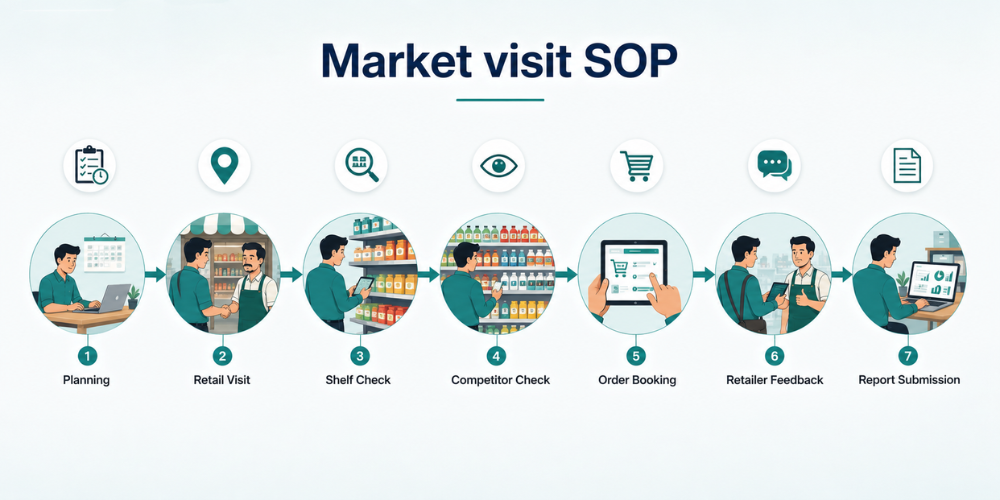
Every salesperson should do the things in the same order no matter where they are or how much experience they have. For example a regular routine might include:
- Check in at the store
- Look at what productsre available
- Check how the products are displayed
- See what the competition is doing
- Take the stores order
- Get feedback from the store
- Take a picture to prove you visited
This helps make sure that every store gets the level of service and that reports are accurate.
It Works in the World
A good plan is made with the real world in mind. Salespeople often visit stores in one day have to travel and deal with unexpected things that come up. The plan should be realistic and fit in with what they do every day without slowing them down. If a plan seems like much extra work salespeople are less likely to use it.
It Uses Digital Tools
If salespeople have to rely on memory or paper lists, they might forget things or make mistakes. Using tools makes it easier for them to do each step of the plan when they visit a store. Using an SFA that helps with sales with features like lists GPS to track where you are and automated reports and analytics helps make sure that every step is done and recorded in real time.
It Clearly Says What to Do
Every salesperson should know what the salesperson is supposed to do when the salesperson visits a store. The plan should clearly say what the salesperson has to do, what information the salesperson needs to get, and what the salesperson should accomplish on each visit to the store. When salespeople know what to expect from the salesperson visit, the salespeople are less confused and more accountable for the salesperson's actions.
It Is Easy to Check On
A plan should not tell salespeople what to do but also make it easy for managers to check that they are doing it. Managers can check things like
- how many stores were visited
- If salespeople are sticking to their schedule
- how many visits were completed
- how many orders were taken
- If stores are giving feedback.
This helps managers see if the plan is working and find areas to improve.
It Can Be Improved Over Time
Things change, like what customers want and how the company sells things. A good plan should be looked at regularly. Updated based on what salespeople say about new goals and changes in how the company operates. Asking salespeople for their input can help find ways to make the plan better simplify what they do and make it easier to use without making it less consistent.
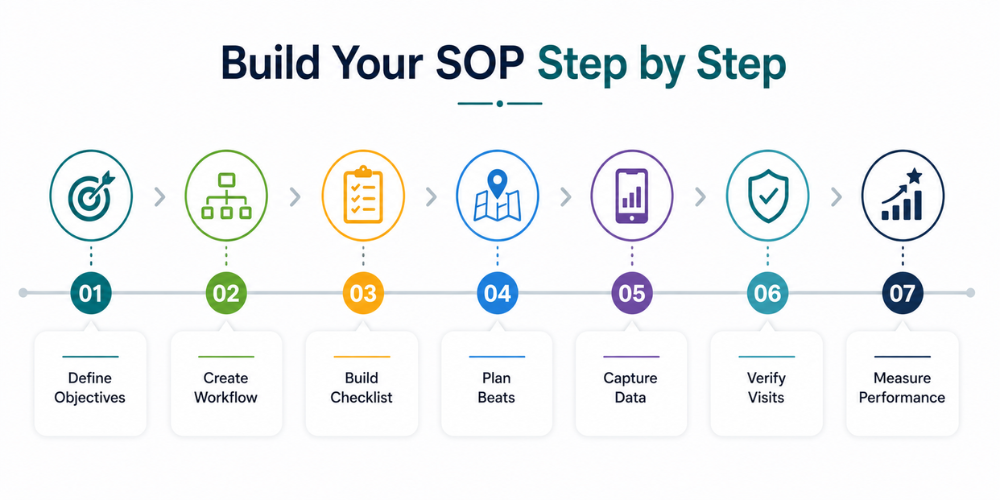
7 Steps to Build an Effective Market Visit SOP
Before you create a Standard Operating Procedure (SOP), you need to know what it's for. The goal is not to make a document with many rules. A good market visit SOP gives a clear process that sales reps can follow and document with a tailored visit. market visit

By dividing the process into steps, you can make sure sales reps do things the same way every time, hold them accountable, and make sure each market visit helps improve sales and gives better data. Here's how to make an SOP that really works in the field:
Step 1: Define What Sales Reps Should Achieve on Every Market Visit
Before creating a plan, we need to know what every sales rep should do on a market visit. Collecting orders is important. It shouldn't be the only goal. A good visit should also check if products are available, see how they are displayed, get feedback from retailers, look at what competitors are doing, and build relationships with customers. Having goals makes sure every rep works towards the same things and gives a consistent experience at all outlets.
Step 2: Create a Standard Plan for Market Visits
Once we know the goals, we define a sequence of activities for reps to follow on each visit. A standard plan avoids confusion. Ensures no important task is missed. A simple plan could be:
- Check in at the store
- Greet the retailer
- Check product availability
- Review shelf placement
- Record competitor activity
- Book an order
- Collect payments if needed
- Get retailer feedback
- Check out. Move to the next store
Following the same plan across all areas improves consistency and makes it easier to monitor field performance.
Step 3: Build a Retail Visit Checklist
A checklist reminds reps of tasks to complete on every visit. Instead of relying on memory, reps can follow a list that covers every important task. The checklist may include:
- Product availability verified
- Shelf visibility checked
- Competitor products recorded
- Retailer feedback collected
- Order placed
- Payment collected
- Store image captured
Using checklists through software helps improve compliance and reduces errors.
Step 4: Standardize Planning Sales Reps Daily Visits
The plan should clearly state which retailers to visit, how often, and the best route to take. Without planning, reps may skip stores, make trips, or spend more time traveling than selling. Using a beat plan helps organize daily visits, improve outlet coverage, reduce travel time, and ensure representatives stay on schedule.
Step 5: Define Data to Collect on Every Visit
The plan should specify what information reps need to collect at every store. Collecting data helps managers make informed decisions and identify market trends. Important information may include:
- Stock availability
- Retailer orders
- Shelf photos
- Competitor pricing and promotions
- Retailer feedback
- Payment collections
- Visit images and GPS location
A field sales tracking software makes it easier to record this information in real time instead of relying on manual notes.
Step 6: Make Every Market Visit Verifiable
Managers should confirm that every assigned visit has been completed as planned. Adding verification steps improves accountability. Verification can include:
- GPS check-in and check-out
- Visit timestamps
- Store photographs
- Order confirmation
- Retailer signatures, where required
Step 7: Measure Compliance and Improve the Plan
Creating a plan is not a one-time task. Regularly review how well the team follows the process and identify areas for improvement. Tracking performance helps managers understand whether the plan is delivering results. Monitor metrics such as:
- Outlet coverage
- Beat adherence
- Visit completion rate
- Order conversion rate
- Retailer feedback submissions
- Sales rep productivity
Review feedback from managers and reps, simplify steps where necessary, and update the plan as the business grows. A process that evolves with market conditions remains effective, over time.
How Field Sales Automation Improves Standard Operating Procedure Compliance
Making an effective operating procedure is the beginning. The big problem is making sure every sales person follows it every day when they visit stores. When people do things by hand use paper lists and report at the end of the day things can get missed data can be wrong. Managers do not have a clear view of what is happening.
A field sales automation solution is really helpful because it makes the entire sales process digital. This field sales automation solution helps the sales team do their jobs. The field sales automation solution also keeps track of what the sales team does. When they do it. Managers can see what is going on with the sales team in the field. Using a field sales automation solution means that the sales team can follow the rules they are supposed to follow as part of their work not something they have to do extra.
- Digital Beat Planning Makes Sure Every Store Is Visited
A good market visit starts with a plan. Managers can use beat planning software to assign stores to salespeople based on where they are, how important they are, and how often they should be visited. Salespeople get a plan for each day, which means they do not miss visits, cover more stores, and follow the plan better.
- GPS Attendance Holds Sales People Accountable
The first thing sales people do every day is mark their attendance. A GPS attendance system with limits makes sure they can only mark their attendance when they are actually at the store. This makes salespeople more accountable, stops them from cheating, and gives managers confidence that the day is starting as planned.
- Real-Time Field Employee Tracking Checks Every Visit
-1783941467.png)
Instead of waiting for salespeople to update their records, managers can track what they are doing in real time. The GPS-based employee location tracking system checks when they arrive, when they leave, and where they are so managers can be sure they are visiting the stores and doing their jobs.
- Digital Order Management Makes The Sales Process The Same For Everyone
Every order should be handled the same way. Sales order management software lets sales people take orders digitally, apply the prices, and send them in right away. This reduces mistakes, speeds up the process, and makes sure everyone is doing things the way.
- Data From Store Visits Is Collected In Time
Visiting stores is not just about taking orders. Salespeople also need to check how much stock is available, how visible the products are, what competitors are doing, and what retailers. Take pictures of the store. Field sales automation software lets them collect all this information, which makes the data more accurate and gives managers a better view of what is happening in the market.
- Tracking Secondary Sales Gives A View Of The Market
Just looking at the initial sales does not give a complete picture of how the market is doing. Secondary sales automation software helps businesses track how products are moving from distributors to retailers see patterns in demand and measure sales performance in areas. This data helps businesses make predictions and informed decisions.
- Automatic Reporting Saves Time. Improves Accuracy
Writing reports by hand at the end of the day takes a lot of time. Can lead to mistakes. With reporting software, salespeople can get summaries of their visits, reports on which stores they covered, order reports, and productivity dashboards automatically. This means sales people can focus on selling and managers can get data right away.
- Performance Dashboards Help Measure Standard Operating Procedure Compliance
A good standard operating procedure should be something that we can measure. We can use dashboards to see how well salespeople are doing their jobs. For example, we can track which stores they visit, how many visits they make, and how many orders they get. We can also see how productive the salespeople are. This helps managers find problems and give feedback to the salespeople when they need it. Managers can use this information to make changes and improve the way things are done by the sales team in the field.
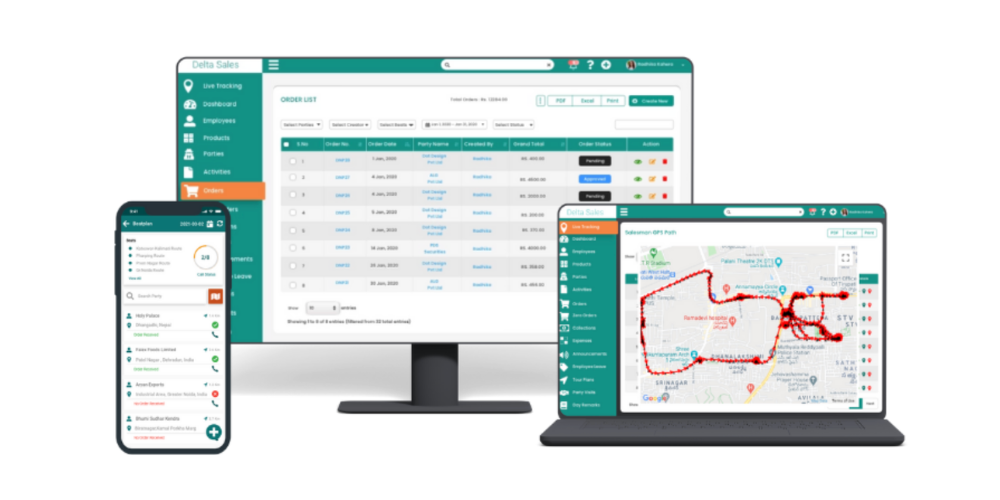
How Delta Sales App Helps Sales Teams Follow Every Market Visit SOP
Having a defined market visit SOP is important. Ensuring that every sales representative follows it every day is where most businesses struggle. Manual processes often lead to problems. These include skipped visits, inconsistent reporting, delayed order submissions, and limited visibility into field activities. Delta Sales App solves this problem. It digitizes the market visit process. From planning beats to generating end-of-day reports, the platform guides sales representatives. It gives managers visibility into field operations. This helps businesses standardize market visits. It improves accountability. Ensures consistent execution across all territories. Here's how Delta Sales App supports every step of a market visit SOP.
- Plan Daily Market Visits with Beat Planning
A successful market visit starts with planning. Delta Sales Apps' beat planning software helps managers create beat plans. They assign outlets based on territories. Optimize daily routes. Sales representatives know exactly which retailers to visit and in what sequence. This reduces missed outlets. Improves overall retail coverage.
- Ensure a Start to Every Workday
The first step of every SOP is attendance. Delta Sales Apps’ GPS attendance system, geo-fencing, and selfie attendance ensure representatives can mark attendance and leaves from authorized locations. This improves accountability. It gives managers confidence that field activities begin as scheduled.
- Monitor Field Activities in Time
Managers no longer have to rely on phone calls or manual updates. The field employee tracking feature provides GPS tracking, visit timestamps, and route history. This allows managers to verify completed visits and monitor field productivity throughout the day.
- Standardize the retailer's Order Collection
Every retailer should receive the level of service. Delta Sales Apps' sales order management software helps representatives capture orders digitally. They apply pricing and promotional schemes. Submit orders instantly from the retailer's location. This standardizes the order-taking process. It reduces errors and improves order accuracy.
- Capture Complete Market Visit Information
A market visit is about more than booking orders. Delta Sales App enables representatives to record stock availability, shelf visibility, competitor activities, retailer feedback, payment collections, and store images during every visit. Capturing this information in time ensures that managers receive accurate and complete market insights.
- Improve Visibility into Secondary Sales
Understanding how products move from distributors to retailers is essential for sales planning. Delta Sales Apps' secondary sales management module provides businesses with real-time visibility into sales. This helps managers identify sales trends monitor product movement, and make inventory and distribution decisions.
- Automate Reporting and Performance Tracking
Preparing reports manually can consume valuable selling time. Delta Sales App automatically generates visit reports, sales summaries, outlet coverage reports, productivity reports and other performance dashboards. This reduces work for sales representatives. It gives managers access to accurate business data.
- Measure SOP compliance with actionable dashboards.
An SOP can only be improved if its performance is measured. Delta Sales App provides dashboards that track KPIs. These include beat adherence, outlet coverage visit completion rates order conversion, sales representative productivity and retailer engagement. These insights help managers identify gaps in execution. They provide targeted coaching. Continuously improve field performance.
- Manage the Entire Field Sales Operation from One Platform
Instead of using multiple tools for attendance, order management, reporting, and employee tracking, Delta Sales App brings everything together in a single field sales automation software. Managers can monitor team activities, track sales performance, review retailer visits, and analyze field data from one dashboard. This makes SOP implementation easier and more effective.
Conclusion
A good market visit SOP is more than a document. It helps sales reps do every market visit in this way. This improves how they do their job at stores and gives managers good information to make better decisions. If you make your SOP easy to follow, the steps every time, and use technology, you can reduce mistakes when reporting, visit more outlets, work better with retailers, and make your sales team more productive. The important thing is to make a process that's easy to do and easy to check. With Delta Sales App, you can use technology for every part of your market visit SOP. This includes route planning, marking when you arrive at a place, tracking your salespeople, managing sales orders tracking sales to retailers, and automatic reporting. This makes sure every sales rep does their job in the way managers can see what is happening in the field.
Ready to build a sales team that follows every market visit SOP with confidence? Book a free demo of Delta Sales App today and discover how our all-in-one field sales automation software can help you streamline market visits, improve team productivity, and drive better sales performance.