
How To Manage a Field Sales Team Across Multiple Cities

Running a field sales team has always been a high-effort, high-stakes game. But when you’ve got your team in multiple cities, the complexity goes through the roof. It may seem on the surface to be a simple daily routine of visiting retailers, taking orders, and updating reports, but without centralized control, this becomes a fragmented system of disconnected activities.
For many growing businesses, especially in FMCG, distribution, pharma, and B2B sales, field sales executives operate independently in different regions. More often than not, a manager sitting at headquarters or a regional office depends on delayed reports, phone calls, WhatsApp updates, or end-of-day Excel sheets to get a sense of what really happened in the field. The data, by the time it gets to the decision-makers, is too late to act on it.” This failure to provide real-time visibility creates serious operational blind spots. Sales teams could be flourishing in one city and falling behind in another, and nobody knows until the monthly reports come in. Uneven territory coverage, missed customers, and sales opportunities falling through the cracks. Over time, this doesn’t just affect productivity; it directly affects revenue growth as well as market expansion.
This is the point at which modern field sales management moves from manual coordination to centralized digital control. One software approach assists businesses to consolidate all the field activities like attendance, visits, orders, routes, and performance metrics into one view. Managers can focus on real-time, data-driven decision-making rather than chasing reports.
In this blog we will take a look at the real challenges of managing a multi-city field sales team and how a single system can turn scattered operations into a structured, data-driven, and scalable sales engine.
Why Managing Field Sales Teams Across Cities is So Difficult
Expanding a field sales operation into multiple cities opens new growth opportunities, but it also introduces a new level of complexity. Unlike office-based teams, field sales representatives work independently across different territories, making it difficult for managers to maintain visibility, ensure accountability, and drive consistent execution. As the team grows, manual processes and disconnected reporting systems often become major obstacles to efficient sales management.
-
Limited Visibility Into Daily Field Activities
One of the biggest challenges is a lack of real-time visibility into what field sales reps are doing throughout the day. Managers often depend on calls, messages, and end-of-day reports to understand customer visits, meetings, and sales activities. Such lagged information makes it difficult to identify problems, measure productivity, and ensure that planned sales activities are being performed effectively across all cities quickly.
-
Inconsistent Reporting Across Regions
When teams in different cities use different reporting methods, maintaining consistency becomes difficult. Some representatives may submit detailed reports while others provide only basic updates, leading to fragmented and unreliable data. This inconsistency makes it challenging for management to compare regional performance, identify trends, and make informed business decisions based on accurate information.
-
Difficulty Tracking Sales Team Productivity
Measuring productivity becomes more complicated when sales teams operate across multiple locations. Managers need visibility into customer visits, order generation, follow-ups, and territory coverage, but without a centralized system, tracking these activities accurately is nearly impossible. As a result, high-performing employees may go unrecognized while productivity gaps remain unnoticed for extended periods.
-
Communication Gaps Between Headquarters and Field Teams
Keeping every sales representative aligned with company objectives becomes increasingly difficult as teams expand geographically. Important updates related to product launches, promotional schemes, pricing changes, or sales targets may not reach every team member at the same time. These communication gaps can create confusion, inconsistent execution, and a disconnected customer experience across different markets.

-
Challenges in Monitoring Territory Coverage
Proper territory coverage is critical to maintaining market presence and maximizing sales opportunities. But when teams are dispersed over different cities, managers may find it hard to confirm that assigned areas are being visited on a regular basis. This can lead to some territories being ignored altogether, while others get overexposed, creating missed opportunities and uneven market penetration.
-
Delayed decision-making due to slow data flow
In competitive markets, quick decisions can significantly impact sales performance. However, businesses that depend on manual reporting often receive sales and field activity data after considerable delays. Without access to real-time information, managers cannot respond promptly to declining sales, stock shortages, competitor activities, or changing customer demands, reducing the organization's ability to act proactively.
-
Managing Attendance and Accountability Becomes Difficult
Sales managers often find tracking attendance and holding reps accountable in multiple cities to be a challenge. Traditional attendance methods tell us next to nothing about real field activity, and it’s difficult to verify working hours, customer visits, or route completion. This lack of transparency can have an impact on productivity, performance evaluation and general team discipline.
-
Scaling operations aggravates existing problems
Challenges that can be addressed with a small team become major roadblocks as the business scales. More cities, more sales representatives, and more customers mean more data and communication. When companies grow their field sales network, they often experience reporting delays, operational inefficiencies, and reduced control without a structured system in place to manage operations centrally.
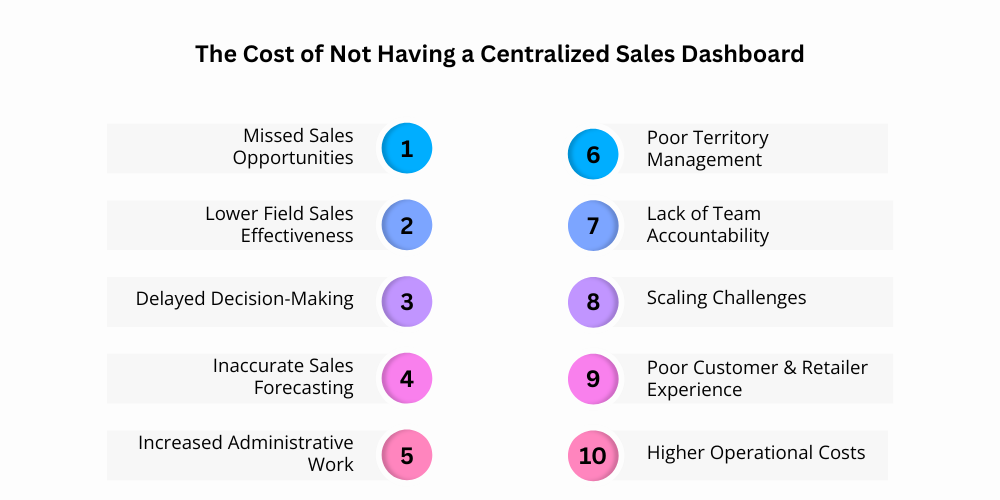
The Cost of Not Having a Centralized Sales Software
The more businesses grow their field sales operations in multiple cities, the riskier it is to do it with spreadsheets, phone calls, WhatsApp groups, and manual reporting. These methods may work for a small team, but as the organization grows, they often create serious operational bottlenecks. Without a central sales software, managers lack real-time visibility to effectively manage their field sales team, track performance, and optimize sales execution. Lost revenue opportunities, reduced productivity, and slower decision-making are the result.
-
Missed Sales Opportunities Due to Lack of Real-Time Visibility
One of the largest disadvantages of managing a distributed sales team without field sales management software is the inability to access real-time information. Sales managers often get updates hours or even days after customer visits happen. This delay hampers the ability to identify potential opportunities, respond quickly to customer concerns, or support sales reps when needed. Without tracking sales in real-time, you’re probably missing out on deals that could’ve been saved if you acted quicker.
-
Lowered Field Sales Effectiveness
A productive sales team depends on clear visibility into daily activities. Without a sales force automation system, managers cannot accurately track customer visits, meetings completed, routes covered, or orders generated. This lack of transparency often leads to inefficient use of time, reduced accountability, and inconsistent performance across territories. Over time, declining productivity directly impacts sales growth and overall business performance.
-
Delayed Decision-Making and Slow Response Times
In today's competitive market, sales leaders need access to actionable data immediately. Without a sales performance dashboard, critical information often gets trapped in spreadsheets and manual reports. This delay prevents managers from responding quickly to declining sales, stock shortages, changing customer demands, or competitor activities. Businesses that operate without real-time sales analytics often find themselves reacting to problems rather than preventing them.
-
Inaccurate Sales Forecasting
Reliable forecasting is only possible when accurate data is available from every sales territory. Manual reporting systems often produce incomplete or outdated information, making sales forecasts unreliable. Poor forecasting can lead to inventory shortages, overstock situations, inefficient resource allocation, and missed revenue targets. A centralized sales reporting dashboard helps businesses make more accurate forecasts by providing real-time data from all field locations.
-
Increased Administrative Work for Sales Teams
Field sales reps should be spending most of their time selling, building relationships, and increasing market coverage. However, without a field force automation solution, much of their day is often spent preparing reports, sharing updates, and doing admin work. Managers also waste time collecting data from multiple sources. This administrative burden reduces overall efficiency and limits time available for revenue-generating activities.
-
Poor Territory Management and Market Coverage
Effective territory management is critical for businesses operating across multiple cities. Without a centralized system, it becomes difficult to monitor which areas are being actively covered and which are being neglected. Some sales representatives may repeatedly visit the same outlets while others miss important accounts altogether. Poor territory coverage can limit market penetration, weaken retailer relationships, and create opportunities for competitors to strengthen their presence.
-
Accountability is Missing in Many Cities
It is difficult to manage a large field force when you can’t accurately verify attendance, customer visits, and route completion. Without features like GPS tracking, live location tracking, and field employee monitoring, managers have no visibility into real field activities. This lack of accountability can impact productivity, team discipline, and overall sales execution across different cities.
-
Challenges in Scaling Field Sales Operations
As businesses expand into new markets, operational complexity grows significantly. More cities mean more sales representatives, more retailers, more distributors, and more customer interactions. Without a centralized field sales management system, maintaining consistency across all locations becomes increasingly difficult. Processes that once worked manually become inefficient, making it harder to scale operations while maintaining control and visibility.
-
Poor Customer and Retailer Experience
Retailers and customers expect timely follow-ups, accurate order processing, and consistent engagement from sales representatives. When sales activities are managed through disconnected systems, communication gaps become common. Missed visits, delayed responses, and inaccurate information can negatively impact customer satisfaction and retailer trust. A centralized dashboard helps ensure a consistent experience across all territories and strengthens long-term business relationships.
-
Higher Operational Costs and Reduced Profitability
The financial impact of inefficient sales management often extends beyond what appears on reports. Missed sales opportunities, duplicate visits, poor route planning, delayed decisions, and excessive administrative work all contribute to higher operational costs. Without a sales automation platform, businesses often spend more resources achieving lower results. Over time, these inefficiencies can significantly reduce profitability and slow business growth.
What is a Single Sales Software for Field Teams?
A single sales software is a centralized platform that allows businesses to monitor, manage, and optimize all field sales activities from one place. Instead of collecting information from multiple spreadsheets, calls, emails, and messaging groups, managers can access real-time data about their entire field sales operation through a unified dashboard.
For companies managing sales representatives across multiple cities, regions, or territories, a single system acts as a command center that provides complete visibility into daily field activities, sales performance, customer interactions, attendance, and order management. Whether a sales executive is visiting retailers in Mumbai, meeting distributors in Delhi, or generating orders in Bangalore, all activity is automatically captured and displayed in one centralized system.
In traditional field sales management, managers can spend hours collecting reports from different teams before they can get a sense of what is going on on the ground. A sales software for field teams solves this problem by giving instant access to live data and helping businesses make faster and better-informed decisions.
How Does a Single Sales Software Work?
A modern field sales management software pulls data directly from the mobile apps that field sales reps use. Every customer visit, order, attendance check-in, route update and sales activity is automatically recorded and synced to a central dashboard.
This allows managers to oversee operations in multiple locations without having to constantly receive manual updates from the team. They can see performance metrics as they happen, they don’t have to wait until the end of the day to see them.
The dashboard becomes a single source of truth for the whole sales organization, making sure that everyone is working on the same accurate and up-to-date information.
What Information Can Managers View From a Single Software?
A comprehensive sales force automation software provides visibility into every critical aspect of field sales operations, including:
- Field employee attendance and working hours
- Live GPS location of sales representatives
- Daily customer visits and meeting records
- Orders booked from different territories
- Retailer and distributor engagement activities
- Beat plan adherence and route coverage
- Sales targets versus actual performance
- Territory-wise and city-wise sales reports
- Team productivity and performance metrics
Having all this information in one place helps managers identify trends, monitor execution, and take corrective actions before small issues become larger problems.
The importance of a single software to multi-city sales teams
Having a business that is operating in multiple cities is more difficult to stay visible. It is common that different teams work independently, and the manager can have difficulties understanding what is going on in each region.
This is where a centralized sales system can come to the rescue by compiling data from all cities, territories, and sales reps into one, easy-to-use platform. This enables leadership teams to benchmark performance across regions, identify underperforming territories, and allocate resources more effectively.
“Businesses can see their entire field sales network in a single view, without having to manage separate reports from each of the cities.
Key Benefits of a Single Sales Software
A well-designed field sales software offers several advantages that improve operational efficiency and sales performance.
-
Real-Time Sales Tracking
Managers can monitor sales activities as they happen, enabling faster responses to opportunities and challenges.
-
Improved Team Accountability
Features such as GPS based employee tracking, activity logs, and visit verification ensure that field representatives remain accountable for their daily tasks and responsibilities.
-
Better Sales Performance Monitoring
A centralized system makes it easier to track sales targets, compare team performance, and identify areas for improvement.
-
Faster Decision-Making
Access to real-time sales data allows managers to make informed decisions without waiting for manual reports or periodic reviews.
-
Enhanced Territory Management
Businesses can monitor market coverage, identify underserved areas, and optimize resource allocation across territories.
-
Streamlined Reporting
Automated reporting eliminates the need for manual data collection and significantly reduces administrative workload.
How Delta Sales App Helps Manage Multi-City Field Sales Teams
Delta Sales App is a field sales automation platform designed to simplify and centralize sales force management across multiple locations. It brings all field operations into one intelligent dashboard, helping businesses track, manage, and optimize their sales teams efficiently. The App enables organizations to manage distributed sales teams from a single system while improving productivity, accountability, and sales performance.
Whether your sales representatives are operating in different cities, states, or regions, Delta Sales App provides complete visibility into every aspect of field execution.
Key features
-
Real-Time Field Employee Tracking
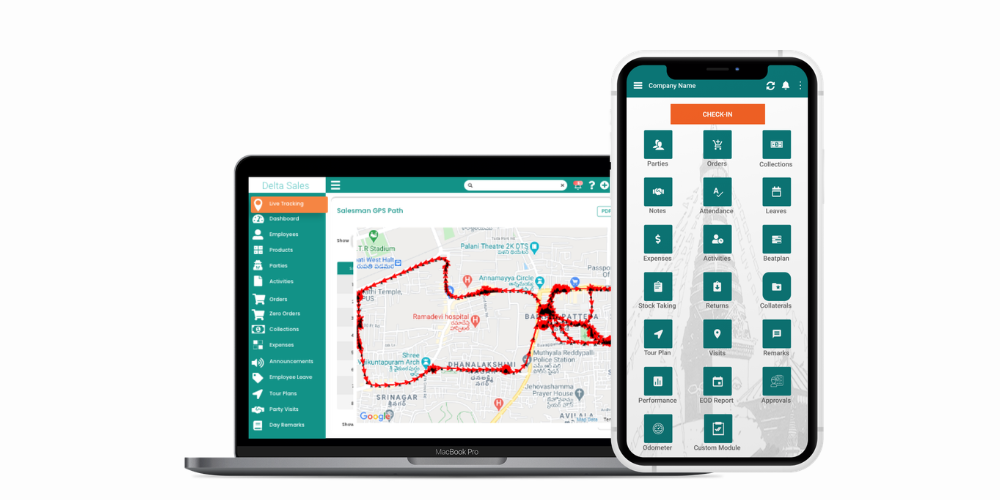
One of the biggest challenges in managing a sales team across multiple cities is knowing where your field reps are and how effectively they’re spending their time. Delta Sales App gives the managers the ability to track the field activities in real time with the help of GPS based employee tracking and live location monitoring.
This visibility enables firms to validate customer visits, track movement across outlets, and ensure sales reps are covering their territories efficiently. Instead of relying on manual updates, managers can access accurate field activity data directly from the dashboard.
-
Smart Attendance and Workforce Management
Tracking attendance becomes increasingly difficult when employees operate from different cities and rarely visit the office. Delta Sales App simplifies this process through its attendance management system, enabling location-based check-ins and check-outs directly from the mobile app.
Managers can monitor attendance records, working hours, and employee activity without requiring manual reporting. This improves accountability while reducing administrative work for both employees and supervisors.
-
Centralized Sales Dashboard for Complete Visibility
Delta Sales App is a centralized sales dashboard that collects data from all cities, territories and sales representatives in one place. Managers can instantly see sales performance, customer visits, orders booked, attendance records and productivity of the team without toggling between multiple tools.
With all important sales information in one place, businesses can make decisions more quickly and have better control over field operations regardless of team size or geographic distribution.
-
Beat Planning and Route Optimization
Efficient territory coverage is essential for maximizing sales opportunities. Delta Sales App helps businesses create structured beat plans and optimize daily routes for field sales representatives.
Managers can assign territories, monitor route adherence, and ensure that important retailers, distributors, and customers are visited on schedule. This structured approach improves market coverage, reduces travel inefficiencies, and helps field teams achieve more productive customer interactions.
-
Customer Visit Tracking and Retailer Management
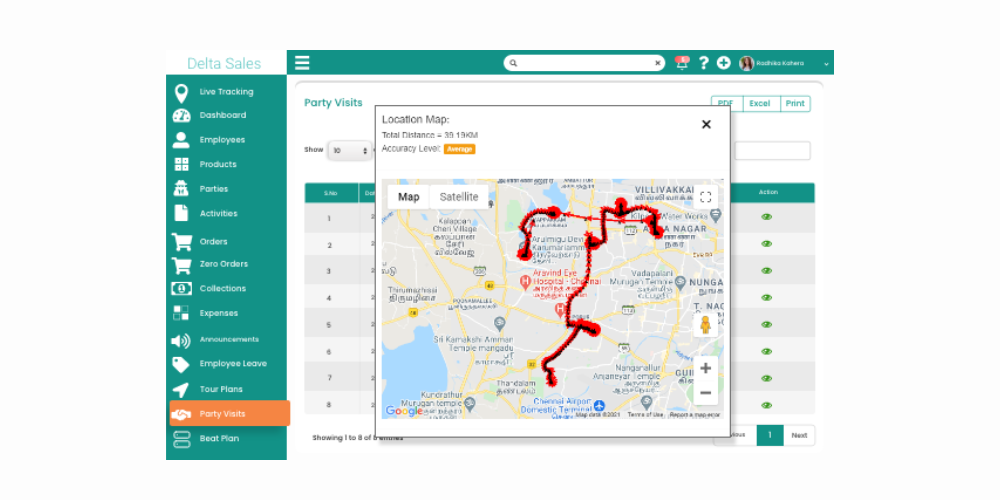
Maintaining strong retailer and distributor relationships requires consistent engagement. Delta Sales App records every customer visit, meeting, and interaction, giving managers a complete view of field activities.
This helps businesses ensure that key accounts receive proper attention while also identifying opportunities to improve retailer coverage, customer retention, and market penetration across different cities.
-
Sales Performance Analytics and Reporting
For businesses operating across multiple locations, data-driven decision-making is essential. Delta Sales App provides detailed sales analytics, performance reports, and field activity insights that help managers evaluate both individual and team performance.
With access to real-time reports, businesses can identify high-performing territories, uncover productivity gaps, measure target achievement, and make informed strategic decisions based on accurate field data.
-
Order Management and Faster Sales Execution
Manual order collection often leads to delays, errors, and communication gaps between sales teams and back-office operations. Delta Sales App simplifies the process through its mobile order management system, allowing field representatives to capture orders directly from customer locations.
Orders are instantly available within the system, enabling faster processing, improved accuracy, and better coordination between sales, distribution, and inventory teams.
-
Task Management and Team Coordination
Coordinating activities across multiple cities often becomes challenging when communication relies solely on calls and messages. Delta Sales App allows managers to assign tasks, track completion status, and monitor execution through a centralized platform.
This ensures that sales initiatives, promotional activities, and operational tasks are completed on time while maintaining alignment between headquarters and field teams.
-
Offline Functionality for Uninterrupted Operations
Field sales representatives frequently work in locations with unstable internet connectivity. Delta Sales App supports offline data capture, allowing employees to continue recording visits, orders, and activities even when network access is limited.
Once connectivity is restored, the data automatically syncs with the central system, ensuring uninterrupted sales operations and accurate reporting.
Key KPIs to Track from a Sales Software
A sales software is only valuable if it helps businesses measure the metrics that directly impact sales performance and field productivity. For organizations managing field sales teams across multiple cities, tracking the right Key Performance Indicators (KPIs) is essential for identifying strengths, uncovering operational gaps, and making data-driven decisions.
A modern field sales software provides real-time visibility into these metrics, helping managers evaluate both individual and team performance while ensuring that sales goals are consistently achieved.
-
Number of Customer Visits
Customer visits are one of the most fundamental indicators of field sales activity. Tracking the number of retailer, distributor, or customer visits completed by each sales representative helps managers understand whether the team is actively engaging with the market. A consistent visit rate often indicates strong field execution, while declining visits may signal productivity issues or poor territory management.
-
Productive vs. Non-Productive Visits
Not every customer visit results in a meaningful business outcome. Monitoring the ratio of productive visits, where orders are generated or business discussions take place, versus non-productive visits provides deeper insight into sales effectiveness. This KPI helps managers evaluate the quality of field activities rather than simply measuring quantity.
-
Sales Orders Generated
The total number of orders booked is one of the most important sales performance metrics. Tracking order generation across cities and territories helps businesses understand which regions are contributing the most revenue and where additional support may be needed. This KPI also provides visibility into individual sales representative performance.
-
Sales Revenue by Territory
For businesses operating in multiple cities, analyzing revenue at a territory level is crucial. A sales dashboard should provide city-wise, region-wise, and territory-wise sales data so managers can compare performance across markets. This helps identify high-growth areas, underperforming regions, and opportunities for expansion.
-
Target Achievement Rate
Measuring how closely sales representatives and teams are meeting their targets is essential for evaluating performance. Tracking target achievement percentages allows managers to quickly identify top performers and provide support to employees who may be struggling to meet their goals.
-
Beat Plan Adherence
A well-structured beat plan ensures that sales representatives cover the right outlets at the right time. Monitoring beat adherence helps managers verify whether field employees are following assigned routes and visiting planned customers. Strong adherence improves territory coverage and helps maintain consistent customer engagement.

-
Outlet Coverage
Outlet coverage measures the percentage of assigned retailers, distributors, or customer locations visited within a specific period. This KPI is particularly important for FMCG and distribution businesses where market presence depends on regular retailer engagement. Low coverage may indicate inefficiencies in route planning or workforce allocation.
-
Attendance and Working Hours
Field sales productivity begins with workforce discipline. Tracking attendance, check-in and check-out times, and total working hours helps managers ensure accountability across geographically dispersed teams. A reliable attendance management system provides visibility into workforce availability and field activity levels.
-
GPS-Based Field Activity Tracking
Location-based KPIs help businesses verify that customer visits are genuine and that field representatives are spending time in their assigned territories. Monitoring GPS-verified activities improves transparency and reduces the risk of inaccurate reporting, especially for large field sales teams operating across multiple cities.
-
Order Conversion Rate
The order conversion rate measures how effectively customer visits are converted into actual sales orders. A sales representative who conducts many visits but generates few orders may require additional training or support. This KPI helps managers evaluate sales effectiveness and identify opportunities for improvement.
-
New Customer Acquisition
Growth depends on more than retaining existing customers. Tracking the number of new retailers, distributors, or customers added by each sales representative helps businesses measure market expansion efforts. This KPI is especially valuable for companies entering new cities or launching new products.
-
Average Revenue Per Sales Representative
This metric measures the revenue contribution of each sales executive and helps businesses understand workforce efficiency. Comparing average revenue across cities and territories can reveal performance trends and support more effective resource allocation.
-
Team Productivity Score
A comprehensive productivity score combines multiple metrics such as customer visits, orders generated, attendance, territory coverage, and target achievement. This provides managers with a holistic view of employee performance and helps identify both top performers and areas requiring improvement.
-
Customer Follow-Up Rate
Consistent follow-up is often the difference between a lost opportunity and a successful sale. Tracking follow-up activities ensures that leads, customer inquiries, and pending orders are being managed effectively. A high follow-up rate generally leads to stronger customer relationships and better conversion outcomes.
-
Sales Growth Trends
Beyond daily activities, businesses should monitor long-term sales trends to evaluate overall growth. Comparing sales performance month-over-month or quarter-over-quarter helps management assess whether strategies are delivering results and where adjustments may be required.
Conclusion
Managing a field sales team in multiple cities is not an easy task. As teams grow and territories expand, manual processes, disparate reports and limited visibility can lead to inefficiencies, missed opportunities and slower business growth. To remain competitive, organizations require a one-stop solution that offers real-time visibility into field operations, sales, customer engagement, and team productivity.
One sales system helps organizations streamline operations, improve accountability, optimize territory management and make faster, data-driven decisions. The right field sales management software can help businesses successfully manage distributed sales teams, increase productivity and scale with confidence.
Ready to Simplify Multi-City Field Sales Management?
Book a free demo today and see how sales force automation can improve visibility, productivity, and growth across every territory.