
Modern Trade vs. General Trade: Key Differences
In today’s rapidly evolving retail ecosystem, understanding how different retail channels operate is essential for brands seeking consistent market performance. Among these channels, Modern Trade vs. General Trade remains one of the most defining distinctions in how companies plan distribution, visibility, and customer engagement. Each channel follows its own operational framework, influences consumer behavior differently, and requires a unique execution strategy.
As competition rises and consumers become more informed, brands can no longer rely on generic retail strategies. They must understand the structural differences between modern and general trade and adapt their execution models accordingly. This ensures not only higher sales but also stronger brand presence, optimized supply chains, and improved retailer relationships.
Understanding Modern Trade and General Trade
-
Modern Trade (MT)
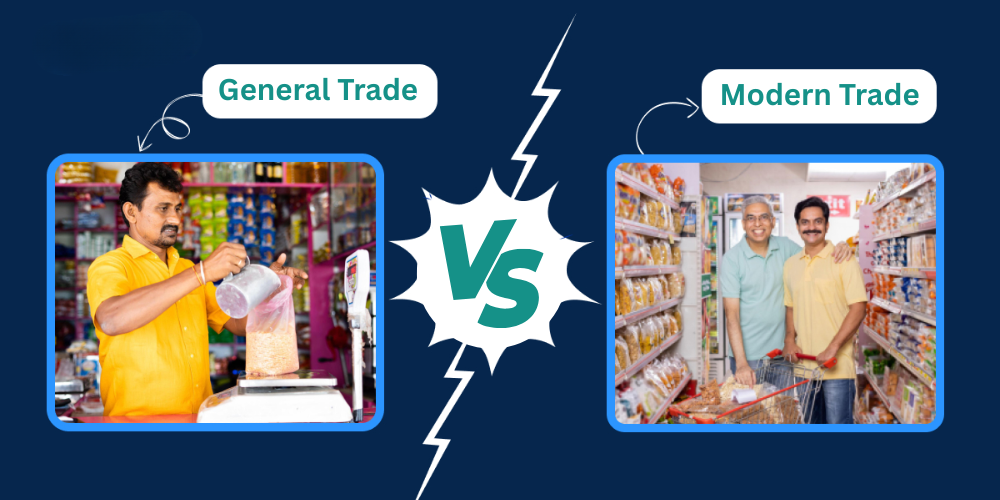
Modern trade refers to organized retail formats such as supermarkets, hypermarkets, convenience chains, and large-format stores. These outlets follow standardized processes, centralized procurement, structured merchandising guidelines, digital billing systems, and data-driven inventory planning.
Modern trade retailers often have multiple branches, uniform pricing policies, and advanced technology integrations, creating a more controlled and predictable environment for brands.
-
General Trade (GT)
General trade consists of traditional, unorganized retail formats such as mom-and-pop stores, kirana shops, local wholesalers, and independent retailers. This channel dominates in many emerging markets due to its proximity, personal trust, and flexible buying patterns.
Unlike modern trade, GT stores typically function independently, follow their own negotiation-based pricing styles, and rely heavily on personal relationships with distributors and sales representatives.
The Strategic Importance of Differentiating MT and GT
The distinction between MT vs. GT is not just operational, it shapes how brands allocate budgets, deploy sales teams, plan promotions, and analyze performance. Retail Execution quality also varies drastically between the two channels, and brands often face common Retail Execution Mistakes when they try to apply the same strategy to both environments.
Consumer behavior varies significantly between the two channels. MT customers prefer variety, convenience, and structured product displays, while GT customers value quick service and familiarity. Margins and profitability differ due to location costs, promotional demands, and trade agreements.
Execution models diverge, as modern trade demands planogram compliance, shelf audits, and promotional coordination, whereas general trade depends on retailer persuasion, relationship-building, and frequent visits.
For brands operating across both channels, clarity on these differences is essential to avoid execution gaps, stock issues, or ineffective promotional spending.
Key Benefits of Each Trade
Understanding the strengths of both Modern Trade (MT) and General Trade (GT) allows brands to design balanced, channel-specific strategies that maximize reach, profitability, and overall Retail Execution quality. Each channel contributes differently to market presence and consumer engagement, making it essential for companies to use both effectively.
Benefits of Modern Trade
Modern trade offers structure, visibility, and data-driven insights that significantly enhance control and execution efficiency. Some of the most impactful advantages include:
Higher Visibility & Stronger Brand Control
MT provides brands with premium shelf space, standardized planograms, and well-managed display zones. This gives companies the ability to control how their products appear across multiple locations.
-
End caps, gondola displays, and branded shelves improve shopper recall.
-
Central decision-making ensures consistency in brand representation.
This level of structured visibility is rarely available in traditional GT environments.
Access to Rich, Real-Time Data
One of the biggest advantages of modern trade is the availability of POS (point-of-sale) data.
Brands gain insights into:
-
Purchase frequency
-
Basket size
-
Category growth trends
-
Consumer switching patterns
This data-driven environment minimizes Retail Execution Mistakes such as overstocking or understocking and helps brands plan smarter promotions.
Standardized Shopping Experience
Modern trade outlets operate with uniform pricing, organized shelf layouts, and standardized customer service.
For brands, this means:
-
Predictable performance
-
Better control over promotions
-
Easier rollout of new products or pack sizes
Such consistency strengthens brand reliability and supports premium placement strategies.
Scalability and Predictable Footfall
Large-format stores attract steady and predictable customer traffic.
This provides:
-
Reliable demand forecasting
-
Better ROI on promotions
-
Opportunities for cross-merchandising and bundled offers
The structured environment helps brands scale faster and test new strategies effectively.
Benefits of General Trade
General Trade remains the backbone of retail distribution in many regions, especially in emerging markets. Its strength lies in reach, relationships, and agility factors that directly influence market penetration and last-mile visibility.
Extensive Market Reach and Penetration
GT stores are present in every neighborhood, urban, semi-urban, and rural.
This allows brands to:
-
Access remote territories modern trade doesn’t cover
-
Build widespread distribution networks
-
Achieve high numeric distribution
GT's proximity-based presence makes it indispensable for everyday consumer goods.
Lower Operational and Promotional Costs
General trade outlets typically require:
-
Minimal infrastructure investment
-
Low merchandising expenses
-
Fewer promotional demands compared to modern trade
This makes GT a cost-efficient channel, especially for brands with low-margin SKUs or wide product portfolios.
Strong Personal Selling Influence
Unlike MT, general trade thrives on relationships. Retailers often rely on trusted sales reps and distributors for product recommendations.
This leads to:
-
Higher influence during product introductions
-
Better negotiation flexibility
-
Strong loyalty and long-term partnerships
Sales representatives equipped with field apps for retail execution can strengthen these relationships further by providing faster service and better communication.
Faster Decision-Making and Agility
GT stores can make quick decisions without multi-level approvals.
This allows brands to:
-
Implement new schemes instantly
-
Introduce products rapidly
-
Adapt quickly to market shifts
Such agility helps brands stay competitive in fast-moving segments.
Flexibility in Ordering and Stocking
Smaller retailers purchase stock in smaller quantities and have flexible restocking cycles.
This benefits brands by:
-
Reducing inventory pressure
-
Enabling frequent engagement with retailers
-
Allowing rapid push for priority SKUs during seasonality
This flexibility also helps avoid common Retail Execution Mistakes such as mismatched supply-demand planning.
The Role of Technology in MT & GT Execution
Technology has become a backbone for Retail Execution, transforming how brands manage everything from product placement to order cycles. While both Modern Trade and General Trade leverage digital tools, the way technology influences operations is quite different shaped by the level of retail organization, store formats, and data availability.
Many brands today adopt field apps for retail execution to minimize errors, capture insights in real time, and prevent common Retail Execution Mistakes such as out-of-stock situations, delayed order-taking, and non-compliant displays.
Technology in Modern Trade
Modern trade environments operate with higher levels of technological integration, giving brands structured control over execution. Technology enables:
-
Advanced Inventory Forecasting: Automated demand planning tools help retailers predict replenishment needs. They reduce stockouts by analyzing historical trends and real-time sales movement. This ensures optimal inventory health across store networks, supporting smoother operations.
-
Digital Shelf Monitoring: Sensor-based systems and image recognition tools identify empty shelves or misplaced SKUs. They allow teams to correct gaps instantly, preventing lost sales opportunities. Automated alerts also improve planogram compliance and reduce manual audit efforts.
-
Centralized Promotions Management: Software platforms coordinate promotional launches across store networks. This ensures uniform execution of pricing, offers, and display setups in all branches. Brands can also measure promotion performance more accurately through centralized dashboards.
-
Vendor Collaboration Portals: Track purchase orders, claims, and payments seamlessly. These portals create transparency between retailers and suppliers, minimizing delays. They help streamline dispute resolution and strengthen supplier partnerships.
-
Analytics-Driven Category Management: Data helps improve assortment planning, pricing, and product performance. Retailers identify fast-moving SKUs, optimize shelf space, and eliminate weak performers. Such analytics allow continuous category refinement to maximize consumer satisfaction.
These integrations make modern trade highly data-driven, predictable, and efficient—allowing brands to react faster to market dynamics.
Technology in General Trade
General trade, although less structured, has undergone a digital shift, primarily through mobile-based tools and distributor management platforms:
-
Digital Order Taking: Sales reps use mobile apps to track orders and share catalogs instantly. This reduces errors caused by manual entry and speeds up the order cycle. Retailers benefit from quick access to updated schemes, prices, and product availability.
-
Route Planning Tools: GPS-backed applications ensure better outlet coverage.
Sales reps can plan daily routes, reducing travel time and increasing productivity. Managers gain visibility into field movements, helping improve workload balance. -
Retailer Intelligence: Apps capture key insights on buying patterns, credit cycles, and competitor influence. This intelligence helps reps personalize pitches and improve retailer engagement. Brands can use this data to identify risks, opportunities, and emerging trends in GT.
-
Merchandising Automation: Field reps upload images for share-of-shelf and display validation. Automated checks ensure accurate execution and faster feedback loops. Brands can monitor visibility performance in real time and take corrective action quickly.
-
Distributor Dashboards: DMS helps track stock, schemes, and secondary sales more accurately. It ensures smooth coordination between primary and secondary sales channels. Distributors gain clearer visibility into demand patterns, improving supply planning.
These tools help GT operate with modern efficiency while retaining its traditional strengths of speed and relationship-based selling.
Leadership’s Role in Balancing Both Channels
Leadership plays a critical role in aligning Execution, Strategy, and People across MT and GT to ensure cohesive retail performance. By guiding teams through channel-specific demands, leaders help prevent Retail Execution Mistakes and build a unified market strategy.
Strategic Alignment Across Channels
-
Leaders define tailored goals for MT and GT, ensuring both channels contribute effectively to overall growth without conflicting strategies. This clarity enables teams to execute focused plans that maintain balance and prevent overlap in market efforts.
-
Leadership enforces pricing structures that remain consistent across channels, reducing conflicts and protecting long-term brand credibility. Proper price governance also strengthens retailer relationships by ensuring fairness and transparency.
-
Leaders distribute promotional investments based on channel needs to ensure maximum visibility and measurable ROI. This strategic allocation helps brands optimize spending while enhancing execution impact in both MT and GT.
Setting Transparent KPIs and Performance Systems
-
Clear KPIs create accountability and allow teams to evaluate retail performance systematically across diverse markets. This structured approach allows faster course correction and reduces operational inefficiencies.
-
These metrics ensure standardized execution and help brands maintain strong control over visibility in modern trade outlets. They also support continuous improvement by highlighting gaps in display quality or promotional effectiveness.
-
These benchmarks reinforce consistent field activity and foster stronger relationships with GT retailers. By tracking these metrics, leaders ensure robust last-mile execution and improved coverage.
Empowering Teams Through Training & Tools
-
MT Teams: MT teams need analytical and negotiation skills to manage structured environments and complex retailer expectations. Leadership provides training to strengthen merchandising precision and ensure strict planogram adherence.
-
GT Teams: GT teams rely on interpersonal skills to navigate traditional retail dynamics and build trust with small retailers. Leaders support them with training that enhances communication, persuasion, and credit management capabilities.
-
Leaders implement field apps, tracking systems, and dashboards to enhance visibility and streamline workflows. These tools empower teams to make real-time decisions, improving overall execution efficiency.
Driving a Data-Centric Culture
-
Leaders prioritize data-driven insights to shape strategies and make informed decisions across MT and GT. This habit strengthens forecasting accuracy and ensures market responses are proactive, not reactive.
-
Leadership promotes consistent use of technology to improve accuracy, accountability, and real-time reporting. This digital adoption helps teams reduce errors and maintain higher execution standards.
-
Dashboards enable quick performance reviews, supporting timely interventions and strategic adjustments. This continuous feedback loop enhances agility and strengthens operational discipline.
Ensuring Consistency Across Regions
-
Leaders safeguard brand consistency to ensure every retail outlet reflects the same quality and value proposition. Such uniformity prevents confusion, protects brand equity, and supports nationwide execution excellence.
-
Leadership ensures even the smallest outlets receive proper attention and strategic alignment. This inclusive approach enhances market penetration and strengthens the brand’s presence across diverse geographies.
Conclusion
Both Modern Trade vs. General Trade play a vital role in shaping a brand’s market success. While modern trade offers structured visibility, data-driven insights, and predictable buying behavior, general trade provides unmatched reach, agility, and personal influence.
Brands that master the strengths of both channels while deploying tailored execution strategies achieve higher sales performance and market dominance.
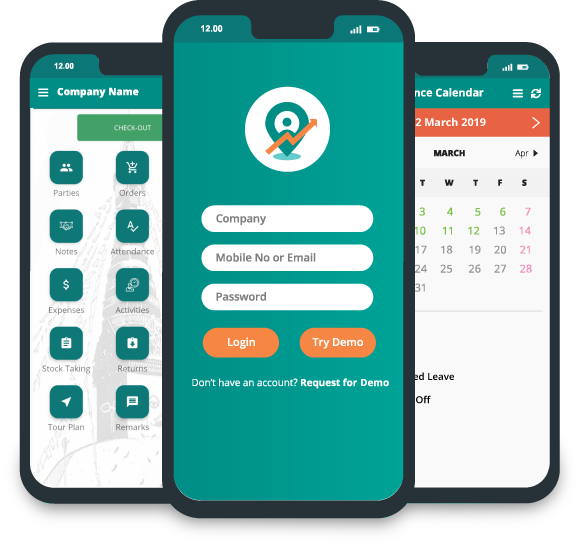
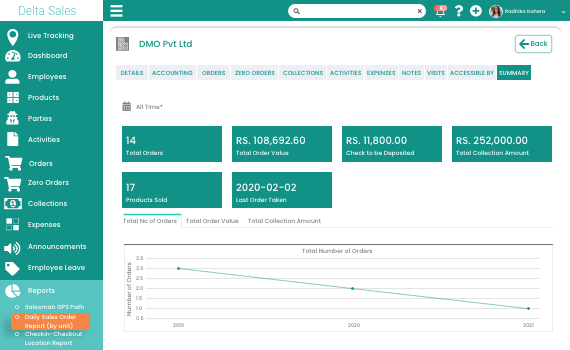
To support this multi-channel execution, tools like Delta Sales App help field teams, distributors, and managers seamlessly manage orders, track visits, monitor merchandising, and analyze performance across both MT and GT. With better visibility and real-time insights, brands can stay competitive, disciplined, and execution-focused in every market segment.
To Enhance visibility, control, and performance. Get started with Delta Sales App.