
What Is Sales Enablement? A Step-by-Step Guide to Driving More Revenue

In today’s competitive market, having a motivated sales team isn’t enough. Even the most talented representatives struggle if they don’t have the right content, tools, training, and insights at the right time. This is where sales enablement comes in.
Sales enablement aligns people, processes, and technology to help sales teams sell smarter, faster, and more effectively. When done right, it shortens sales cycles, improves win rates, and ultimately drives more revenue.
This guide breaks down what sales enablement really means, why it matters, and how you can build a step-by-step sales enablement strategy that actually works.
What Is Sales Enablement?
Sales enablement is the ongoing process of equipping sales teams with the content, tools, knowledge, and guidance they need to engage buyers effectively throughout the sales journey.
Unlike traditional sales support, sales enablement is not a one-time activity. It’s a continuous system that ensures sales representatives always have access to updated materials, clear messaging, and actionable insights aligned with buyer needs.
In simple terms, sales enablement helps salespeople:
-
Know what to say
-
Understand when to say it
-
Deliver it using the right channel and tools
Why Sales Enablement Matters More Than Ever
Modern buyers are informed, impatient, and digitally driven. They expect personalized conversations rather than generic pitches. Without proper enablement, sales teams spend too much time searching for information instead of selling.
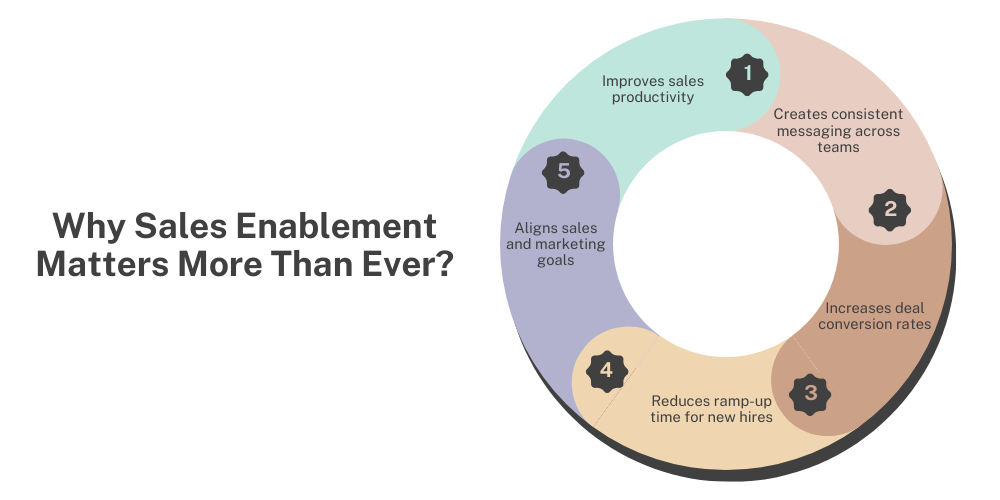
Effective sales enablement:
-
Improves sales productivity
-
Creates consistent messaging across teams
-
Increases deal conversion rates
-
Reduces ramp-up time for new hires
-
Aligns sales and marketing goals
When supported by tools like sales automation software, sales teams can focus on building relationships instead of managing manual tasks.
Step-by-Step Guide to Driving More Revenue
Step 1: Align Sales and Marketing Teams
Sales enablement starts with alignment. When sales and marketing work in silos, messaging becomes inconsistent and opportunities are lost. Marketing should create content based on real sales conversations, objections, and buyer questions. Sales teams, in turn, should share on-ground insights and feedback.
Using shared platforms like sales and marketing automation tools helps ensure that both teams work from the same data, goals, and customer understanding.
Step 2: Understand Your Buyer’s Journey
You can’t enable sales without understanding who they’re selling to. Sales enablement must be built around the buyer’s journey, not internal assumptions.
Key buyer stages include:
-
Awareness – Identifying a problem
At this stage, buyers realize they have a challenge. Sales teams should educate, share insights, and help prospects understand problems without pushing products too early. -
Consideration – Evaluating solutions
Buyers actively compare options and approaches. Sales enablement supports reps with case studies, solution guides, and value-driven conversations tailored to specific buyer needs. -
Decision – Choosing a vendor
Buyers are ready to select a provider. Sales teams should focus on differentiation, pricing clarity, trust-building, and addressing final objections to confidently close the deal.
Each stage requires different messaging, content, and sales actions. When reps have access to buyer-stage-specific resources through CRM and lead management systems, they can engage more confidently and relevantly.
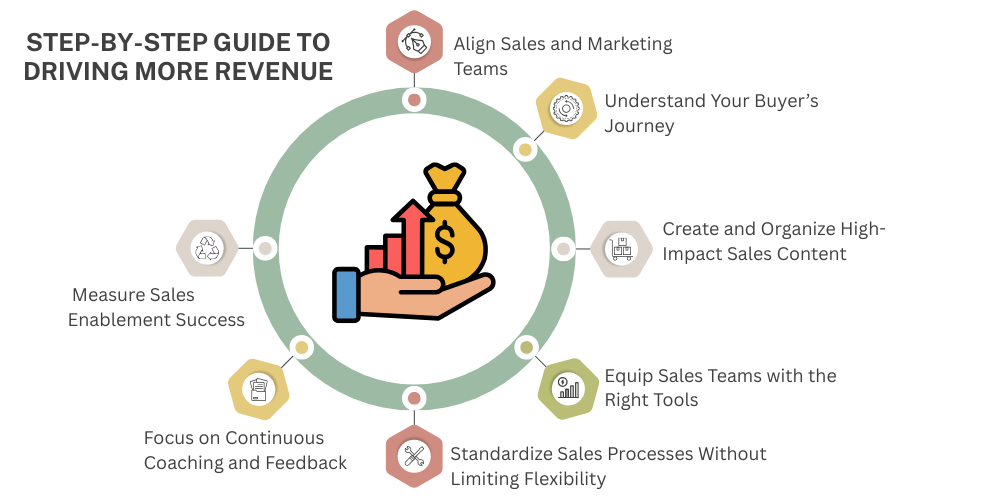
Step 3: Create and Organize High-Impact Sales Content
Content is the backbone of sales enablement. This includes:
-
Product decks: Product decks help sales teams present features, benefits, and value propositions clearly, ensuring consistent messaging and confident product demonstrations during customer meetings.
-
Case studies: Case studies showcase real customer success stories, building trust and credibility by demonstrating how similar businesses achieved measurable results using the solution.
-
One-pagers: One-pagers provide concise overviews of products or solutions, helping prospects quickly understand key benefits without overwhelming them with too much information.
-
Pricing guides: Pricing guides bring transparency and clarity, helping sales teams explain costs, packages, and value justification while reducing confusion and delays during negotiations.
-
Email templates: Email templates ensure consistent, professional communication, saving time for sales reps while maintaining messaging quality across follow-ups, introductions, and deal progression.
-
Competitive comparisons: Competitive comparisons highlight key differentiators, helping sales reps confidently address objections and position their offering more effectively against alternative solutions.
However, content only helps when it’s easy to find and up to date. Disorganized or outdated materials slow sales down and hurt credibility. Centralized access through content management for sales teams ensures reps always share the right message at the right time.
Step 4: Equip Sales Teams with the Right Tools
Technology plays a major role in successful sales enablement. The goal isn’t to overload teams with tools, but to provide solutions that simplify selling.
Key enablement tools include:
-
CRM systems: CRM systems centralize customer data, track interactions, manage leads, and give sales teams complete visibility into opportunities, helping them build stronger relationships and close deals faster.
-
Sales automation platforms: Sales automation platforms reduce manual work by automating follow-ups, task reminders, and pipeline updates, allowing sales reps to focus more on selling and customer engagement.
-
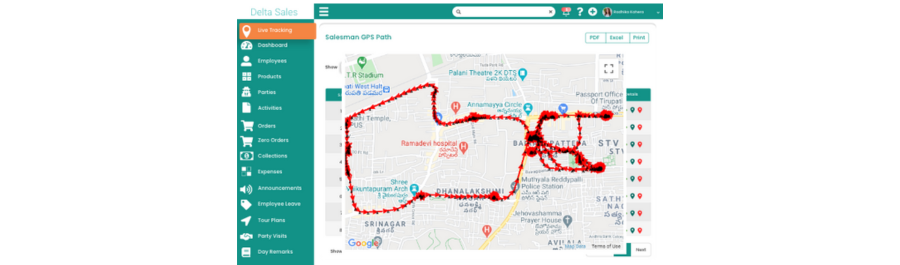
Field sales applications: Field sales applications support on-the-go teams by enabling visit planning, order capture, activity logging, and real-time data updates directly from the field.
-
Performance dashboards: Performance dashboards provide real-time visibility into sales metrics, targets, and trends, helping managers track progress, identify gaps, and make data-driven decisions quickly.
For teams operating on the ground, especially in distribution-heavy industries, field sales tracking apps help capture activities, track visits, and maintain accurate customer data without manual effort.
Step 5: Standardize Sales Processes Without Limiting Flexibility
A strong sales enablement strategy defines clear processes while allowing room for personalization. Standard processes help:
-
Maintain consistency: Standardized sales processes ensure every prospect receives a consistent experience, messaging, and service quality, regardless of which sales representative is handling the opportunity.
-
Improve forecasting accuracy: Clear, defined sales stages make revenue predictions more reliable by providing accurate visibility into deal progress, pipeline health, and expected closures.
-
Reduce dependency on individual selling styles: Standard processes reduce reliance on personal selling approaches, enabling teams to perform consistently even when experienced reps leave or new hires join.
These processes should cover:
-
Lead qualification: A structured qualification process helps sales teams identify high-potential leads early, focus efforts on the right prospects, and avoid wasting time on unqualified opportunities.
-
Follow-ups: Standardized follow-up processes ensure timely, relevant communication with prospects, preventing missed opportunities and keeping deals moving steadily through the sales pipeline.
-
Proposal creation: Defined proposal processes help sales teams create accurate, professional, and consistent proposals faster, reducing errors and shortening deal approval cycles.
-
Deal closures: Clear closing steps guide sales reps through final negotiations, approvals, and sign-offs, increasing win rates and ensuring smooth, predictable deal completion.
With insights from sales pipeline management solutions, managers can identify bottlenecks and guide reps more effectively.
Step 6: Focus on Continuous Coaching and Feedback
Sales enablement doesn’t end after onboarding. Continuous coaching ensures that sales reps improve with every interaction.
Managers should:
-
Review call data and performance metrics: Analyzing call recordings and sales metrics helps managers identify strengths, gaps, and coaching opportunities, enabling targeted improvements in sales conversations and overall performance.
-
Share best practices across teams: Sharing proven sales techniques and successful approaches across teams helps replicate wins, improve consistency, and accelerate learning for both new and experienced sales reps.
-
Provide real-time feedback: Real-time feedback allows managers to correct issues immediately, reinforce positive behaviors, and help sales reps adapt quickly, improving outcomes in ongoing deals and interactions.
When combined with insights from sales performance analytics, coaching becomes data-driven rather than opinion-based, leading to consistent improvement.
Step 7: Measure Sales Enablement Success
You can’t improve what you don’t measure. Sales enablement success should be tracked using clear KPIs such as:
-
Win rates: Win rates show how effectively sales teams convert opportunities into customers, helping measure the impact of sales enablement efforts on deal success and overall selling effectiveness.
-
Sales cycle length: Sales cycle length tracks the time taken to close deals, indicating how well sales enablement tools, content, and processes help move prospects through the pipeline faster.
-
Deal size: Deal size measures average revenue per sale, showing whether sales teams are successfully communicating value, upselling, and positioning solutions more effectively.
-
Content usage: Content usage reveals which sales materials are most frequently used and effective, helping teams refine content strategies and provide reps with resources that truly support selling.
-
Rep productivity: Rep productivity measures how efficiently sales representatives use their time, highlighting whether sales enablement reduces manual work and allows more focus on revenue-generating activities.
These metrics help organizations understand what’s working and where adjustments are needed. Tools that integrate real-time sales reporting and forecasting capabilities make this evaluation faster and more accurate.
Common Sales Enablement Mistakes to Avoid
Even well-planned strategies can fail if common mistakes aren’t addressed:
-
Treating enablement as a one-time project
Sales enablement is an ongoing process. Treating it as a one-time initiative leads to outdated content, misaligned teams, and declining sales effectiveness over time. -
Ignoring feedback from sales reps
Ignoring sales reps’ feedback results in impractical tools and content, reducing adoption and effectiveness since enablement strategies fail to reflect real selling challenges. -
Creating content without buyer context
Content created without buyer insights often misses real pain points, making sales conversations less relevant and reducing engagement across different stages of the buyer journey. -
Using disconnected tools
Disconnected sales tools create data silos, manual work, and poor visibility, preventing sales teams from accessing complete information needed for efficient and informed selling. -
Focusing only on training, not execution
Training alone isn’t enough. Without execution support through tools, processes, and content, sales teams struggle to apply learned skills in real-world selling situations.
Avoiding these pitfalls ensures your sales enablement strategy stays relevant and impactful.
How Sales Enablement Drives Long-Term Revenue Growth
Sales enablement is not just about closing more deals today it’s about building a scalable, repeatable revenue engine.
When sales teams are enabled properly:
-
Buyers experience consistent value
Sales enablement ensures consistent messaging, informed conversations, and reliable engagement, helping buyers receive the same value-driven experience at every touchpoint. -
Sales cycles become predictable
Defined processes, clear stages, and performance insights help sales teams forecast outcomes accurately, making deal progress and revenue timelines more predictable. -
Teams adapt faster to market changes
Enabled sales teams quickly adjust messaging, strategies, and tools in response to changing customer needs, competitor actions, and evolving market conditions. -
Revenue growth becomes sustainable
Sales enablement builds repeatable processes and continuous improvement, allowing organizations to scale sales efforts while maintaining performance, efficiency, and long-term revenue growth.
Organizations that invest in enablement create a culture of continuous improvement rather than reactive selling.

Conclusion
Sales enablement bridges the gap between strategy and execution. By aligning teams, understanding buyers, delivering the right content, and leveraging the right technology, businesses can empower their sales teams to perform at their best.
Platforms like Delta Sales App bring these enablement elements together by helping sales teams streamline processes, gain visibility into field activities, and make data-driven decisions that support consistent revenue growth.
When sales enablement becomes a core business function rather than an afterthought, driving revenue becomes a natural outcome not a constant struggle.
Empower your sales team with smarter tools - Discover Delta Sales App today!
-1792906895-resized320.png)