
Which Field Sales Metrics Should Managers Review Every Week?

A field sales team can look incredibly busy on paper: dozens of customer visits, calls all day, kilometers traveled, and orders getting entered into the system. Then the weekly numbers come in, and managers are still left asking the uncomfortable question: is any of that actually driving sales?
That's where the right field sales metrics make the difference. A high visit count doesn't automatically mean strong performance. One rep might complete more visits and generate fewer orders. Another might cover fewer customers but consistently bring in the higher-value business. A territory can look active on the surface while the accounts that actually matter go untouched. Even a team hitting its weekly sales target can be quietly struggling with follow-ups, route efficiency, or field execution, problems that don't show up if a manager's only looking at revenue.
That's why weekly performance reviews need to go beyond total sales. Looking at the right metrics across field activity, productivity, sales outcomes, pipeline movement, attendance, and compliance gives managers a read on what's happening in the field before those patterns start showing up in monthly numbers.
In this blog, we will look at the most important field sales metrics managers should review every week and how each one can help improve field team performance
Why Weekly Sales Metric Reviews Matter
Monthly reports can tell managers what happened. Weekly reviews help them understand what is happening and what to do now. Field teams see performance change fast. This week, perhaps there are fewer productive outlets in a territory. A rep spends too much time traveling. The follow-ups are delayed. If you wait until the end of the month to find out what these problems are, it will make recovery much harder. Managers can benefit from a weekly review in that it:
-
Align scheduled activities with real-world field outcomes
-
Spot shifts in sales performance promptly
-
Assess if visits are leading to actual orders
-
Analyze territory and representative effectiveness
-
Identify shortcomings in follow-up and customer engagement
-
Enhance route planning and on-the-ground execution
-
Base decisions on up-to-date sales insights rather than guesses
The goal is not to turn managers into report reviewers. It is to give them enough information to decide where attention is needed next week.
Key Field Sales Metrics Managers Should Track Weekly
Not every metric carries the same weight. A high visit count, for instance, doesn't automatically mean strong performance. A useful weekly review covers five areas: activity, productivity, sales outcomes, pipeline movement, and field compliance. Together, they show whether reps are doing the right work, whether that work is actually productive, and whether any of it's contributing to revenue.
1. Activity Metrics: Are Reps Doing the Work?
Activity metrics provide the first layer of visibility. They show whether the planned field activities are actually being completed.
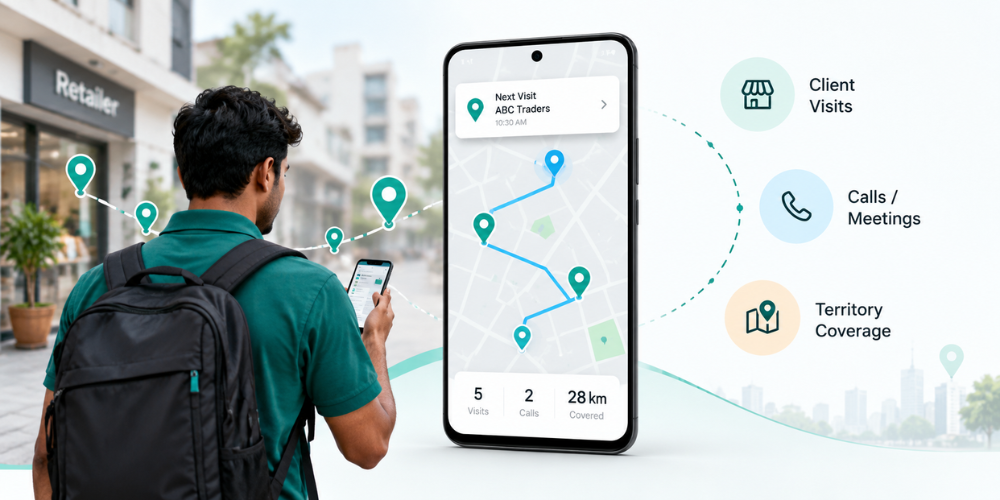
Number of Client Visits Completed
The total number of visits completed gives managers insight into the level of field activity that occurred throughout the week.
Yet, it's important to remember that visit count alone doesn't define success. A representative who completes 35 visits might achieve better outcomes than another who completes 50, especially if those 35 visits are focused on the right customers and lead to more impactful results. Managers should compare completed visits with:
-
Planned visits
-
Orders generated
-
Customer coverage
-
Visit duration
-
Territory priorities
This makes sales activity tracking more meaningful than simply counting visits.
Call/Meeting Frequency
Calls and meetings still matter for accounts that need regular communication, follow-ups, or ongoing relationship management. Managers can check whether reps are keeping up the expected contact frequency for important customers and prospects. A sudden drop in calls or meetings can point to missed follow-ups, workload problems, or bad prioritization. On the flip side, a rep with unusually high activity but little movement in sales might mean those conversations aren't actually turning into anything.
Territory Coverage Rate
Territory coverage reflects how well sales representatives connect with the customers or outlets they are responsible for. For companies that span vast geographic regions, this metric allows managers to pinpoint areas that may be receiving too much attention, not enough, or are being inconsistently serviced. It also sheds light on whether the team's strategy for managing territories aligns with the real needs and priorities of the market.
2. Productivity Metrics: Is the Effort Translating into Results?
Activity tells managers what reps are doing. Productivity helps answer the more important question: Is that effort being used effectively?
Average Time Spent Per Visit
Time spent at each customer location gives useful context around field productivity. Very short visits can mean rushed interactions, while excessively long ones eat into how many productive customers a rep can actually cover in a day. Managers shouldn't force one ideal visit duration onto every customer, though. It's more useful to watch for unusual patterns and weigh visit time against actual outcomes like orders, collections, or what the follow-up actually needed.
Visit-to-Order Conversion Rate
This metric connects field activity directly to commercial results. If a rep completes 40 customer visits but receives orders from only 8, the visit-to-order conversion rate provides a clearer picture than visit volume alone. A declining conversion rate can encourage managers to investigate:
-
Customer quality
-
Product availability
-
Pricing or schemes
-
Sales approach
-
Visit frequency
-
Territory conditions
It helps distinguish between being busy in the field and actually generating business.
Distance Traveled vs. Productive Hours
Travel is unavoidable in field sales, but too much of it eats into the time available for actual customer interactions. Managers can compare distance traveled against productive working hours to spot inefficient routes, poorly planned territories, or unnecessary movement between locations. This is where route optimization has a real, practical impact: better planning means reps spend more of the day with customers and less of it just getting to them.

3. Sales Outcome Metrics: Is Revenue Growing?
Ultimately, field activities need to contribute to business results. Sales outcome metrics show whether the work being completed in the field is producing commercial value.
-
Total Sales Value (Weekly)
Weekly sales value gives managers a quick read on revenue generated by the field team, but the raw total only means much when it's weighed against previous weeks, targets, territories, and individual performance. A sales increase means more when managers actually know where the growth came from. A team might beat its weekly target off the back of one large order while several territories continue sliding. Looking at the total alone would hide that problem completely.
-
Average Order Value
Average order value shows how much revenue each order actually brings in. More orders doesn't always mean sales are growing efficiently. If order frequency climbs while average order value drops significantly, that's worth checking against product mix, customer purchasing patterns, or missed selling opportunities. This one is especially useful when reviewed alongside visit-to-order conversion.
-
Win Rate by Rep
Win rate shows how effectively individual reps turn qualified opportunities into actual sales. Comparing win rates across the team can surface real differences in sales execution, territory quality, customer mix, or how opportunities get managed. The point isn't ranking reps off one number. It's using the data to find coaching opportunities and figure out what the reps who are winning are actually doing differently.
4. Pipeline & Follow-Up Metrics
Field sales performance is not limited to orders generated today. Opportunities created this week can become next month's revenue. That makes pipeline and follow-up visibility an important part of a weekly review.
-
New Leads Generated
New leads show whether reps are still creating future sales opportunities, not just closing what's already in the pipeline. Managers should weigh both quantity and quality here. A pile of unqualified leads adds little real value, while a smaller number of genuinely relevant prospects can build a much stronger pipeline. Tracking lead generation by rep and territory also flags exactly where prospecting activity needs to pick up.
-
Follow-Up Compliance Rate
A lead or opportunity is worth little if the next action never actually happens. Follow-up compliance measures whether reps are actually completing the follow-ups assigned or scheduled to them. Managers can check overdue follow-ups, completed ones, and any opportunity that's gone quiet without a recent interaction. That's what keeps pipeline management tight and stops potential customers from just falling through the cracks.
-
Deal Aging / Stuck Opportunities
Some opportunities sit in the pipeline way longer than they should. Weekly deal-aging reviews catch the ones that have stopped moving. Those might need a specific action, more information, management support, or honestly just a decision to remove them from the active pipeline altogether. Instead of letting stalled opportunities inflate the numbers, managers can steer the team toward the deals that actually have realistic potential.
5. Attendance & Compliance Metrics
Good sales results require consistent field execution. Attendance and compliance metrics help managers understand whether planned field operations are actually taking place.
-
Check-in/Check-out Punctuality
Attendance data shows when reps actually start and end their field activities. Managers can review late check-ins, missed check-outs, unusual attendance patterns, and any deviation from the expected schedule. That matters most for distributed teams, where a manager can't physically see what's happening in the field day-to-day.
-
Route Adherence
A planned route gives structure to a rep's field activity. Route adherence shows whether reps are actually following the assigned route or deviating from it regularly. Frequent deviations aren't necessarily a red flag on their own; customer emergencies, new opportunities, traffic, and other real-world conditions can force changes. The point of watching this metric is catching the repeated patterns that point to poor planning or inefficient territory execution, not the occasional one-off detour.
-
Expense Report Accuracy
Travel and field expenses get hard to manage when you collect information manually. Weekly expense reviews catch missing information, unusual claims, duplicate entries, or mismatches between what field activity says happened and what got reported. Accurate expense data also gives a business real visibility into what field operations actually cost.
How to Track These Metrics Without Manual Reporting Hassles
Reviewing different metrics every week can quickly become just another administrative task if managers are pulling information from spreadsheets, messages, attendance records, and separate sales reports every time.
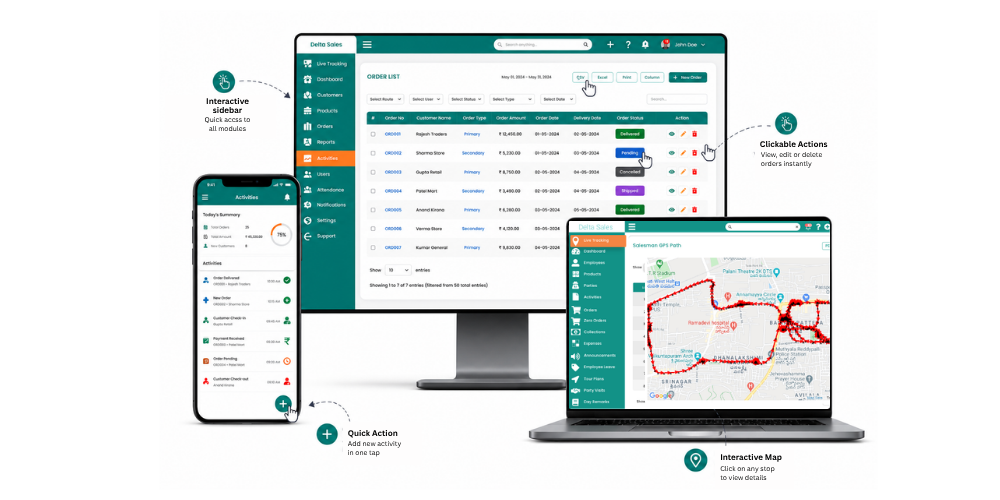
This is where a field sales platform like Delta Sales App brings different operational data into one system. Instead of stitching together disconnected reports, managers can monitor field activities, sales performance, customer visits, attendance, routes, and the rest of it from one centralized place.
-
Real-Time Dashboards for Managers
A dashboard provides managers with a unified perspective on field performance, eliminating the need for manual data compilation from various sources. It enables them to track key metrics, assess team or territory performance, and pinpoint areas needing focus.
For organizations overseeing a substantial field force, this type of sales performance dashboard streamlines weekly reviews, making them quicker and more effective. The true benefit lies not just in accessing more data but in recognizing the figures that necessitate a decision.
-
Automated Weekly Reports
Automated reports cut down the time managers spend just preparing weekly summaries. Instead of collecting data by hand, teams work from structured reports covering the relevant sales and field activity, which frees managers to actually interpret the results, talk through challenges with reps, and plan the next step.
For businesses looking to strengthen field force automation, automated reporting also brings more consistency to how performance gets reviewed across teams and territories, instead of every manager improvising their own version of the review.
-
Centralized Field Activity Data
When field information sits scattered across different tools, connecting activity to outcomes gets genuinely hard. A centralized system lets managers view related information together instead of hunting across five places for the full picture.
A manager can line up customer visits against orders generated, check attendance next to field activity, or look at routes and travel patterns when evaluating a rep's productivity. That gives a much fuller view of field sales performance, since managers aren't staring at isolated numbers anymore. They can see how different pieces of activity connect and where an improvement would actually move the needle most.
-
Easier Team and Territory Comparisons
Weekly reviews get a lot more useful when managers can actually compare performance across reps and territories side by side. A centralized system makes it easy to spot differences in customer coverage, visit activity, sales results, follow-ups, and the other indicators that matter, instead of relying on one blended team-wide number that hides all the variation.

That kind of comparison lets a manager actually dig into why one territory is performing differently from another. It also sharpens coaching, since feedback can target the specific gap a rep actually has, based on real field data, instead of handing the whole team the same generic notes.
-
Faster Identification of Performance Gaps
One of the biggest advantages of digital tracking is that managers don't have to wait until month-end to find out something's wrong. If completed visits drop below expectations, follow-ups go overdue, sales dip in a territory, or attendance patterns shift, managers can catch it during the regular weekly review, while there's still time to actually do something.
That's what makes the review process action-oriented. The point isn't just recording what happened last week. It's using that information to decide what needs to change this week.
Conclusion
The best weekly sales review isn't the one with the most numbers on it. It's the one that answers five simple questions: are reps actually doing the work, is their time being used productively, is that activity generating sales, are future opportunities moving forward, and is field execution happening the way it was planned? Consistently reviewing activity, productivity, sales outcomes, pipeline, attendance, and compliance metrics lets managers move past just measuring how busy the team looks and into actually understanding what's creating results and where things need to improve.
A structured weekly review also makes performance conversations a lot more objective. Instead of leaning on assumptions or getting blindsided by an end-of-month surprise, managers have timely information they can actually use to coach reps, fix territories, and make better field decisions.
The right technology makes this a lot easier to sustain. Delta Sales App brings field sales activity and performance information into one system, giving managers real visibility without depending on manual reporting to piece it together.
Want better visibility into your field team's weekly performance? Book a free demo of Delta Sales App and see how it can simplify field sales monitoring and reporting.