
7 Things That Change When an FMCG Company Adopts an SFA
For an FMCG company, field sales rarely break down because sales representatives do not know how to sell. The bigger problem is often what happens around the sale. A rep visits 25 outlets, but the manager sees the activity only in an end-of-day report. A distributor receives orders through paper or messaging apps. A stock-out is discovered after a retailer has already lost the sale. A beat plan exists, but there is no reliable way to know whether the planned outlets were actually covered. Retail execution depends on how consistently each rep follows the process.
These operational gaps become harder to manage as the distribution network grows. This is where sales force automation (SFA) adoption changes the way an FMCG sales organization works. Sales force automation does not simply replace paper reports with a mobile application. When implemented properly, it changes how field activity is captured, how managers review performance, how distributors are monitored, and how decisions are made at the territory level. The impact can be seen across the entire sales workflow, from beat planning and outlet visits to order booking, retail execution, secondary sales, and management reporting.
In this blog, we will look at seven practical things that change when an FMCG company adopts an SFA and how those changes affect both field teams and the head office.
Why FMCG sales teams move to an SFA
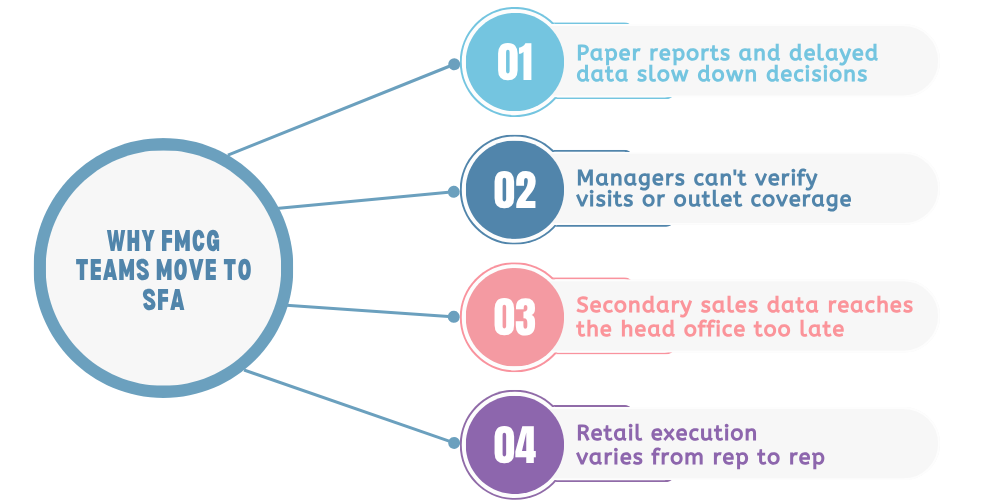
FMCG sales teams often reach a point where manual processes make it difficult to maintain visibility and control across a growing field operation. As the number of sales reps, outlets, distributors, and SKUs increases, paper reports, spreadsheets, calls, and chat-based updates can create delays and inconsistencies. Sales Force Automation Software helps bring field activity, sales data, and execution workflows into one system, giving managers faster access to reliable information and helping teams work with greater consistency.
-
Paper reports and delayed data slow down decisions
Many FMCG teams still depend on spreadsheets, paper-based DSRs, phone calls, or chat groups to collect field information. A sales representative may finish the day's visits and send an update several hours later. By then, the manager is looking at yesterday's information rather than what is happening in the market right now. This creates a gap between field activity and management action. An SFA captures sales activity at the point where it happens. Orders, visits, collections, attendance, expenses, and other field information can flow into a centralized system instead of being manually consolidated later.
-
Managers can't verify visits or outlet coverage
A beat plan may show 40 outlets scheduled for a particular territory. But without field activity data, managers may have limited visibility into which outlets were actually visited. This makes territory coverage difficult to measure. GPS-based visit tracking, attendance records, and outlet-level activity provide a more reliable picture of field execution. Managers can identify missed outlets, unusual travel patterns, and coverage gaps without relying entirely on verbal explanations.
-
Secondary sales data reaches the head office too late
For FMCG businesses, primary sales to distributors tell only part of the story. Secondary sales indicate what is moving from distributors toward retailers and other outlets. When this information arrives late, management has less time to respond to changing demand, distributor stock levels, or SKU movement. With an SFA, secondary sales information can be captured closer to the source and connected with territory, outlet, distributor, and SKU-level information.
-
Retail execution varies from rep to rep
One representative may check shelf visibility carefully while another focuses only on taking an order. One may capture promotional compliance with photos, while another provides a verbal update. Without a standardized workflow, retail execution becomes dependent on individual habits. SFA workflows can define what needs to be checked during an outlet visit, creating a more consistent process across territories.
The Operational Impact of SFA on FMCG Sales Teams
SFA adoption changes more than how sales representatives record their daily activities. It creates a more connected flow of information between the field and head office, so managers can see what is happening across territories, outlets, distributors, and sales activities with less reliance on delayed reports. The result is a shift from manually collecting updates to using shared, structured data for managing field execution, sales performance, and planning. Here are seven changes that become visible.
1. You see what the field team is actually doing
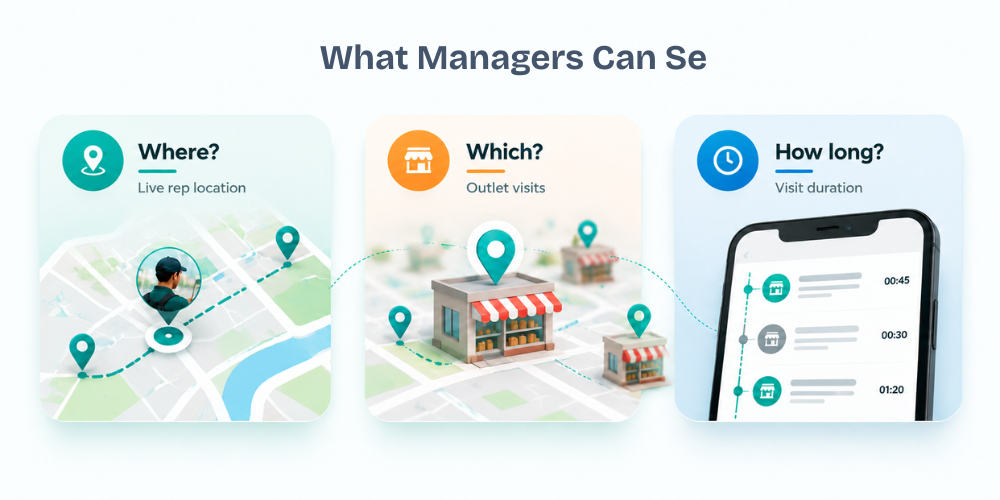
Field sales has always had a visibility problem. A manager may know a representative's assigned territory and planned beat, but that does not necessarily show what happened during the day. SFA provides a digital trail of field activity.
-
Beat plan adherence becomes measurable
A beat plan defines which outlets a representative should visit and when. With an SFA, planned outlets can be compared with actual visits. Managers can see whether the rep followed the assigned beat, which outlets were skipped, and whether coverage is consistent across the territory. This makes the beat plan review more objective. It also helps identify whether poor sales are related to demand or simply insufficient outlet coverage.
-
Live visit tracking replaces end-of-day reporting
Instead of waiting for a DSR at the end of the day, managers can view field activity as it is recorded. GPS-based tracking can show where representatives are working and which outlets have been visited. This is particularly useful for geographically distributed teams where managers cannot physically accompany every rep. The purpose is not simply to watch employees. It is to establish operational visibility so managers can respond when a territory is falling behind.
-
Time spent per outlet stops being a guess
Visit duration can provide another useful operational signal. If a representative spends very little time at high-value outlets, the manager may need to understand why. If certain outlets consistently take too much time, route planning or territory allocation may need adjustment. The data does not replace managerial judgment. It gives managers a better starting point for the conversation.
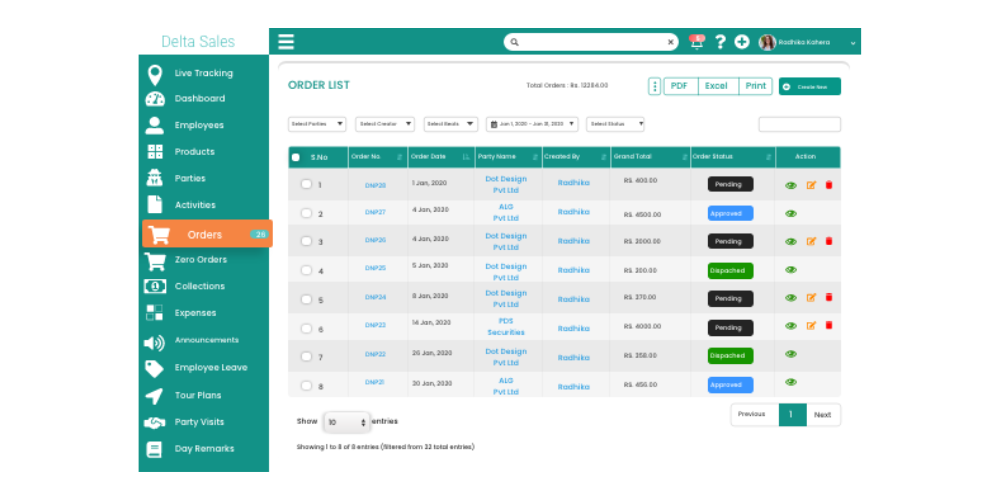
2. Order capture moves from paper to the app.
Order management is one of the most visible changes after SFA adoption. Instead of writing orders manually and later transferring them into another system, sales representatives can capture orders directly through the mobile application.
-
Fewer errors between the outlet and the distributor
Manual order entry creates opportunities for incorrect SKU quantities, pricing mistakes, missing items, or transcription errors. Digital order capture reduces unnecessary re-entry. A rep can select products and quantities within the application, creating a structured order record that can be processed through the sales workflow. For FMCG companies managing hundreds or thousands of SKUs, this becomes increasingly important.
-
Faster order processing and delivery
When order information reaches the relevant team faster, distributors can begin processing sooner. The benefit is particularly noticeable when sales operations previously depended on end-of-day consolidation. Instead of asking, "Which outlets placed orders today?" managers can work from a centralized order record.
-
Van sales and pre-sales orders in one system
Not every FMCG sales model works the same way. Some teams use pre-sales representatives who collect orders for later fulfillment. Others use van sales, where the representative carries stock and sells directly to outlets. An SFA can support both workflows while keeping sales information within the same operational system. That gives management a clearer picture of sales activity across different field models.
3. Retail execution gets standardized.
Taking an order is only one part of an FMCG field visit. The representative may also need to check shelf placement, product visibility, planogram compliance, promotional displays, pricing, stock availability, and competitor activity. SFA adoption turns these checks into structured activities rather than informal observations.
-
Shelf share, visibility, and planogram checks on every visit
Standardized checklists help ensure that important retail execution tasks are not skipped. For example, a field representative can be required to record whether priority SKUs are visible, whether the agreed display is available, or whether a promotional placement has been implemented. The exact checklist can vary by company, channel, or outlet type.
-
Photo audits replace verbal updates
A verbal statement such as "the display is installed" is difficult to verify later. Photo-based audits provide supporting evidence from the outlet visit. Managers can review images linked to specific outlets and activities, making it easier to monitor retail execution across large territories.
-
Scheme and promotion compliance gets tracked at the outlet level
Trade promotions often fail at the execution stage rather than the planning stage. A company may launch a scheme centrally, but implementation can vary by distributor, territory, or outlet. An SFA can record scheme-related activity at the outlet level, helping managers identify where promotional execution is incomplete. This creates a connection between planned trade activity and what actually happens in the market.
4. Distributor and stock visibility improves.
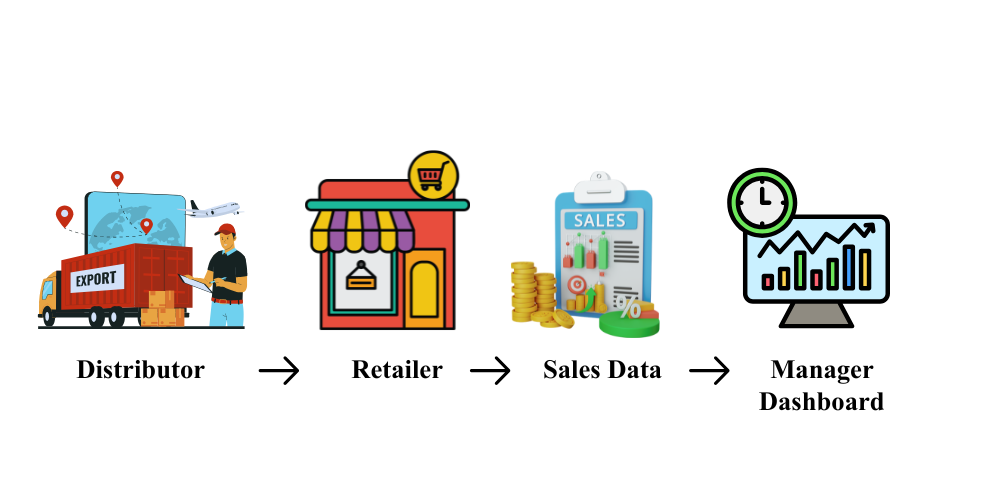
Distributor management becomes difficult when sales data is fragmented. An FMCG company may have information sitting across distributor spreadsheets, sales representative reports, accounting systems, and messaging platforms. SFA brings more of the field-side information into one workflow.
-
Secondary sales data arrives without waiting for month-end
Secondary sales can be captured continuously instead of being treated purely as a periodic reporting exercise. This allows managers to monitor movement by territory, distributor, outlet, and SKU throughout the sales cycle. More frequent data does not automatically guarantee better decisions, but it gives the organization more opportunity to act before a problem becomes a larger sales issue.
-
Outlet-level stock and stock-outs show up early.
Stock availability is directly connected to sales opportunity. When a high-demand SKU is unavailable at a retailer, the missed sale may not be obvious until someone reviews the numbers later. Outlet-level stock information and field observations can help identify potential stock-outs earlier. This is particularly useful for fast-moving SKUs where lost availability can quickly affect secondary sales.
-
Distributor performance can be compared
Distributors operate in different territories and may serve different outlet mixes. Centralized sales data makes it easier to compare indicators such as order volume, outlet coverage, SKU movement, and territory performance. The objective is not simply to rank distributors. The more useful question is why performance differs and what operational changes can improve it.
5. Beat planning and route productivity improve
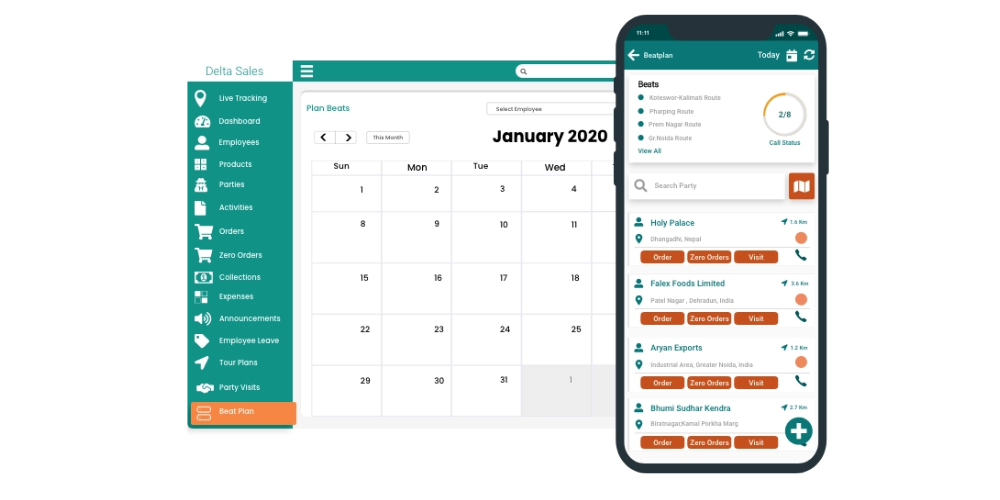
A territory can contain hundreds or thousands of outlets. The way those outlets are grouped into beats has a direct effect on field productivity. Traditional beat plans are often based on historical routes and representative familiarity. SFA introduces more data into that planning process.
-
Routes are built around outlet value, not habit
Not every outlet contributes the same sales value or requires the same visit frequency. A data-driven beat plan can consider outlet type, sales history, location, visit frequency, and business potential. Route optimization can then reduce unnecessary travel and create more practical daily schedules.
-
More productive calls per rep per day
Productivity is not simply about increasing the number of visits. A useful sales call should create value through an order, collection, merchandising activity, relationship management, stock check, or another defined objective. Better routes reduce avoidable travel and leave representatives with more productive time in the market.
-
Coverage gaps and unvisited outlets become obvious
When planned and completed visits are recorded digitally, coverage gaps become easier to identify. A territory manager can see whether particular outlets are repeatedly missed or whether a beat needs to be redesigned. This is particularly important when a company expands into new territories and the existing beat structure no longer reflects the market.
6. Sales managers change how they coach and review.
SFA adoption also changes the role of the sales manager. Instead of spending most of a review meeting collecting updates, managers can spend more time interpreting the data and coaching the team.
-
Review meetings use shared data, not rep opinions
Field representatives naturally provide context around their performance. That context remains important, but it should be considered alongside actual field activity. A manager can review visit coverage, orders, collections, route adherence, productive calls, and other indicators before discussing the reasons behind the results. This creates a more structured review process.
-
Targets and incentives can be tied to actual field activity
Sales targets remain important, but an FMCG organization may also want to measure the activities that contribute to those targets. Depending on the sales model, these could include outlet coverage, productive calls, order value, collection performance, new outlet additions, or retail execution. When the underlying activity is recorded consistently, performance measurement becomes easier to structure.
-
New reps ramp up faster with guided visit workflows
Experienced sales representatives often carry a lot of process knowledge in their heads. New representatives need that knowledge to be made explicit. An SFA can guide a rep through attendance, planned visits, order booking, outlet checks, collections, and reporting. This reduces dependence on informal instructions and gives new team members a consistent operating process.
7. Planning and forecasting get better inputs.
The final change happens above the territory level. Once field information is collected consistently, the data becomes useful for planning.
-
Demand patterns show up by territory, outlet, and SKU
An SFA helps management read sales movement from more than one angle: which SKUs are moving in a territory, which outlets order regularly, where a particular product is slowing down, and which territories have good coverage but weak conversion. When sales data is scattered across spreadsheets and manual reports, those questions are hard to answer with any confidence.
-
Trade spend can be linked to results
Trade promotions represent a significant investment for many FMCG companies. When promotion activity is recorded alongside outlet sales and execution data, management can begin examining whether the intended activity produced the expected market response. This provides a stronger basis for future promotion planning.
-
Leadership gets one source of data for field decisions
The most valuable change may be the creation of a shared operational view. Sales, distribution, field activity, outlet coverage, collections, and retail execution can be reviewed through connected dashboards and reports. Instead of each department maintaining its own version of field reality, leadership can work from a more consistent dataset.

How to know if your FMCG team is ready for an SFA
An FMCG team does not need to reach a certain size before considering an SFA. The stronger indicator is whether manual sales processes are making field operations harder to manage. If managers struggle to track outlet coverage, receive timely sales data, verify field activity, or keep distributor and stock information organized, the existing process may no longer be sufficient. These signs can help determine whether the team is ready to move from manual reporting to a more structured SFA workflow.
-
Reps still report visits and orders through calls, paper, or chat groups
Phone calls, paper forms, spreadsheets, and messaging groups scatter the daily visit and order data and make it hard to verify. Managers end up collecting DSRs by hand, pulling order details together and chasing individual reps. An SFA system puts field visits, order booking, collections, and daily sales reporting into one structured workflow, so managers can see field activity and sales information on a central platform instead of across several separate channels.
-
Sales data takes days to reach managers
Delayed sales reporting can make it difficult to respond to changes in the market. By the time a manager receives consolidated information, a stock-out, missed order, or territory-level sales decline may already have affected performance. With sales force automation, field teams can capture orders, collections, and other sales activities through a mobile application. This gives managers faster access to sales data and helps reduce the gap between field execution and management decisions.
-
You can't say which outlets were missed last month
Outlet coverage is central to FMCG sales execution. Without a reliable record of planned versus completed visits, a manager can't tell whether weak territory performance comes from low demand, poor sales execution, or outlets that simply weren't visited. An SFA links beat planning, GPS-based visit tracking, and outlet management, which gives a clearer picture of coverage. Managers can see which outlets got missed, review the visit patterns, and adjust beat plans based on what the field data actually shows.
-
Scheme issues and stock-outs are found after the sales are lost
Retail execution problems feed straight into secondary sales. A priority SKU goes missing from the shelf, a promotion doesn’t get set up right, planned display never makes it to the outlet. If a manager only finds out at a periodic review, the lost sale is usually gone by then. An FMCG SFA app lets reps log stock availability, promotional compliance, retail execution activity, and other outlet observations as part of the visit itself. Photo audits and structured checklists give managers a more current read on what’s actually happening on the shelf.
-
Your outlet and distributor network has outgrown spreadsheets
Spreadsheets can be useful when the operation is small, and the number of outlets, distributors, SKUs, and sales representatives is manageable. Problems often appear when the network expands, and multiple people need to update, consolidate, and analyze the same information. At that stage, FMCG sales automation can provide a more structured way to manage outlets, distributors, orders, collections, field activities, and sales reports. A centralized system also reduces dependence on multiple spreadsheet versions and manual data entry.
-
Managers spend more time collecting updates than coaching reps
Sales managers should be spending their time improving territory performance, coaching reps, reviewing execution, and sorting out distributor or outlet issues. If a big chunk of the day instead goes to "Where are you?", "Which outlets did you visit?", and "How much did you sell?", the reporting process has become a management problem of its own. An SFA shows field sales activity, attendance, employee location, beat adherence, orders, and collections, so managers spend less time chasing basic updates and more time acting on what they already know.
-
Field teams work across areas with unreliable internet connectivity
Connectivity can be a real barrier for field teams working in rural or spread-out markets. If the app needs a steady internet connection, reps struggle to record orders or visits wherever coverage is weak. An offline-first SFA lets them keep logging field activity without a live connection, and the data syncs once they're back in range. That keeps things running in areas where 2G, 3G, or patchy connectivity is normal.
-
Sales performance varies significantly between territories
When some territories consistently beat others, management needs to know why, and the monthly sales figure alone rarely explains it. Field sales automation software links territory coverage, productive calls, order value, SKU movement, outlet visits, and route productivity, so managers get more to work with when they review a territory and decide what needs to change.
-
There is no single source of truth for field sales data
When attendance sits in one system, orders in spreadsheets, distributor information somewhere else, and field updates in chat groups, nobody gets the full picture of sales performance. An SFA brings all of that into one connected workflow. For FMCG companies, this gives field sales, distribution, retail execution, secondary sales, and management reporting one consistent source of information.
How Delta Sales App supports FMCG field teams
For FMCG companies moving toward SFA adoption, the system needs to fit the realities of field operations rather than force representatives into complicated workflows. Delta Sales App combines field sales force automation with employee tracking and sales reporting for companies managing outside sales teams.
-1791090767.png)
-
Beat plans, visit tracking, and attendance
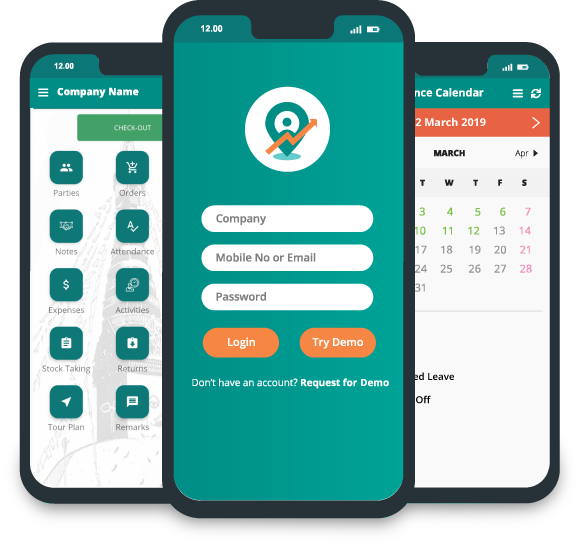
Delta Sales App supports beat planning, GPS-based employee location tracking, attendance, and field visit monitoring. Managers can use field activity data to understand territory coverage and whether planned visits are being completed.
-
Order capture for pre-sales and van sales
The platform supports digital order booking and sales workflows for field teams. This can help replace paper-based order collection and provide management with faster access to order information. For teams operating in areas with unreliable connectivity, offline-first functionality allows field activity and orders to be recorded without depending entirely on a continuous internet connection.
-
Retail execution checks and photo audits
Field teams can capture outlet-level information and visit photos as part of retail execution workflows. This helps organizations standardize important checks and create a more verifiable record of what happened at the outlet.
-
Distributor and stock visibility
Distributor and party management capabilities help connect field activity with distributor operations. Sales teams can work with information related to orders, collections, stock, and outlet activity, giving managers more context for territory-level decisions.
-
Dashboards and reports for sales managers
Real-time dashboards and automated reports reduce the need to manually consolidate DSRs and field updates. Managers can review sales activity, visits, collections, attendance, expense reporting, and other operational information from a centralized system. The goal is straightforward: give field teams a practical workflow while giving managers the visibility needed to manage territories, distributors, and sales performance.
Conclusion
SFA adoption changes more than the way an FMCG representative submits a report. It changes how the organization sees field activity. Beat plan adherence becomes measurable. Orders move from paper into a structured workflow. Retail execution becomes more consistent. Distributor and stock visibility improves. Routes can be planned around actual territory data. Sales managers can coach from shared information instead of relying entirely on verbal updates. And leadership gets better inputs for planning, forecasting, and trade decisions.
The value of an SFA ultimately depends on implementation. A complicated system that adds work for representatives will struggle to deliver these benefits. A practical SFA should fit the field workflow, work across real-world connectivity conditions, and turn everyday sales activity into usable operational data. For FMCG companies looking to improve field visibility, territory coverage, order management, retail execution, and sales reporting, Delta Sales App provides a connected platform built around these requirements.
Book a free demo to see how Delta Sales App can fit into an FMCG field sales workflow.