Why Is Customer Visit Frequency Important in Field Sales?

A salesperson may meet their daily quota in any of the dozens of stores they visit each day, but are they visiting the right store at the right time? In the world of field sales, the success of a salesperson is not determined solely by the number of stores they manage to visit but also by how often a given store has been visited, depending on the store’s purchasing power, history, and needs. The importance of this is that, for instance, the store that runs out of goods after a week cannot be visited with the same frequency as a small store that places orders only once a month. This means that determining the right visit frequency is what customer visit frequency is all about.
Although a good customer visit plan is necessary for the success of one’s field sales strategy, a well-made customer visit plan is still not enough for success. One needs to ensure that the visits are made as planned. Without the necessary customer visit monitoring, the manager of the field sales team will not know if any of the representatives have completed their planned routes. As a result, missed opportunities, inconsistent retailer engagement, stock-outs, and declining customer satisfaction can become common challenges.
Researchers associated with the Harvard Business Review claim that acquiring a new customer may take 5 to 25 times more money than retaining an old one. In field sales, retailers must develop and keep good relationships; the success of the process relies on timely visits and meetings. Therefore, customer retention becomes as important as customer acquisition.
Modern field sales automation software offers smart planning of visits, customer visit tracking, GPS verification, and reporting instantly so businesses provide their customers with the needed frequency of visiting each territory. Unlike traditional ways of planning visits that include a manual plan or spreadsheet, field sales managers are able to monitor compliance with the plan, obtain better coverage of the area, and ensure visiting retailers are treated properly.
In the blog, we will discuss why customer visit frequency matters in field sales, how to define what visiting frequency one should follow for various customer types, common problems businesses deal with, and how customer visit tracking and sales automation solutions can enhance sales productivity, improve relationships with retailers, and ensure the company's growth.
What Is Customer Visit Frequency?
The customer visit frequency refers to how many times a salesperson visits a customer within a certain period to check on the progress of sales, maintain relations, and take care of business. Depending on the type of customer and the business, customer visits may happen daily, weekly, bi-weekly, or monthly.
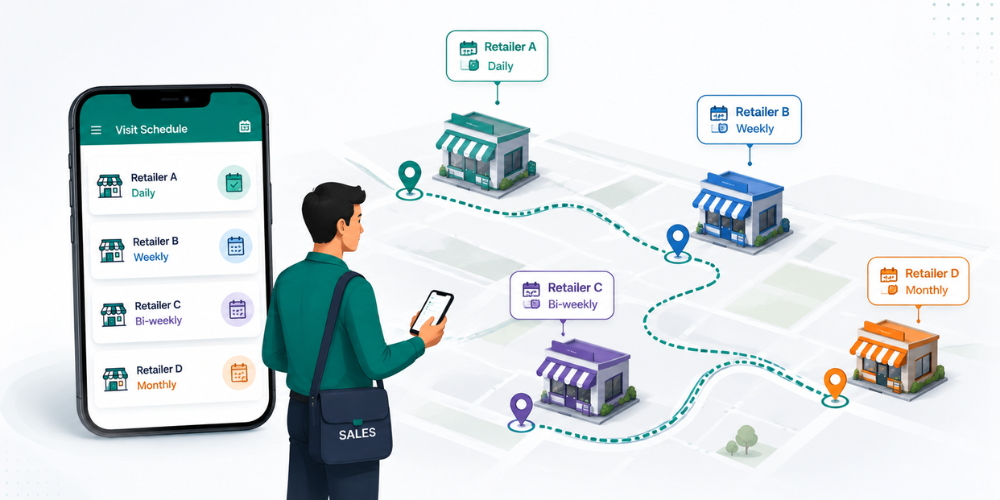
In field sales, customer visit frequency is not about reaching maximum visit count. Rather, it deals with calculating the right frequency to provide each customer with the required care without wasting efforts and time. For instance, stores with high sales in stock may require multiple visits each week, while small shops that have low sales may just need one visit every few weeks. The effective visit frequency strategy considers several factors, such as
-
Sales volume of the customers
-
Frequency of orders
-
Product demand and inventory turnover
-
Distance to a customer
-
Market potential
-
Seasonality and marketing policy
-
Activities of competitors
For example, imagine two retailers in the same territory. One generates large weekly orders and frequently experiences stock shortages, while the other places a small order once a month. Assigning the same visit frequency to both customers would lead to inefficient use of your sales team's time. Instead, businesses should prioritize visits based on customer value and business potential.
However, deciding how often customers should be visited is only the first step. Businesses also need a Sales Visit Planning App to create structured visit schedules, assign customer visits, and ensure every planned visit is completed efficiently.
Why Customer Visit Frequency Matters
Customer visit frequency directly impacts sales performance, retailer relationships, inventory availability, and overall field team productivity. Too infrequent customer visits by sales reps can result in loss of sales opportunities, missed market changes, and eroded retailer trust. On the other hand, if you call on customers more often than required, you increase travel expenses and reduce the number of stops a sales rep can make in a day. “The secret is to keep the right number of visits for each customer in accordance with their value, buying behavior, and business potential. When combined with customer visit tracking, companies can make sure that planned visits are scheduled and consistently executed. Here are the top reasons why customer visit frequency is one of the most important field sales metrics.

1. Strengthens Customer Relationships and Builds Trust
The success of field sales is dictated by the relationships with customers. Price and product quality matter when it comes to making purchasing decisions, but retailers also care about manufacturers who will keep supporting them over time. Regular sales calls allow salespersons to maintain contact with retailers, learn their problems, and assist them when needed. Sales representatives can, in particular:
-
Solve problems before they arise
-
Present new products and promotions
-
Learn new requirements of customers
-
Get feedback from customers
-
Establish lifetime relations with customers
When customers are aware of the fact that sales representatives visit them regularly, they are more likely to remain loyal to the brand rather than turn to competitors who provide better support.
2. Enhances Route Planning and Field Productivity
Poorly planned customer visits often result in unnecessary travel, overlapping routes, and fewer productive sales calls. By analyzing customer visit frequency, businesses can create smarter visit schedules that allow representatives to cover more customers while spending less time on the road. When combined with Beat Planning Software and Route Planning Software, businesses can:
-
Reduce travel time
-
Increase daily customer coverage
-
Minimize fuel and transportation costs
-
Improve salesperson productivity
-
Ensure every territory receives balanced coverage
Efficient route planning allows sales representatives to focus on selling instead of traveling.
3. Increases Sales Opportunities and Order Value
Every customer visit opens the way for making additional revenue. Instead of just taking an order, sales representatives can make face-to-face contact to sell new products, show seasonal promotions, and persuade customers to buy larger amounts. Regular visits allow sales teams to:
-
Upsell premium products
-
Cross-sell complementary items
-
Promote ongoing deals and discounts
-
Present new products
-
Raise the average order value
Clients who get regular business support are more prone to making repeat orders and increase their total earnings.
4. Improves Customer Visit Tracking and Sales Accountability
Planning customer visits is only good when sales reps actually go for them. Without an accurate system to track customer visits, managers typically have limited visibility into field activities and rely on manual reports or verbal updates. With the help of customer visit tracking software, businesses can:
-
Check that planned visits took place
-
Recording of visit timestamps and GPS locations
-
Keep a record of the time of each customer visit
-
Identify missed or skipped outlets
-
Compare planned visits against actual visits
This level of visibility improves accountability, ensures consistent customer coverage, and helps managers make better decisions based on real-time field data instead of assumptions.
5. Reduces Stock-Outs and Prevents Lost Sales
One of the main goals of scheduling the right frequency of visits is to keep the shelves stocked with products. When an item runs out of stock, it means that the store lost a sale; what is worse, the customer might buy a similar product at a competitor’s store. Frequent visits enable sales agents to:
-
Keep track of what's in stock
-
Spot products selling quickly
-
Build a restocking plan
-
Decide how much of an item to order
-
Make sure that a certain item is available with various different items.
According to research by the National Association of Convenience Stores, stock-outs can significantly reduce retailer sales and negatively affect customer satisfaction. Frequent customer visits help businesses identify inventory gaps early and maintain consistent product availability.
6. Provides Better Market Intelligence
Sales representatives spend more time in the market than anyone else within the organization. Every customer visit provides valuable information that can help businesses make informed decisions. Regular visits enable representatives to collect insights such as:
-
Competitor pricing
-
New product launches
-
Customer buying patterns
-
Retailer feedback
-
Product demand trends
-
Merchandising issues
These real-time market insights help businesses respond more quickly to changing market conditions and stay ahead of competitors.
7. Improves Sales Forecasting and Business Planning
Accurate sales forecasting depends on reliable field data. Businesses that maintain consistent customer visit frequency receive regular updates on inventory levels, retailer demand, customer feedback, and upcoming sales opportunities.
This information helps managers:
-
Forecast product demand more accurately
-
Plan inventory replenishment
-
Allocate sales resources effectively
-
Identify high-growth customers
-
Optimize future visit schedules
Instead of relying solely on historical sales data, businesses can make proactive decisions using insights collected during every customer visit.
How Often Should Sales Representatives Visit Customers?
Determining how often a sales representative should visit a customer isn't straightforward; it varies from one situation to another. The right frequency hinges on various factors, such as the customer's potential for sales, how often they place orders, their location, how quickly their inventory moves, and their overall importance to the business. Treating every customer the same way can waste time and resources. High-value customers might not get the attention they deserve, while less important accounts could take up more time than they warrant. To address this, businesses should embrace a more personalized, data-informed strategy that categorizes customers based on their significance and needs.
Thanks to modern customer visit tracking and field sales automation tools, this process has become much simpler. These technologies analyze customer data, enabling managers to craft tailored visit schedules and ensure that every planned visit is carried out effectively.
Here are some general guidelines for determining customer visit frequency.
-1786594920.png)
1. High-Value Customers: 2–3 Visits Per Week
High-value customers contribute a significant portion of your revenue and often have fast inventory turnover. These customers require frequent engagement to maintain stock availability, strengthen relationships, and capitalize on sales opportunities. This category typically includes:
-
Major retail chains
-
Large grocery stores
-
High-volume wholesalers
-
Key distributors
Regular visits allow sales representatives to:
-
Prevent stock-outs
-
Monitor product availability
-
Avoid running out of stock
-
Implement marketing campaigns
-
Address any issues promptly
Neglecting visits to these important customers can have a direct negative effect on your revenue and market presence.
2. Medium-Value Customers: Once Every Week
Medium-value customers generate consistent business but usually don't require multiple visits each week. Weekly visits allow representatives to:
-
Collect orders
-
Review inventory levels
-
Address customer concerns
-
Maintain strong business relationships
-
Monitor competitor activity
This schedule provides a good balance between customer support and efficient territory coverage.
3. Low-Value Customers: Every Two to Four Weeks
Smaller retailers and customers with lower purchasing volumes may not need as many visits, but they are important and shouldn't be overlooked. They play a vital role in market coverage and contribute to the long-term growth of the business. During these visits, representatives can:
-
Restock inventory
-
Introduce new products
-
Gather feedback from the market
-
Spot potential growth opportunities
It's essential for businesses to regularly assess these accounts, as a customer who seems low-value today might turn into a high-value customer down the line.
4. New Customers: More Frequent Visits During Onboarding
New customers typically require extra assistance as they begin their journey with us. Regular visits are essential for fostering trust and encouraging them to become loyal patrons. During these visits, sales representatives can:
-
Share insights about product features and pricing in a relatable way
-
Ensure that their first orders arrive smoothly and on time
-
Address any onboarding challenges they may face
-
Suggest product ranges that align with their needs and preferences
-
Cultivate lasting relationships built on understanding and support
A welcoming onboarding experience can significantly enhance customer loyalty and lead to repeat business.
5. Seasonal or Campaign-Based Customers
During festive seasons, promotional campaigns, or product launches, some customers may need extra visits to ensure everything runs smoothly. Take, for instance, an FMCG distributor who might ramp up visit frequency ahead of major shopping periods to:
-
Capture larger orders
-
Make sure promotional displays are set up
-
Monitor inventory levels
-
Assist with marketing efforts
After the campaign wraps up, the visit frequency can revert to the usual schedule.

Challenges of Managing Visit Frequency Manually
As businesses expand, keeping track of how often customers are visited can become quite a challenge. Many companies still depend on outdated methods like spreadsheets, paper schedules, phone calls, or casual conversations to plan and oversee customer visits. While these approaches might suffice for smaller sales teams, they quickly become cumbersome when dealing with hundreds or even thousands of customers spread across various regions.
Without a unified system in place, sales managers often find themselves in the dark regarding field activities. They may not be aware if sales reps are meeting their visit targets, skipping certain locations, or spending too much time on less important accounts. This lack of insight can hinder the ability to maintain a steady rhythm of customer visits, resulting in lost sales opportunities and diminished productivity in the field.
Here are some of the typical hurdles businesses encounter when trying to manage customer visit frequency manually.
-
Missed customer visits
-
Duplicate store visits
-
Unbalanced workloads
-
Inaccurate reports
-
Difficulty monitoring field teams
-
Limited visibility into salesperson performance
As businesses expand, manual processes become increasingly difficult to manage.
How Field Sales Automation Improves Customer Visit Frequency
As your customer base expands, keeping track of the right frequency for customer visits can become quite a challenge. Sales managers face the important task of ensuring that every retailer is visited promptly, territories are managed effectively, and field representatives adhere to their schedules. When this is handled manually, it often leads to missed visits, uneven customer coverage, and a lack of clarity regarding field operations.
This is where field sales automation software can make a significant difference. By moving away from spreadsheets and manual reporting, businesses can streamline visit planning, track customer visits in real time, and gain insights into field performance through a centralized dashboard.
By integrating smart planning with customer visit tracking, businesses can guarantee that each customer receives the appropriate number of visits, all while enhancing the productivity and accountability of their sales team.
1. Automates Beat Planning and Visit Scheduling
Creating visit schedules manually is both time-consuming and prone to errors. Sales managers often struggle to balance workloads while ensuring every customer receives adequate attention. With Beat Planning Software, businesses can:
-
Create structured daily, weekly, or monthly beat plans.
-
Schedule customer visits based on priority and location.
-
Assign balanced territories to field representatives.
-
Reduce missed or duplicate customer visits.
-
Improve overall customer coverage.
Automated beat planning ensures that high-value customers are visited more frequently while lower-priority accounts receive appropriate attention without overburdening the sales team.
2. Enables Real-Time Customer Visit Tracking
-1786594921.png)
Ensuring that customer visits take place is crucial for effective planning. Field sales automation empowers managers to keep track of every interaction with customers through customer visit tracking. With GPS-enabled technology, businesses can:
-
Confirm customer visits as they happen.
-
Log the exact times and locations of visits.
-
Verify when salespeople check in and out.
-
Spot any missed or skipped visits.
-
Assess how long visits last and their overall productivity.
This transparency fosters accountability and provides managers with a clear view of field activities.
3. Optimizes Routes to Increase Daily Customer Coverage
Sales representatives spend a significant portion of their day traveling between customer locations. Poor route planning reduces the number of productive visits they can complete. By integrating route planning software with customer visit schedules, businesses can:
-
Create more efficient travel routes.
-
Cut down on travel time and fuel expenses.
-
Boost the number of customer interactions each day.
-
Avoid unnecessary detours.
-
Enhance overall productivity in the field.
With smarter routing, sales teams can focus more on building relationships and closing deals, rather than spending excessive time in transit.
4. Prioritizes High-Value Customers
Field sales automation recognizes that each customer has unique visit needs. By leveraging customer data, it empowers managers to prioritize visits based on actual business value instead of mere assumptions. Companies can categorize customers based on:
-
Sales volume
-
Purchase frequency
-
Growth potential
-
Inventory turnover
-
Strategic importance
This approach guarantees that essential accounts get the focus they deserve while ensuring effective coverage throughout the entire territory.
5. Provides Real-Time Insights Through Customer Management
Each customer visit is an opportunity to gather important insights about their needs and preferences. Rather than keeping this information scattered in notebooks or spreadsheets, customer management software brings everything together in one place, including customer profiles, order history, payment details, past interactions, and visit records.
Before each visit, sales representatives can easily access this wealth of information to:
-
Grasp what the customer truly needs.
-
Look back at previous orders.
-
Spot chances for upselling.
-
Address any unresolved issues more quickly.
-
Create a tailored experience for each customer.
Having all this customer information readily available empowers sales representatives to make their visits more effective and meaningful.
6. Measure Visit Performance with Automated Reports
One of the biggest advantages of field sales automation is the ability to measure field performance accurately. Instead of relying on manual reports, managers can track key performance indicators such as
-
Planned versus completed visits
-
Customer coverage
-
Visit compliance
-
Average visit duration
-
Orders collected
-
Productive and non-productive visits
Using daily work logs and reporting dashboards, managers gain actionable insights that help improve team performance and optimize future visit plans.
7. Helps Businesses Scale Field Operations
As companies grow and venture into new cities, regions, or markets, keeping track of how often customers are visited can become quite challenging. Field Sales Automation Software makes this process easier by allowing businesses to:
-
Manage multiple sales territories from one platform.
-
Monitor large field teams in real time.
-
Create uniform customer visit schedules.
-
Ensure consistent customer engagement across different areas.
-
Enhance collaboration between managers and field representatives.
Whether you're looking after 2Track large field teams in real time.0 customers or 20,000, automation guarantees that each customer gets the attention they deserve without adding to administrative burdens.
How Delta Sales App Helps Improve Customer Visit Frequency
Maintaining the right customer visit frequency requires more than a well-planned schedule. Sales managers need complete visibility into field activities, customer interactions, territory coverage, and salesperson performance to ensure every planned visit is completed on time.
Delta Sales App brings all these capabilities together in a single Field Sales Automation Software platform, helping businesses automate visit planning, track field activities in real time, and improve customer engagement across every territory.
Here's how Delta Sales App helps businesses optimize customer visit frequency.
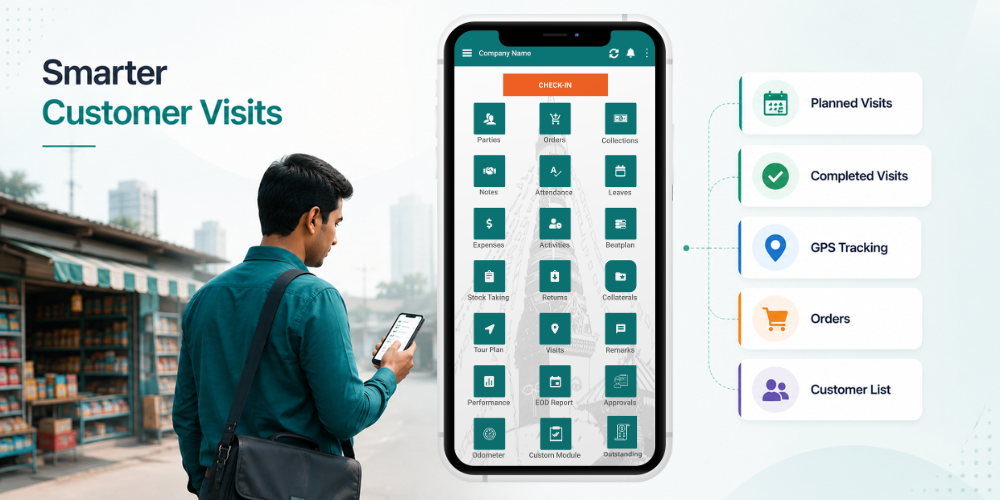
1. Smart Beat Planning for Better Customer Coverage
Managers can simplify their daily scheduling by utilizing Beat Planning Software, which allows them to create optimized routes and visit plans tailored to customer priority, location, and territory. This approach benefits businesses in several ways:
-
Every customer is guaranteed a spot in the visit schedule.
-
High-value retailers receive the attention they deserve.
-
Duplicate or missed visits are a thing of the past.
-
Workloads are evenly distributed among sales representatives.
-
Overall territory coverage is significantly enhanced.
By adhering to structured beat plans, sales teams can connect with more customers while ensuring they visit at the right frequency.
2. Real-Time Customer Visit Tracking
Delta Sales App's Customer Visit Tracking feature empowers managers with a clear view of field operations. Utilizing GPS-enabled tracking, businesses can:
-
Confirm that customer visits took place.
-
Log visit locations and timestamps.
-
Keep track of when salespeople check in and out.
-
Spot any missed or delayed visits.
-
Assess the duration spent at each customer site.
This approach removes uncertainty and guarantees that every scheduled customer visit is carried out as planned.
3. GPS-Based Field Employee Monitoring
Leading a distributed field sales team is simplified with GPS-based employee tracking. Sales managers can:
-
Monitor live employee locations.
-
Ensure routes are followed as planned.
-
Keep an eye on real-time employee locations.
-
Minimize unauthorized detours.
-
Foster accountability within the field team.
This approach allows sales representatives to dedicate more time to building relationships with customers and less time to unproductive travel.
4. Centralized Customer Information
Before meeting with a customer, sales representatives require insights into past interactions, order details, pending payments, and customer preferences. Utilizing customer management software, all customer profiles are consolidated in one location, allowing sales teams to:
-
Review past visits.
-
Access order details.
-
Document customer feedback.
-
Monitor payment status.
-
Prepare for more effective customer meetings.
Having comprehensive customer information at hand enables representatives to provide more tailored service during each visit.
5. Automated Daily Work Logs and Visit Reports
Manual reporting often consumes valuable selling time and delays decision-making. Using Daily Work Logs, every customer visit is automatically recorded, giving managers instant access to field activity reports without relying on paperwork or manual updates. Managers can monitor:
-
Planned versus completed visits.
-
Customer coverage.
-
Daily sales activities.
-
Visit productivity.
-
Salesperson performance.
These real-time insights help identify performance gaps and improve future visit planning.
6. Territory Management for Growing Sales Teams
As companies venture into new markets, keeping track of customer visits can become quite challenging. The Delta Sales App's Territory Management Software simplifies this process by helping businesses map out their customers, create fair territories, and make sure every outlet gets the attention it deserves. This approach allows organizations to:
-
Enhance coverage of their territories.
-
Avoid double visits to the same customers.
-
Distribute workloads among salespeople evenly.
-
Expand field operations smoothly.
-
Provide reliable service across different regions.
7. Data-Driven Insights for Continuous Improvement
The Delta Sales App goes beyond merely assisting businesses in planning customer visits; it empowers them to enhance these interactions continuously. With intuitive dashboards and insightful analytics, managers can keep a close eye on essential performance indicators, including:
-
How well visits are being followed through
-
The extent of customer outreach
-
The effectiveness of sales efforts
-
The rates at which orders are converted
-
The efficiency of routes taken
-
Trends in customer engagement
These valuable insights enable businesses to fine-tune their visit strategies, allocate resources more effectively, and ensure they get the most out of every customer interaction.
Conclusion
Customer visit frequency goes beyond mere scheduling; it's essential for nurturing meaningful customer relationships, enhancing retailer satisfaction, unlocking sales potential, and boosting the productivity of your field team. If you visit customers too rarely, you risk stock-outs, lost sales, and diminished engagement. Conversely, visiting too frequently can drain valuable time and resources.
Finding the right balance is crucial. This involves prioritizing customers based on their significance, crafting efficient visit schedules, and utilizing customer visit tracking to ensure every planned interaction happens. With Field Sales Automation Software, businesses can streamline beat planning, optimize travel routes, keep an eye on field activities in real time, and make informed decisions that elevate overall sales performance.
Are you ready to enhance your customer visit frequency and elevate your field sales results? Schedule a free demo of Delta Sales App today and explore how smart visit planning, real-time tracking, and robust sales automation tools can empower your team to forge stronger customer connections, boost productivity, and foster sustainable growth.