
How Agro-Input Companies Can Manage Dealer Networks

Agro-input companies rely on dealer networks to get seeds, fertilizers, crop protection products, pesticides, and equipment into farmers' hands. The problem is that these networks are never sitting in one tidy place. Dealers spread across villages, districts, and rural territories, each market running on its own crop calendar, demand pattern, credit cycle, and competitive pressure.
For field teams, managing that network means more than showing up and collecting orders. Sales officers need to know which dealers are actually active, what stock they're holding, which products are moving, where collections have gone overdue, and whether the planned market visits are even happening.
A structured approach to dealer management brings all of that into one process instead of five. Dealer segmentation, territory mapping, beat planning, visit tracking, order booking, stock monitoring, collections, and performance reporting can work together, rather than living across separate spreadsheets, phone calls, and paper records.
This blog explains how agro-input companies can organize dealer networks, improve field execution, control orders and collections, and use field-sales technology to maintain better visibility across territories.
Why Dealer Networks Are Hard to Manage in Agro-Inputs
Dealer management gets particularly hard in agro-inputs because demand and distribution are tied so tightly to geography and the agricultural calendar. A dealer in one crop-growing region needs something completely different from a dealer three districts over. And product demand can swing fast with sowing, planting, pest pressure, weather, harvest, it doesn't sit still the way demand in most other industries does.
-
Thousands of dealers spread across rural territories
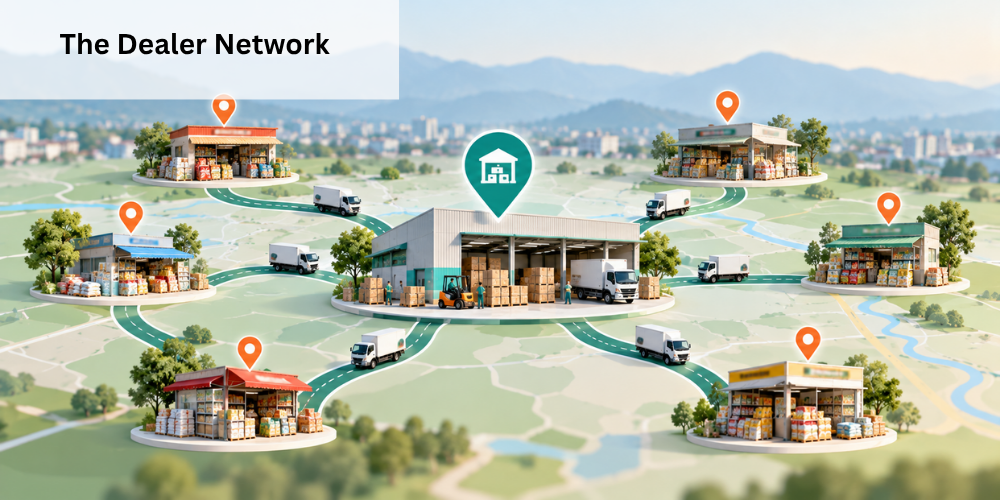
An agro-input company might work with hundreds or thousands of dealers across multiple territories, scattered far from branch offices and from each other. One sales officer might cover dealers across several villages or towns. Without real territory mapping, the same high-potential dealer gets all the attention while smaller, less visible dealers go weeks without a visit. Distance eats productivity too. A badly designed beat means the rep spends most of the day driving between locations instead of actually meeting dealers and developing the territory. A structured dealer network needs to define which dealers belong to which territory, which field officer owns each dealer, how often each one should be visited, which dealers need more frequent visits, and which territories need more coverage overall. That's the foundation everything else builds on.
-
Short selling windows tied to crop seasons
Agro-input sales live and die by crop cycles. Demand for a product can spike hard at one stage of cultivation and vanish once that window closes. That puts real pressure on field teams to move fast. A dealer runs out of a key product at peak demand and waits three days for the next scheduled visit, and the sale's already gone to a competitor by then. Too much stock before or after the season, on the other hand, ties up working capital and creates its own inventory headache.
Field teams need visibility into dealer demand and stock before the selling window gets tight, not after. Beat planning should follow the agricultural calendar, not run the same fixed route year-round regardless of what's actually happening in the fields.
-
Limited visibility into dealer stock, credit, and payments
Dealer relationships involve credit sales, outstanding payments, returns, schemes, purchasing patterns that shift all the time. When all of it sits scattered across spreadsheets, notebooks, WhatsApp, and individual officers' private records, nobody at the top has a reliable picture of the market. A dealer can look active because an order landed recently, while their collections are actually sitting overdue. Another dealer hasn't ordered in weeks, not because business is slow but because a competitor's product has taken the shelf space.
Without dealer-level visibility, managers end up leaning on field reports and phone calls for everything. The real goal is to make dealer activity measurable at three levels: territory, officer, and individual dealer.
How Agro-Input Companies Can Manage Dealer Networks Step by Step
Effective dealer management starts with operational discipline. Technology can support the process, but the underlying dealer structure, field routine, and performance measures need to be clear first.

1. Organize the dealer network before you try to control it.
Start with a reliable view of the dealer network. A dealer database needs more than a name and phone number; it should carry location, territory, sales history, product categories, credit terms, outstanding payments, the assigned sales officer, and the dealer's potential.
-
Segment dealers by sales volume, potential, and credit risk
Not every dealer deserves the same attention. A practical segmentation model sorts dealers by current sales, future potential, purchasing frequency, strategic importance, and payment behavior. High-volume dealers get frequent visits because they're driving real secondary sales. High-potential dealers with low current sales might need more market development instead. Dealers with a pattern of late payment need closer credit monitoring, not another sales pitch. Segmentation is what lets field managers put their time where it actually pays off. And categories shouldn't be set once and forgotten; a small dealer today can turn strategically important fast when a new crop, product, or territory opportunity opens up near them.
-
Map territories and assign them to field officers
Every dealer needs a clearly defined territory and a responsible field officer, full stop. Territory mapping is what lets managers answer the basic operational questions fast: how many dealers does each officer carry, which villages and towns are actually covered, where are the coverage gaps, is anyone driving unnecessarily far, and which dealers haven't seen a visit in a while. It also makes beat planning practical instead of a guessing game. Field teams can build routes around location and priority instead of pulling them from memory every morning.
-
Standardize dealer onboarding and documentation
Dealer onboarding should follow the same process every time: business details, contact information, location, credit terms, tax documentation, product categories, and agreed commercial terms, all captured in a standard format. This matters most when sales officers change territories, because a structured record means the new officer isn't starting from zero, rebuilding years of territory knowledge from scratch. A centralized record also gives managers a consistent view of the network, not five different versions depending on who you ask.
2. Build a visit routine that covers every dealer

A dealer network can't be managed from an office chair. Field execution is what actually decides whether the distribution strategy reaches the market or just sits in a plan somewhere. The goal was never more visits for the sake of more visits. It's getting the right dealers visited at the right frequency and making sure each visit actually produces something useful.
-
Align beat plans with the farming calendar
Beat planning for agro-input companies has to bend with the agricultural calendar. During peak demand, priority dealers need more frequent visits, full stop. Before the season starts, officers should be checking expected demand, stock requirements, product awareness, and whether the dealer's actually ready for what's coming. After the peak, the focus shifts to collections, inventory movement, returns, and getting ready for the next cycle. A fixed weekly route still gives structure, nothing wrong with that. But the frequency and priority behind it needs to flex with the season, not stay locked to a calendar that doesn't care what's actually happening in the fields.
-
Verify visits with location and time stamps
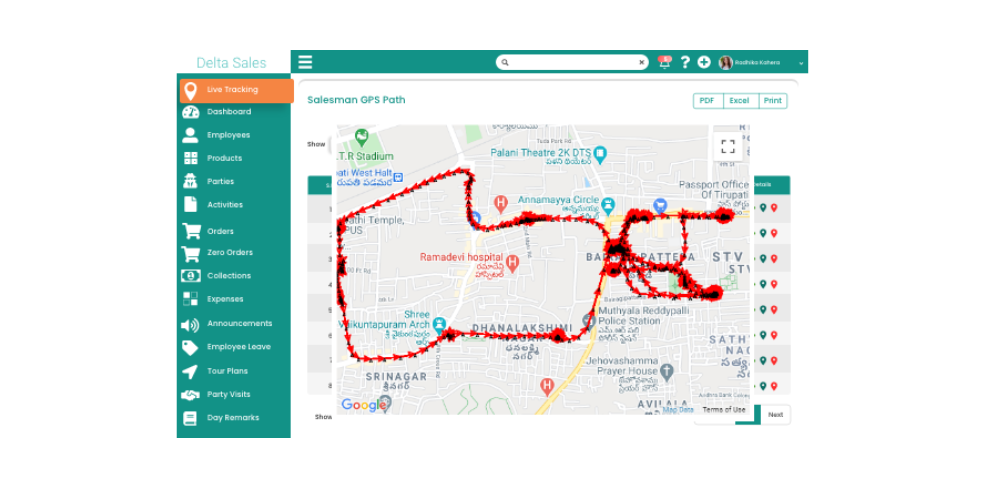
A planned visit on paper isn't the same thing as a visit that actually happened. GPS-based location tracking lets managers verify when and where an officer actually showed up, an objective record instead of a phone call asking, "Where are you right now?" That matters a lot in large rural territories, where nobody's physically supervising every route. Visit verification sharpens accountability too. If a dealer shows as visited, a manager can pull up the location, the time, the order, the collection, or whatever activity came with it instead of taking a manual DSR at face value.
-
Record dealer stock and market feedback on each visit
A dealer visit should leave behind something useful for the next decision, not just a checkmark. Field officers can record current stock levels, which SKUs are moving fast and which aren't, competitor products on the shelf, farmer demand, product enquiries, pending orders, payment status, returns or damaged stock, and market- or crop-related feedback. That data gets more valuable the more consistently it's collected. If several dealers in the same territory report low availability of one SKU, a sales manager can catch that pattern early, not three weeks later at the monthly review when half the season's already gone.
3. Keep orders, stock, and collections under control
Dealer visits ultimately need to translate into controlled sales execution. An agro-input company can have excellent territory coverage and still lose sales if orders are recorded late, dealer inventory is unclear, or collections are not followed up.
-
Book orders during the visit instead of after it
Order booking should happen right there with the dealer, while the officer's still standing in front of them. Record it on the spot, and nobody's depending on a handwritten note or a memory that's faded by the drive-back. It also gives the company a faster read on demand; if several dealers are suddenly ordering the same crop-input SKU, management can spot that pattern and get inventory lined up before it becomes a shortage. Digital order booking also ties the visit directly to the sale that came out of it, instead of leaving that connection to guesswork.
-
Track dealer inventory and sell-through
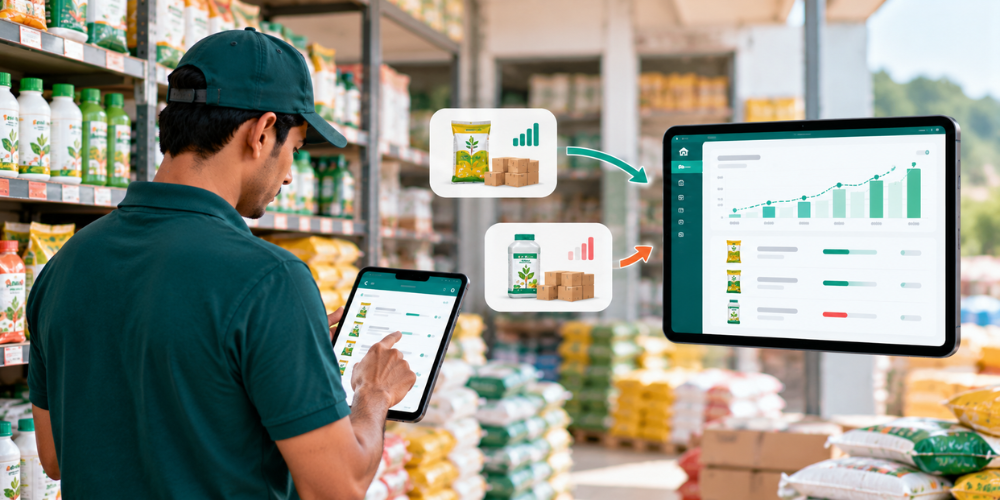
Dealer stock visibility is important because an order does not always mean that the product is moving through the market. A dealer may continue ordering because of established purchasing habits while actual sell-through is slowing. Another dealer may have strong demand but insufficient inventory. Tracking stock movement helps distinguish between these situations. At the SKU level, managers can monitor which products are moving quickly, which are sitting in dealer inventory, and which dealers may need replenishment. This becomes particularly useful around seasonal peaks when stock availability can directly affect market share.
-
Set credit limits and follow up on outstanding payments
Credit management is another important part of dealer operations. Sales growth becomes less useful when outstanding receivables continue to increase. Field officers should therefore have visibility into dealer credit limits, outstanding balances, due amounts, and collection commitments. Collection activity can be recorded alongside dealer visits and orders. Managers can then identify dealers with overdue payments and assign follow-up actions. Instead of waiting for the end of the month to discover collection problems, the sales team can address them during routine territory visits.
4. Measure dealer performance and act on it
Dealer performance should be reviewed using more than total sales. A dealer generating high sales but consistently delaying payments may require a different strategy from a dealer generating moderate sales with strong payment discipline. Similarly, a dealer with declining orders may need market-development support before being classified as inactive.
-
Spot inactive and underperforming dealers early
Inactive dealers shouldn't surface only at the quarterly or annual review; by then it's too late to do much about it. A dealer who's stopped ordering, hasn't been visited in a while, or is sitting on inventory that isn't moving can be flagged the moment that pattern shows up. Then the field team can actually go find out why. Could be falling local demand, a competitor moving in, stock problems, pricing, credit restrictions, poor coverage from the sales side, dealer dissatisfaction, or just the season shifting. Catching it early is what gives managers time to actually fix it.
-
Reports managers can review daily and weekly
Managers need reports that answer operational questions without someone spending an afternoon consolidating spreadsheets. Daily reports can cover field activity, orders, collections, attendance, and dealer visits. Weekly reports can step back and show territory coverage, sales performance, dealer activity, SKU movement, and collection progress. None of this is meant to add reporting work. It replaces the scattered updates with one consistent source, which is less work, not more.
How Delta Sales App Helps Agro-Input Companies Manage Dealers
Once dealer territories, visit routines, order processes, and performance measures are defined, field-sales software can bring these activities into one workflow.
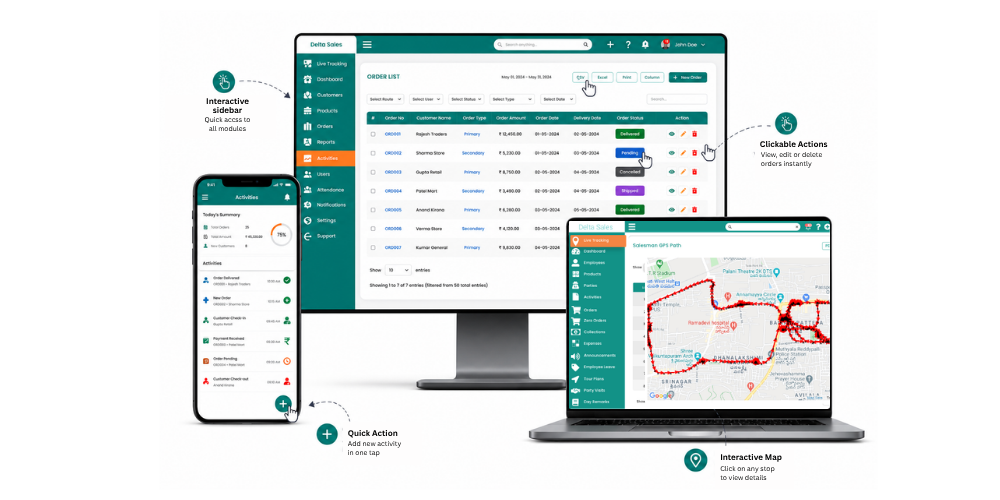
Delta Sales App is designed for businesses that manage distributed field sales teams, including manufacturers, distributors, wholesalers, and companies operating through dealer and retail networks.
-
Beat planning and visit tracking for field teams
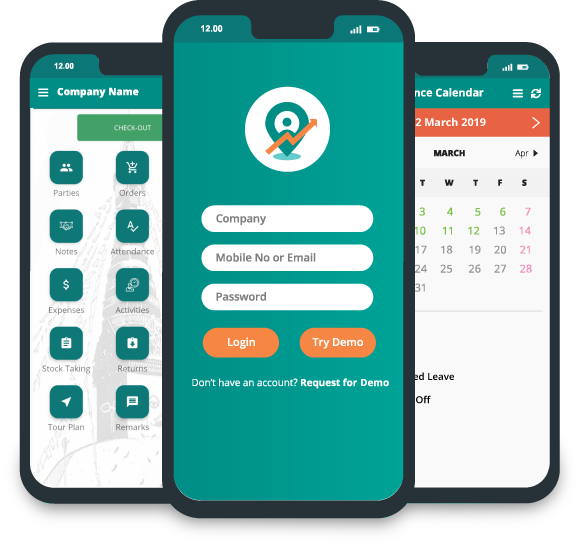
Delta Sales App lets field managers organize dealer visits into structured beats, built around territories and who's responsible for what. GPS tracking shows actual field movement and visit activity, so managers can see whether planned coverage is actually happening instead of relying on calls or an end-of-day summary. For agro-input teams working large rural territories, that makes both route planning and field supervision a lot more practical. Visit data also connects to dealer activity, so managers see not just where an officer went, but what actually happened once they got there.
-
Order booking and live field tracking
Field officers can capture orders while working in the market instead of recording them separately and entering them later. This reduces the gap between dealer demand and management visibility. Order information can be reviewed alongside field activity, while offline-first functionality allows representatives to continue working in areas where mobile connectivity is unreliable. Data can sync when connectivity becomes available again. This is particularly relevant for agro-input businesses operating across rural markets, agricultural corridors, plants, warehouses, and other areas where network availability may vary. The same field workflow can support other activities such as collection reporting, attendance, expenses, and dealer-related information, reducing the number of separate systems representatives need to maintain.
-
Reports on dealer activity and territory coverage
Field managers need a clear picture of what is happening across the network. Delta Sales App provides reporting and dashboards that can help managers review field activity, sales performance, attendance, orders, collections, and territory coverage. Instead of waiting for manually consolidated DSRs, managers can use field data to identify gaps during the week. For example, if a territory has a large number of planned dealer visits but relatively few completed visits, the manager can investigate the coverage gap. If orders are declining in a particular territory, dealer activity and SKU-level information can provide additional context. This turns field reporting from a retrospective exercise into a management tool.
Conclusion
Managing a large dealer network takes more than regular visits. Sales teams need clear territory ownership, beat plans that actually follow the seasons, accurate order and stock data, collections that get followed up on time, and real visibility into what's happening in the field.
A structured approach to dealer management ties all of that together, so managers can catch coverage gaps, inactive dealers, stock issues and missed opportunities before they turn into bigger problems. Delta Sales App brings dealer visits, beat planning, order booking, employee tracking, collections, and field reporting into one platform, so managers get a clearer picture of what's actually happening across their territories.
Ready to simplify dealer network management and improve field-sales visibility? Get a personalized demo from a sales expert and see how Delta Sales App can fit into the existing sales workflow.