
Why Is Business Intelligence Important for Sales Leaders?

What if you could forecast a sales slowdown before it hit your monthly targets? Or discover your top-performing territory without waiting for end-of-month reports? It is still a challenge for many sales leaders. While companies have more sales data than ever, critical decisions are often made with old spreadsheets, siloed reports, or gut instinct. This leads to slower response times, missed opportunities, inaccurate forecasts, and a lack of visibility into what’s really happening across the sales team.
Business intelligence flips that on its head by transforming raw sales data into useful insights in real-time. It tells sales leaders not only what happened but also why it happened and what might happen next and gives them the confidence to make the right decisions. Whether you manage field sales representatives, distributors, or retail operations, business intelligence gives you the visibility needed to improve performance and achieve long-term success.
In this blog, we will cover why business intelligence matters for sales leaders, the key benefits of it, how it is different from traditional sales reporting, and what businesses can practically do to build a more data-driven sales strategy.
What Is Business Intelligence in Sales?
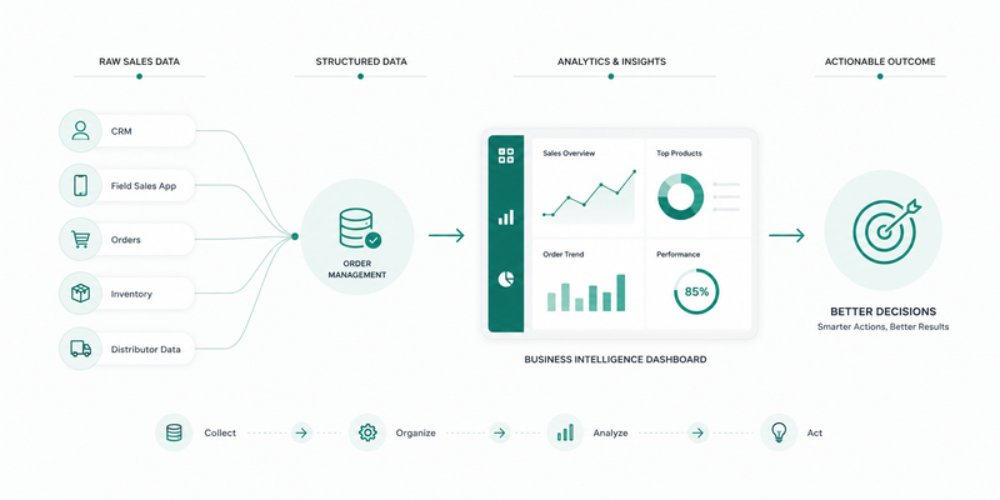
Business intelligence (BI) in sales refers to the process of collecting, organizing, analyzing, and visualizing sales data so leaders can make informed decisions. Rather than reviewing historical reports at month-end, BI provides real-time insight into what is happening across the sales pipeline. Sales business intelligence integrates data from several sources, such as
-
CRM-Systems
-
Sales Force Automation (SFA) software
-
Systems for managing distributors
-
Retail execution data
-
Order & inventory management
-
Engaging with customers
-
Sales activities in the field
The insights are shared through user-friendly dashboards, detailed reports, and intuitive analytics that empower managers to grasp sales performance, uncover opportunities, and proactively address challenges before they impact revenue. Instead of merely questioning, "What occurred?" business intelligence provides clarity on "Why did it occur?" and "What actions should we take next?"
Why Sales Leaders Need Business Intelligence Today
In today's fast-paced sales landscape, competition is fierce, and data plays a crucial role in decision-making. Sales leaders find themselves juggling larger teams, managing diverse territories, striving to meet ambitious revenue goals, and adapting swiftly to the ever-evolving needs of customers. While they have access to vast amounts of sales data, simply having more information doesn't guarantee better choices. The true challenge lies in transforming that data into valuable insights. Without effective business intelligence, sales data often gets scattered across various platforms: spreadsheets, CRM systems, field sales applications, distributor reports, and manual records. This disjointed approach can obscure the overall picture of business performance. By the time monthly reports are analyzed, valuable opportunities might slip away, sales trends could change, and minor issues may escalate into significant challenges. Here are some key reasons why business intelligence has become indispensable for today's sales leaders:
-
Make Faster Decisions with Real-Time Data
In today's dynamic market, waiting for weekly or monthly reports can slow down crucial decision-making. Business intelligence offers real-time dashboards that refresh automatically, enabling sales leaders to respond swiftly to shifts in sales performance, customer needs, or market trends.
-
Gain Complete Visibility Across the Sales Process
From lead generation and pipeline management to order fulfillment and distributor performance, business intelligence gives leaders a centralized view of every stage of the sales process. This visibility makes it easier to identify bottlenecks, monitor team activities, and ensure sales targets stay on track.
-
Improve Team Performance
Business intelligence empowers managers to understand and enhance both individual and team performance through real-time KPIs. It allows them to compare different territories, assess the productivity of sales representatives, monitor outlet coverage, and uncover coaching opportunities grounded in actual performance data instead of mere assumptions.
-
Respond Quickly to Market Changes
Consumer tastes, competitor movements, and demand trends can shift swiftly. Business intelligence equips sales leaders to detect new trends promptly, modify sales tactics, streamline inventory, and reassign resources proactively to mitigate revenue impacts from these changes.
-
Reduce Guesswork and Increase Confidence
Sales strategies thrive on empirical evidence rather than gut feelings. Business intelligence supersedes traditional analysis and conjectures with precise, data-driven insights. When predicting revenue, designing sales initiatives, or establishing objectives, leaders can make informed decisions with enhanced assurance and reduced risk.
Key Benefits of Business Intelligence for Sales Leaders
Business intelligence goes beyond just creating reports; it turns sales data into meaningful insights that empower leaders to enhance performance throughout the sales journey. By focusing on sales forecasting, pipeline management, KPI tracking, and sales analytics, BI enables businesses to make decisions grounded in real-time data instead of relying on assumptions. By integrating information from CRM systems, Sales Force Automation (SFA) software, field sales management tools, and distributor management systems, business intelligence offers a holistic view of sales operations. This comprehensive perspective allows sales leaders to spot trends early, allocate resources effectively, and foster continuous improvement within their teams.
Below are some of the most valuable benefits that business intelligence brings to modern sales organizations.
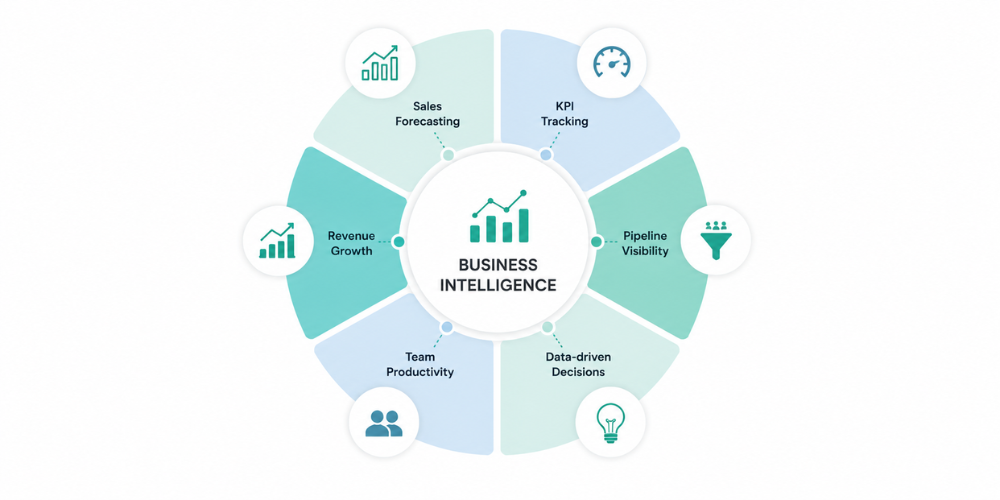
1. Improved Sales Forecasting Accuracy
Effective sales forecasting is crucial for establishing realistic revenue goals, managing inventory, distributing resources, and anticipating future demand. Yet, forecasts that rely solely on past reports or manual guesses often miss the mark when it comes to current market realities. By leveraging business intelligence, companies can enhance their sales forecasting by examining historical sales data in conjunction with real-time insights, such as active deals, customer preferences, territory performance, seasonal fluctuations, and sales pipeline dynamics. This data-driven approach allows sales leaders to create forecasts grounded in solid evidence rather than mere intuition.
More precise forecasts empower businesses to:
-
Set attainable sales goals
-
Optimize inventory and production processes
-
Direct sales efforts toward high-potential markets
-
Minimize stockouts and surplus inventory
-
Enhance budgeting and revenue strategies
For organizations utilizing sales analytics and predictive insights, forecasting evolves into a continuous process rather than a monthly task, enabling leaders to adapt swiftly to changing market conditions.
2. Real-Time KPI Tracking
Key Performance Indicators (KPIs) play a vital role in understanding how well a sales organization is performing. However, if these indicators are only checked at the end of the week or month, important chances to enhance performance might slip away unnoticed. With business intelligence, teams can access real-time KPI dashboards that refresh automatically as new sales information comes in. This allows sales leaders to keep a constant eye on performance rather than relying on outdated reports. Some typical sales KPIs to watch include:
-
Revenue generated
-
Sales target achievement
-
Conversion rate of orders
-
Average value per order
-
Frequency of customer visits
-
Coverage of outlets
Having immediate access to these key metrics allows managers to easily spot areas that need improvement, celebrate the achievements of their best sales representatives, and make prompt changes that enhance overall sales effectiveness.
3. Better Pipeline Visibility
A thriving sales pipeline is essential for consistent revenue growth, but effectively managing it requires a clear view of every step in the sales journey. Business intelligence offers a user-friendly sales performance dashboard that provides leaders with an insightful overview of pipeline health, deal progression, customer interactions, and territory performance. Rather than depending on manual updates from various sources, managers can keep an eye on opportunities in real time.
This enhanced visibility empowers sales leaders to:
-
Spot deals that are stuck or moving slowly
-
Focus on high-value opportunities
-
Monitor conversion rates at each stage of the pipeline
-
Assess sales performance by territory
-
Optimize sales planning and resource distribution
When paired with CRM software and Sales Force Automation tools, business intelligence fosters proactive pipeline management, enabling teams to close deals more quickly and boost overall sales effectiveness.
4. Faster, Data-Driven Decision-Making
One of the most significant benefits of business intelligence is its capacity to empower decision-making with precise, real-time insights instead of relying on guesses or old reports. With interactive dashboards, sales leaders can quickly dive into sales trends, understand customer purchasing behaviors, evaluate product performance, monitor field sales activities, and assess distributor effectiveness. This proactive approach helps them spot potential problems early on and take necessary actions before these issues impact business results. By leveraging business intelligence, leaders can make quicker, more informed decisions regarding:
-
Optimizing sales territories
-
Allocating resources effectively
-
Promoting products strategically
-
Developing pricing strategies
-
Replenishing inventory efficiently
Instead of dedicating countless hours to compiling spreadsheets or sifting through reports, managers can concentrate on taking meaningful action. This approach, grounded in data, enhances operational efficiency, boosts responsiveness, and equips businesses with a competitive edge in dynamic sectors such as FMCG, distribution, and retail.
Business Intelligence vs. Traditional Sales Reporting
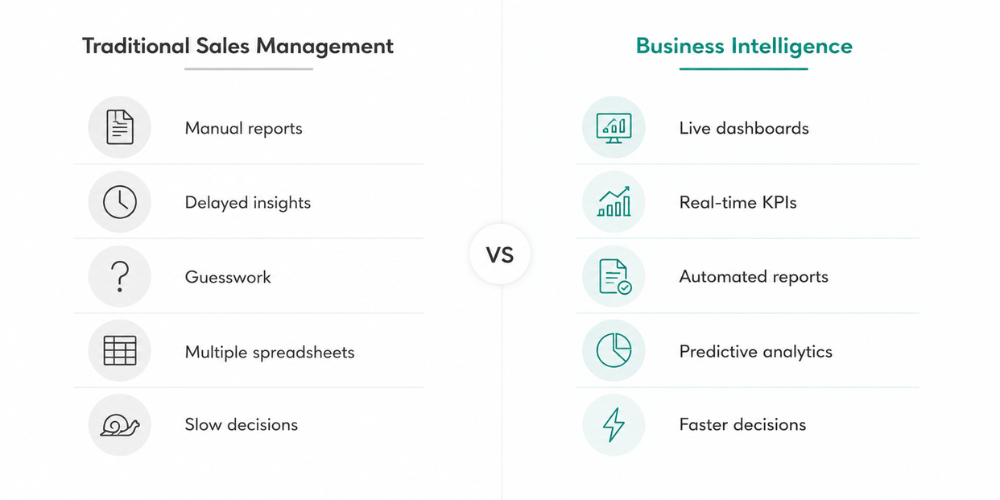
In today's rapidly evolving sales landscape, many businesses continue to depend on traditional sales reports to gauge their performance. While these reports offer valuable historical insights, they often miss the mark in keeping pace with the dynamic nature of the market. Relying on static spreadsheets and manually compiled reports can lead to outdated information, making it challenging for sales leaders to adapt to shifting market conditions or spot potential issues before they affect revenue. Business intelligence offers a fresh perspective. Rather than merely recounting past events, it actively gathers and analyzes sales data from various sources, providing real-time insights. This empowers sales leaders to keep a finger on the pulse of performance, recognize trends as they emerge, and make quicker, informed decisions based on data.

Here are the key distinctions between business intelligence and traditional sales reporting:
-
Real-Time Insights vs. Historical Data
Traditional sales reports are often created on a daily, weekly, or monthly basis, which means that by the time they are reviewed, the information can feel stale and disconnected from the current reality. In contrast, business intelligence dashboards refresh automatically with real-time data, providing sales leaders with a clear and up-to-date view of their sales performance. This immediacy empowers them to respond swiftly and effectively to the ever-changing landscape of their business.
-
Automated Analytics vs. Manual Reporting
Traditional sales reporting often involves exporting data from different systems, organizing spreadsheets, and manually creating reports. Besides being labor-intensive, this approach can lead to delays and inaccuracies. Business intelligence overcomes these challenges with automated reports and analytics that continuously collect and visualize sales data, allowing sales leaders to access accurate, real-time insights without the need for manual reporting.
-
Interactive Dashboards vs. Static Spreadsheets
Spreadsheets organize data in a rigid format, which can obscure trends and hinder performance comparisons among teams and regions. In contrast, business intelligence leverages dynamic dashboards that empower users to filter information, delve into specific metrics, and visualize outcomes through engaging charts and graphs, significantly enhancing the clarity of insights.
-
Predictive Insights vs. Past Performance
Traditional reporting often looks back at past events, providing limited insight for future strategies. In contrast, business intelligence merges historical data with current sales analytics, allowing businesses to spot trends, anticipate demand, and forecast future sales outcomes. This empowers leaders to take initiative and make informed decisions, rather than simply responding to issues as they arise.
-
Faster Decision-Making vs. Delayed Responses
When important business decisions rely on reports created by hand, precious time slips away. Business intelligence offers immediate access to key sales metrics, forecasts, pipeline performance, and field sales insights, enabling leaders to spot opportunities, tackle challenges, and refine strategies promptly.
Essential BI Tools and Dashboards for Sales Teams
Effective business intelligence relies heavily on the tools that gather, analyze, and showcase your sales data. The ideal BI solution empowers sales leaders to move past tedious manual reporting by offering real-time dashboards that bring together information from various sources into a clear, user-friendly format.
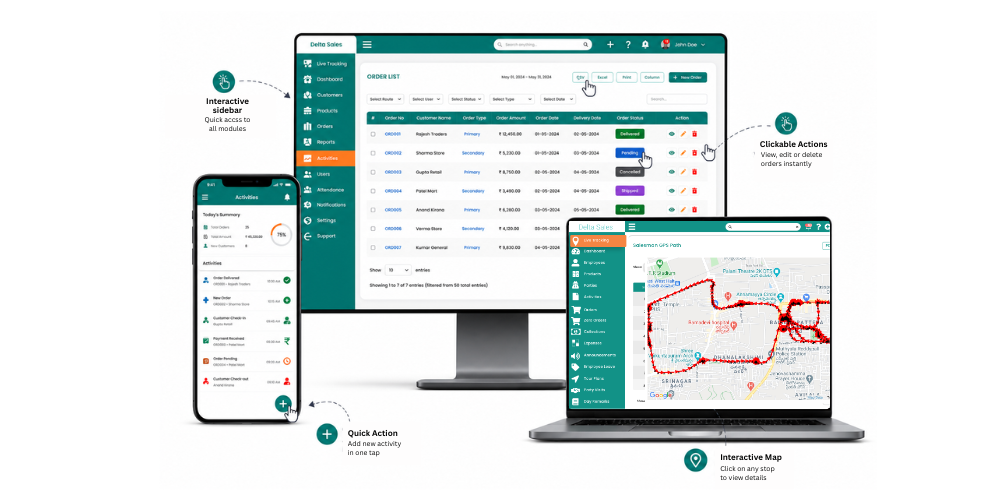
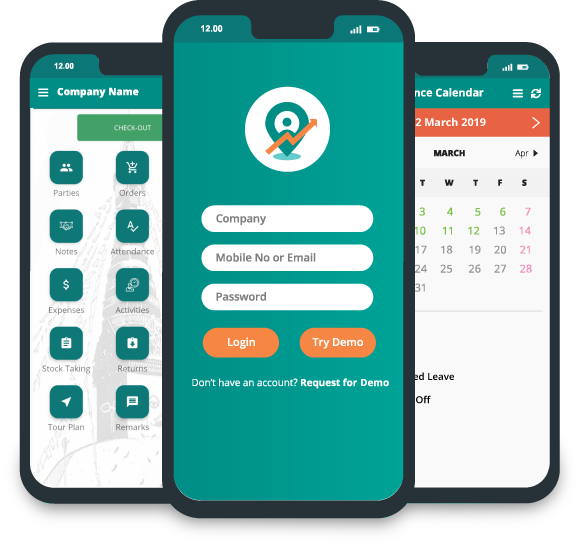
For companies with field sales teams, leveraging an integrated platform can significantly enhance the value of business intelligence. Rather than gathering data in one system and analyzing it in another, solutions like Delta Sales App merge Sales Force Automation (SFA) with intuitive business intelligence dashboards. This allows sales leaders to keep track of customer visits, order collections, secondary sales, sales rep productivity, territory performance, distributor activities, and key sales KPIs all from one platform. This integration removes the hassle of manual reporting, provides immediate visibility, and supports quicker, data-driven decision-making. Whether you’re utilizing Delta Sales App alongside other analytics tools or a dedicated BI solution, the following dashboards are crucial for boosting sales performance:
-
Sales Performance Dashboard
A sales performance dashboard offers a clear snapshot of your revenue, how well targets are being met, conversion rates, and overall sales growth. It allows managers to easily assess the performance of individuals, teams, and territories, helping them pinpoint areas that may require extra focus or improvement.
-
Sales KPI Dashboard
Keeping an eye on the right KPIs is crucial for boosting productivity and achieving business objectives. A KPI dashboard provides sales leaders with a real-time view of important metrics like sales revenue, average order value, how often customers visit, outlet coverage, win rates, and the productivity of sales representatives. This helps them make informed decisions and drive their teams toward success.
-
Sales Pipeline Dashboard
A pipeline dashboard provides a clear view of each step in the sales journey. It allows leaders to keep an eye on ongoing opportunities, track the progress of deals, spot any obstacles, and predict future revenue based on the current pipeline. This insight enables them to focus on the most promising opportunities and enhance their chances of closing deals.
-
Field Sales Dashboard
For companies with mobile sales teams, a field sales dashboard offers a comprehensive look into daily sales activities. It highlights important aspects like customer visits, route completion, order management, attendance, GPS tracking, and territory coverage. This transparency empowers managers to support their field teams, ensuring they stay productive and connected to the company's goals.
-
Distributor and Retail Performance Dashboard
Manufacturers and distributors frequently seek enhanced understanding of their distribution networks. A distributor performance dashboard monitors secondary sales, retailer interactions, order fulfillment, stock levels, and distributor efficiency, enabling businesses to refine channel performance.
-
Sales Forecasting Dashboard
A forecasting dashboard takes a closer look at past trends while incorporating real-time sales data to create more reliable revenue forecasts. This empowers sales leaders to better understand customer needs, manage resources wisely, and make thoughtful business decisions with increased assurance.
Conclusion
Business intelligence has become an essential capability for modern sales leaders. In an increasingly competitive market, relying on delayed reports or intuition alone is no longer enough to drive consistent growth.
By providing real-time visibility into sales performance, improving forecasting accuracy, tracking critical KPIs, and enabling faster decision-making, business intelligence helps organizations respond quickly to market changes and make more confident strategic decisions. Whether you're managing a field sales team, distributor network, or retail operations, adopting business intelligence can transform the way your sales organization performs.
Ready to bring real-time business intelligence into your sales process? Discover how Delta Sales App helps sales leaders monitor KPIs, forecast more accurately, track field sales activities, and make smarter decisions with real-time dashboards. Book a free demo today and see how data-driven sales management can accelerate your business growth.