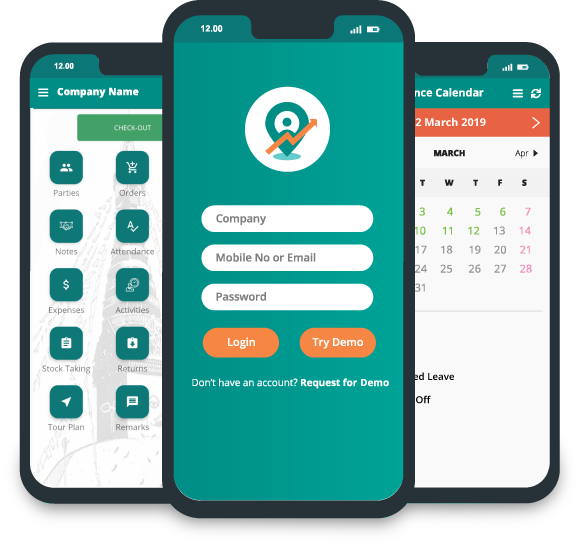

Workforce Management for Field Sales Teams: A Practical Guide for Distributors and Wholesalers

Field sales has long been the backbone of distribution-driven industries, powering revenue generation across sectors such as FMCG, pharmaceuticals, building materials, and telecom. Unlike inside sales, field sales relies heavily on on-ground execution, relationship-building, and consistent market coverage. Sales representatives act as the direct link between businesses and retailers, ensuring product availability, visibility, and order flow.
However, as markets expand and competition intensifies, managing field sales teams has become far more complex than before. Distributors and wholesalers are no longer limited to handling orders, they must oversee territory coverage, track daily sales visits, monitor team productivity, and ensure proper execution across multiple locations. The absence of structured workforce management often leads to gaps in visibility, inefficient routing, missed sales opportunities, and reduced accountability. Over time, these inefficiencies directly impact revenue growth and operational control, making it essential for businesses to adopt a more organized and technology-driven approach to managing their field workforce.
Many organizations today rely on digital tools such as an attendance management system to maintain accuracy in field reporting and employee presence tracking.
What is Workforce Management for Field Sales Teams?
Workforce management for field sales teams refers to the structured process of planning, monitoring, and optimizing the daily activities of on-ground sales representatives. It ensures that field teams operate efficiently across assigned territories while maintaining accountability, consistency, and productivity.
In modern operations, businesses increasingly adopt staff time tracking software to understand how effectively field time is being utilized.
Unlike traditional office-based workforce management, field sales operations are decentralized. Sales representatives work in different locations, follow dynamic schedules, and interact directly with retailers or distributors. This makes it essential to have systems that provide real-time visibility, performance tracking, and operational control.
For distributors and wholesalers, workforce management is not just about tracking employees, it is about ensuring that every sales visit, route, and activity contributes to business outcomes such as increased coverage, higher order value, and improved customer relationships.
Key Elements of Workforce Management in Field Sales
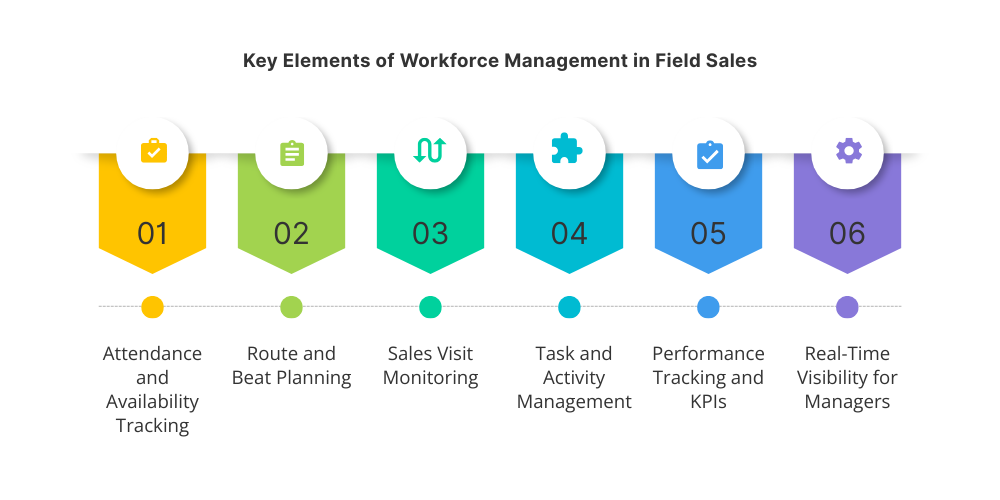
- Attendance and Availability Tracking
Digital tools similar to an employee time tracking software help ensure accurate field presence verification and eliminate manual errors in reporting. - Route and Beat Planning
Defines structured daily routes and market coverage plans, ensuring sales representatives visit assigned outlets efficiently without missing important customers or territories. - Sales Visit Monitoring
Records each outlet visit, including interaction details, order status, and outcomes, helping managers track execution quality and field performance accurately. - Task and Activity Management
Assigns daily responsibilities such as follow-ups, collections, promotions, and new customer onboarding, ensuring field teams stay focused and aligned with objectives. - Performance Tracking and KPIs
Measures sales team productivity using key metrics like number of visits, conversions, order value, and revenue contribution for better evaluation. - Real-Time Visibility for Managers
Provides live updates on field activities, locations, and performance, enabling managers to make quick decisions and ensure proper execution of plans.
Why Workforce Management is Critical for Distributors and Wholesalers
In distribution-driven businesses, field execution directly determines sales success. Without proper workforce management, common issues arise:
- Lack of visibility:
Managers cannot track real-time field activities, making it difficult to verify visits, monitor performance, and ensure proper execution across assigned territories. - Poor territory control:
Sales representatives may skip important outlets or visit the same locations repeatedly, leading to uneven coverage and missed revenue opportunities in markets. - Execution gaps:
Business strategies often fail during implementation because there is no proper system to monitor whether planned activities are executed correctly. - Reduced productivity:
Without structured planning and tracking, field teams waste time, make fewer productive visits, and fail to achieve daily sales targets efficiently.
These challenges lead to missed opportunities, inconsistent coverage, and reduced productivity. Sales teams may work without clear direction, affecting overall performance.
A structured workforce management system brings discipline by organizing routes, tracking activities, and standardizing processes. It ensures better use of time, improved accountability, and consistent execution across territories.
For distributors and wholesalers, this means higher efficiency, better control, and more predictable sales outcomes.
Key Challenges in Managing Field Sales Teams
Managing field sales teams comes with unique complexities due to their distributed nature and lack of direct supervision. Unlike office teams, field representatives operate independently across different locations, making it difficult to maintain control, consistency, and performance. Without a structured system, even small inefficiencies can quickly scale into major operational issues.
- Lack of Real-Time Visibility
Managers depend on delayed updates, making it difficult to monitor field activities instantly, identify issues early, and ensure timely execution. - Manual Reporting Inefficiencies
Paper-based or WhatsApp reporting creates inconsistent data, increases errors, delays information flow, and makes it difficult to analyze field performance accurately. - Attendance and Visit Tracking Issues
Without proper systems, verifying whether sales representatives actually visited assigned locations or completed their work becomes highly unreliable and unclear. - Poor Route Discipline
Sales representatives may ignore planned routes, causing inefficient travel, missed outlets, overlapping visits, and reduced overall market coverage efficiency. - Productivity Leakage
Untracked idle time, unnecessary travel, and missed opportunities reduce the number of productive sales visits, directly impacting overall team performance and revenue.
Addressing these challenges requires a structured approach supported by technology and clear processes. By identifying and resolving these gaps, distributors and wholesalers can significantly improve field efficiency, ensure better execution, and drive higher sales performance.
Core Components of an Effective Workforce Management System
A strong workforce management system is built on structured components that ensure complete visibility, control, and efficiency in field sales operations. These elements work together to improve execution, accountability, and overall performance across distributed teams.
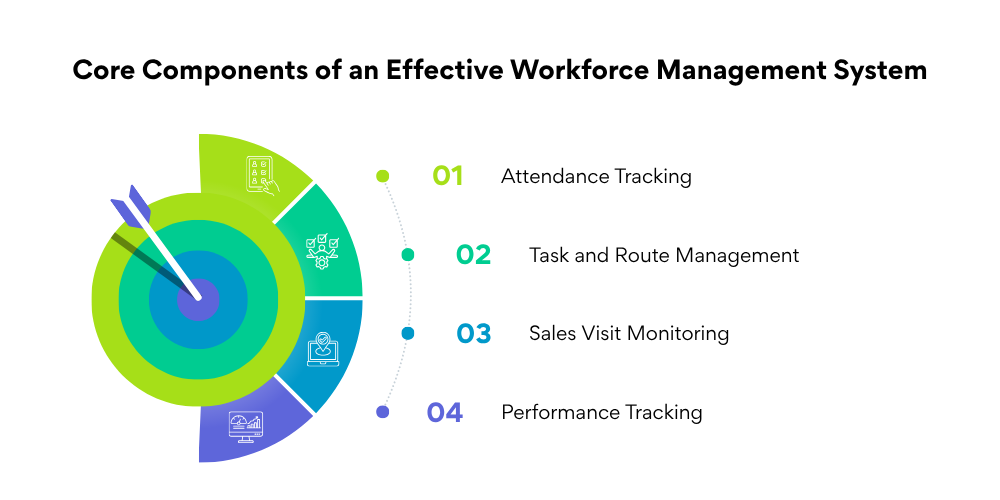
- Attendance Tracking
Digital attendance with GPS-based location verification ensures authenticity, prevents proxy reporting, and provides accurate tracking of field workforce presence. - Task and Route Management
Structured beat plans and daily task assignments help sales representatives follow optimized routes, reduce travel time, and ensure complete territory coverage. - Sales Visit Monitoring
Managers can track each outlet visit in real time, including visit status, order details, and outcomes, ensuring proper execution of sales plans. - Performance Tracking
Key performance indicators such as daily visits, order value, and conversion rates help measure productivity and provide actionable insights for improvement.
The Role of Technology in Modern Workforce Management
Traditional methods are no longer sufficient for managing distributed field sales teams. As businesses scale, manual tracking and fragmented reporting systems fail to provide the speed, accuracy, and visibility required for effective decision-making. This is where technology becomes a core enabler of modern workforce management.
Technology transforms how field teams operate by introducing structure, automation, and real-time intelligence into daily activities. It not only improves efficiency but also ensures that every field action is measurable and aligned with business goals.
Modern workforce management systems leverage technology in several critical ways:
- Mobile-first operations for field teams
Sales representatives use mobile applications to log visits, update activities, and receive tasks, ensuring seamless execution on the go. - Cloud-based dashboards for managers
Managers gain centralized access to field data, enabling them to monitor performance, track progress, and manage teams from anywhere. - Real-time synchronization of data
All field activities are instantly updated, reducing delays, eliminating duplication, and ensuring accurate reporting across the organization. - Automation of routine processes
Tasks such as attendance logging, visit tracking, and reporting are automated, reducing manual effort and improving data reliability. - Improved decision-making through analytics
Technology converts raw field data into actionable insights, helping businesses identify trends, optimize routes, and improve team productivity.
By eliminating manual errors and providing instant visibility across the entire sales operation, technology ensures that distributors and wholesalers can move from reactive management to proactive, data-driven control of their field workforce.

How Field Sales Automation Transforms Workforce Efficiency
Field sales automation significantly improves workforce efficiency by removing dependency on manual processes and introducing structured, technology-driven execution. It helps organizations streamline daily operations, reduce human errors, and ensure better control over field activities.
By digitizing core field operations, automation ensures that every action performed by a sales representative is recorded, tracked, and analyzed in real time. This creates a more disciplined and performance-oriented sales environment.
Key benefits include:
- Automatic visit logging
Field visits are automatically recorded with time and location details, ensuring accurate tracking without manual reporting or data entry errors. - Real-time data updates
All field activities are instantly synced to the system, allowing managers to monitor progress and make faster, data-driven decisions. - Reduced administrative workload
Automation eliminates repetitive manual tasks such as reporting, attendance marking, and data consolidation, saving significant time for both sales teams and managers. - Improved sales focus
Sales representatives spend less time on documentation and more time engaging with customers, improving conversion rates and overall productivity. - Enhanced accountability and transparency
Every field activity is traceable, which increases responsibility among team members and ensures better adherence to assigned tasks and routes.
Overall, field sales automation transforms traditional workforce management into a high-efficiency, data-driven system where performance is measurable, execution is consistent, and decision-making becomes significantly faster and more accurate.
Real-Time Tracking and Field Visibility for Managers
Real-time gps tracking is one of the most critical capabilities in modern field workforce management, as it gives managers complete visibility into on-ground sales activities as they happen. Instead of relying on delayed reports or assumptions, managers can now monitor field operations live and ensure every activity aligns with business plans.
With real-time visibility, field sales operations become more controlled, transparent, and performance-driven. It allows organizations to quickly identify gaps, correct deviations, and improve execution quality across territories.
Key benefits include:
- Instant activity monitoring
- Every field action such as visits, orders, and check-ins is updated immediately, allowing managers to track daily progress without delays.
- Deviation alerts
The system flags route deviations or missed visits, helping managers take corrective action before it impacts sales performance. - Improved accountability
When activities are visible in real time, sales representatives are more disciplined and consistent in following their schedules and responsibilities. - Faster decision-making
Managers can respond quickly to on-ground situations using live data instead of waiting for end-of-day reports. - Live location tracking
Managers can view the real-time location of sales representatives, ensuring they are following assigned routes and covering planned areas effectively.
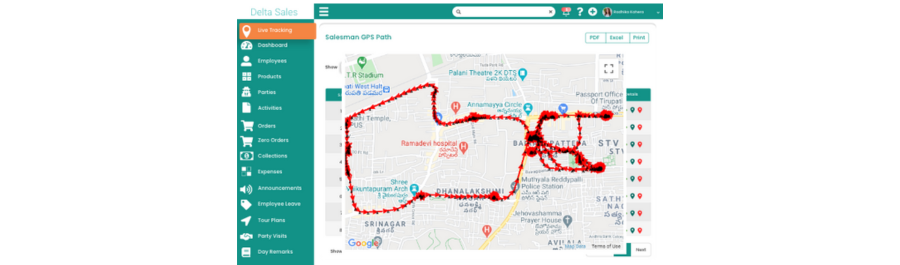
Overall, real-time tracking transforms field sales management from a reactive process into a proactive control system, ensuring better execution, higher productivity, and stronger operational efficiency.
Smart Scheduling and Territory Allocation Strategies
Effective scheduling is critical for maximizing field productivity in sales-driven organizations. It ensures that every sales representative operates with a clear plan, optimized routes, and balanced workload, resulting in better execution and higher efficiency.
Key components include:
- Beat Planning Optimization
Designing efficient daily routes helps reduce travel time, improve time utilization, and increase outlet coverage within the assigned territory. - Territory Balancing
Workload is distributed fairly among sales representatives based on potential, geography, and customer density, improving overall team performance and consistency. - Reducing Overlap
Eliminating duplicate visits to the same outlets ensures better time management, avoids confusion, and enhances operational efficiency across the field team.
Overall, smart scheduling and territory allocation help create a more structured and productive field sales system where resources are used effectively and market coverage is maximized.
Data-Driven Decision Making in Field Sales Operations
Data has become the foundation of modern workforce management in field sales. Instead of relying on assumptions or manual reports, businesses can now use real-time and historical data to understand what is happening on the ground and why. This shift enables more accurate planning, better execution, and improved sales performance.
With proper reports and analytics, distributors and wholesalers can make informed decisions that directly impact productivity and revenue.
With data analytics, businesses can:
- Identify high-performing sales reps
Performance data helps recognize top performers based on visits, conversions, and revenue contribution, enabling better reward and strategy planning. - Detect underperformance early
Continuous monitoring highlights gaps in productivity or execution, allowing managers to take corrective action before performance declines further. - Optimize routes and territories
Data insights help refine beat plans and territory allocation to reduce inefficiencies and improve market coverage. - Improve forecasting accuracy
Sales trends and historical patterns support more reliable demand forecasting and inventory planning. - Enhance decision speed and quality
Real-time insights reduce dependency on guesswork, enabling faster and more confident operational decisions.
Business Impact: How Workforce Management Improves ROI
Implementing a structured workforce management system delivers measurable and long-term business benefits for distributors and wholesalers. It directly improves how field teams operate, how managers make decisions, and how efficiently resources are utilized across territories.
By bringing visibility, control, and automation into field operations, businesses can significantly enhance overall return on investment (ROI).
Key business impacts include:
- Increased Sales Productivity
Better tracking and structured workflows ensure field teams follow planned routes and complete more productive customer visits daily. - Reduced Operational Leakage
Eliminating inefficiencies such as missed visits, idle time, and unplanned travel helps businesses maximize output from existing resources. - Higher Profitability
Optimized workforce operations reduce operational costs while improving sales output, leading to stronger margins and better financial performance. - Faster Decision Cycles
Real-time data and analytics enable managers to respond quickly to market changes, improving agility and competitive advantage. - Improved Resource Utilization
Field teams, time, and territories are used more effectively, ensuring maximum return from every operational input.
Common Mistakes in Managing Field Sales Teams
Many distributors and wholesalers face performance issues not because of a lack of effort, but due to avoidable management mistakes. These gaps in execution and planning often lead to inefficiency, poor visibility, and lost revenue opportunities in field operations.
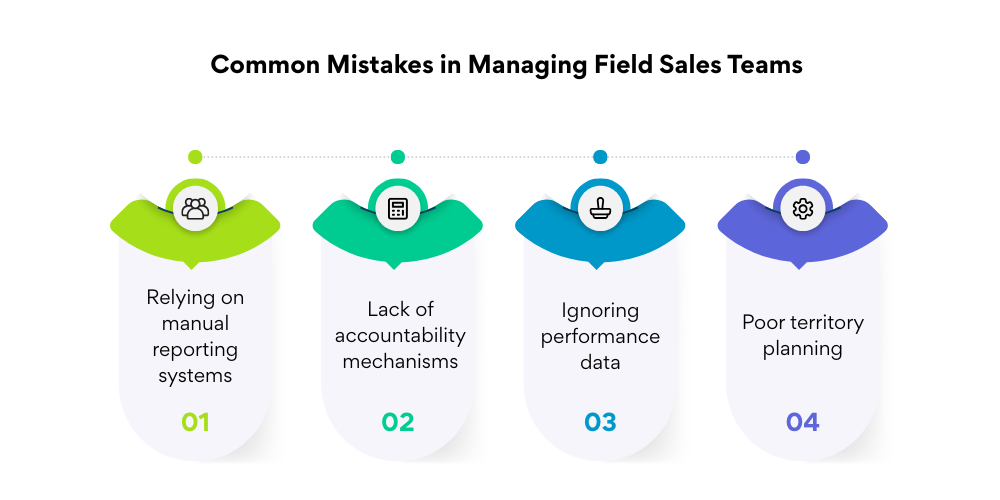
Common mistakes include:
- Relying on manual reporting systems
Manual methods like paper logs or informal updates create delays, errors, and unreliable data, making it difficult to track real field performance accurately. - Lack of accountability mechanisms
Without proper tracking and monitoring systems, it becomes difficult to ensure that sales representatives follow assigned routes and complete their daily responsibilities. - Ignoring performance data
Many businesses collect data but fail to analyze it, missing valuable insights that could improve productivity, sales outcomes, and decision-making. - Poor territory planning
Inefficient or unbalanced territory allocation leads to uneven workload distribution, missed outlets, and reduced overall market coverage.
Avoiding these common mistakes is essential for building a strong and efficient workforce management system. With the right structure and visibility, distributors can improve execution, enhance productivity, and ensure consistent field performance.
Best Practices for Distributors and Wholesalers
To achieve consistent field performance and maximize operational efficiency, distributors and wholesalers must adopt structured and disciplined workforce management practices. These best practices help improve execution quality, reduce inefficiencies, and ensure better control over field sales teams.
Key best practices include:
- Standardize field processes
Establish clear and uniform procedures for visits, reporting, and task execution to ensure consistency across all sales representatives and territories. - Use mobile-based tracking systems
Implement digital tools that enable real-time tracking of attendance, visits, and activities, improving visibility and reducing manual errors. - Conduct regular performance reviews
Continuously evaluate field team performance using defined KPIs to identify gaps, recognize top performers, and improve productivity. - Base decisions on real-time data
Use live dashboards and analytics instead of assumptions to make faster, more accurate operational and strategic decisions.
Maintaining consistency, discipline, and data-driven execution is essential for successful workforce management. When these practices are followed effectively, distributors can significantly improve field efficiency, accountability, and overall sales performance.
Implementation Roadmap: How to Set Up Workforce Management System
Implementing a workforce management system requires a structured approach to ensure smooth adoption and long-term effectiveness. A phased roadmap helps distributors and wholesalers transition from manual processes to a fully digital, data-driven field operation.
Step 1: Define KPIs
Identify clear and measurable performance indicators such as daily visits, conversion rates, order value, and revenue contribution to track field effectiveness.
Step 2: Digitize Field Reporting
Replace manual reporting methods with digital systems to ensure accurate, real-time data capture and eliminate reporting delays and inconsistencies.
Step 3: Set Up Tracking and Routing
Implement GPS-based tracking and structured beat plans to ensure sales representatives follow optimized routes and cover assigned territories efficiently.
Step 4: Train Field Teams
Provide proper onboarding and training to ensure field staff understand how to use the system effectively and follow standardized processes.
Step 5: Monitor and Optimize
Continuously analyze performance data, identify gaps, and refine processes to improve efficiency, productivity, and overall system effectiveness.
A well-executed implementation roadmap ensures smooth adoption, better field control, and long-term scalability of workforce management systems.

Future of Workforce Management in Field Sales
The future of workforce management in field sales is rapidly evolving with the adoption of advanced technologies that bring intelligence, automation, and predictive capabilities into daily operations. Traditional monitoring systems are being replaced by smart platforms that not only track activities but also guide decision-making in real time.
Key future trends include:
- AI-based route optimization
Artificial intelligence will automatically design the most efficient travel routes for sales representatives, reducing travel time and maximizing customer coverage. - Predictive performance analytics
Advanced analytics will help forecast sales performance, identify risks early, and predict which territories or representatives need attention or support. - Automated decision-making systems
Routine operational decisions such as task allocation, scheduling, and performance alerts will become increasingly automated, reducing managerial workload and improving speed. - Real-time intelligent insights
Systems will move beyond reporting to actively suggesting actions based on live field data and performance patterns.
Businesses that adopt these innovations early will gain a strong competitive advantage through higher efficiency, better resource utilization, and more accurate sales execution.
Conclusion:
Workforce management is no longer optional, it is a necessity for distributors and wholesalers aiming to scale efficiently.
By combining structured processes, modern technology, and data-driven decision-making, businesses can transform their field sales operations into a high-performance revenue engine.
Organizations that invest in workforce management today will be better positioned to handle future challenges, improve productivity, and drive sustainable growth.
If you are looking to streamline your field sales operations, improve visibility, and boost team productivity, you can explore a modern solution built for distributors and wholesalers.
Book a demo of Delta Sales App to see how real-time tracking, automation, and analytics can transform your field workforce management.