
How to Turn Zero-Sales Outlets into High-Performing Sales Channels
Zero-sales outlets are one of the most significant hidden revenue leaks in field sales-driven businesses. These outlets already exist in your territory, are assigned to sales representatives, and require time and effort, but they generate no revenue.
Zero-sales outlets are not failures but rather missed opportunities for FMCG companies, distributors, pharmaceutical brands, and retail-focused organizations. With the right strategy, process discipline, and sales automation, these outlets can be revitalized and transformed into consistent, high-performing sales channels.
This blog explains everything that needs to be done, step by step, to bring about that transformation.
Understanding What Zero-Sales Outlets Really Indicate
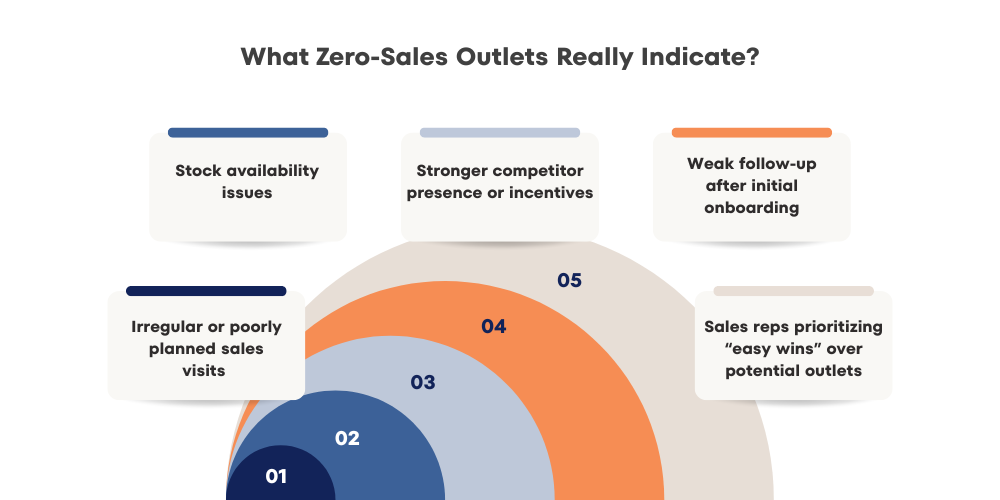
A zero-sales outlet does not always mean lack of demand. In most cases, it signals operational or execution gaps, such as:
-
Irregular or poorly planned sales visits
When sales visits are unstructured or inconsistent, outlets lose engagement and buying momentum. Without route planning, visit scheduling, and daily beat planning, sales reps often skip potential outlets or visit them at the wrong time. Using real-time visit tracking and field sales planning tools ensures every outlet receives timely, purposeful visits that increase conversion chances.
-
Stock availability issues
Zero sales frequently occur when outlets are unable to place orders due to stockouts or delayed replenishment. Without order management visibility and real-time sales data, teams may misinterpret this as low demand. With digital order capture and sales analytics dashboards, businesses can identify stock gaps early and ensure consistent product availability at the outlet level.
-
Stronger competitor presence or incentives
Competitors frequently gain an advantage by providing higher profit margins, faster delivery, promotional programs, or increased in-store visibility. If your sales team lacks insight into competitor activity, outlets will naturally favor brands that provide greater immediate value and dependability.
-
Weak follow-up after initial onboarding
Many outlets fail to generate sales because there is no structured follow-up after the initial onboarding. First orders are delayed or missed in the absence of automated reminders, task assignments, and outlet activity tracking. A centralized sales CRM and SFA platform ensure that new outlets receive targeted follow-ups, activation visits, and early engagement.
-
Sales reps prioritizing “easy wins” over potential outlets
When performance tracking is based on manual reporting, sales representatives tend to prioritize familiar, high-performing outlets in order to meet short-term goals. This behavior results in high-potential outlets going unattended. Organizations can ensure balanced coverage and accountability across all outlet types by implementing sales performance dashboards, outlet-level key performance indicators, and manager visibility into field activities.
Treating zero-sales outlets as “low priority” creates a vicious cycle: fewer visits lead to less engagement, which further reduces the chance of sales. High-performing organizations break this cycle by analyzing the root cause instead of ignoring the outlet.
Step 1: Classify Outlets Beyond Basic Categories
Many sales teams stop at basic outlet classification key, regular, new, and zero-sales. While this is a good starting point, it is not sufficient for revival strategies.
To truly convert zero-sales outlets, they must be classified internally based on behavior and potential, such as:
-
Never-visited outlets
These outlets are in the system but have never had a structured sales visit. This is usually due to poor beat planning, insufficient visit scheduling, or limited manager visibility into field activities. Despite being onboarded, these outlets remain inactive unless proper outlet activation workflows and first-visit tracking are implemented. Using field visit management and route planning tools, sales teams can ensure that each new outlet is visited, engaged, and activated on time.
-
Visited but no orders
These outlets are visited, but the visits do not result in orders. Common causes include poor sales pitch execution, a lack of order capture tools, and a lack of pricing and scheme visibility during visits. Sales representatives can use digital order booking, real-time product catalogs, and sales activity tracking to identify objections, address them immediately, and improve visit-to-order conversion rates.
-
Order drop-off outlets
Order drop-off locations display previous purchases but no longer accept reorders. This is frequently the result of ineffective follow-up management, inconsistent visit frequency, or a lack of visibility into the order cycle. Managers can detect drop-offs early and take corrective action before the outlet goes permanently inactive by utilizing outlet-level sales analytics, reorder reminders, and sales performance dashboards.
-
Competitor-dominated outlet
These outlets have a high demand but prefer competitor brands due to better pricing, promotions, or availability. Without competitor activity tracking and in-store execution insights, sales teams lack the intelligence required to compete effectively. Capturing competitor data during field visits enables managers to fine-tune offers, increase margins, and develop outlet-specific strategies to reclaim lost share.
This deeper classification allows managers to assign specific actions rather than generic instructions. This segmentation can be automated using tools such as the DeltaSales App, which uses visit data, order history, and sales trends.
Step 2: Identify the True Reason Behind Zero Sales
Once outlets are classified, the next step is diagnosis. Every zero-sales outlet has a reason and finding it is critical.
-
Stock Availability Issues
Many outlets are willing to sell but cannot place orders due to distributor stockouts or delayed replenishment. Without visibility into inventory flow, sales teams assume rejection when the real issue is supply.
-
Competitive Advantage Gaps
Outlets often shift to competitors offering better margins, faster delivery, or more attractive schemes. If your team doesn’t capture competitor activity during visits, these signals remain invisible.
-
Poor Visit Quality
Poor Visit Quality refers to situations where a sales representative’s outlet visit fails to move the sale forward. While the outlet may be marked as “visited,” the interaction lacks commercial impact. The representative may not actively pitch priority products, clearly explain ongoing schemes or offers, or attempt meaningful price or quantity negotiations. As a result, the visit becomes a routine check-in rather than a sales-driven engagement, leading to missed opportunities, low order conversion, and stagnant outlet performance despite regular field activity.
-
Sales Assumptions
One of the most damaging reasons is that sales reps assume an outlet will not buy and reduce effort, thereby making assumption a reality.
Digitized visit reporting and reason-for-no-order tracking help uncover these internal problems early.
Step 3: Build a Targeted Visit Strategy for Zero-Sales Outlets
Zero-sales outlets should never follow the same field visit strategy as high-performing outlets. To activate them effectively, sales teams must use data-driven visit planning, structured execution, and clear sales objectives.
They require:
-
Higher visit frequency in short cycles
Zero-sales outlets require more frequent engagement to build trust and momentum. Using visit scheduling, beat planning, and route optimization, sales managers can increase visit frequency in shorter cycles without overloading sales reps. Higher visit frequency supported by real-time visit tracking ensures outlets remain engaged until the first order is successfully placed.
-
Clear visit objectives (activation, trial order, visibility check)
Every visit to a zero-sales outlet should have a clear purpose. Without clear visit objectives, sales reps frequently complete visits without producing meaningful results. Assigning task-based visits, such as outlet activation, trial order placement, or product visibility checks, via field sales task management improves focus and visit-to-order conversion rates.
-
Manager-defined focus SKUs or schemes
Generic selling rarely works for inactive outlets. Managers must define focus SKUs, pricing schemes, or introductory offers based on outlet potential. With access to product catalogs, scheme management, and outlet-level analytics, sales reps can pitch the right products during visits, increasing the likelihood of first and repeat orders.
Unplanned visits result in inconsistent outcomes. A structured visit plan, supported by route optimization and priority tagging, ensures that sales representatives spend their time where the conversion probability is highest.
The DeltaSales App allows managers to assign outlet-specific visit priorities and monitor compliance in real time.
Step 4: Improve Field Productivity Through Smart Route Planning
Sales productivity is directly tied to how much time reps spend selling versus traveling or idling.
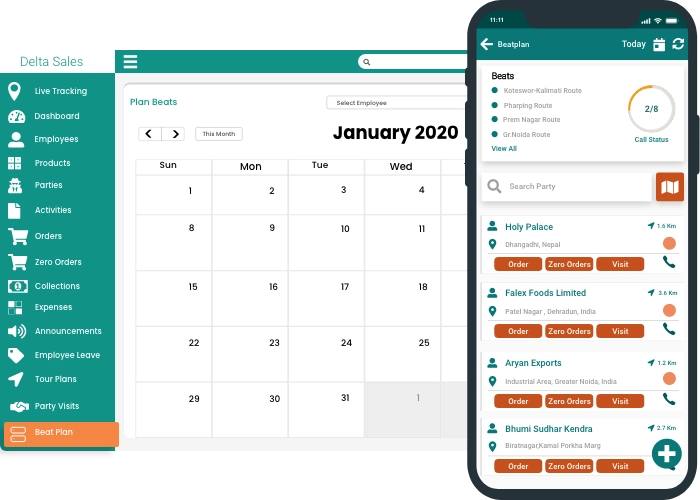
Without optimized routes:
-
Reps waste time on long travel loops
-
High-potential zero-sales outlets get skipped
-
Daily coverage remains low
Smart route planning ensures:
-
Zero-sales outlets are visited early in the day
-
Nearby outlets are grouped logically
-
More productive selling hours per rep
This directly increases the likelihood of reactivation by providing more meaningful face time with outlets.
Step 5: Create Outlet-Specific Activation Plans
Generic promotions are rarely effective for zero-sales outlets. They require outlet-specific activation strategies based on sales data, field insights, and execution tracking.
Trial-based first orders
- Many inactive outlets are hesitant to place full orders before gauging demand. Enabling trial-based first orders via digital order booking and minimum order quantity controls reduces risk for retailers while increasing first-order conversions.
Limited-period schemes
- Time-bound offers instill a sense of urgency and spur action. Sales teams can implement limited-time schemes aimed at zero-sales outlets and track redemption performance using scheme management, trade promotion tracking, and real-time scheme visibility.
Focused SKU introductions
- Focused SKU selling works better for zero-sales outlets than pushing complete portfolios. Having access to outlet-level sales, manager-defined focus SKUs, and product catalogs Representatives can use these insights to launch high-rotation products that satisfy outlet demand.
Merchandising or visibility support
- Visibility increases demand. Providing in-store merchandising support, shelf visibility checks, and image-based reporting all contribute to increased brand presence at the outlet. Tracking visibility through field visit reports ensures that execution is consistent.
Step 6: Strengthen Sales Execution at the Rep Level
Even the best sales strategy depends on strong field sales execution. Sales reps must have real-time access to actionable information to convert visits into orders. Sales reps must be equipped with:
-
Complete outlet history
Access to outlet-level sales history, visit records, and order trends enables sales reps to better understand buying patterns and tailor their pitch to each visit.
-
Previous rejection reasons
Capturing and viewing reasons for no orders via sales visit reporting enables reps to address objections proactively and improve visit-to-order conversion.
-
Current schemes and pricing
Real-time visibility into active schemes, pricing updates, and trade promotions enables reps to present accurate offers and avoid lost sales due to outdated information.
-
Product availability insights
Knowing product availability, stock status, and SKU-level inventory allows reps to recommend available products and avoid failed orders.
When reps arrive at outlets informed and prepared, conversations transition from casual to commercially productive.
Mobile-first tools like DeltaSales App ensure reps have this information instantly, improving confidence and negotiation effectiveness.
Step 7: Track the Right KPIs to Measure Progress
Zero-sales outlet revival becomes effective when performance is tracked using real-time sales analytics and outlet-level KPIs. Key indicators include:
-
Visit-to-order conversion rate
Measures the number of field visits that result in a successful order booking, which aids in assessing sales execution efficiency and representative effectiveness.
-
Time taken to convert first order
Monitors the time between outlet onboarding and first order placement, highlighting the efficacy of activation strategies and follow-up planning.
-
Repeat order frequency
Monitors how often outlets place repeat orders, indicating outlet engagement, product acceptance, and long-term performance.
-
Drop-off rate after activation
Identifies outlets that stop ordering after the initial activation, assisting teams in better follow-up management and visit frequency planning.
-
SKU-level adoption
Tracks which products and SKUs are being ordered, providing insights into product performance, focus SKU effectiveness, and assortment optimization.
These KPIs allow managers to distinguish between temporary activation and sustainable performance.
Step 8: Build a Continuous Feedback and Improvement Loop
Reviving zero-sales outlets necessitates ongoing performance monitoring, data-driven decision-making, and execution improvement.Top-performing organizations:
-
Review zero-sales outlet reports weekly
Regular analysis of zero-sales outlet reports, outlet performance dashboards, and sales analytics assists managers in identifying trends, gaps, and early warning signs.
-
Adjust visit strategies dynamically
Managers can use real-time field data, visit tracking, and beat plan adjustments to change visit frequency and priorities based on outlet behavior and results.
-
Reassign outlets if required
Performance-based outlet reassignment improves coverage by allocating outlets to the most effective sales reps based on rep productivity data.
-
Refine incentive structures based on performance
Tracking scheme performance, sales incentives, and ROI analytics enables organizations to refine offers that drive sustainable outlet activation.
Continuous optimization ensures that once an outlet becomes active, it stays active.

Step 9: Scale the Strategy with Sales Automation
As outlet volumes increase, manual tracking becomes inefficient. Sales automation ensures consistent execution, visibility, and accountability across regions.
Sales automation helps:
-
Identify zero-sales outlets automatically
Sales automation systems can automatically flag zero-sales and inactive outlets for action by leveraging outlet performance analytics, order history tracking, and sales dashboards.
-
Assign structured follow-ups
Automation enables task assignment, follow-up scheduling, and outlet-specific action plans, ensuring that no inactive outlets go unnoticed.
-
Monitor field execution in real time
Managers gain complete visibility into sales execution and rep productivity by utilizing real-time visit tracking, GPS-based attendance, and field activity monitoring.
-
Generate actionable insights for managers
Faster and more effective decision-making is made possible by the conversion of raw sales data into actionable insights through centralized analytics dashboards and performance reports.
With Delta Sales app, businesses can standardize zero-sales revival strategies across regions while still allowing local flexibility.
Conclusion
Zero-sales outlets are not a waste of space; rather, they represent untapped potential. When combined with data, structured planning, disciplined execution, and the appropriate technology, they can become high-performing sales channels that drive long-term growth.Organizations that succeed don't just chase high-performing outlets; they also convert underperforming ones.
If your company wants predictable revenue growth, the journey must begin with converting zero sales into consistent performance.
Book a Delta Sales App demo today to see how your field sales teams can transform zero-sales outlets into high-performing sales channels that are faster, smarter, and more scalable.