
Avoid These Costly Mistakes When Rolling Out Field Automation

Field automation promises faster reporting, better visibility, and higher productivity. Yet many organizations fail to see real impact after implementation. The problem isn’t the technology, it's how it’s rolled out.
From poor planning to low user adoption, small mistakes can quietly turn a powerful automation initiative into an expensive disappointment. If you’re planning to digitize field operations or already in the middle of it, understanding these pitfalls can save time, money, and morale.
Let’s explore the most common mistakes businesses make when rolling out field automation and how to avoid them.
Mistake 1: Treating Automation as a Technology Project, Not a Business Change
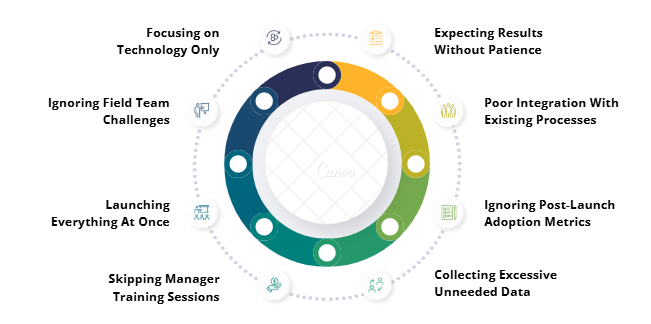
One of the biggest mistakes companies make is viewing field automation as just another software deployment. In reality, it’s a complete change in how field teams work, report, and interact with managers. When automation is rolled out without explaining why it matters, field reps often see it as extra monitoring rather than support. This leads to resistance, incomplete data, and workarounds that defeat the purpose of automation.
Successful companies align automation with clear business goals like improving field force Automation, reducing delays, or increasing accountability so teams understand the value from day one.
Mistake 2: Ignoring Ground-Level Challenges Faced by Field Teams
Office teams often design workflows that look perfect on paper but fail in the real world. Field reps deal with poor connectivity, long travel hours, customer interruptions, and limited time for data entry. If automation tools are complex or time-consuming, reps will delay updates or skip them altogether. This results in unreliable data and frustrated managers.
Automation should simplify work, not add friction. Tools that support quick updates, offline access, and minimal manual input help teams adopt automation naturally while improving daily field reporting accuracy.
Mistake 3: Rolling Out Everything at Once
Trying to automate every process attendance, visits, orders, expenses, surveys at the same time is overwhelming. Field teams struggle to adapt, and managers find it difficult to monitor what’s actually working. A phased rollout works better. Start with high-impact areas like visit tracking or reporting, stabilize adoption, then expand gradually. This approach allows teams to build confidence and see quick wins.
Organizations that phase automation experience smoother transitions and better long-term results, especially in sales activity tracking systems.
Mistake 4: Not Training Managers Alongside Field Reps
Automation often focuses heavily on field reps, but managers are just as important. If managers don’t know how to read reports, analyze data, or coach teams using insights, automation becomes underutilized. Without strong managerial usage, data stays unused and reps lose motivation to update systems consistently.
Training managers to use dashboards, identify trends, and take timely action ensures automation delivers real value especially for improving real-time sales visibility across regions.
Mistake 5: Collecting Too Much Data Without Clear Purpose
Automation makes it easy to collect large volumes of data but more data doesn’t always mean better decisions. When reps are asked to fill long forms or update unnecessary fields, data quality suffers. Every data point should serve a clear purpose: improving forecasting, identifying bottlenecks, or enhancing customer engagement.
Focused data collection improves compliance and ensures reports support smarter decisions, particularly in field sales team performance analysis.

Mistake 6: Overlooking Adoption Metrics After Launch
Many companies assume the job is done once automation goes live. In reality, the post-launch phase is where success or failure is determined. Are reps logging activities daily? Are managers reviewing dashboards regularly? Are insights leading to action?
Tracking adoption metrics helps identify gaps early. Low usage often signals usability issues, lack of training, or unclear expectations. Regular reviews help organizations maximize the return on automated field operations.
Mistake 7: Failing to Integrate Automation Into Existing Processes
Automation should fit into existing workflows, not replace them abruptly. When automation tools operate in isolation, teams end up duplicating work across systems. Integration with existing approval flows, reporting cycles, and communication channels ensures automation becomes part of daily operations rather than an added task.
Smooth integration enhances efficiency and supports better end-to-end sales process automation.
Mistake 8: Expecting Immediate Results Without Patience
Automation delivers long-term gains, not overnight miracles. Expecting instant productivity jumps often leads to disappointment and premature abandonment. Initial weeks are about learning, adapting, and stabilizing usage. Real insights emerge over time as data accumulates and behaviors improve.
Organizations that stay patient and focus on continuous improvement see sustainable gains in field team efficiency optimization.
Creating the Right Field Automation Roadmap
-
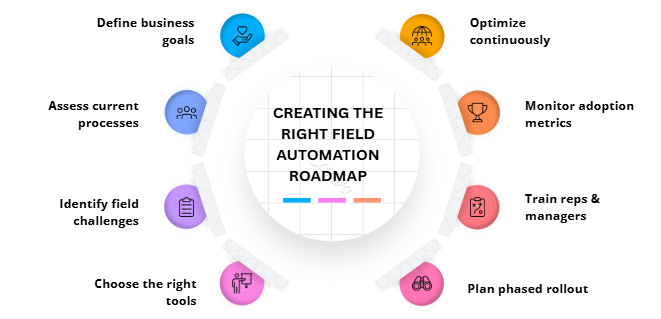
Start by defining clear business objectives for field automation, such as improving visibility, reducing manual work, or increasing productivity, so every automation decision supports measurable outcomes.
-
Identify and prioritize field processes that create the most operational friction, focusing first on activities that consume time, cause reporting delays, or impact customer interactions.
-
Involve field teams and managers early while designing workflows to ensure automation reflects real-world conditions, practical challenges, and daily responsibilities faced outside the office.
-
Plan a phased rollout instead of launching everything at once, allowing teams to adapt gradually, stabilize usage, and build confidence before expanding automation to additional processes.
-
Establish clear ownership and accountability for automation success by assigning responsibilities for adoption tracking, data quality, and ongoing improvements across teams and leadership.
-
Define meaningful success metrics before rollout, focusing on usage consistency, activity quality, and actionable insights rather than just the volume of data collected.
Conclusion
Field automation is no longer optional, it's essential for scaling operations, improving accountability, and making smarter decisions. However, success depends less on the tool itself and more on how thoughtfully it’s implemented. By avoiding common mistakes like poor planning, low manager involvement, and data overload, organizations can unlock the full potential of automation. The goal is not just digitization, but meaningful transformation that empowers field teams and managers alike.
Modern solutions like Delta Sales App are designed with real-world field challenges in mind helping businesses roll out automation smoothly, improve adoption, and turn daily activity data into actionable insights. If you’re planning to automate your field operations, start smart, roll out strategically, and focus on people as much as technology.
Want to see how smarter field automation can work for your team? Book a quick demo and experience the difference.