
How to Avoid Field Sales Management Mistakes

"A small leak will sink a great ship." Benjamin Franklin
Just as a small leak can sink a ship, small mistakes in field sales, like missed visits, incorrect data, or inefficient routes, can cost FMCG brands, distributors, and retailers thousands of dollars in lost revenue. In 2026, achieving sales success requires working smarter, not harder, through visibility, planning, and real-time execution.
Field sales management mistakes are common, but they are also completely avoidable. This guide will teach you how to identify, avoid, and correct these errors, allowing your team to improve execution, productivity, and revenue while utilizing the most recent mobile sales and field force automation tools.
What Are Field Sales Mistakes?
Field sales mistakes are errors or inefficiencies that occur during the execution of sales activities outside of the office, usually in the field when representatives visit retailers, distributors, or end customers. These mistakes may seem minor, but they have a significant impact on revenue, customer relationships, and team performance.
Missed outlet visits, delayed or incorrect order entry, inefficient route planning, inconsistent follow-ups, and poor activity tracking are all examples of common field sales mistakes. Missing scheduled visits or failing to update orders on time can result in lost sales opportunities and inventory problems, whereas inefficient routing wastes time and reduces daily coverage.
Why Field Sales Mistakes Matter
The field sales landscape is faster, more competitive, and more customer-focused than ever before. Sales teams no longer have the luxury of delayed insights, guesswork, or manual tracking; any missed activity has a direct impact on revenue, relationships, and growth. Understanding why mistakes are important is the first step towards smarter, more effective field sales management.
-
Lost Revenue Opportunities
Every missed outlet visit, delayed order entry, or skipped follow-up represents direct revenue loss. In highly competitive markets such as FMCG or retail distribution, even a single unvisited retailer can result in lost shelf space, delayed stock replenishment, or a competitor gaining the lead.
-
Poor Customer Relationships
Inconsistent communication, forgotten follow-ups, or delayed responses damage trust and erode long-term loyalty. Customers today expect quick, accurate, and consistent service, especially in sectors like FMCG and retail distribution. Field sales mistakes directly harm relationships, reducing repeat business and the likelihood of upselling.
-
Low Team Productivity
Without proper tracking and structured workflows, field sales teams waste hours on redundant tasks, reporting, or route planning. Low productivity is not just a numbers issue; it impacts morale, coverage efficiency, and overall revenue.
-
Managerial Blind Spots
Managers who rely on delayed reports or gut feelings cannot coach effectively. Without real-time visibility, high performers aren’t recognized, underperformers aren’t guided, and strategic decisions
Top Field Sales Management Mistakes and How to Avoid Them
1. Poor Planning and Route Management
Many field sales teams underestimate the importance of planning and route optimization in daily execution. Randomly assigned routes, unbalanced territories, or poorly planned beats result in inefficient coverage, wasted travel time, and lost sales opportunities. For FMCG brands, distributors, and retailers, this can result in lost revenue and underutilized resources.
How to Fix:
-
Use territory management tools to assign beats fairly.
Digitally mapping sales territories ensures equal workload distribution among field reps and eliminates overlapping or skipped accounts. Managers can optimize coverage, monitor performance gaps, and make data-driven decisions by matching territories to outlet density, potential revenue, and strategic priorities. Territory management also enables scalable operations, so that as teams expand, new reps can be assigned territories efficiently without disrupting existing workflows.
-
Apply route optimization to minimize travel time.
Route optimization software determines the most efficient route between multiple outlets, saving time, lowering fuel costs, and increasing the number of visits a representative can make per day. Efficient routing ensures that reps spend their time on customer engagement and order capture, rather than unnecessary commuting. Optimized routes also provide better coverage in remote or densely populated areas, allowing teams to target untapped outlets while maintaining on-time deliveries and consistent execution.
-
Track visits with mobile-first sales apps to ensure no outlet is skipped.
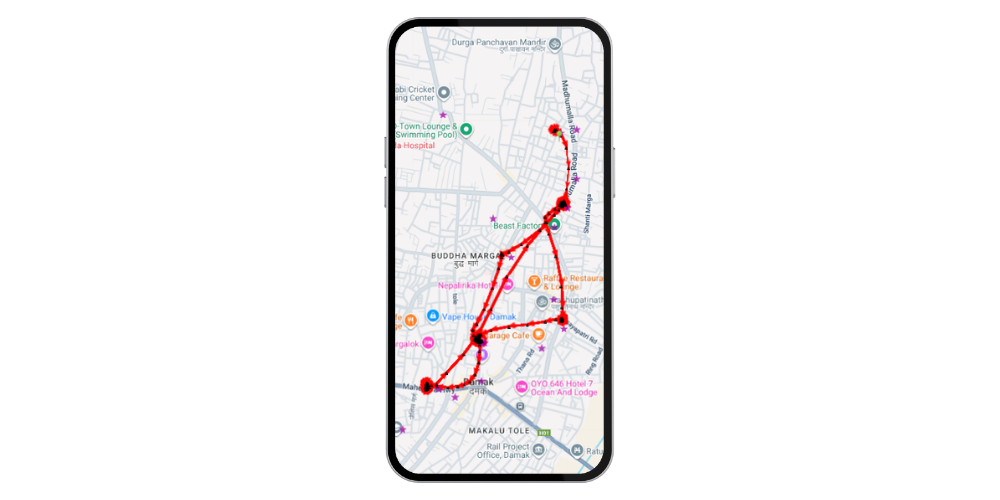
Field representatives can use GPS-enabled mobile apps and check-in features to track each visit, order, and interaction in real time. Managers have instant visibility into field activity, allowing them to ensure adherence to planned routes, identify missed opportunities, and provide targeted coaching. Mobile-first sales apps also automate data collection, reducing errors associated with manual reporting and ensuring that all insights, such as visit frequency, order value, and customer feedback, are available for strategic decision-making.
Implementing these fixes allows sales teams to transform their field operations into a data-driven, highly efficient machine, where every outlet is served, every visit is tracked, and every rep can focus on driving sales growth and execution excellence.
2. Ignoring Data and Reporting
Relying on memory, end-of-day spreadsheets, or delayed reporting leads to performance metrics gaps, inaccurate KPIs, and delayed managerial decisions. In modern field sales, real-time data is the backbone of efficiency.
How to Fix:
-
Capture data in real time with mobile CRM tools.
Reps can use mobile-first sales apps to instantly log visits, update orders, and record customer interactions. Real-time data capture ensures that managers always have up-to-date information about field performance, eliminating the need for end-of-day reports and lowering the risk of human error. Accurate, timely data enables leaders to identify trends, highlight gaps, and make faster, more informed decisions.
-
Use performance dashboards to monitor activity, orders, and coverage.
Interactive dashboards present sales activity, KPIs, orders, and outlet coverage in a single view. Managers can quickly identify underperforming reps, areas with missed visits, and accounts at risk, while reps gain insight into their own performance and progress toward goals. Dashboards also allow teams to track progress against plans, which improves accountability and enables managers to coach more effectively.
-
Base coaching decisions on analytics rather than assumptions.
Data-driven insights enable managers to shift from subjective evaluations to evidence-based coaching, identifying precisely where reps require assistance. Analytics reveal patterns in sales behavior, visit frequency, and order size, allowing you to optimize performance and increase revenue. W. Edwards Deming famously stated, "In God we trust." "All others must bring data." By prioritizing data, teams can make more informed decisions, avoid mistakes before they escalate, and ensure consistent execution across all territories.
3. Poor Communication With Teams
Misalignment between field representatives and managers is a frequent source of errors and missed targets. Without clear communication channels, reps may skip tasks, report orders incorrectly, or fail to follow up consistently.
How to Fix:
-
Enable integrated communication through calls, SMS, or chat inside your sales app.
Using a mobile sales app with integrated communication features ensures that all interactions are centralized. Representatives can contact customers directly, while managers can keep track of progress and challenges in real time. This integration eliminates fragmented communication across multiple platforms while also reducing delays or errors in sales execution and order management.
-
Ensure follow-up reminders are automated.
Automating follow-ups and task reminders ensures that no outlet, order, or customer interaction is overlooked. Representatives receive timely alerts for calls, meetings, and pending tasks, allowing them to prioritize high-impact activities. Automated reminders improve consistency, boost customer engagement, and prevent missed sales opportunities due to human error.
-
Provide instant feedback based on activity reports.
Managers can review real-time activity reports, such as visit completion, order logging, and KPI performance, and offer immediate coaching or guidance. Timely feedback allows reps to correct mistakes quickly, reinforces best practices, and increases overall team productivity. Transparent communication promotes accountability, alignment with corporate goals, and a culture of continuous improvement.
4. Not Training Your Team Properly
Many organizations underestimate the value of consistent and structured training for field sales teams. Without proper training, reps frequently make mistakes in order processing, data entry, follow-ups, and reporting, lowering efficiency and customer satisfaction. A lack of coaching also limits their ability to handle objections, upsell products, or navigate complex sales processes, thereby impacting revenue.
How to Fix:
-
Conduct regular coaching sessions using real-time performance data.
Managers can use mobile-first sales apps and performance dashboards to provide data-driven coaching that is tailored to each rep's strengths and weaknesses. By reviewing metrics like visit completion, order accuracy, and sales KPIs, coaching becomes more targeted, actionable, and measurable, ensuring continuous skill improvement and higher execution standards.
-
Use analytics insights to identify skills gaps.
Advanced sales analytics enable managers to identify recurring mistakes, underperforming beats, and knowledge gaps in their teams. Activity tracking, order trends, and customer interactions provide insights for creating customized training modules that focus on improving weak areas, reducing errors, and increasing sales confidence.
-
Document standard operating procedures (SOPs) for every process.
Clear and easily accessible SOPs provide reps with step-by-step instructions for field activities, order management, reporting, and customer engagement, ensuring team consistency. SOPs serve as a reference for new hires, reducing learning curves and errors, resulting in increased efficiency, accountability, and predictable sales results.
5. Overlooking Offline Functionality
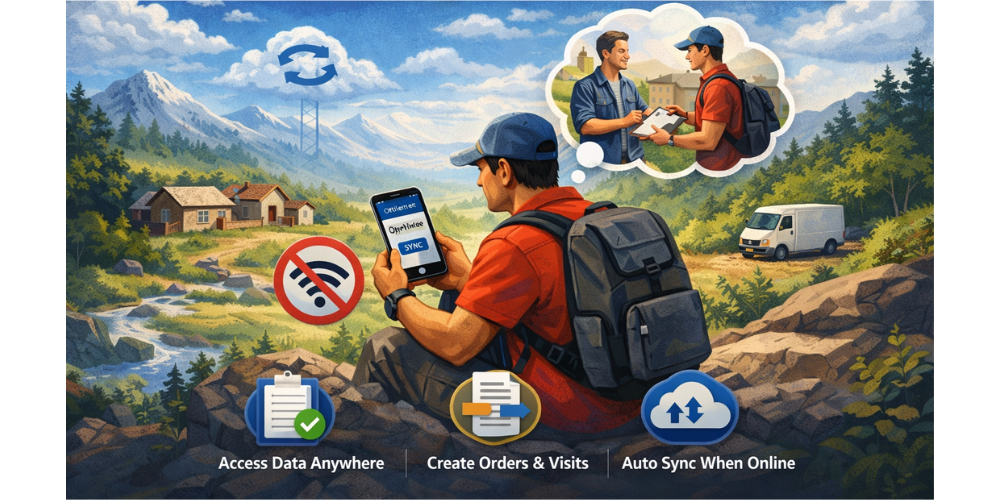
Field sales teams frequently operate in remote or low-connectivity areas, where limited internet access can cause delays in orders, visits, and activity reporting. Relying solely on cloud-based tools in such environments results in missed opportunities, inaccurate data, and delayed managerial insights.
How to Fix:
-
Choose tools with offline functionality and automatic sync.
Mobile sales applications that support offline mode enable reps to capture orders, update visits, log customer interactions, and track KPIs even when they are not connected to the internet. Once connectivity is restored, all data is automatically synced with central systems, ensuring that nothing is lost and managers have a complete and accurate picture of field activity.
-
Ensure data is captured accurately in the field and updated automatically
Offline apps reduce the need for manual note-taking or delayed reporting, thereby eliminating errors caused by memory lapses or end-of-day data entry. Accurate offline data collection ensures that activity reports, order details, and customer interactions are immediately available after sync, allowing managers to make timely decisions while also maintaining consistent coaching and performance tracking.
6. Ignoring Accountability and Performance Metrics
Without clear performance tracking, field representatives may skip visits, postpone orders, or fail to focus on high-priority tasks. This lack of accountability not only lowers individual productivity but also prevents managers from identifying trends and coaching effectively.
How to Fix:
-
Implement real-time activity and performance dashboards.
Mobile sales tools with activity tracking dashboards allow managers to monitor every visit, order, call, and follow-up as it happens. These dashboards provide instant visibility into individual and team performance, enabling managers to spot trends, flag underperformance, and make informed coaching decisions. Real-time dashboards also empower reps to self-monitor their progress against KPIs, encouraging ownership and responsibility.
-
Track visit completion, order fulfillment, and KPI attainment.
Accurate tracking of key performance indicators (KPIs) ensures that every rep’s activity is measured against clearly defined targets. Metrics like visit frequency, order size, and task Managers can use completion and outlet coverage to identify underperforming reps, optimize territories, and allocate resources more efficiently. This level of tracking helps sales teams go from reactive to proactive performers.
-
Use automated alerts to flag missed activities.
Automated notifications notify managers and representatives when critical actions, such as missed visits, unsubmitted orders, or delayed follow-ups, occur. Teams that flag issues immediately can take corrective action, prevent revenue leakage, and ensure consistent execution across all territories. Alerts also reinforce accountability by encouraging reps to focus on high-priority tasks and align their actions with organizational goals.
7. Failing to Use the Right Tools
Many organizations continue to use spreadsheets, basic CRMs, or generic apps for field sales management, resulting in inefficiency, errors, and limited visibility. Modern field sales necessitates a mobile-first sales force automation (SFA) solution that combines CRM, order management, activity tracking, analytics, and communication in one platform.
How to Fix:
-
Invest in mobile-first SFA tools that cover CRM, orders, analytics, and communication.
Modern SFA platforms, such as DeltaSalesApp, enable field teams to manage all aspects of sales execution through a single mobile interface. Reps can capture leads, log visits, place orders, and track KPIs in real time, while managers have instant access to territory coverage, performance trends, and pipeline health. This integration reduces manual effort, eliminates missed opportunities, and ensures that sales activities are in line with business objectives.
-
Ensure your tool integrates with existing systems and is easy to adopt.
The ideal solution should integrate seamlessly with ERP, finance, and communication platforms, removing data silos and reducing manual entry. Easy adoption and intuitive design encourage reps to incorporate the tool into their daily operations, resulting in consistent usage and faster ROI. Integration also allows managers to combine data from multiple sources, which improves reporting accuracy and strategic decision-making.
-
Leverage automation to reduce manual errors and save time.
Automation features such as automatic order syncing, follow-up reminders, activity tracking, and performance alerts allow reps to focus on high-value tasks rather than administrative work. By reducing human error and streamlining workflows, teams increase productivity, improve customer engagement, and maintain consistent execution across all sales territories.
Bonus Tip: Continuous Improvement
Mistakes in field sales are unavoidable, but the difference between good and great teams lies in their ability to learn and adapt. Continuous improvement entails gathering real-time data, regularly reviewing performance, and fine-tuning processes to eliminate inefficiencies and maximize results. Field teams should monitor metrics such as visit completion, order accuracy, customer interactions, and KPI attainment to identify recurring errors or bottlenecks. Managers can then use this information to provide targeted coaching, adjust routes, optimize territories, and improve overall performance.
As Benjamin Disraeli once said, "The secret of success is constancy of purpose." In field sales, this entails constantly measuring, learning, and improving. Organizations that embrace data-driven insights, continuous coaching, and process optimization can turn mistakes into opportunities, increase sales productivity, and drive long-term revenue growth.
Avoid Field Sales Mistakes with Delta Sales App
A mobile-first sales solution can significantly reduce all common field sales mistakes, including poor planning, missed data, weak communication, a lack of training, offline issues, accountability gaps, and the use of the wrong tools. DeltaSalesApp combines CRM, order management, performance tracking, analytics, and communication into a single user-friendly platform, allowing teams to work smarter, faster, and more accurately.
How DeltaSalesApp Helps:
-
Real-Time Activity & Performance Dashboards:
DeltaSalesApp provides instant visibility into every rep's activity, such as visit completion, order fulfillment, and KPI tracking. Managers can monitor trends, identify gaps, and make data-driven decisions in real time. Reps can track their own performance, remain accountable, and prioritize high-impact tasks. This feature ensures that coaching becomes proactive rather than reactive, and that sales execution is consistent with business objectives. -
Territory & Route Optimization:
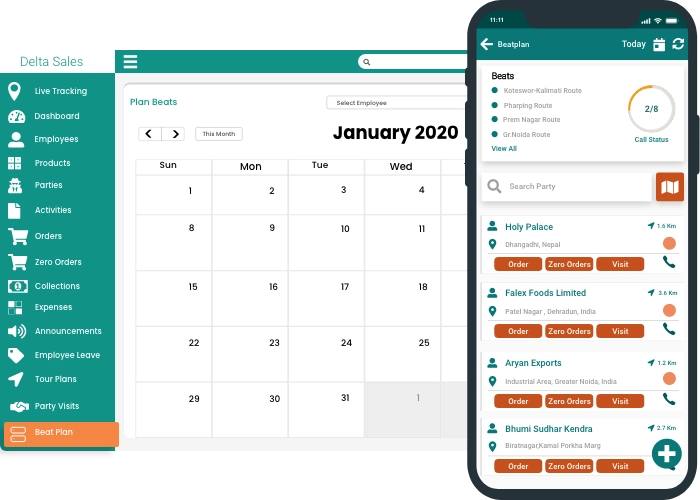
DeltaSalesApp digitally maps territories and distributes them evenly, ensuring that no beat is over- or underserved. Smart route optimization determines the most efficient daily travel itinerary, lowering fuel costs, travel time, and missed outlets. Representatives can visit more accounts per day, while managers have complete visibility into coverage, increasing field productivity and revenue potential.
-
Mobile-First Execution with Offline Support:
Field representatives can capture leads, log visits, update orders, and manage customer interactions using their mobile devices, even in areas with limited connectivity. Data collected offline syncs automatically when the internet is restored, ensuring no data loss and continuous workflow. This feature eliminates delays, prevents errors from manual recording, and ensures that sales operations run smoothly in all territories. -
Automated Alerts & Follow-Ups:
DeltaSalesApp provides timely notifications for high-priority tasks such as pending follow-ups, missed visits, and delayed orders. Reps are guided on what needs immediate attention, lowering the likelihood of missed opportunities. Managers can also use automated alerts to track adherence to targets, ensuring that teams stay focused, accountable, and consistent in their execution. -
Integrated Communication:
Calls, SMS, and chat are integrated directly into the app, allowing for seamless communication between reps, managers, and customers. Every interaction is automatically recorded, resulting in a comprehensive history of customer touchpoints. This integration reduces miscommunication, ensures follow-ups are timely, and strengthens team alignment and customer relationships. -
Performance Analytics & Coaching Insights:
DeltaSalesApp goes beyond simple dashboards, analyzing trends, patterns, and activity gaps to provide actionable coaching insights. Managers can identify top performers, underperforming reps, and skill gaps to facilitate targeted coaching sessions. Data-driven insights help to refine processes, increase efficiency, and drive measurable revenue growth.

Conclusion
Field sales mistakes may appear minor, but their impact on revenue, productivity, and customer relationships is significant. To avoid these errors, careful planning, real-time tracking, the right tools, and ongoing coaching are required. DeltaSalesApp enables field teams to capture visits, log orders, track performance, and remain productive while offline. Managers gain visibility, representatives perform better, and businesses experience measurable growth when the right tool is used.
As the saying goes, "The secret of success is consistency of purpose." Delta Sales App enables your team to work smarter, perform better, and consistently meet sales targets, transforming challenges into opportunities for growth.
See how DeltaSalesApp can help your team avoid costly mistakes and boost field sales performance