
Struggling With Time-Off Tracking? Here’s How to Choose the Right Leave Management System
Managing employee leave should be simple, but for many organizations, time-off tracking is still one of the most frustrating HR challenges. Manual spreadsheets, disconnected systems, and unclear policies frequently result in errors, payroll disputes, compliance risks, and dissatisfied employees.
If your organization is struggling with inaccurate leave records, approval delays, or poor visibility into workforce availability, it’s time to rethink your approach. Choosing the right leave management system (LMS) can transform how your business handles time off, improve productivity, and build trust across teams.
In this blog, we'll explain why leave management is important, what common challenges organizations face, and how to select the best leave management system for long-term success.
What Is a Leave Management System?
A leave management system is a digital HR solution that automates the processes of requesting, approving, tracking, and recording employee time off. It replaces manual processes with a centralized platform that guarantees accuracy, transparency, and policy compliance.
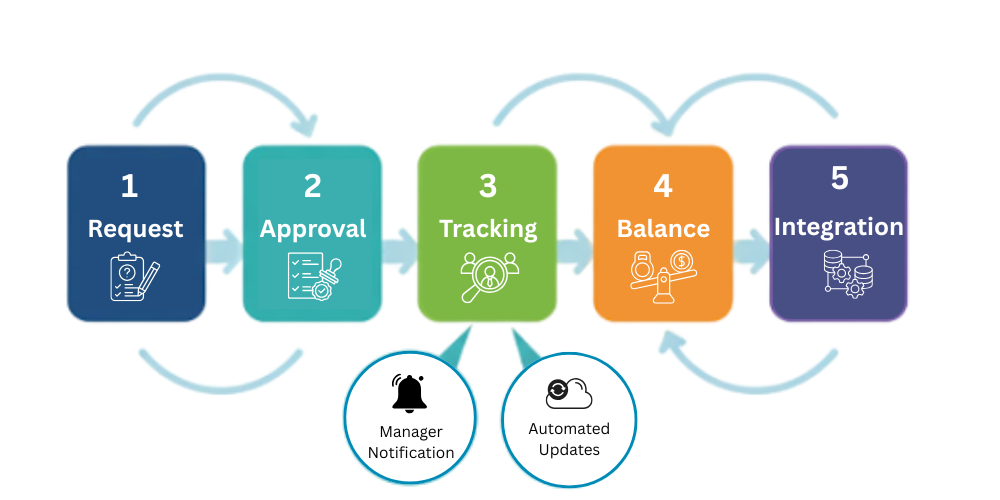
Employees can apply for leave through self-service portals, managers can approve requests in real time, and HR teams gain complete visibility into leave balances and usage patterns. Modern leave management software also integrates with attendance management, payroll systems, and workforce analytics tools, making it a critical component of HR automation.
Why Time-Off Tracking Is Still a Major Challenge
Despite advancements in HR technology, many organizations continue to use outdated or semi-manual leave tracking methods. These methods frequently fail to scale as teams expand or become more distributed.
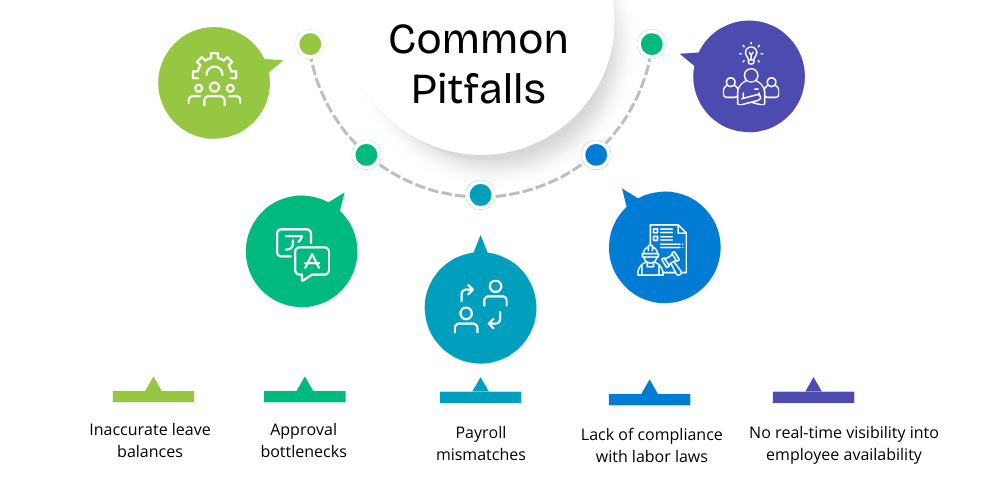
Common issues include:
-
Inaccurate leave balances
Manual leave tracking often results in incorrect leave balances, leading to employee confusion, disputes, and unreliable workforce planning. -
Approval bottlenecks
Email-based or paper-driven approval processes slow down leave approvals, causing delays, poor visibility, and inefficient time-off management. -
Payroll mismatches
When leave data is not properly synced with payroll systems, it leads to salary miscalculations, overtime errors, and payroll processing issues. -
Lack of compliance with labor laws
Outdated leave management methods make it difficult to enforce statutory leave policies, increasing the risk of compliance violations and penalties. -
No real-time visibility into employee availability
Without real-time leave tracking, managers lack accurate insights into employee availability, making scheduling and workforce management ineffective.
When leave data isn’t centralized, HR teams and managers are forced to make decisions based on incomplete or outdated information. Over time, this directly affects employee satisfaction, operational planning, and workforce discipline.
Importance of a Leave Management System in Modern Organizations
-
Accurate Leave Tracking and Records
All forms of leave, including compensatory off, earned leave, sick leave, and casual leave, are tracked in real time by a centralized leave management system. Confusion and disagreements are decreased because managers and staff always have access to updated leave balances.
-
Faster Approvals and Better Accountability
Automated workflows remove unnecessary delays in leave approvals. Managers can approve or reject requests instantly, while employees receive timely notifications.
This structured process improves attendance discipline, reinforces accountability, and ensures that teams are adequately staffed at all times.
-
Payroll Accuracy and Compliance
Leave data directly impacts payroll calculations, especially for unpaid leave, overtime adjustments, and statutory compliance. A reliable leave management system ensures:
-
Correct salary calculations
-
Compliance with labor laws
-
Accurate reporting for audits
This significantly reduces payroll errors and HR rework.
-
Improved Workforce Planning
Managers are better able to plan workloads when they are aware of impending leaves. This helps sustain productivity even during periods of high leave and avoids last-minute staffing shortages.
Workforce planning becomes proactive instead of reactive, a major advantage for growing organizations and field-based teams.
-
Better Employee Experience
Employees value transparency and control. A self-service leave management system allows them to:
-
Apply for leave anytime, anywhere
-
Track approval status
-
View leave balances without contacting HR
This autonomy builds trust and improves overall employee engagement.
How to Choose the Right Leave Management System
Not all leave management tools are created equal. To avoid switching systems later, it’s important to evaluate the following factors before making a decision.
Policy Flexibility
Your leave management system should adapt to your organization’s policies—not the other way around. Look for software that supports:
-
Multiple leave types: Supports sick leave, casual leave, earned leave, unpaid leave, and special leave categories within a single leave management system.
-
Custom accrual rules: Automatically calculates leave accrual based on tenure, role, or policy-defined earning cycles.
-
Carry-forward and encashment policies: Allows unused leave to be carried forward or encashed according to company policy and payroll rules.
-
Location-specific labor regulations: Ensures leave policies comply with regional labor laws and statutory requirements across different locations.
This flexibility is essential for compliance and scalability.

Seamless Integration With Attendance Systems
Leave data should automatically sync with attendance and time-tracking tools. This ensures:
-
Accurate attendance reports: Ensures leave and attendance data always match in real time.
-
Correct payroll inputs: Prevents salary errors caused by missing or incorrect leave data
-
Unified workforce analytics: Combines attendance and leave data for better workforce insights.
For organizations already using attendance or field-force management tools, integration is non-negotiable.
Real-Time Reporting and Analytics
Advanced leave management systems offer dashboards and reports that help HR teams analyze:
-
Leave trends: Identifies patterns in employee leave usage over time.
-
Absenteeism patterns: Highlights frequent or irregular absences impacting productivity.
-
Department-wise availability: Shows team availability to support be.tter workforce planning.
These insights support smarter workforce decisions and help improve overall productivity.
Mobile Accessibility
Mobile access is essential as remote and field teams become more common. Managers and staff can efficiently manage time off while on the go with a mobile-friendly leave management system.
This is especially important for sales teams, on-field staff, and distributed workforces.
Ease of Use and Adoption
Even the most powerful system fails if employees don’t use it. Choose a leave management system that is:
-
Intuitive: Easy for employees to understand without training.
-
Easy to navigate: Simple menus enable faster leave requests and approvals.
-
Quick to adopt: Minimal onboarding ensures immediate system usage.
Minimal training requirements lead to faster implementation and better ROI.
Common Mistakes to Avoid When Choosing a Leave Management System
Many organizations rush the selection process and face operational challenges later. Avoid these common leave management mistakes to ensure long-term efficiency and compliance.
-
Choosing software without payroll integration
Without payroll integration, leave data must be updated manually, increasing payroll errors and administrative workload. -
Ignoring scalability needs
A system that cannot scale with workforce growth leads to frequent system changes and process disruptions. -
Overlooking compliance requirements
Failure to support statutory leave rules can result in labor law violations and compliance risks. -
Selecting tools without mobile support
Lack of mobile access slows approvals and affects leave management for remote and field teams. -
A future-ready leave management system should support current HR needs while adapting seamlessly as your organization grows.
A future-ready leave management system should support your organization today and as it grows.
How a Smart Leave Management System Supports Business Growth
Basic HR administration is no longer the only aspect of leave management. By transforming time-off data into useful insights, a smart leave management system strategically contributes to long-term business growth, workforce discipline, and operational efficiency. When properly executed, it:
-
Improves workforce discipline
Automated leave policies and approval workflows ensure employees follow structured processes, improving accountability and attendance discipline. -
Reduces administrative workload
By eliminating manual tracking and approvals, HR teams spend less time on routine tasks and more time on strategic initiatives. -
Enhances employee satisfaction
Transparent leave balances, faster approvals, and self-service access create a fair and positive employee experience. -
Enables data-driven decision-making
Real-time leave reports and workforce analytics help leadership make informed decisions on staffing, productivity, and resource planning.
Organizations that invest in the right leave management system gain better control over their workforce while creating a fair and transparent work environment.
How DeltaSalesApp Simplifies Leave Management and Time-Off Tracking
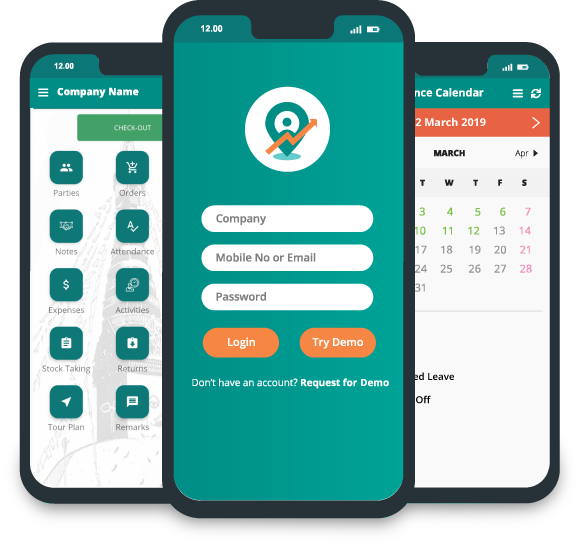
DeltaSalesApp offers an integrated attendance and leave management solution built for modern organizations managing office-based, remote, and field teams.
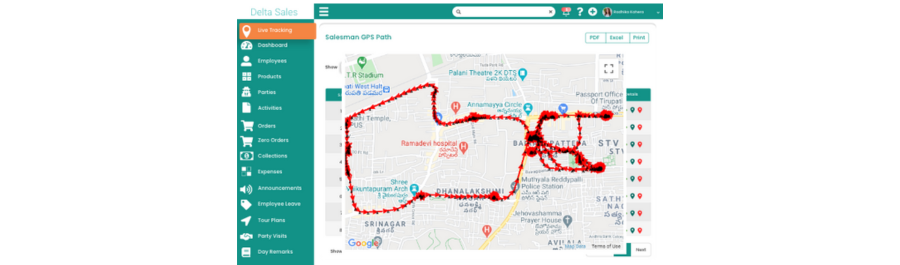
Unlike standalone leave tracking tools, DeltaSalesApp combines GPS tracking, real-time workforce visibility, and automated leave workflows into a single platform. Approved leaves are automatically reflected in attendance records, ensuring accurate payroll-ready data without manual intervention.
With DeltaSalesApp, organizations can:
-
Automate employee leave requests and approvals
DeltaSalesApp automates leave requests and approval workflows, reducing manual HR effort while improving leave management efficiency and approval turnaround time -
Track real-time leave balances and attendance
Real-time leave balance tracking and attendance management give HR teams accurate visibility into employee availability and daily workforce status. -
Sync leave data with payroll and reports
Integrated leave and payroll management ensures approved leaves are reflected in payroll reports, enabling accurate salary calculations and compliance. -
Manage remote and field teams through mobile access
Mobile-first leave and attendance tracking allows remote and field teams to apply for leave and managers to approve requests anytime, anywhere. -
Maintain workforce discipline and transparency
Centralized leave management and attendance tracking improve workforce discipline, accountability, and organizational transparency.
By unifying leave management, attendance tracking, and workforce analytics, DeltaSalesApp eliminates data gaps and operational inefficiencies.
Why Choose DeltaSalesApp as Your Leave Management System?
DeltaSalesApp is ideal for organizations that require more than basic HR tools, particularly those that manage sales teams, field personnel, and multi-location operations.
Key advantages include
-
Mobile-first leave and attendance management
DeltaSalesApp enables employees and managers to manage leave and attendance through a mobile-first platform, making it ideal for sales teams and field personnel.
-
Real-time workforce visibility:
Live dashboards provide real-time visibility into attendance, leave status, and employee locations, helping managers make informed workforce decisions.
-
Payroll-ready data accuracy:
Automated syncing of leave and attendance data ensures payroll-ready reports with accurate inputs for salary processing and compliance.
-
Scalable system for growing teams
DeltaSalesApp scales easily as teams expand, supporting multi-location operations and evolving workforce requirements.
-
Improved accountability and productivity
Centralized attendance and leave tracking increases employee accountability while improving overall productivity and execution.
Conclusion
Struggling with time-off tracking indicates that manual processes and disconnected systems are no longer sufficient. A smart leave management system improves workforce operations by increasing accuracy, compliance, and transparency while reducing administrative effort.
DeltaSalesApp provides organizations with a mobile-first, integrated solution that combines leave management, attendance, payroll-ready data, and real-time workforce visibility. It is designed for modern teams that require control, scalability, and accountability across multiple locations.
Ready to eliminate leave tracking errors and gain complete workforce visibility?
Book a demo today and see how Delta Sales App can simplify leave and attendance management while improving operational efficiency across your organization.