
10 Common RFP Mistakes to Avoid When Selecting Sales Software
Choosing the right sales software is a high-impact decision. It affects your field sales productivity, distributor performance, reporting accuracy, and ultimately, revenue growth. That’s why most organizations use an RFP (Request for Proposal) to evaluate vendors systematically.
However, many companies unknowingly sabotage the process through common RFP mistakes. These mistakes lead to poor vendor fit, bloated costs, delayed implementation, and tools that sales teams resist using.
In this blog, we’ll break down 10 common RFP mistakes businesses make when selecting sales software and more importantly, how to avoid them so you end up with a solution that truly supports your sales goals.
Starting the RFP Without Clear Business Objectives
One of the biggest mistakes companies make is launching an RFP before clearly defining why they need sales software. Many RFPs list dozens of features but fail to explain the actual problems the organization is trying to solve such as low field visibility, poor distributor tracking, or inaccurate sales reporting.
Why this hurts your decision
When objectives aren’t clearly defined, vendors submit generic proposals, comparisons become unclear, and internal teams struggle to identify which solution genuinely solves their most critical sales challenges.
How to avoid it
Before writing the RFP:
-
Identify your top 3–5 sales challenges: Start by pinpointing the exact problems affecting your sales performance. This could include limited visibility into field activities, inconsistent distributor reporting, frequent stockouts, or low outlet coverage. Clear challenges guide focused RFP questions.
-
Define measurable goals: Convert challenges into measurable outcomes. For example, aim to reduce stockouts by 20%, improve beat adherence to 95%, or increase productive outlet visits per rep. These metrics help evaluate vendors objectively.
-
Align leadership, sales, and operations on priorities: Involve all key stakeholders early. When leadership, sales teams, and operations agree on priorities, the RFP reflects real business needs and prevents conflicting expectations during evaluation.
If your goal is real-time field visibility, for example, tools like field sales tracking apps should naturally become a focus during evaluation.
Treating All Vendors as “Equal” on Paper
Many RFPs unintentionally push vendors toward identical answers by using overly rigid templates and checkbox-style questions.
While structure is important, this approach limits differentiation and innovation.
Why this hurts your decision
Focusing only on feature lists leads to superficial comparisons, preventing you from understanding how each solution truly addresses your unique sales challenges and operational realities.
How to avoid it
Along with structured questions:
-
Combine structured questions with scenario-based ones: In addition to checklist-style queries, present real-life sales situations like managing unexpected stockouts or handling missed outlet visits and ask vendors to explain their response strategies.
-
Request detailed real-world use cases: Ask vendors to share specific examples of how their software has helped clients with similar sales models or challenges. This demonstrates practical effectiveness beyond generic claims.
-
Evaluate alignment with your sales workflow: Have vendors illustrate how their solution integrates into your existing processes from beat planning and order taking to distributor management and reporting to ensure seamless adoption.
This method highlights platforms designed for real field conditions. Solutions like daily Retail execution apps, not just checkboxes on a list.
Overloading the RFP With Unnecessary Features
A common trap is adding every possible feature “just in case.” This results in long, complex RFPs that focus more on volume than value.
Why this hurts your decision
When all vendors are forced into identical responses, evaluations become feature comparisons only, making it difficult to identify which solution truly delivers practical value and real-world sales impact.
How to avoid it
Classify requirements into:
-
Include scenario-based questions: Go beyond yes/no or checkbox questions. Present real sales scenarios such as managing missed outlet visits or tracking distributor stock—and ask vendors to explain how their system handles them end to end.
-
Request real-world use cases: Ask vendors to share practical examples from similar industries or sales models. Real use cases reveal how the software performs in day-to-day field conditions, not just in ideal situations.
-
Evaluate fit with your sales workflow: Ask vendors to demonstrate how their solution aligns with your actual sales processes, from beat planning and order booking to reporting and follow-ups. This helps identify tools that support execution, not just reporting.
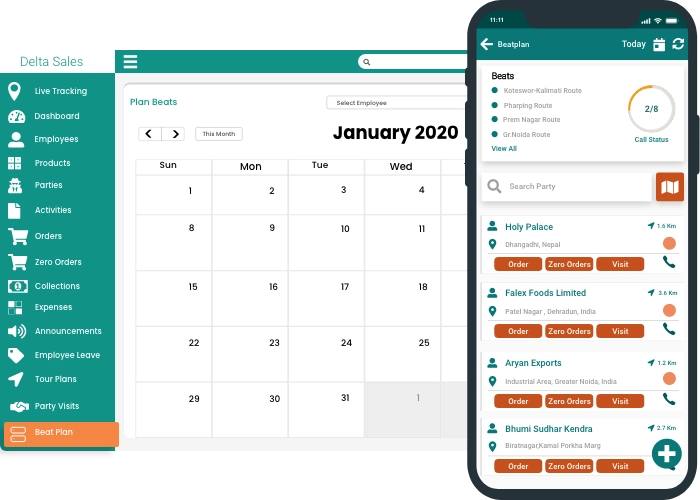
For example, if your sales reps are struggling with route discipline, beat plan and customer-visit-tracking should be prioritized over advanced analytics that won’t be used initially.
Ignoring the End Users: Your Sales Team
Many RFPs are written by management or IT teams with minimal input from actual sales reps or field managers.
Why this hurts your decision
When end users are excluded from the RFP process, the selected software often feels complex and impractical, leading to poor adoption, resistance from sales reps, and underutilized features.
How to avoid it
Involve:
-
Involve field sales reps early: Sales reps use the system daily, so their input is critical. Engage them to understand pain points around order booking, outlet coverage, reporting, and time spent on manual tasks.
-
Include area and regional managers: Managers need visibility into team performance, attendance, routes, and target achievement. Their perspective helps ensure the software supports both execution and decision-making.
-
Engage sales operations teams: Sales ops teams bridge strategy and execution. Involving them helps align reporting needs, data accuracy, and process efficiency with the right software capabilities.
Ask vendors how their solution improves daily tasks like order booking, outlet visits, and reporting. Tools like mobile-apps-for-field-sales-teams often stand out here because they are built with usability in mind.
Writing Vague or Generic RFP Questions
Questions like “Describe your reporting capabilities” invite vague, marketing-heavy responses.
Why this hurts your decision
Vague RFP questions lead to generic, marketing-focused responses, making it difficult to compare vendors objectively or assess which solution can truly meet your operational needs.
How to avoid it
Ask precise, outcome-driven questions:
-
Ask detailed, outcome-focused questions: Frame questions around real business outcomes instead of broad capabilities. This forces vendors to explain exactly how their system works in practical scenarios.
-
Evaluate field activity tracking clearly: Ask how daily outlet visits are captured, validated, and reported. Clear answers reveal the system’s reliability in tracking real field execution.
-
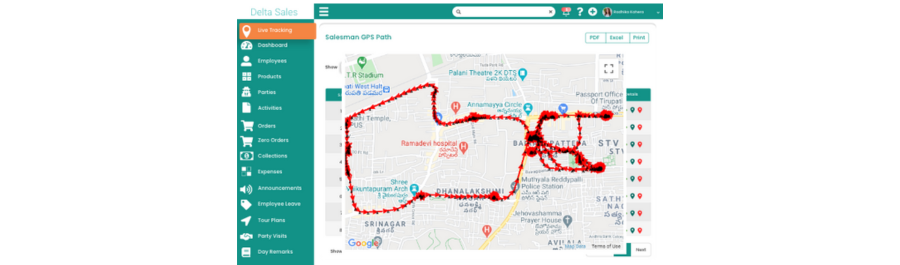
Check real-time visibility for managers: Request specifics on attendance monitoring, GPS route tracking, and live dashboards. This shows whether managers can take timely action or only review reports later.
Assess distributor and secondary sales monitoring asks how distributor orders, secondary sales, and stock movement are tracked and reconciled. These precise questions help you evaluate true distribution management system capabilities rather than surface-level claims.
Not Evaluating Implementation and Support Capability
Many organizations assume that implementation will be “handled later” and focus only on software features.
Why this hurts your decision
Ignoring implementation and support capabilities often results in delayed rollouts, low user adoption, unresolved issues, and slower realization of value—even when the software itself is strong.
How to avoid it
Include RFP questions about:
-
Clarify the implementation timeline: Ask vendors how long onboarding typically takes, key milestones involved, and what internal resources are required. A clear plan reduces delays and confusion during rollout.
-
Understand training methods in detail: Evaluate whether training is live, self-paced, role-based, or ongoing. Effective training ensures sales teams adopt the tool confidently and correctly from day one.
-
Review support availability and response time: Ask about support channels, response SLAs, and escalation processes. Reliable support is critical when field teams depend on the system daily.
-
Confirm availability of dedicated account management: Dedicated account managers help with ongoing optimization, best practices, and issue resolution, ensuring the solution continues to deliver value as your business evolves.
Prioritize vendors with strong onboarding support. Vendors known for structured post-sales support such as customer onboarding approach typically enable faster adoption, smoother implementation, and quicker ROI.

Overlooking Scalability and Future Growth
Your sales operations today may look very different in 12–24 months.
Why this hurts your decision
Choosing software that cannot scale with your business often results in system limitations, costly reimplementation, data migration challenges, and disruption to growing sales operations.
How to avoid it
Evaluate whether the solution can support:
-
Plan for a growing sales team: Ask whether the platform can easily onboard additional sales reps without performance issues or complex reconfiguration as your team expands.
-
Assess distributor and channel scalability: Evaluate how well the solution handles more distributors, higher order volumes, and multiple sales channels without compromising data accuracy or speed.
-
Check readiness for new territories: Ensure the software supports multiple regions, hierarchies, currencies, and local reporting needs, enabling smooth geographic expansion.
-
Review flexibility of reporting and analytics: Confirm that dashboards and reports can evolve with new KPIs, larger datasets, and advanced analysis as your business matures.
Choosing growth-ready platforms, modern sales force automation tools are built to scale seamlessly, allowing your sales operations to grow without requiring system replacement or major disruption.
Focusing Only on Price Instead of Total Cost of Ownership
Cost matters but selecting sales software based only on the lowest quote is risky.
Why this hurts your decision
Choosing sales software based only on price often leads to hidden expenses, poor user adoption, and lower productivity, ultimately costing more than a well-priced, value-driven solution.
How to avoid it
Evaluate:
-
Assess implementation effort upfront: Understand how much time, internal resources, and configuration are required to go live. Complex implementations often increase costs and delay value realization.
-
Review training and onboarding support: Check whether training is included, how long onboarding takes, and if role-based guidance is provided. Proper training reduces errors and improves early adoption.
-
Evaluate ongoing customer success and support: Look beyond basic support. Strong customer success teams help optimize usage, resolve issues quickly, and ensure long-term value from the software.
A solution that improves efficiency and reduces manual work such as sales automation platforms often delivers better ROI even if the upfront cost is slightly higher.
Failing to Define a Clear Evaluation Process
Many RFPs fail not because of vendors but because internal teams don’t agree on how proposals will be scored.
Why this hurts your decision
Without a defined evaluation framework, proposal reviews become subjective and inconsistent, leading to delays, internal disagreements, and decisions driven by opinion rather than business value.
How to avoid it
Before releasing the RFP:
-
Define clear evaluation criteria upfront: Establish what matters most—such as functionality, ease of use, scalability, support, and ROI so every proposal is assessed against the same standards.
-
Assign weightage to each criterion: Not all factors carry equal importance. Assign percentages to features, usability, support, and cost to reflect real business priorities and enable objective comparison.
-
Involve key stakeholders early: Bring leadership, sales, operations, and IT teams into the evaluation process from the start. Early alignment reduces conflict and speeds up final decisions.
A defined process ensures faster, data-driven decision-making especially when comparing complex platforms like sales performance management software and builds confidence in the final selection.
Skipping Real Demos and Pilot Testing
Paper responses can only tell you so much.
Why this hurts your decision
Relying only on written proposals increases the risk of selecting software that looks impressive on paper but fails to perform effectively in real field conditions.
How to avoid it
Always:
-
Request live demos tailored to your use case: Ask vendors to demonstrate the solution using your actual sales scenarios, not generic demos. This reveals how well the system supports your specific workflows.
-
Ask for pilot or trial access: Pilot testing allows sales teams and managers to experience the software firsthand, uncover usability issues, and validate performance before full-scale deployment.
-
Test real, day-to-day workflows: Evaluate how smoothly the system handles core activities such as order booking, outlet visits, attendance tracking, and reporting under real operating conditions.
Practical testing helps teams clearly see the real value of solutions, particularly in field-intensive environments where usability and execution matter most.
Final Thoughts
An effective RFP is a strategic tool that helps you choose sales software your team will actually use, improving field visibility, execution, and ROI. Avoiding common mistakes like vague questions, ignoring end users, or skipping implementation details ensures you select a scalable, user-friendly solution.
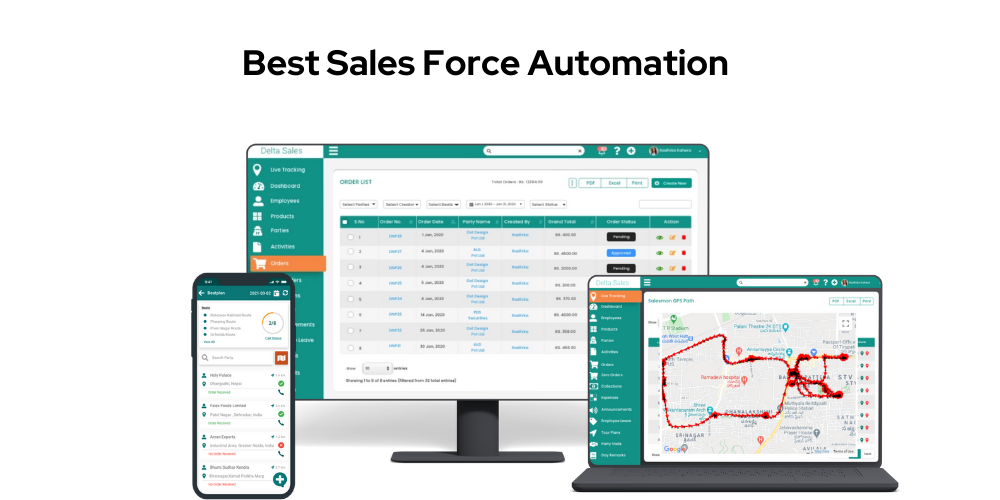
Solutions like Delta Sales App stand out by offering practical features, smooth onboarding, and strong support tailored for real sales challenges. A well-crafted RFP leads to smarter sales execution and lasting growth.
Schedule Your Demo Today & discover how Delta Sales App can help you to boost your sales performance.