
How Growing FMCG Brands Track Outlets, Distributors, and Sales Reps in One System
For a growing FMCG brand, chaos is often mistaken for growth. One day, you are celebrating a surge in orders; the next, you are scrambling to figure out why a key distributor ran out of stock while a warehouse three cities away is overflowing with expiring inventory. Meanwhile, your sales representatives are filling out paper reports that no one reads, and your managers are drowning in WhatsApp groups trying to verify if a promoter actually showed up at a supermarket.
This is the breaking point for many brands. The gap between having distribution and managing distribution becomes a business bottleneck.
In this blog, we will break down exactly how successful FMCG brands consolidate the "Golden Triangle" of operations Outlets, Distributors management, and Sales Reps into a single, unified workflow. We’ll explore why visibility is the ultimate currency in FMCG and how moving from fragmented data to integrated systems fuels sustainable scale.
Why Spreadsheets Fail at Scale
Let’s address the elephant in the boardroom: the Excel sheet. Spreadsheets are the default operating system for most startups, but they are retrospective, not real-time.
When a brand operates in 50 cities with 30 distributors and 100 reps, a spreadsheet can tell you how much you sold last month. However, it cannot tell you:
-
Which specific outlets were not visited yesterday.
-
Which distributor is holding 60 days of dead stock.
-
Which rep is prioritizing high-margin SKUs over entry-level volume builders.
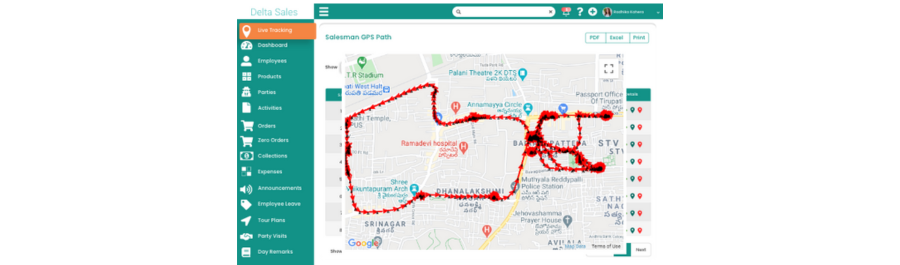
This is where the concept of a unified system shifts from "nice to have" to "must-have." To truly scale, brands need to connect the order book to the physical movement of goods and people. Using tools that offer sales tracking allows management to see not just the outcome (sales) but the activity (visits) that drives the outcome.
The Three-Headed Monster of FMCG Operations
To understand the solution, we must first understand the complexity. Unlike a direct-to-consumer (D2C) brand that ships a box from a warehouse to a doorstep, FMCG operates in layers.
The Sales Rep is the tip of the spear. They visit the Outlet (retail store), take orders, set up displays, and check competitor activity. The order then travels to the Distributor, who holds stock, picks the products, and delivers them.
The tragedy of growing FMCG brands is that these three entities usually operate in silos.
-
The Rep thinks in terms of daily visits and commissions.
-
The Distributor thinks in terms of credit limits and warehouse space.
-
The Outlet owner thinks in terms of margins and footfall.
When these three speak different languages, execution fails. The rep promises a scheme, the distributor doesn't know about it, and the outlet cancels the order. Integrated tracking eliminates this friction.
Tracking the Outlet: Beyond Just Billing
Most brands track outlets by their billing address. This is a mistake. In modern FMCG execution, an outlet is a living asset that requires health monitoring.

-
Primary Tracking: Compliance and Loyalty
Tracking outlets isn't just about knowing they exist; it’s about knowing what happens inside those four walls. Did the brand get the shelf space they paid for? Is the point-of-sale material up? Are the 500gm packs outselling the 1kg packs?
Growing brands use field sales management app solutions to digitize the outlet. Instead of a rep simply checking in via location, they check in via task completion. Managers can instantly see high-quality photos of the shelf, verify Plan-O-Gram compliance, and log competitor pricing.
-
Secondary Tracking: Behavioral Data
The best brands track the behavior of the outlet owner. How do they react to price changes? What is their credit discipline? By logging this data in a unified system, the distributor knows which outlet gets the new premium SKU and which outlet remains focused on volume-driven staples.
Tracking the Distributor: The Inventory Balancing Act
Distributors are the most valuable partners and often the hardest to control. They operate on thin margins and prioritize fast-moving stock. For a growing brand, if your product isn't the distributor’s top priority, you are invisible.
-
The Red Flag of Secondary Sales
The classic mistake is measuring distributor performance solely on "lifting" (primary sales). A distributor can lift a truckload of stock today and not push it to retailers for three weeks. This creates a false sense of growth. The brand celebrates, the warehouse is empty, but the market is dry.
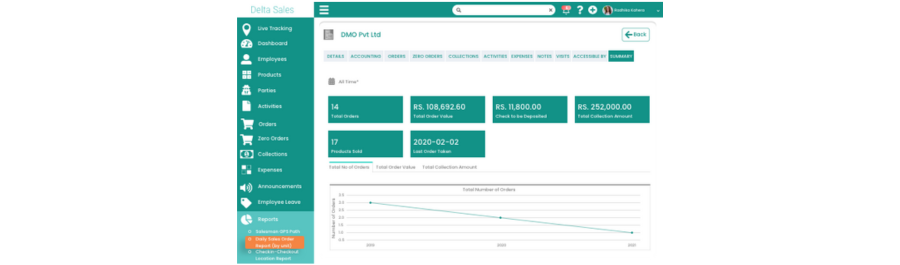
Effective tracking measures secondary sales from the distributor to the retailer. When brands track this in real-time, they identify which distributors have genuine market velocity and which are simply warehousing stock. Integrating automated reports and analytics transforms distributor management from guesswork to science. You can finally answer: "Is my distributor under-stocked, or are they just bad at pushing penetration?"
-
Cash Flow and Credit Tracking
In a unified system, the finance team doesn't work in isolation. When a rep places an order from an outlet, the system immediately checks the distributor’s credit limit and stock availability. This prevents the dreaded "Order-Cancel" loop, where a rep books a massive order only to have the distributor reject it due to credit holds.
Tracking the Sales Rep: Activity vs. Productivity
There is a distinct difference between a rep who is "busy" and a rep who is "productive." In traditional management, a rep visiting 15 stores a day is considered a high performer. In execution intelligence, a rep visiting 8 stores and achieving 80% scheme compliance is the true star.
-
Geotagging and Beat Plan Adherence
The foundation of rep tracking is geography. It’s easy for a rep to skip a low-potential store and visit a high-potential one twice to hit their call count. However, FMCG success relies on coverage, not cherry-picking.
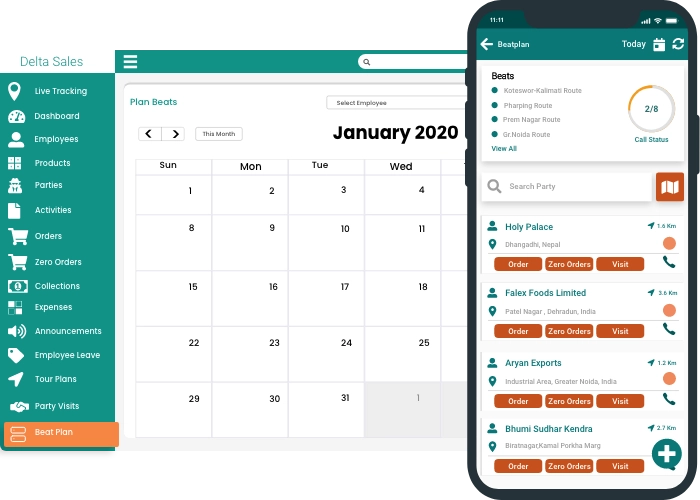
By enforcing route planning within the system, brands lock in a "Beat Plan". The rep knows that on Monday, they must cover Market A. The system validates that the rep was physically present at those specific coordinates. This builds consistency. Retailers learn to expect the rep on a specific day, increasing order reliability.
-
Measuring Quality of Interaction
It is no longer enough to know if a rep visited. You must know what they did there.
-
Did they open the Delta Sales App catalog and present the new launch?
-
Did they collect payment?
-
Did they take a picture of the secondary display?
When these metrics are tied to incentives, behavior changes. Reps stop rushing through visits and start executing. Utilizing features like daily work logs ensures that every minute of the workday is accounted for, not just for surveillance, but for coaching. If a high-performer is struggling in a specific territory, the data shows exactly where the friction is.
Breaking Down the Barriers to Integration
Despite the obvious benefits, brands hesitate. The most common pushback is, "My distributors have their own software."
This is the integration trap. Distributors use hundreds of different accounting tools (Tally, Busy, Marg, etc.). The goal isn't to force them to change their software; the goal is to connect to it.
Modern systems use API integrations or automated uploads to pull distributor stock and billing data into the brand's command center. The distributor continues their daily workflow, and the brand gets the visibility they need. This non-invasive approach respects the autonomy of the distributor while satisfying the brand's need for customer tracking.
Similarly, for outlets that don't use any software, the rep becomes the data entry point. By digitizing the order book at the point of sale, the system captures the "moment of truth" in real time.
The ROI of Unified Tracking
Let’s move from theory to tangible business outcomes. What does this actually save?
-
Reduction in "Phantom Stock"
Phantom stock is inventory that the system says exists, but the physical shelf says doesn't. By connecting distributor off-take (sales to retailers) with brand shipment (sales to distributors), brands can pinpoint exactly where stock is vanishing. This reduces leakage and improves working capital.
-
Increased ROI on Manpower
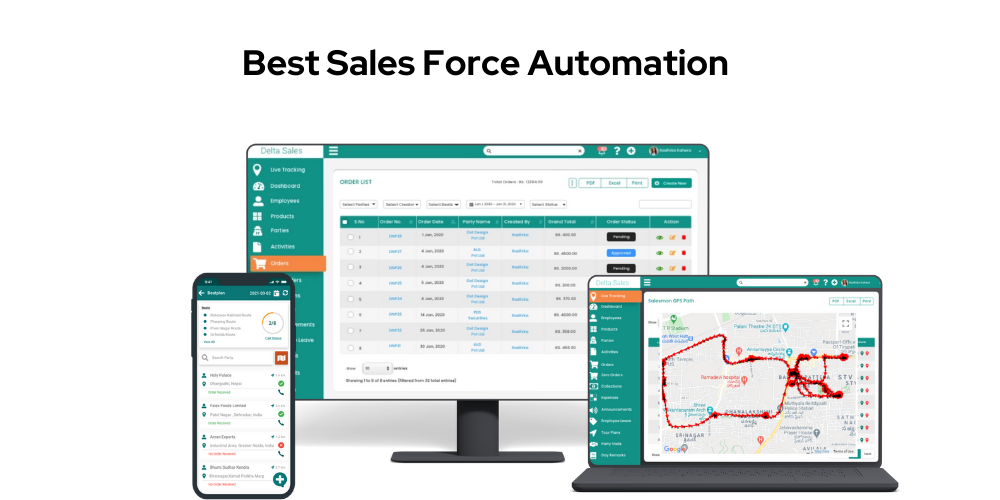
When you track what reps actually do, you realize 20% of your team is usually generating 80% of the quality output. Unified tracking allows you to benchmark performance. Why is Rep A closing 90% of visits with an order, while Rep B only closes 40%? Is it territory, pitch, or pricing? The data reveals the answer. By leveraging field sales automation software, coaching becomes data-driven, not emotional.
-
Optimized Trade Spend
Trade spend (money spent on retailer schemes and discounts) is the largest leak in the FMCG bucket. Without tracking, brands pay for "Happy Hour" discounts that retailers never pass on to the consumer. When the rep logs the scheme execution via the app, and the invoice shows the discounted price, the brand finally gets proof of performance. They stop paying for promises and start paying for proof.
The Human Element: Adoption is Culture
Technology is the enabler, but adoption is the culture. The most sophisticated tracking system in the world is useless if the rep deletes the app and the distributor sends fake stock reports.
-
Building Trust, Not Surveillance
The key is positioning the system as a tool for growth, not punishment. When reps realize that accurate sales data helps them justify territory expansion (which means more opportunities for promotion), they become advocates. When distributors realize that transparent stock levels mean the brand trusts them with higher credit limits and exclusive launches, they willingly participate.
-
Gamification and Recognition
Unified tracking allows for real-time recognition. "Congratulations! You are the first rep in the West Zone to hit 100% of your target this month." This instant feedback loop is more motivating than a cash bonus received 45 days later.
Conclusion
The difference between a stagnant FMCG brand and a high-growth FMCG brand is no longer the quality of the product it is the speed and accuracy of execution. In a market where competitors can copy your packaging within weeks, they cannot easily copy your operational rhythm.
Tracking Outlets, Distributors, and Sales Reps in one system transforms your organization. It breaks down the walls between sales, supply chain, and finance. It creates a single source of truth that allows a CEO in Mumbai to know exactly what is happening on a shelf in a remote village in Assam. It turns field force from order-takers into business managers and transforms distributors from warehouses into strategic partners.
This is where Delta Sales App emerges as the definitive solution. It is specifically designed to solve the exact challenges outlined in this blog. By integrating outlet journey planning, real-time distributor inventory syncing, and rep performance analytics into a single, intuitive mobile interface, it provides the "single pane of glass" view that growing brands desperately need. Whether you are looking to automate your secondary sales reporting, enforce beat discipline through GPS-validated check-ins, or eliminate the paperwork burden on your field staff, the platform is designed to deliver execution intelligence out of the box. It bridges the gap between the distributor’s warehouse and the retailer’s counter, ensuring that every link in your supply chain is pulling in the same direction.
If you are ready to stop fighting fires and start building a predictable, scalable distribution engine, discover how Delta Sales App can unify your operations.
Book a Free Demo Today and see how a connected system can turn your growth ambitions into daily realities.