
FMCG Sales Software for Small and Mid-Size Distributors: Is It Worth It?
There are unique problems that come with running a small- or medium-sized FMCG distribution business. Distributors often have too much to do, like managing stock, keeping your sales team on task, and quickly meeting customer needs. Manual order books, spreadsheets, and calls back and forth are some of the old ways that may work for a while, but they slow down growth because they have limits.
This is where software for selling fast-moving consumer goods (FMCG) can really help. But small distributors often ask themselves, "Is it worth it to buy FMCG sales software?" In this blog, we'll talk about the problems that small distributors often have, what FMCG sales software can do for them, the real benefits, and how to tell if it's the right choice for your business.
Challenges Small FMCG Distributors Face
Small and medium-sized distributors work in fast-paced settings with few resources. They often have to do a lot of different things at once, like managing sales, inventory, and customer relationships. Here are some of the biggest problems they have to deal with:

-
Manual Order Management:
A lot of small distributors still use notebooks, spreadsheets, or even spoken orders to keep track of sales. This method raises the chance of mistakes, causes orders to be missed, and makes the process of fulfilling orders take longer. If you make a simple mistake with the quantity or product, you could lose customers or money.
-
Inefficient Route Planning:
Salespeople spend a lot of time deciding which areas to cover, which customers to visit, and the best ways to get there. Lack of a route planning system means they waste fuel, time, and energy, which makes it harder for them to make sales visits in a day.
-
Limited Sales Visibility:
Distributors can't get a clear picture of how well they're doing when sales data is spread out over spreadsheets or notes. It's hard to keep track of daily sales, the best-selling items, and how well reps are doing.
-
Inventory Issues:
It's common for stores to run out of stock or have too much of something. If distributors don't get real-time updates on their inventory, they might miss out on sales or have to tie up money in products that aren't selling quickly.
-
Scaling Difficulties:
The manual tasks get less and less useful as the business grows, which makes it harder to move into new areas or serve more customers well. Without proper FMCG distributor management software, managing expansion, multiple sales reps, and increasing order volumes becomes complex and inefficient.
These challenges can slow growth, even for distributors with high potential. They highlight the need for smarter, technology-driven solutions that improve efficiency, accuracy, and visibility.
What FMCG Sales Software Offers
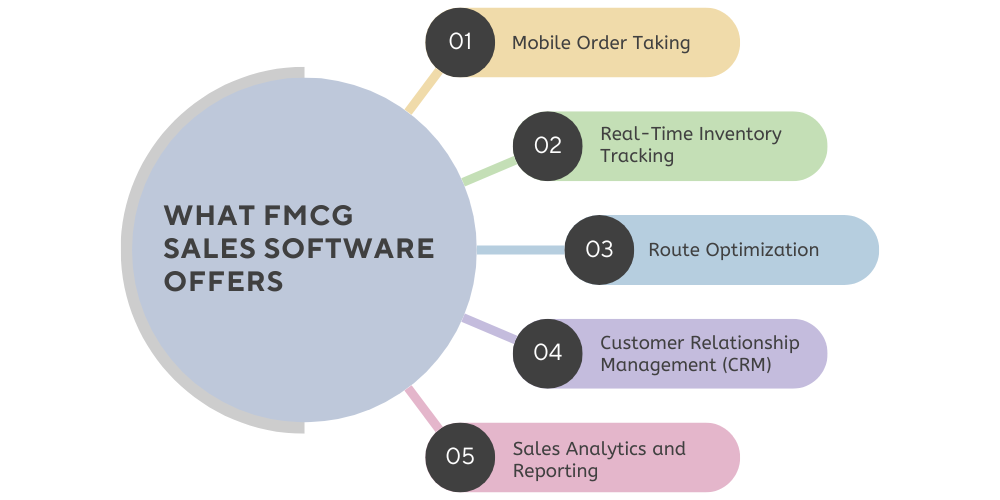
FMCG sales software is designed to automate and simplify important distribution tasks, especially for distributors that are small to medium-sized. It works like a multiplier, allowing businesses to get more done with the same group of people. This is what it usually gives you:
-
Mobile Order Taking:
A smartphone or tablet lets salespeople take orders right in the field. This cuts down on paperwork, speeds up processing, and gets rid of mistakes that happen when orders are entered by hand. The backend system gets orders right away, which speeds up delivery and makes customers happier.
-
Real-Time Inventory Tracking:
Always keep track of what you have in stock, what is running low, and what needs to be restocked. Distributors can avoid running out of stock and having too much stock by having accurate inventory data. This makes sure that working capital is used in the best way possible.
-
Route Optimization:
The software can suggest the most efficient routes for sales reps, minimizing travel time and fuel costs while maximizing the number of customer visits per day. This ensures that sales teams are productive and cover the entire territory effectively.
-
Customer Relationship Management (CRM):
Keep track of what customers like, what they've ordered in the past, and how often they interact with you. This lets distributors tailor their services to each customer, build stronger relationships with them, and get them to buy from them again.
-
Sales Analytics and Reporting:
Gain clear insights into sales trends, top-selling products, and the performance of your sales team. With detailed data at your fingertips, you can make informed decisions, identify growth opportunities, and quickly adjust your sales strategies. Advanced tools like automated reports and analytics help you track performance in real time and stay ahead of market changes.
By integrating these features, FMCG sales software transforms operations from reactive and manual to proactive, automated, and data-driven.
Benefits for Small and Mid-Size Distributors
The benefits of FMCG sales software extend beyond efficiency, they can directly impact revenue, customer satisfaction, and long-term growth.
-
Cost Savings Through Automation: Not only do manual processes take a long time, but they also cost a lot of money in terms of mistakes and labor. Automating order management, inventory management, and reporting lowers costs and stops mistakes that could cost a lot of money.
-
Increased Sales Opportunities: With features like mobile order management, route optimization, and real-time inventory tracking, sales reps can cover more outlets, capture orders instantly, and identify upsell opportunities on the go. Faster order processing ensures no missed sales, while smart route planning maximizes daily productivity and market coverage.
-
Improved Customer Satisfaction: Distributors can make sure that orders are correct and delivered on time by using digital order taking, accurate invoicing, and real-time stock visibility. Tracking customer data and using it to personalize sales helps build stronger relationships, which keeps customers coming back and grows the business through referrals.

-
Data-Driven Decisions: Distributors can learn a lot about how their products are doing, how sales are changing, and what their field teams are doing with automated reports and analytics and real-time sales dashboards. This helps people make better buying decisions, predict demand more accurately, and make quick changes to sales and marketing plans in the fast-paced world of FMCG.
-
Scalability: A robust field sales force automation platform allows small distributors to scale operations efficiently. Whether it’s onboarding more sales reps, expanding territories, or managing a larger product catalog, the system supports growth without increasing manual workload or operational complexity.
In short, FMCG sales software enables small distributors to compete with larger players by improving efficiency, accuracy, and customer engagement.
Is FMCG Sales Software Worth the Investment?
Many small and medium-sized distributors are hesitant to use FMCG sales software because they think it will be too expensive. When money is tight and every penny counts, it's normal to wonder if investing in technology is a good idea. But when you look at the hidden costs and inefficiencies of traditional manual processes, buying sales software quickly turns out to be a smart, long-term choice.
-
Time Savings: Manual tasks like writing orders, checking stock, and planning routes consume a large part of a sales rep’s day. With mobile order management, inventory management system and automated route optimization, FMCG sales software eliminates repetitive work. Sales reps can instantly place orders, access stock data, and follow optimized routes, allowing them to focus more on selling, building relationships, and closing deals. This directly improves field productivity and increases daily customer coverage.
-
Error Reduction: When you do things by hand, you often make mistakes when you enter orders, update inventory, and plan deliveries. FMCG sales software cuts down on human mistakes by a lot by letting you take orders digitally, sync inventory automatically, and check data in real time. Accurate orders and stock visibility that is always up to date make sure that deliveries are on time and that there are fewer returns. This builds trust with customers, makes your service more reliable, and boosts your brand's reputation in competitive FMCG markets.

-
Return on Investment (ROI): Even though you have to spend money up front, features like sales automation, faster order processing, and tracking field sales quickly pay off. Distributors often see a return on investment (ROI) within a few months because they save time, avoid costly mistakes, and let reps take more orders. Better order accuracy and higher sales efficiency help you quickly get your money back and make more money overall.
-
Long-Term Benefits: FMCG sales software helps businesses grow over time by providing automated reports and analytics, sales dashboards, and performance tracking. Distributors can make decisions based on data, find new opportunities, improve their inventory planning, and confidently enter new markets. This digital foundation lets small distributors grow their businesses without having to do more work or spend more money on operations.
How to Choose the Right FMCG Sales Software
Selecting the right FMCG sales software is one of the most important decisions a small distributor can make. The right tool doesn’t just streamline operations; it becomes a foundation for growth, efficiency, and better customer service. Here’s a detailed guide on what to look for:
-
Affordability:
For small distributors, money is often the most important thing. Find software that has all the important features you need, like taking orders on a mobile device, keeping track of inventory, optimizing routes, and reporting sales, but not any extras that raise costs. Many software companies now offer solutions that are specifically designed for small and medium-sized distributors. This means you can grow your business without paying for features you don't need. Keep in mind that the goal is to get the most out of your investment, not just the cheapest option.
-
Ease of Use:
Your team won't be able to use even the best software if they can't figure it out. Pick a system with an easy-to-use interface that doesn't need much training. A simple, easy-to-use design makes it easier for people to start using it quickly, makes fewer mistakes, and makes sales reps less likely to resist changing their workflow. Think about using platforms that have tutorials, help with onboarding, and quick customer service to help your team learn faster.
-
Mobile Access:
Your sales team is busy going to see clients, taking orders, and checking stock. Mobile-enabled software makes sure that they can do these things quickly from anywhere, without having to go back to the office or use paper forms. To keep reps productive even in places with poor internet access, look for features like offline access, mobile dashboards, and push notifications.
-
Integration Capabilities:
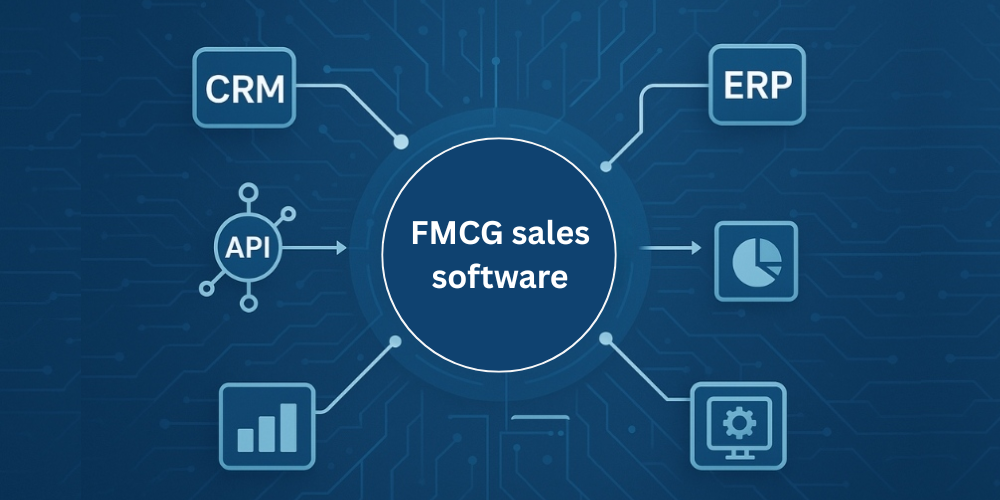
Your FMCG sales software should work perfectly with the systems you already have, like your ERP, accounting, or inventory management tools. Proper integration stops people from doing the same thing twice, cuts down on mistakes made by hand, and makes sure that data moves smoothly between departments. When all systems are linked, distributors can see all of their sales, inventory, and finances at once, which helps them make better decisions and respond more quickly to changes in the market.
-
Scalability and Flexibility:
Your business could grow quickly, even if you're a small distributor right now. Look for software that can grow with your business, whether that means hiring more salespeople, adding new product lines, or moving into new areas. Flexible solutions let you change features to fit your business needs, which makes sure they will work for a long time.
-
Support and Training:
Lastly, think about how much help the software provider gives. Good customer support, tutorials, and help with onboarding can make a big difference in how quickly your team gets used to the software and how well you use it to get results.
For a starting point, check out affordable FMCG sales software for growing distributors designed to help small teams manage sales efficiently and scale operations.
Conclusion
For small and medium-sized FMCG distributors, choosing the right sales software is no longer just a choice; it's a strategic move that can change how things work, make them more efficient, and help the business grow. FMCG sales software helps distributors focus on what really matters: growing their business and making customers happy. It does this by automating manual tasks, optimizing routes, tracking inventory in real time, and giving sales insights that can be acted on.
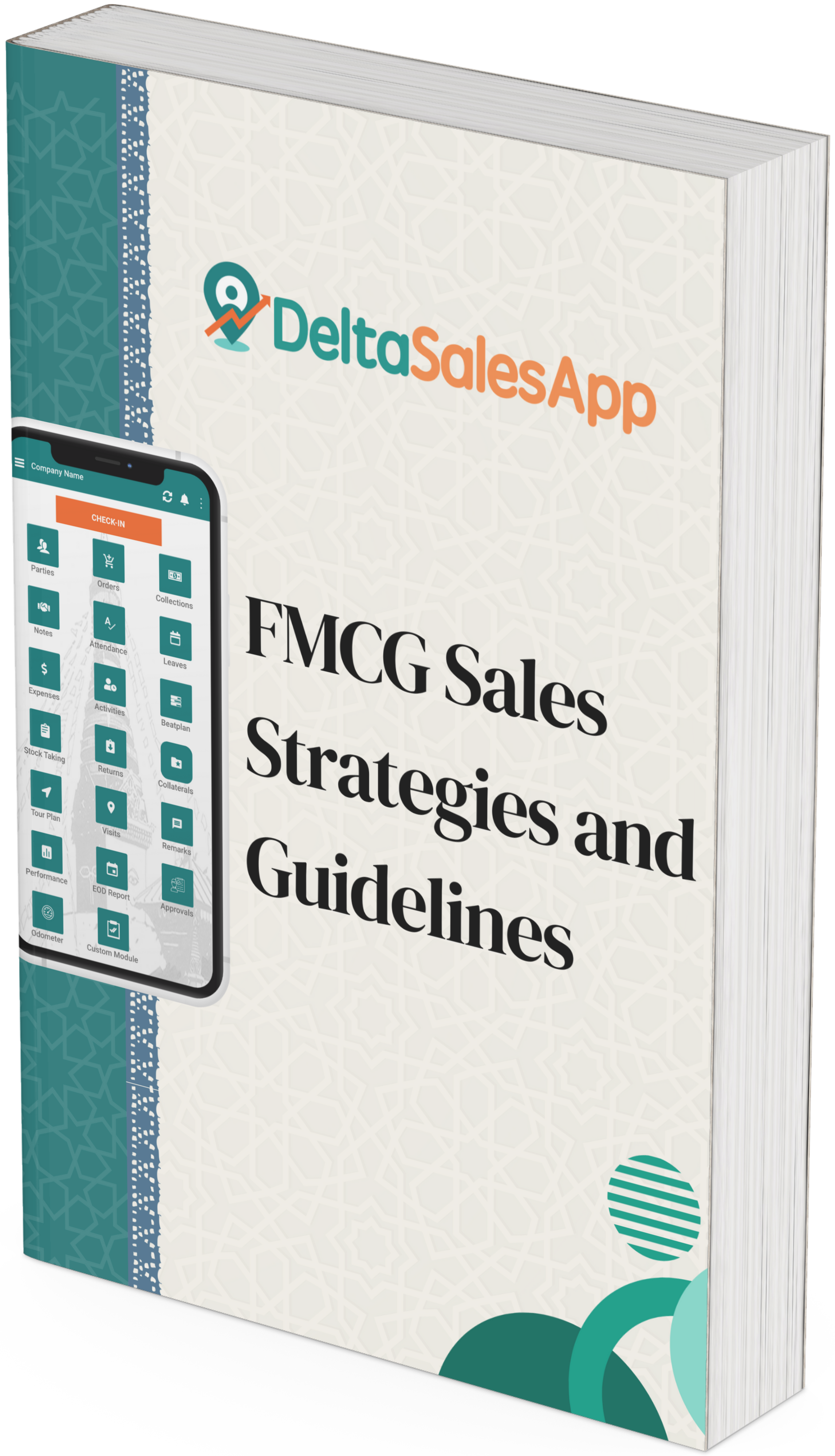
Buying software like Delta Sales App can help you cut down on mistakes, save time, and grow your business without adding extra costs. It gives small teams the tools they need to make better decisions and run their field operations more efficiently, which lets them compete with bigger distributors.
Don't wait if you want to take your distribution business to the next level and see the benefits for yourself. Schedule your free demo today and see Delta Sales App in action.