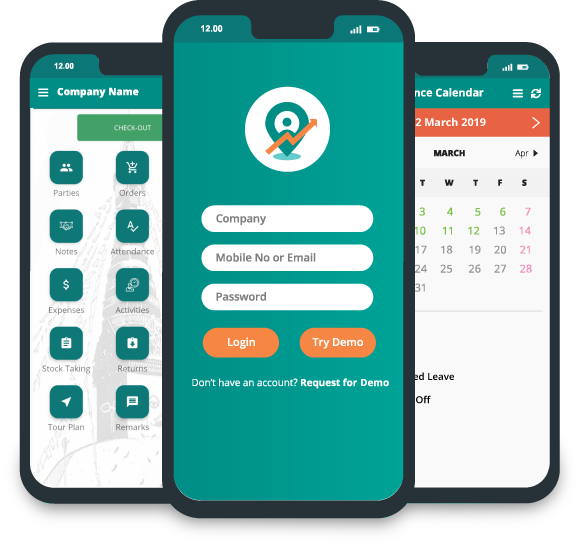

Mobile Sales Apps and CRM: Managing Customers and Sales Anytime, Anywhere

In today’s fast-paced business environment, sales teams cannot rely solely on desktop systems or traditional CRM databases. The demand for agility, instant communication, and real-time access to critical information has made mobility an essential aspect of modern sales strategy. Businesses are increasingly adopting mobile sales apps and mobile CRM solutions to ensure that their teams remain productive while on the go, enabling efficient management of customer relationships from anywhere.
With mobile solutions, sales professionals can work remotely, access live data, and respond to client needs instantly, empowering teams to close deals faster and make informed decisions without being tied to a physical office. A sales app simplifies your sales workflow, allowing teams to focus on closing deals rather than managing cumbersome processes.
What Are Mobile Sales Apps?
Mobile sales apps are specialized software applications designed to help sales professionals manage leads, monitor performance, and close deals directly from smartphones or tablets. Unlike conventional sales tools, these apps provide real-time capabilities that allow teams to update customer information, track orders, and manage tasks while in the field.
Core Functions of Mobile Sales Apps
-
Lead Capture & Management : Sales reps can instantly add new leads, update prospect information, and track engagement progress, ensuring no opportunity is missed while enabling timely and efficient follow-ups.
-
Route Planning & Scheduling : Route planning for field visits, minimize travel time, and plan daily schedules efficiently, helping sales professionals meet more clients and maximize productivity during their field operations.
-
Instant Reporting & Analytics : Access real-time sales dashboards and key performance metrics anytime, enabling data-driven decisions, monitoring team progress, and identifying trends for smarter sales strategy implementation across the organization.
-
Order Management : Efficient order management lets your sales team submit orders, generate invoices, and check inventory availability directly from the app. This order management system helps process transactions faster, reduce errors, and improve customer satisfaction on the go.
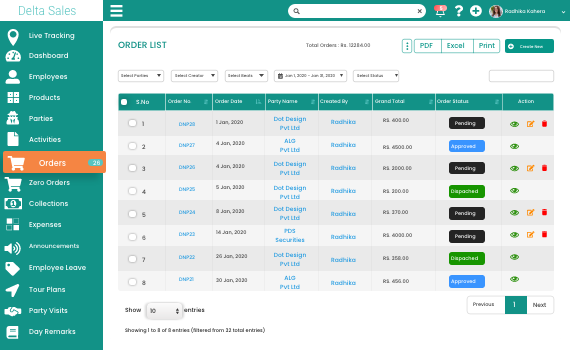
The mobility factor ensures that sales professionals can respond to customer inquiries quickly, log important activities in real-time, and stay connected to their teams even while working remotely.
Understanding Mobile CRM Solutions
A mobile CRM solution extends the power of traditional Customer Relationship Management (CRM) platforms to mobile devices. It allows sales reps to access customer data, track interactions, and manage workflows while being on the move.
When evaluating CRM options for your team, understanding Mobile CRM vs. Traditional CRM helps highlight the advantages of mobility, real-time access, and field-friendly features over desktop-bound systems.
Why Mobile CRM Solutions Are Essential
-
Centralized Customer Data : All client information is stored securely in one location, accessible anytime, ensuring sales teams have accurate, up-to-date records for informed decision-making and seamless customer interactions.
-
Automated Task Management : Schedule follow-ups, reminders, and alerts automatically, helping sales reps stay organized, never miss opportunities, and maintain consistent engagement with leads and customers.
-
Analytics & Insights : Gain real-time visibility into customer behavior, sales trends, and team performance, enabling data-driven decisions that improve productivity, forecast sales, and optimize overall business strategies.
By leveraging a mobile CRM solution, teams can make faster decisions, improve customer experiences, and maintain accurate, up-to-date records, regardless of their physical location.
How Sales App and Mobile CRM Together Transform Customer Management
When integrated, a sales app and a mobile CRM solution create a seamless ecosystem for managing customer relationships.
-
Sales reps can instantly update leads, check the status of orders, and monitor their performance metrics without returning to the office.
-
Managers gain a bird’s-eye view of team activities, helping them make data-driven decisions quickly.
-
The collaboration between sales app and mobile CRM ensures that everyone in the team has access to the most accurate information, reducing errors, avoiding duplicate work, and enhancing overall productivity.
For example, a field sales representative visiting multiple stores can log product availability, submit orders, and update customer interactions in real-time. The office team, in turn, can immediately see the updates, prepare invoices, or plan follow-up marketing actions, all within the same system.
Top Mobile Sales Apps for Growing Businesses provide these capabilities and more, making it easier to scale operations while maintaining high efficiency and customer satisfaction.
Key Features to Look for in Mobile Sales Apps
Choosing the right mobile sales apps is critical for maximizing ROI. Here are some essential features to consider:
-
Lead Management : Efficiently capture, track, and prioritize leads, ensuring sales teams never miss opportunities. Manage follow-ups and engagement progress seamlessly to boost conversion rates and pipeline effectiveness.
-
Customer Profiles : Access detailed customer histories, preferences, and interaction records in real-time. This allows personalized engagement, stronger relationships, and informed decision-making for every client interaction.
-
Offline Mode : Maintain full app functionality even without internet connectivity, enabling field sales teams to continue working efficiently in remote or low-network areas without delays.
-
Reporting & Analytics : Track key sales metrics, monitor KPIs, and generate actionable reports instantly. Gain insights to optimize strategies, measure team performance, and improve overall sales effectiveness.
-
Integrations : Seamlessly integrates the app to ERP, accounting, email, marketing, and other business tools. Streamline workflows, reduce duplication, and create a centralized system for all sales activities.
Selecting apps with these features ensures that your sales team has the right tools to stay productive, even in challenging environments. Free vs. Paid Sales Tracking Apps can be explored to determine which solution aligns best with your budget, team size, and feature requirements.
Benefits of Using Mobile CRM Solutions for Sales Teams
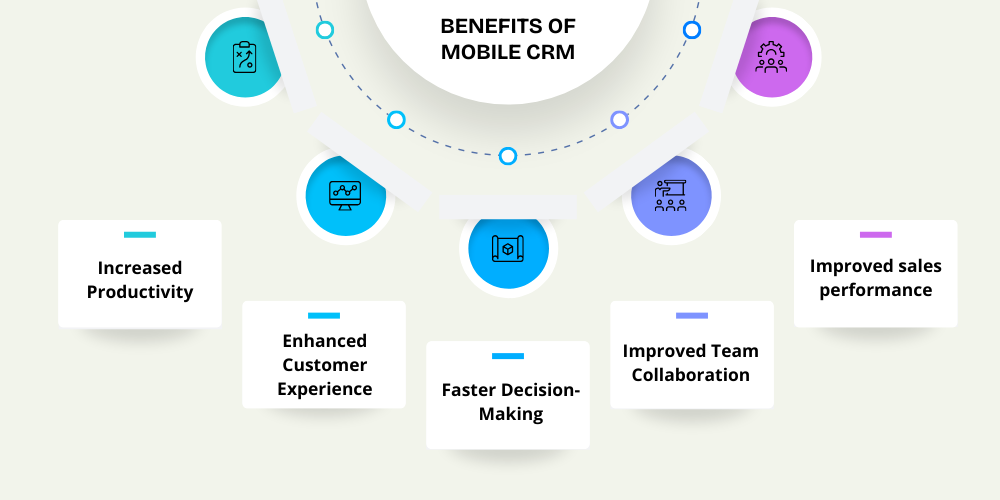
Implementing a mobile CRM solution can transform how your sales team operates. Key benefits include:
-
Increased Productivity : Sales reps can access and update customer information on the go, reducing repetitive office tasks and allowing more time to focus on high-value sales activities.
-
Enhanced Customer Experience : With real-time insights, sales teams can engage clients personally and proactively, delivering tailored solutions that strengthen relationships and improve overall customer satisfaction.
-
Faster Decision-Making : Managers can instantly analyze sales metrics, pipeline status, and team performance, enabling informed, timely decisions that optimize strategies and drive revenue growth.
-
Improved Team Collaboration
Centralized customer data ensures all team members have access to the same information, reducing miscommunication, improving coordination, and enhancing overall team efficiency.
Overall, mobile CRM solutions help businesses achieve higher efficiency, better customer retention, and improved sales performance.
Real-Time Sales Management: Why It Matters
Real-time sales management is a critical differentiator in today’s competitive market. With mobile sales apps and a mobile CRM solution, managers and executives gain instant visibility into sales operations.
-
Track Team Activities in Real-Time: Managers can monitor every sales rep’s activities, from lead updates to client meetings, ensuring complete transparency and quickly identifying progress and potential gaps.
-
Monitor Progress Against Targets: By comparing live performance metrics with set goals, managers can evaluate team productivity, track KPIs effectively, and ensure sales targets are consistently met or exceeded.
-
Identify and Address Bottlenecks Immediately: Sales leaders can spot challenges or inefficiencies as they occur, allowing prompt corrective action, streamlining processes, and maintaining a smooth workflow across the entire sales team.
This level of transparency ensures no opportunities are lost, improves accountability, and allows for rapid adjustments to strategies, keeping businesses ahead in a fast-moving sales environment.
Mobile Sales Apps for Field Teams and Remote Workforces
Field and remote sales teams often face challenges in connectivity, coordination, and timely data access. Mobile sales apps help overcome these issues by providing instant updates, allowing sales reps to log client visits, submit orders, and record feedback without delay. This real-time functionality ensures that every action taken in the field is immediately visible to managers and colleagues, keeping the team aligned and responsive to customer needs.
Additionally, mobile sales apps enable synchronized workflows, giving all team members access to the latest data regardless of their location. Efficiency tools such as route optimization, scheduling, and task management further enhance field productivity, allowing sales teams to focus on high-value activities. Whether your team is visiting multiple clients or working remotely, mobile sales apps ensure smooth collaboration, consistent performance, and improved overall sales efficiency.
Data Security & Syncing Across Devices
Security is a top priority when managing sensitive customer information. Modern mobile CRM solutions include:
-
Encrypted Data Storage: Protects sensitive customer and business information by keeping all data secure, preventing unauthorized access, and ensuring that critical records remain safe at all times.
-
Secure Syncing Across Devices: Maintains data consistency across multiple devices, allowing sales teams to access up-to-date information in real-time without compromising privacy or security.
-
Role-Based Access Controls: Limits access to sensitive information according to team roles, ensuring that only authorized personnel can view or modify critical customer and business data.
These security measures give businesses confidence that mobile sales apps and mobile CRM solutions can be safely used in the field or remotely, protecting valuable information while enabling seamless collaboration.
Integrations That Amplify Your Sales App Power
A sales app becomes more effective when integrated with other business tools:
-
Integrating a sales app with ERP systems allows seamless tracking of inventory levels, order processing, and product availability in real-time, which reduces errors and improves fulfillment efficiency.
-
Connecting to accounting software helps sales teams generate accurate invoices, track payments, and manage financial records effortlessly, ensuring timely billing while minimizing administrative overhead.
-
Integration with marketing platforms enables automated email campaigns, promotional activities, and customer segmentation, allowing sales teams to nurture leads efficiently and drive higher engagement.
Linking communication tools such as email and messaging apps ensures that sales representatives can instantly follow up with clients, send updates, and coordinate with team members without switching platforms.
Challenges Businesses Face Without Mobile CRM
Without a mobile CRM solution, organizations often encounter:
-
Delayed Updates: Without a mobile CRM solution, sales teams often rely on manual reporting, which creates time lags and slows down decision-making, leading to missed opportunities and inefficiencies.
-
Fragmented Customer Information: Leads and contacts are scattered across multiple systems, making it difficult for teams to access accurate, up-to-date customer data and provide personalized engagement.
-
Poor Collaboration: Lack of real-time access to information hampers teamwork, causing miscommunication, duplicated efforts, and slower response times across sales and support teams.
-
Missed Opportunities: Slow follow-ups and disconnected teams can result in lost clients, reduced revenue, and weaker customer relationships, putting businesses at a competitive disadvantage.
Adopting mobile CRM and sales apps directly addresses these pain points by centralizing data and enabling real-time access.
How to Choose the Right Mobile Sales App
Selecting the right mobile sales app requires a thoughtful approach. Here are essential considerations to help you find a solution that truly empowers your team:
-
Define your business and sales‑team requirements before you begin evaluating options, clearly outline what your field team needs, whether that’s order placement on‑the‑go, real‑time inventory sync, distributor management, or territory‑wise reporting.
-
Ensure offline functionality if your sales force operates in remote or low-connectivity regions, offline support is critical. The app should allow data entry and order placement offline then auto-sync when connectivity is restored.
-
Check integration capabilities a good mobile sales app should seamlessly integrate with your existing systems CRM, ERP, inventory or accounting tools to avoid duplicate data entry and ensure smooth operations.
-
Consider scalability for future growth. The app should not only meet your current needs but also adapt as your business expands, allowing more users, greater data volume, multiple territories, or advanced features like multi‑channel distribution.
-
Look for real‑time reporting & analytics, and dashboards for intelligent decision-making and quick reaction to field dynamics, opt for apps that offer clear dashboards, performance analytics, route tracking, and sales data visualization.
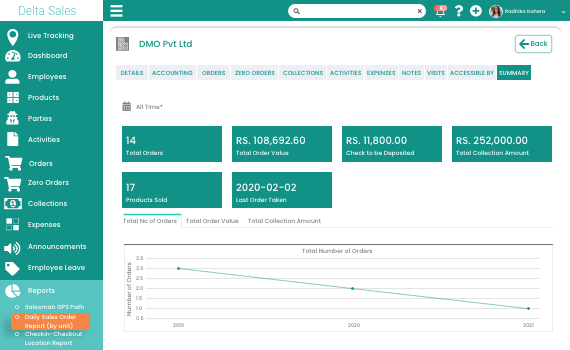
A well-chosen mobile sales app boosts productivity, reduces errors, and provides real-time insights. Delta Sales App offers field sales automation, offline order capture, seamless integrations, and powerful dashboards, ideal for scaling on-ground sales efficiently.
Implementation Tips for Fast Adoption
Rolling out a new mobile CRM or sales app effectively is crucial for quick adoption and maximum impact. Here’s how to ensure your team embraces the tool smoothly:
-
Provide thorough training
Equip your team with hands-on training sessions, tutorials, and support materials. Familiarity with the app’s features builds confidence and reduces resistance to change. -
Encourage consistent usage
Motivate your team through incentives, gamification, or recognition programs. Rewarding engagement helps establish regular usage as a habit. -
Monitor adoption and address issues quickly
Track usage metrics and gather feedback. Resolve technical or workflow challenges promptly to maintain momentum. -
Start with phased deployment
Roll out the app in stages by team, region, or department. This approach minimizes disruption and allows early adjustments based on feedback.
By following these tips, companies can ensure their mobile CRM solution is adopted quickly, empowering teams to work efficiently and maximize ROI.
Final Thoughts
In a world where sales happen anytime, anywhere, mobile sales apps and mobile CRM solutions are no longer optional, they are essential. By providing real-time insights, enhancing customer engagement, and boosting productivity, these tools empower sales teams to operate efficiently, regardless of location.
Investing in mobile sales technology is a strategic decision that enables businesses to stay competitive, grow revenue, and maintain strong customer relationships in an increasingly mobile-first world.
Ready to empower your sales team? Get Started with Delta Sales App Today!