
Predictive Sales in FMCG: How Brands Detect Problems Before They Happen
In the high-velocity world of Fast-Moving Consumer Goods (FMCG), the difference between a winning quarter and a costly write-off often comes down to one factor: timing.
For decades, FMCG brands operated in a reactive state. A stockout was only discovered when a customer complained. A failed promotion was identified after the campaign ended. A sudden dip in sales was analyzed weeks later, when it was already too late to fix.
But the market no longer waits for hindsight.
Today, leading FMCG brands are shifting from reactive damage control to predictive sales. They aren’t just tracking what happened yesterday; they are forecasting what will happen tomorrow and fixing problems before they impact revenue.
This isn’t science fiction. It’s retail execution intelligence applied to data. In this blog, we’ll explore how predictive sales works, why it’s becoming a necessity in FMCG, and how brands are using it to spot cracks in the foundation before the building collapses.
Define Predictive Sales in FMCG?
Predictive sales is the use of historical data, real-time field inputs, and AI-driven analytics to forecast future sales outcomes and identify potential risks in the supply chain or retail execution.
Unlike traditional sales analysis, which looks backward, predictive sales looks forward. It answers questions like:
-
Which stores are likely to run out of stock next week?
-
Which SKUs are losing velocity despite being in stock?
-
Which sales reps are at risk of missing their targets?
-
Which promotions are likely to underperform based on current shelf placement?
It transforms sales from a reactive reporting function into a proactive strategic weapon.
The High Cost of "Too Late"
To understand why predictive sales matters, you have to understand the cost of silence in the FMCG supply chain.
When a product is out of stock, the consumer doesn’t wait. 64% of shoppers will simply buy a competing brand. That lost sale is permanent. Worse, if the out-of-stock occurs during a high-visibility promotion, the brand loses not just the sale, but the marketing investment tied to that promotion.
Historically, brands only discovered these issues during weekly sales meetings or monthly business reviews. By then, the data was cold and the revenue was already gone.
Predictive sales eliminates this lag. It flags a slow-moving SKU or a potential stockout while there is still time to act. This is the difference between a replenishment order placed today and an empty shelf tomorrow.
How Predictive Sales Identifies Problems Early
Predictive sales isn’t magic. It relies on the convergence of three specific data layers:
-
Historical Sales Velocity
Every product has a natural rhythm. Some sell faster on weekends, others during payday weeks. Predictive models analyze months of sales data to establish a "healthy" baseline for each SKU at each store.
When a product deviates from this rhythm for example, selling 30% less than usual on a Tuesday the system flags it immediately. It might be a pricing error, a competitor activity, or a merchandising issue. The cause is unknown, but the risk is identified instantly.
-
Field Intelligence
Sales data tells you what is happening. Field data tells you why.
A product might show zero sales despite being in stock. A traditional report would show a blank. Predictive sales, however, correlates that blank with data from the field. Perhaps the product was moved to the bottom shelf. Perhaps the point-of-sale display was never set up.
By integrating field visit data with sales data, brands move from "We have a problem" to "We have a problem at Store 452 because the promo shelf talker is missing."
-
External Variables
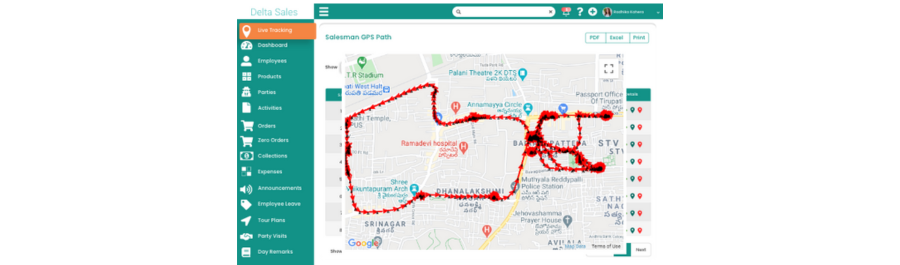
Weather, local events, and even traffic patterns influence FMCG sales. Advanced predictive models factor in these external signals. If a sudden heatwave is forecasted, the system predicts a surge in beverage demand and alerts the supply chain to sales route tracking additional stock before the shelves empty.
From Detection to Correction: The Predictive Workflow
Detecting a problem is useless unless it triggers action. Predictive sales succeeds when it is embedded into the daily workflow of field teams and managers.
Here is how a predictive alert typically flows through a modern FMCG operation:
Step 1: Alert Triggered
The system detects that SKU "A" in Region "B" is selling 40% below its forecasted rate despite full inventory availability. It generates a "Risk of Sales Decay" alert.
Step 2: Root Cause Assignment
The alert is routed to the territory sales manager. The system suggests possible causes based on recent field visit data (e.g., "No visit recorded in 5 days" or "Competitor launched display unit").
Step 3: Field Action
The manager assigns a task to the merchandiser to visit the store within 4 hours. The task includes specific instructions: "Check shelf position and competitor activity for SKU A."
Step 4: Correction & Verification
The merchandiser arrives, identifies the issue (product was buried behind a larger pack), corrects the facing, and uploads a "before and after" photo.
Step 5: Impact Measurement
The system tracks sales velocity post-correction. Within 24 hours, the product returns to its forecasted sales rate. The revenue loss was contained to two days instead of two weeks.
This workflow turns sales from a lagging indicator into a leading indicator. You are no longer measuring failure; you are preventing it.
The Role of Sales Velocity in Predicting Risk
One of the most underutilized metrics in FMCG is sales velocity, the rate at which inventory management leaves the shelf.
Most brands track inventory in absolute terms: "We have 50 units in Stock A." But predictive sales tracks inventory in temporal terms: "At the current sales rate, Stock A will be empty in 3.2 days."
This subtle shift changes everything.
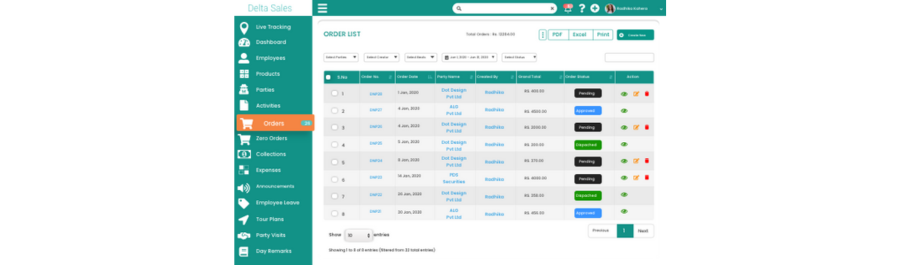
A store with 20 units of a slow-moving SKU is fine. A store with 20 units of a top-selling SKU is a crisis waiting to happen. Predictive models calculate the "time-to-empty" for every SKU at every store and prioritize replenishment based on urgency, not just volume.
This prevents the common mistake of shipping more stock to stores that are already overstocked, while ignoring stores that are about to run dry.
Predicting Promotion Failures Before the Campaign Ends
Promotions are the lifeblood of FMCG, but they are notoriously difficult to measure in real time. A display might be scheduled to launch on Monday, but if it actually goes live on Wednesday, the brand loses two days of peak visibility.
Predictive sales solves this by comparing planned execution with actual execution in near real-time.
If a store is flagged as "Promo Live" in the system but shows zero uplift in sales after 24 hours, the model raises a flag. It doesn't wait for the post-promotion report. It alerts the field manager immediately to verify compliance.
This allows brands to recover a broken promotion while the marketing spend is still active, rather than explaining the failure weeks later.
Preventing Sales Rep Attrition Through Predictive Analytics
The best predictive sales strategies don’t just focus on products they focus on people.
High-performing FMCG brands are now using predictive models to identify which sales representatives are at risk of missing targets or leaving the company entirely.
By analyzing visit frequency, order conversion rates, and route efficiency, the system can detect subtle declines in performance weeks before they become critical. A rep who consistently visits stores but fails to secure orders may need additional training. A rep whose travel time has increased significantly may have an inefficient route.
Proactive coaching, triggered by predictive analytics, retains talent and protects revenue simultaneously.
Breaking Down Data Silos for True Prediction
The biggest barrier to predictive sales is not technology, it is organizational silos. Sales data lives in the ERP. Inventory data lives in the warehouse system. Field sales tracking data lives in a separate app. Promotion data lives in the marketing department. Prediction requires convergence.
Brands that succeed in predictive sales create a single source of truth where order data, inventory levels, activity tracking, and promotional calendars coexist. This unified layer enables the machine learning models to identify correlations that humans would miss.
For example, a brand might discover that sales in a specific region dip every time a particular merchandiser is on leave. The correlation isn't obvious, but the data reveals it. Once identified, the brand can implement cross-training to ensure coverage gaps don't impact revenue.

The Shift from "What Happened" to "What Will Happen"
The evolution of FMCG analytics can be summarized in four stages:
-
Descriptive: What happened? (Last month’s sales report)
-
Diagnostic: Why did it happen? (Root cause analysis)
-
Predictive: What will happen? (Forecasting and risk detection)
-
Prescriptive: What should we do about it? (Automated task generation)
Most brands are stuck between stages 1 and 2. They are excellent at explaining past failures but powerless to stop them.
Predictive sales moves brands into stages 3 and 4. It doesn't just tell you that a store underperformed last month; it tells you which stores are likely to underperform next month and what specific actions will prevent it.
Conclusion
In FMCG, the difference between a market leader and a follower is no longer just product quality or brand strength. It is the ability to see around corners.
Implementing a predictive sales model requires more than just ambition, it requires the right infrastructure to collect, analyze, and act on field data in real time. This is where technology bridges the gap between strategy and execution.
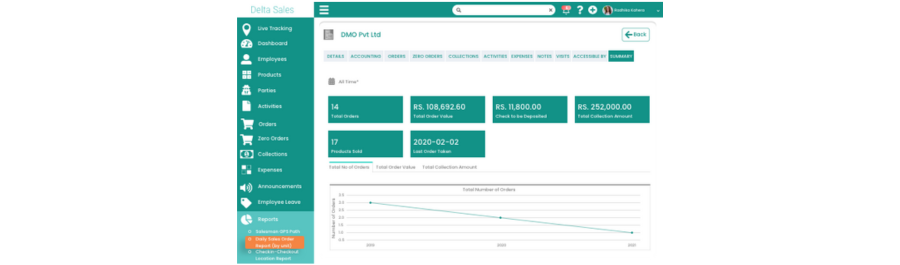
For FMCG brands looking to move from reactive reporting to proactive prevention, Delta Sales App provides the foundation. By unifying field visit data, real-time inventory visibility, and automated task generation, it enables brands to detect anomalies before they become lost revenue. Whether it’s identifying a sudden drop in sales velocity or flagging a store at risk of stockout, Delta Sales App turns raw data into preemptive action. Brands using this approach don’t just report on problems, they solve them before anyone else knows they existed.
Schedule Your Personalized Demo and See how Delta Sales App empowers your team with predictive insights, real-time alerts, and proactive field execution.