
Primary vs. Secondary Sales: What Every FMCG Company Should Know

In the FMCG industry, the efficiency of your distribution pipeline determines whether your product reaches retailers on time, stays fresh on shelves, and remains consistently available to consumers. From manufacturing units to neighborhood kirana stores, every movement of goods reflects a combination of supply planning, demand generation, and execution capability.
As part of FMCG Sales Automation: How Top Brands Are Digitizing Their Distribution and Field Sales, leading companies are rethinking how they track sales movement and distributor performance across markets.
At the heart of these operations lie two crucial metrics: Primary Sales vs Secondary Sales. Although they are often discussed together, they answer very different questions about your business’s performance. Companies that understand the difference between these two and track them properly gain superior visibility, reduce stock issues, plan better, and build more resilient sales strategies.
This blog dives deep into the complete picture of Primary vs. Secondary Sales, explores their impact on FMCG functions, discusses the challenges in tracking them, and highlights why digital tools like Delta Sales App are transforming visibility and decision-making for FMCG leaders.
Understanding the Flow of FMCG Sales
Before exploring the differences, it’s important to understand the standard FMCG distribution chain:
-1766398315.png)
-
Primary Sales occur between manufacturer and distributor.
-
Secondary Sales occur between distributor and retailer.
-
Tertiary Sales involve consumer purchases at the retail level.
Each layer tells a different story about demand, inventory movement, and execution quality. The better a company monitors these stages, the more accurately it can forecast and respond to market signals.
What Are Primary Sales?
Primary Sales represent the transfer of goods from the manufacturer to distributors. This is the very first point where the company books revenue and pushes inventory into the market.
Key Characteristics of Primary Sales
-
Transaction Level: Manufacturer → Distributor
This reflects the movement of goods out of the company warehouse and into distributor warehouses, serving as the first step in the sales chain. -
Purpose: Channel stocking and fulfilling distributor requirements
Companies use primary sales to ensure the channel has enough stock to meet expected demand, especially before seasonal peaks or promotions. -
Driven By: Production cycles and internal targets
Often, primary ordering patterns reflect the company’s sales goals rather than real retail demand.
Why Primary Sales Matter
-
Helps manufacturers meet quarterly and monthly revenue goals: Primary sales provide immediate revenue recognition, enabling companies to hit financial targets, measure performance, and plan future growth confidently.
-
Ensures distributors carry the right levels of inventory for their territories: Strong primary sales indicate healthy stock flow, helping distributors maintain adequate inventory levels and avoid shortages or overstock situations in their regions.
-
Supports large-scale production planning and supply chain efficiency: Consistent primary sales data guides manufacturing forecasts, ensuring factories produce the right quantities and the supply chain remains efficient and balanced.
What Are Secondary Sales?
Secondary Sales refer to the movement of goods from distributors to retailers. Unlike primary sales, this metric reflects the actual demand in the market and the effectiveness of field sales operations.
Key Characteristics of Secondary Sales
-
Transaction Level: Distributor → Retailer This shows how much stock genuinely moves to retailers, indicating real market demand.
-
Purpose: Meeting consumer needs across different outlets Secondary sales help maintain continuous product availability and prevent out-of-stock situations.
-
Driven By: Retail orders and field sales rep performance. This data reveals how well the sales team is covering routes, generating demand, and building retailer relationships.
Why Secondary Sales Matter
-
Reflects real market absorption and product demand: Secondary sales reveal how much stock actually moves to consumers, providing an accurate picture of true market demand and product acceptance across territories.
-
Shows which SKUs, locations, and retailers are performing well: They highlight the exact SKUs, outlets, and regions driving the highest sales, helping FMCG teams understand performance patterns and optimize their retail focus.
-
Helps companies identify coverage gaps and route-level opportunities: Secondary data uncovers underserved areas, missing outlets, and route inefficiencies, enabling companies to strengthen distribution reach and capture untapped market potential.
-1766397941.png)
Primary vs. Secondary Sales: Key Differences
Nature of Transaction
-
Primary: Primary sales represent goods billed from company to distributor, indicating shipment volume and reflecting how much stock enters the distribution channel initially.
-
Secondary: Secondary sales capture product movement from distributor to retailers, providing a clearer measure of real market penetration and actual demand at the retail level.
Demand Orientation
-
Primary: Primary sales are often driven by sales targets or push strategies, sometimes influenced by schemes, incentives, or internal production and billing priorities.
-
Secondary: Secondary sales are entirely pull-driven, reflecting genuine retailer orders generated through actual consumer demand and consistent product movement in the market.
Visibility Level
-
Primary: Primary sales offer complete visibility through ERP or internal systems, making them easy to track, audit, and analyze with reliable company-controlled data.
-
Secondary: Secondary sales visibility is limited without digital tools, relying heavily on distributor systems or sales rep reporting, often causing data gaps or delays.
Impact on Inventory
-
Primary: Primary sales can sometimes create excess stock at distributor points when pushed aggressively, increasing risks of overstocking, expiry, or slow movement.
-
Secondary: Secondary sales ensure inventory clears based on real buying patterns, helping maintain balanced stock levels and preventing wastage or near-expiry situations.
Performance Indicator
-
Primary: Primary sales highlight the sales team’s ability to meet shipment targets by moving products into the distribution channel efficiently and on schedule.
-
Secondary: Secondary sales reflect real market execution by showing retailer coverage, product acceptance, and how effectively the brand moves through the retail ecosystem.
Why FMCG Companies Must Track Both Primary and Secondary Sales
Tracking only one side of the sales pipeline provides an incomplete picture. Let’s explore why both are indispensable.
-
Ensures Accurate Demand Planning: Primary sales reveal how much stock is being pushed into the channel, while secondary sales reflect true consumer-level pull. Together, they help companies predict production needs more accurately, avoid understocking, and optimize manufacturing schedules.
-
Prevents Channel Overstocking: A mismatch where primary sales rise but secondary sales remain stagnant exposes slow-moving inventory in the channel.
Tracking both helps companies take corrective action early, preventing expiry risks and reducing distributor financial pressure. -
Helps Detect Market Issues Early: Weak secondary sales often signal problems such as retailer dissatisfaction, aggressive competitor activity, or weak consumer demand. By monitoring both metrics, FMCG companies can quickly identify the root cause and deploy timely interventions.
-
Supports Balanced Target Setting: Primary targets based solely on shipments can lead to unrealistic expectations and channel stuffing. Secondary trends help set practical, demand-aligned goals that motivate teams while ensuring healthy inventory movement.
-
Strengthens Distributor Relationships: When secondary sales increase, distributors enjoy better stock rotation, smoother cash flow, and reduced credit burdens. Consistent tracking of both sales types builds trust and enables companies to support distributors with data-driven decisions.
-(3)-1766382056.png)
-
Improves Retail Penetration: Secondary data shows which outlets are ordering frequently, where gaps exist, and how well routes are performing.
These insights empower FMCG companies to expand coverage, enhance visibility, and strengthen in-store execution.
Role of Tertiary Sales
Tertiary sales represent the final stage of the FMCG sales cycle, capturing product movement from retailers to end consumers. While primary and secondary sales highlight how goods flow through the distribution network, tertiary sales provide the most accurate picture of real consumer purchase behavior, brand preference, and repeat demand. However, measuring tertiary sales is challenging in most markets due to limited POS digitalization, fragmented retail structures, and inconsistent reporting. Because of these limitations, FMCG companies often prioritize building strong visibility and accuracy in primary and secondary sales first, using them as reliable indicators for demand planning and market performance.
Common Challenges FMCG Companies Face in Tracking Sales
-
Manual or Delayed Distributor Data: Many distributors still maintain sales records using spreadsheets or manual ledgers, which often leads to errors and delayed reporting. This slows down decision-making and prevents companies from responding quickly to market changes or stock movement issues.
-
Limited Retail-Level Visibility: Without a proper sales automation system, FMCG companies cannot track SKU-wise retailer orders, outlet performance, or coverage quality. This lack of precision makes it difficult to identify demand patterns, fast-moving SKUs, or underserved market segments.
-
No Real-Time Stock Tracking: Companies often do not have accurate visibility of distributor closing stock, aging stock, or near-expiry products in real time. As a result, stock imbalances occur, leading to lost sales opportunities, wastage, and inefficient replenishment planning.
-
Fragmented Reporting Tools: Primary sales sit inside ERP systems, while secondary data often arrives via Excel sheets, WhatsApp messages, or phone calls. Such fragmentation creates misalignment, complicates analytics, and prevents leadership from getting a unified view of sales health.
-
Route-Level Blind Spots: Without digital tracking, companies have no clarity on which routes are performing well or which require immediate improvement. This leads to poor coverage planning, missed outlets, and inconsistent execution across different markets.
-
Resistance From Distributors: Distributors frequently hesitate to share data due to concerns about transparency, performance scrutiny, or the extra workload required. This reduces data accuracy and limits the company’s ability to manage supply chain efficiency and stock movement effectively.
How Both Sales Tracking Enhances FMCG Strategy
-
Better Sales & Distribution Strategy: Clear visibility into both primary and secondary sales ensures smarter stock deployment, balanced distributor workloads, and more realistic target setting.
It also helps companies allocate resources efficiently and design market strategies based on actual ground-level performance. -
Improved Supply Chain Planning: Accurate demand signals from secondary sales help companies reduce stock-outs and avoid unnecessary overproduction. This leads to a more responsive and cost-efficient supply chain that aligns closely with real consumption patterns.
-
Enhanced Performance Measurement: By analyzing both sales types, companies can easily identify which regions, products, or distributors require support or corrective actions. This data-driven approach improves accountability and helps teams focus efforts where they will create the most impact.
-
Stronger Promotion Effectiveness: Secondary sales reveal how well trade schemes and retailer promotions are performing at the ground level. This helps companies refine their promotional strategies, target the right outlets, and maximize ROI on marketing spends.
-
Improved Financial Efficiency: Better stock rotation, driven by accurate secondary tracking, reduces expiry-related losses and prevents capital from being locked in slow-moving inventory. As distributors experience improved ROI and healthier cash flow, trust and trade relationships grow significantly stronger.
Digital Transformation: The Key to Accurate Primary & Secondary Sales Tracking
Modern FMCG businesses are moving toward digital sales and distribution platforms for real-time visibility.
-
Better Sales & Distribution Strategy: Clear visibility of primary and secondary sales enables smarter stock deployment, balanced distributor workloads, and achievable targets. It empowers companies to allocate resources effectively and create strategies grounded in real field performance.
-
Improved Supply Chain Planning: Accurate secondary demand signals help reduce stock-outs and prevent excess production. This results in a more responsive, cost-efficient supply chain that stays aligned with genuine consumption patterns across markets.
-
Enhanced Performance Management: Analyzing both sales types highlights regions, products, or distributors needing support or intervention. This data-driven clarity improves accountability and directs team efforts toward areas offering the highest growth potential.
-(5)-1766397836.png)
-
Stronger Promotion Effectiveness: Secondary sales show how well schemes and trade promotions perform at retailer level. These insights help refine promotional plans, ensure targeted execution, and generate better returns on marketing investments.
-
Improved Financial Efficiency: Accurate secondary tracking enhances stock rotation, reducing expiry losses and freeing capital tied in slow-moving items. Stronger distributor profitability and smoother cash flow ultimately reinforce healthier, long-term trade relationships.
Conclusion
Understanding Primary vs. Secondary Sales is critical for any FMCG company aiming to build a strong distribution network, maintain healthy stock rotation, and respond quickly to market demand. Primary sales reveal how effectively products move into the channel, while secondary sales reflect true market demand and execution quality. Together, they create a complete picture of business performance.
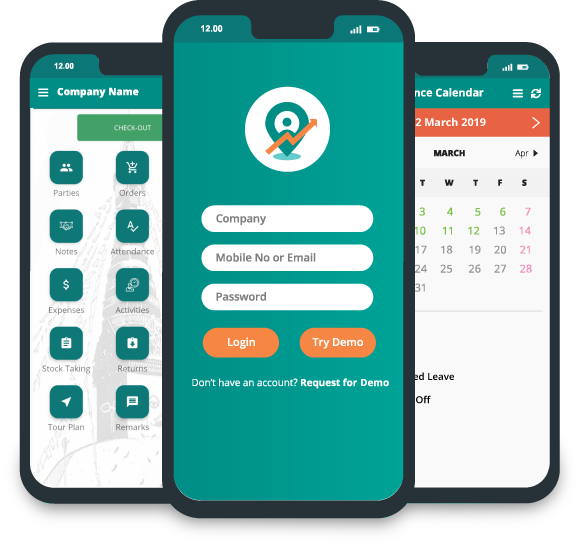
However, achieving unified visibility without digital tools is challenging. This is where Delta Sales App becomes a game-changer. With powerful features for field sales automation, order taking, beat planning, real-time tracking, and distributor stock visibility, Delta Sales App helps FMCG companies track both primary and secondary sales seamlessly.
It eliminates manual gaps, brings accuracy to reporting, and empowers leadership with real-time insights resulting in better decisions, faster growth, and stronger channel relationships.
If your FMCG business wants to upgrade to modern, data-driven sales and distribution visibility, Delta Sales App is the complete solution you need.