
What Is Retail Execution Consistency and How Can Brands Maintain It Across Territories?

A customer walks into two stores carrying the same brand and gets two completely different experiences. In one, the products are well stocked, correctly displayed, backed by the latest promotional materials, and priced right. In the other, placement is off, promotional materials are missing, and some items are sitting out of stock.
Same brand. Same products. So why does the execution look so different? This is one of the biggest challenges a brand runs into as it expands across cities, regions, distributors, and territories. Keeping a consistent presence at every outlet gets a lot harder once hundreds or thousands of stores are being managed by different field teams.
That's where retail execution consistency matters. It means making sure the standards a brand sets for product availability, merchandising, pricing, promotions, shelf placement, and in-store presentation actually hold up across the whole retail network. Local markets might need some flexibility here and there, but the core brand experience shouldn't change depending on which territory a customer happens to be in.
In this blog, we will explore what retail execution consistency means, why execution often varies across territories, the key elements brands need to standardize, and practical ways to maintain consistent retail execution as the business grows.
What Is Retail Execution Consistency?
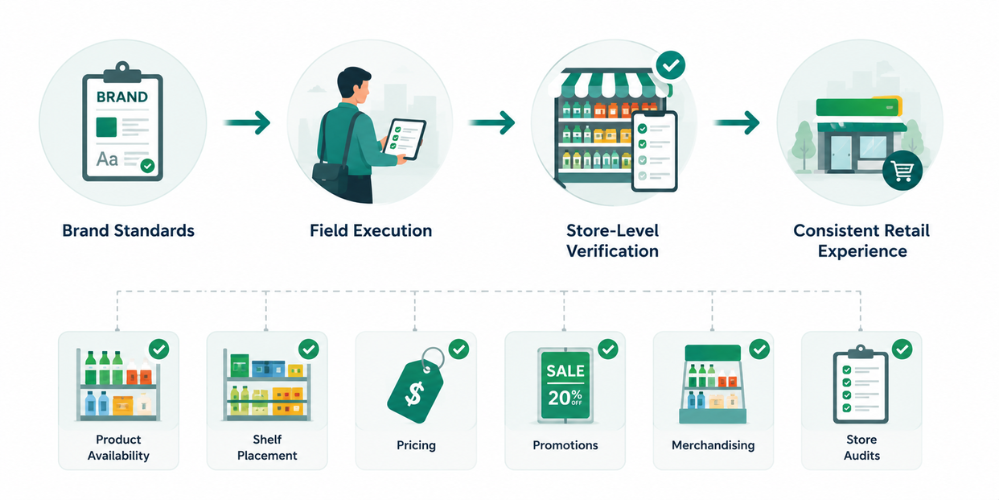
Retail execution consistency means a brand's retail standards and sales activities actually get implemented the same way across its whole network of outlets. That covers things like product availability and stock levels, shelf placement and visibility, planogram compliance, merchandising standards, promotional displays, pricing and discount compliance, point-of-sale material placement, retailer order collection, visit frequency, competitor monitoring, and store audits.
Take a beverage company running across several territories. Management might require a specific shelf position for its products, promotional displays in selected stores, and new campaigns rolled out within a set window. If the sales team in Territory A follows all of that and Territory B only does some of it, the company doesn't have consistent execution, no matter how good the guidelines look on paper. Having the guidelines is the easy part. Actually knowing whether the field is following them is the part that's hard.
Why It Matters for Multi-Territory Brands
Retail execution is crucial for businesses operating in various territories. While a small sales team can easily keep track of a few outlets through direct communication, the challenge grows as the company expands. Managers start relying more on field representatives, distributors, sales supervisors, and reporting systems, which can lead to execution gaps. For instance, one territory might showcase products beautifully, while another struggles with stock on the shelves. Some sales reps may conduct thorough store audits, while others provide only basic information. A promotional campaign might launch swiftly in one area but face delays in another. These inconsistencies can impact brand identity and sales results. Effective retail execution allows brands to:
-
Keep a recognizable presence in stores
-
Ensure products are readily available
-
Standardize how products are displayed
-
Track compliance with promotions
-
Spot stores or territories that need improvement
-
Foster accountability among field teams
-
Evaluate performance across different regions
-
Make informed decisions based on store-level insights
Moreover, it strengthens the connection between company plans and real-world outcomes. For brands with extensive field sales operations, achieving this clarity through spreadsheets, phone calls, and manual reports becomes increasingly challenging. Adopting a structured approach to field sales management, retail audits, territory management, and monitoring execution can help maintain consistency as the business grows.
Why Retail Execution Becomes Inconsistent Across Territories
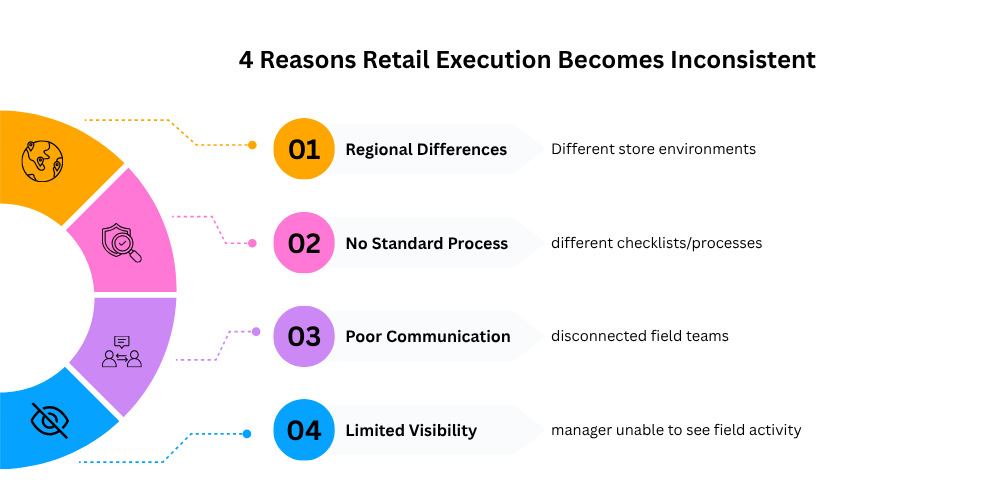
A clear retail strategy is just the starting point; it doesn't ensure that everything will run smoothly in practice. When a strategy is put into action, various elements come into play that can affect its execution. Factors like changing market conditions, the unique practices of field teams, gaps in communication, and a lack of visibility can lead to the same brand standards being applied inconsistently across different regions.
-
Regional and Cultural Differences
No two territories are exactly alike. Retailer expectations, customer behavior, store formats, purchasing patterns, and local competition all shift from region to region, and reps often adjust their approach to match, which is genuinely useful for local market needs. The problem is when that local adaptation starts eating into core brand standards instead of just working around local quirks. Brands need to be clear about what can flex by territory and what has to stay the same everywhere, no exceptions.
-
Lack of Standardized Processes
When different territories run their own version of store visits, merchandising checks, order collection, or audits, keeping execution consistent gets genuinely difficult. One rep might thoroughly check product availability, shelf placement, pricing, and promotional displays, and another might just log that they stopped by. Standardized SOPs, checklists, and audit procedures fix this by getting field teams working from the same basic process, so the store-level data actually means something when it's compared across territories.
-
Poor Field Team Communication
Execution goes inconsistent fast when field teams don't get updated instructions on time. Pricing changes, new promotions, product launches, and merchandising requirements often get communicated through a mix of channels, and that's exactly where information gets missed or goes stale before it reaches the right person. A centralized communication and reporting process fixes that by making sure every rep across every territory gets the same instructions and knows exactly what needs to happen at the store level.
-
Limited Real-Time Visibility
Managers can't personally check on every outlet, especially once a sales team spans multiple cities or regions. When the business runs on spreadsheets, phone calls, or reports that show up late, a manager might not find out whether a store actually got visited or a promotion actually ran until it's already old news. Real-time field visibility fixes that gap, giving managers timely information on store visits, execution activity, and territory performance so problems get caught and fixed faster instead of surfacing weeks later.
Key Elements of Consistent Retail Execution
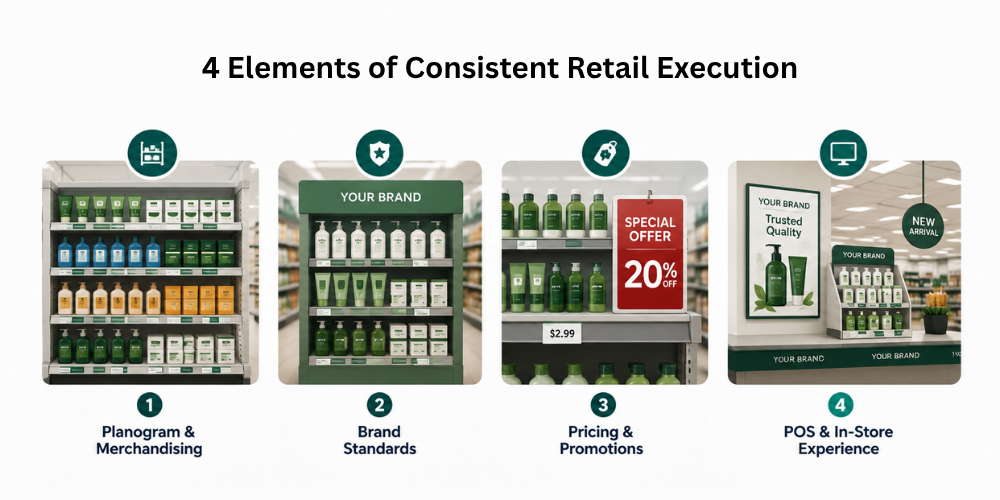
Retail execution consistency doesn't come from a rep just showing up regularly. It takes clear standards for what's actually supposed to happen during and after each visit. Product placement, merchandising, pricing, promotions, and the whole in-store experience, each piece needs to be clearly defined and actually watched, not just assumed. The key elements of consistent retail execution are as follows:
-
Standardized Planograms and Merchandising Guidelines
Planograms and merchandising guidelines give sales teams a clear picture of how products should be positioned and displayed in-store. Standardize those guidelines, and a rep in one territory has the same reference point as one on the other side of the country for shelf placement, visibility, display arrangement, and promotional positioning. That's what stops every territory from quietly developing its own merchandising style and keeps the brand's presence looking the same wherever a customer walks in.
-
Uniform Brand Standards
A consistent brand experience comes down to holding the same core standards wherever a customer runs into the brand: product presentation, shelf organization, promotional materials, branding elements, and display quality. Clear guidelines make it obvious to field teams what's expected on every visit, and they give managers something concrete to check the brand against, no matter which territory they're looking at.
-
Consistent Pricing and Promotions
Pricing and promotional execution shape how retailers and customers actually perceive the brand. If a promotion runs properly in one territory and half-heartedly in another, or retailers end up following different pricing rules, that creates confusion and drags down whatever the campaign was supposed to accomplish. Clear promotional instructions paired with regular field-level checks are what keep agreed pricing, discounts, schemes, and promotions actually consistent instead of drifting territory by territory.
-
Reliable POS and In-Store Experience
Point-of-sale materials and the overall store environment play an important role in product visibility. Posters, displays, wobblers, stands, shelf strips, and other POS materials need to be placed correctly and maintained throughout the campaign. Consistent monitoring of these elements helps brands identify missing or poorly maintained materials and ensures that customers receive a similar in-store experience across different outlets and territories.
How Brands Can Maintain Retail Execution Consistency Across Territories
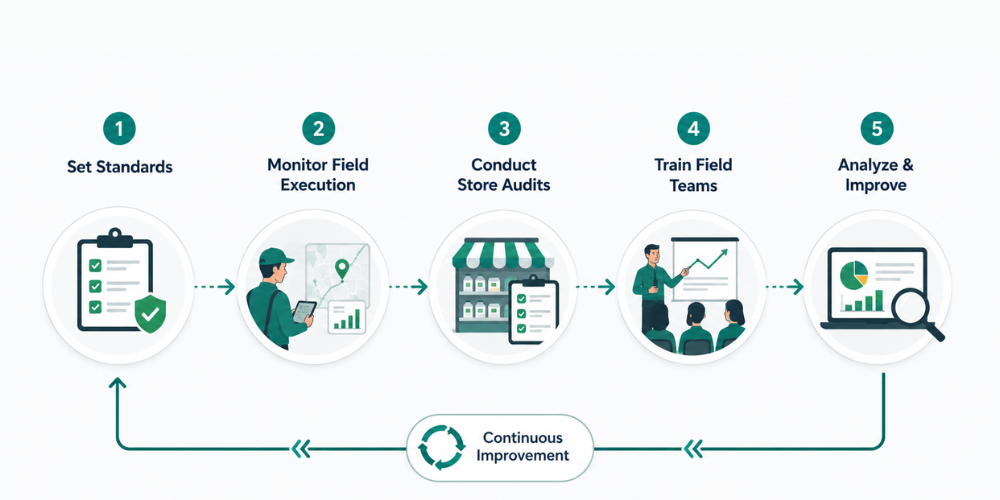
To achieve consistent retail execution, it's crucial to go beyond just setting brand guidelines. Brands must implement systems and processes that empower field teams to adhere to these standards while providing managers with visibility into store operations. As the number of territories and retail locations expands, it's vital to blend standardized procedures with ongoing monitoring, team training, and dependable field data to ensure everything runs smoothly.
-
Set Clear Execution Standards and SOPs
The first step is to clearly define what successful retail execution looks like. Brands should create simple SOPs covering important activities such as store visits, merchandising, product placement, promotional execution, pricing checks, stock verification, and reporting. When the same procedures are followed across territories, field representatives have less room for confusion, and managers can evaluate execution against a common standard.
-
Use Retail Execution Software for Real-Time Monitoring
Effectively managing retail execution across various regions can be quite challenging, especially when relying on spreadsheets or slow manual reports for information. Retail execution software offers a solution by enabling field teams to capture store activities in real-time during their visits. This not only enhances the visibility for managers into field operations but also fosters a more connected and responsive approach. Key details like store visits, GPS locations, product availability, orders, photographs, audit results, and field activities can be consolidated into a single system. This centralization simplifies the process of spotting execution gaps and taking timely corrective actions, ultimately leading to improved performance and better support for the teams in the field.
-
Conduct Regular Store Audits and Compliance Checks
Regular store audits are how a brand actually verifies its standards are being followed, not just assumed. Instead of leaning solely on sales reports, managers can run structured audit checklists checking product availability, shelf placement, promotional displays, pricing, and POS materials. Comparing audit results across territories is what surfaces the locations or teams whose compliance keeps falling short and where a manager needs to actually step in.
-
Train and Empower Local Field Teams
Even the best retail execution process falls apart if reps don't actually understand what's expected of them. Regular training gets everyone on the same page about merchandising standards, promotional requirements, visit procedures, and reporting. At the same time, local reps still need room to respond to genuine market differences without bending the brand's core standards out of shape. Getting that balance right, clear guidelines plus real local judgment, is what actually produces consistent execution.
-
Use data and analytics to keep improving
Retail execution data earns its keep when it's actually used to spot patterns, not just filed away for a report nobody reads twice. Managers can look at territory-wise store visits, audit results, product availability, promotional compliance, sales activity, and field performance together to catch the execution problems that keep coming back. Those insights are what feed into adjusting visit frequency, sharpening training, refining merchandising, or giving extra support to a specific territory. Done consistently, that turns store-level data into an ongoing improvement loop instead of a report someone glances at once.
Benefits of Strong Retail Execution Consistency
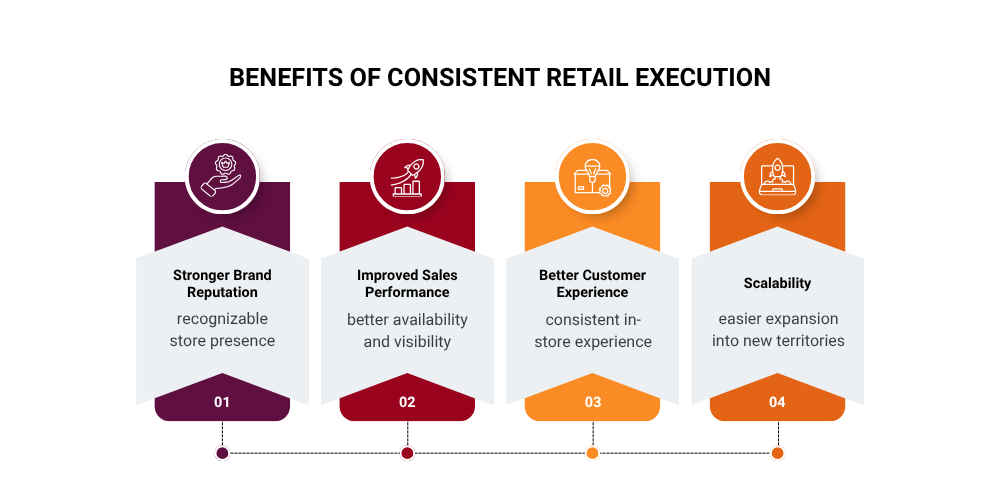
Consistent retail execution goes beyond merely organizing store displays; it fosters a genuine connection between a brand's sales strategy and the real experiences customers have in the marketplace. By ensuring that products, promotions, pricing, merchandising, and other execution activities are harmonized across different regions, businesses can cultivate stronger relationships with their customers and enhance the effectiveness of their field operations.
A central visual could show a retail network expanding from a few stores to many stores while maintaining the same execution standards.
-
Stronger Brand Reputation
Customers tend to feel a stronger connection to a brand when they experience a seamless and familiar atmosphere across various stores and locations. Thoughtful product placement, cohesive branding, dependable promotions, and attractive displays contribute to a welcoming and trustworthy image. As this consistency builds over time, it deepens the relationship between customers and retailers, enhancing their overall perception of the brand.
-
Improved Sales Performance
Better retail execution has a direct line to sales: products stay more visible, available, and easy for customers to actually buy. Follow the merchandising standards, run promotions right, and catch stock issues fast, and there are just fewer sales walking out the door lost. Consistent execution also gives sales managers something concrete to see: which territories and outlets are doing well and which ones actually need help.
-
Better Customer Experience
Customers expect products, prices, promotions, and the general brand experience to be reasonably consistent from one store to the next. Big gaps between outlets create confusion, especially when a promotion or a display doesn't show up the way it was supposed to. Keeping store-level execution consistent is what gives customers a predictable, reliable experience no matter which outlet they walk into.
-
Scalability Across New Markets
A standardized retail execution process makes expansion easier because brands do not have to develop completely new operating methods for every territory. Clear SOPs, merchandising guidelines, store audit processes, and field sales management practices can be replicated as the business enters new markets. With the right technology and reporting structure, managers can maintain visibility over growing retail networks without relying entirely on manual supervision.
How Delta Sales App Helps Brands Maintain Retail Execution Consistency
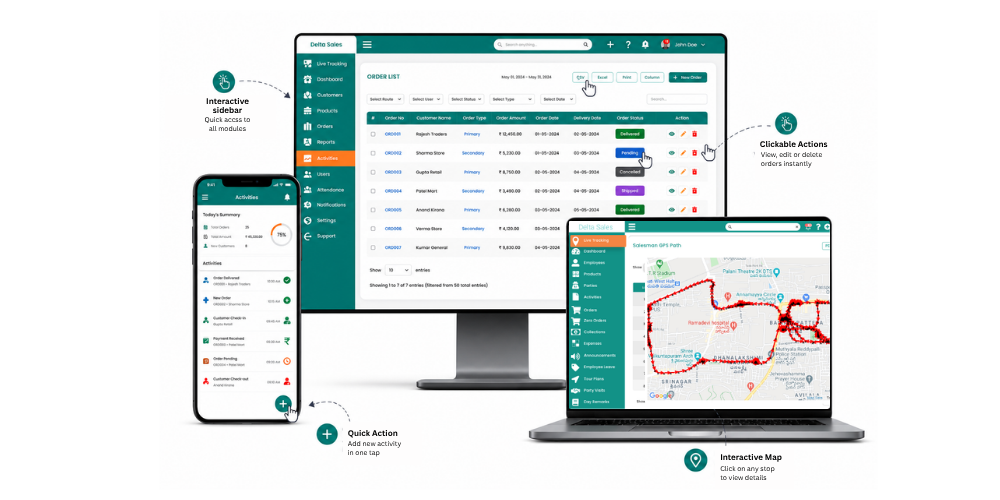
Maintaining consistent retail execution across multiple territories becomes easier when managers can connect store-level activities with centralized field sales data. Instead of relying only on manual updates, businesses can use Delta Sales App to organize field activities, monitor store visits, manage sales operations, and analyze territory-level performance from one system.
-
Real-Time Field Visibility Across Territories
When sales representatives are out in various cities and territories, it's crucial for managers to have a clear view of their field activities. The Delta Sales App offers a GPS-based tracking system and field activity monitoring, allowing managers to easily see both planned and completed visits. This insight helps them understand how their teams are performing across different areas. With this level of visibility, it's simpler to spot missed visits, unusual behaviors, or regions that might need a bit more attention.
-
Automated Store Audits and Compliance Tracking
To ensure consistent execution, businesses need to understand the dynamics within retail outlets, going beyond just confirming a representative's visit. The Delta Sales App enhances store visits by enabling businesses to gather essential field data, including orders and necessary visit images. This fosters a more uniform method for monitoring at the store level, equipping managers with valuable insights to assess execution and pinpoint compliance issues.

-
Route and Beat Plan Optimization
A reliable retail presence hinges on connecting with the right stores at the right times. The Delta Sales App empowers businesses to streamline retailer visits through effective beat and route planning tailored to specific territories and sales goals. By implementing a well-organized beat plan, companies can minimize missed opportunities, enhance retailer engagement, and provide field representatives with a straightforward daily itinerary to navigate.
-
Centralized Reporting and Analytics Dashboard
When field data from various regions is gathered in different spreadsheets or reports, it can be a real challenge to compare performance effectively. The Delta Sales App simplifies this process by consolidating field information into a single, easy-to-navigate reporting platform. This allows managers to effortlessly review sales activities, store visits, orders, attendance, field productivity, and overall territory performance. With these valuable insights at their fingertips, managers can spot execution gaps, make meaningful comparisons between territories, and base their decisions on real, actionable field data.
Conclusion
Retail execution consistency matters for any brand trying to hold a strong, reliable presence across multiple territories. As a retail network grows, differences in local markets, field team habits, communication, and reporting all open up execution gaps that manual processes alone rarely catch in time.
The answer isn't erasing every difference between territories. It's setting clear execution standards while still leaving local teams room to respond to their own market conditions. Standardized SOPs, merchandising guidelines, store audits, training, and regular performance reviews build the foundation for that. Technology is what makes managing it at scale actually feasible: real-time field visibility, structured store visits, beat planning, GPS tracking, and centralized reporting give managers a real read on what's happening across the network and let them close execution gaps faster instead of finding out weeks later.
For brands running distributed sales teams and large retailer networks, Delta Sales App brings field activities, store visits, territory management, beat planning, and sales reporting into one platform, helping build a more structured, consistent approach to retail execution across territories.
If your business wants better retailer coverage, clearer field execution visibility, and more consistent sales operations across territories, book a free demo of Delta Sales App and see how it can support your team.
FAQs
Q1: What is retail execution consistency?
Retail execution consistency is a brand's ability to hold the same standards, merchandising, pricing, promotions, and in-store presentation across every outlet, region, and territory it operates in. It means a customer gets the same brand experience, the same product availability, and the same visual presentation at the point of sale, whether they're shopping in a metro city or a small town on the other side of the map.
Q2: Why is retail execution consistency important for brands?
Retail execution consistency is essential for safeguarding a brand's reputation and fostering enduring trust with customers and retail partners alike. Inconsistent execution across different regions can create confusion, lead to product shortages, or weaken the brand's image. Conversely, maintaining a consistent approach enhances customer loyalty, boosts sales performance, and facilitates confident expansion into new markets.
Q3: What causes inconsistent retail execution across territories?
Inconsistent execution usually comes down to a mix of things: no standardized SOPs, weak communication between headquarters and the field, real differences between regional markets, and no real-time visibility into what's happening at the store level. Without a centralized way to check compliance, even a well-planned strategy can fall apart once it actually hits the ground in different territories.
Q4: How do brands measure retail execution consistency?
Brands usually measure execution consistency through a handful of KPIs: planogram compliance, on-shelf availability, visit frequency, audit scores, and promotional compliance across stores. Tracking those over time, and comparing them territory by territory, is what surfaces execution gaps early enough to actually do something about them before they start hurting sales or the brand's image.
Q5: How does Delta Sales App help maintain retail execution consistency?
Delta Sales App helps brands hold retail execution consistent by giving real-time visibility into field team activity, automating store audits with photo-based verification, and optimizing route and beat plans for better territory coverage. Its centralized reporting dashboard lets brand managers watch compliance and performance across multiple regions from one place, which makes it a lot easier to catch inconsistencies early and hold every territory to the same standard.