
Route Sales Software: Optimize Your Field Distribution
In today’s fast-moving and highly competitive distribution landscape, businesses that rely on field sales and direct store delivery models face increasing pressure to operate with speed, precision, and accountability. As distribution networks expand and customer expectations rise, managing routes, sales activities, inventory, and deliveries manually becomes not only inefficient but also unsustainable. Companies across FMCG, food & beverage, pharmaceuticals, and consumer goods sectors are recognizing that traditional field operations can no longer keep pace with modern market demands.
This blog explores how route sales software transforms field distribution, the key challenges it addresses, essential features to look for, and the tangible business benefits it delivers for B2B decision-makers.
What is Route Sales Software
This is where Route Sales Software plays a critical role. By digitizing and automating route planning, sales execution, inventory tracking, and reporting, route sales software empowers organizations to optimize field distribution, improve sales productivity, and ensure consistent service levels across markets. More than just a technology upgrade, it represents a strategic shift toward data-driven, agile, and scalable distribution operations.
Understanding Route Sales in Modern Distribution
Route sales is a core distribution model in FMCG route sales, where sales representatives follow predefined routes to sell, deliver, and collect payments directly from retail outlets, ensuring rapid replenishment and strong retailer relationships.
-
Route sales as a core distribution model: Route sales involves predefined routes where sales representatives sell, deliver products, and collect payments directly from retailers, enabling frequent replenishment and strong customer relationships in fast-moving industries.
-
Industry relevance and operational complexity: This model is widely used in FMCG and food distribution due to immediate fulfillment needs, but managing routes, inventory, and sales activities adds significant operational complexity.
-
Limitations of manual route sales processes: Without digital tools, teams rely on paper orders and spreadsheets, causing data inaccuracies, poor visibility, delayed reporting, and inconsistent execution across field operations.
-
Scaling challenges in traditional route sales: As businesses grow, manual inefficiencies multiply, increasing operational costs, reducing profitability, and negatively impacting service quality and customer satisfaction.
-
Role of Route Sales Software in modernization: Route Sales Software centralizes route planning, sales execution, inventory tracking, and performance monitoring, providing real-time visibility and control over field distribution operations.
-
Improved efficiency and control through automation: By digitizing field processes, organizations enhance sales productivity, reduce errors, and empower teams to execute routes more efficiently while management gains actionable operational insights.
Key Challenges in Traditional Route Sales Operations
Before understanding the value of route sales software, it is important to recognize the common pain points faced by organizations relying on manual or semi-digital processes.
-
Lack of real-time operational visibility
Managers lack timely insight into field activities, inventory movement, and order status, limiting proactive decision-making and delaying issue resolution across route sales operations. -
Inefficient and static route planning
Traditional route planning ignores real-time traffic, outlet priorities, and demand changes, leading to longer routes, increased fuel costs, wasted selling time, and missed revenue opportunities. -
Manual order processing and invoicing
Paper-based order taking and invoicing consume valuable selling time, increase administrative workload, and raise the likelihood of errors and delayed billing. -
Reduced sales representative productivity
Excessive manual tasks limit the time representatives spend engaging customers, reducing overall productivity, route coverage, and sales effectiveness. -
Inventory inaccuracies and discrepancies
Without real-time stock tracking, businesses face overstocking, stock-outs, and higher returns, negatively impacting service levels, working capital, and customer satisfaction. -
Limited scalability of traditional processes
As distribution networks grow, manual and semi-digital systems fail to scale efficiently, amplifying operational inefficiencies and increasing costs across route-based sales models. -
Need for an automated route sales solution
These challenges highlight the necessity for structured route sales software that centralizes planning, execution, inventory control, and performance monitoring for consistent and efficient operations.
How Route Sales Software Optimizes Field Distribution
Route sales software transforms field distribution by digitizing core operational processes and connecting field teams with central systems in real time. This integration ensures that every sales visit, order, delivery, and transaction is accurately captured and instantly available for analysis.
-
Digitization of core field operations
Route sales software digitizes sales visits, orders, deliveries, and transactions, connecting field teams with central systems in real time for accurate data capture and faster analysis. -
Optimized and dynamic route planning
The software designs efficient routes using geography, outlet priority, delivery frequency, and historical sales data, dynamically adjusting routes as conditions change to maximize efficiency. -
Improved sales execution in the field
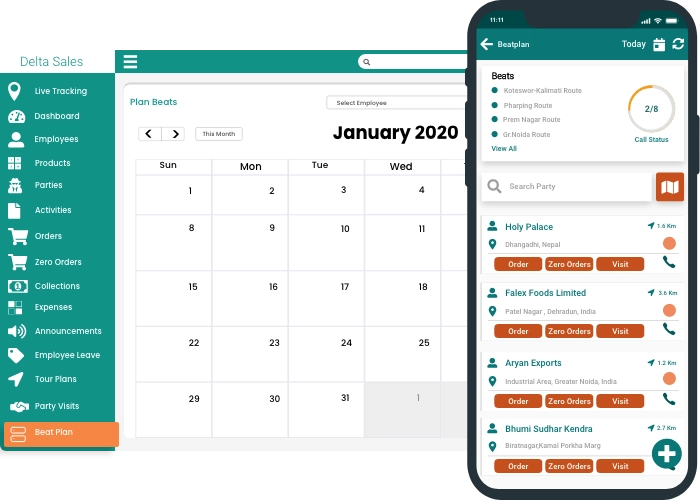
Sales representatives access customer data, pricing, promotions, and product availability on mobile devices, enabling accurate order booking, instant invoicing, and improved customer interactions. -
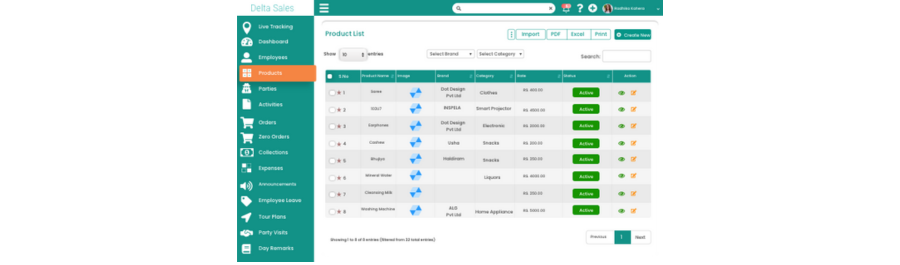
Real-time inventory visibility and control
Live tracking of inventory at van and warehouse levels reduces discrepancies, prevents stock-outs or overstocking, and ensures optimal inventory availability across distribution operations.
-
Integration with van sales operations
Organizations align route sales platforms with Van Sales Management Software to maintain operational consistency and efficiency across pre-sales, route selling, and direct store delivery (DSD) models.
Operational Excellence in Route Sales Execution
-
Importance of sales productivity in route distribution
Sales productivity directly influences revenue growth in route-based models, but improving it requires clear visibility into field activities, performance metrics, and execution quality. -
Real-time monitoring and accountability
Route sales software enables real-time tracking of sales visits, order values, product mix, and outlet coverage, ensuring transparency and accountability without excessive supervision. -
Reduced administrative workload for sales teams
Mobile order booking, instant invoicing, and automated reporting minimize paperwork, allowing sales representatives to spend more time selling and strengthening customer relationships. -
Higher morale and revenue per route
By eliminating manual tasks, sales teams operate more efficiently, improving job satisfaction while increasing sales effectiveness and revenue generated per route. -
Performance analytics and actionable insights
Advanced analytics help managers identify high-performing routes, underperforming territories, and growth opportunities, supporting targeted coaching and continuous performance improvement. -
Alignment of incentives with performance data
Accurate performance metrics enable fair incentive programs, motivating sales teams, reinforcing accountability, and fostering a results-driven sales culture across field operations.
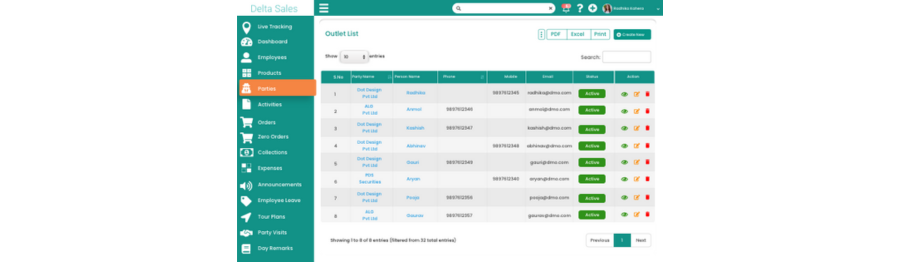
Digitizing Inventory & Order Management for Route Sales
Integration with a Sales Order Management App ensures faster order processing, accurate billing, and unified workflows across field and digital sales channels.
-
Importance of effective inventory control
In route sales operations, accurate inventory control is essential to maintain service levels and manage costs as stock moves frequently between warehouses, vans, and retail outlets. -
Challenges of manual inventory tracking
Manual tracking methods fail to keep pace with rapid inventory movement, leading to inaccuracies, stock mismatches, and reduced reliability in route-based distribution environments. -
Real-time inventory visibility with route sales software
Route sales software provides live inventory tracking, ensuring accurate stock availability and enabling sales representatives to confirm orders confidently without delivery shortfalls. -
Reduced delivery errors and missed commitments
By validating stock availability before order confirmation, businesses minimize partial deliveries, prevent missed commitments, and improve overall service reliability. -
Streamlined field order management
Orders captured in the field are instantly synchronized with central systems, accelerating fulfillment, billing, and reconciliation while eliminating duplicate data entry. -
Unified order processing across sales channels
Integrating route sales platforms with Sales Order Management App creates a centralized order workflow, ensuring consistency, faster processing, and improved visibility across digital sales order management and field sales channels.
Enhancing Retailer Satisfaction Through Route Sales Automation
Customer experience is a decisive factor in competitive distribution markets. Retailers expect consistent deliveries, accurate invoicing, and responsive service.
-
Customer experience as a competitive differentiator
In highly competitive distribution markets, superior customer experience drives success, with retailers expecting consistent deliveries, accurate invoicing, and responsive, dependable service from suppliers. -
Reliable visit schedules and timely deliveries
Route sales software ensures structured visit planning and on-time deliveries, improving service consistency and helping retailers plan inventory more effectively. -
Accurate invoicing and transparent transactions
Instant invoice generation during visits reduces billing errors, minimizes disputes, and accelerates payment cycles, enhancing trust between distributors and retail partners. -
Personalized retailer engagement
Access to customer purchase history and preferences enables sales representatives to provide tailored recommendations, relevant promotions, and more meaningful retailer interactions. -
Faster issue resolution and service responsiveness
Real-time data access allows sales teams to resolve pricing, inventory, or delivery issues quickly, improving responsiveness and overall retailer satisfaction. -
Stronger relationships and brand presence
Consistent service reliability builds retailer trust, increasing order frequency, strengthening loyalty, and enhancing brand visibility and influence at the point of sale.
Real-Time Visibility and Performance Reporting
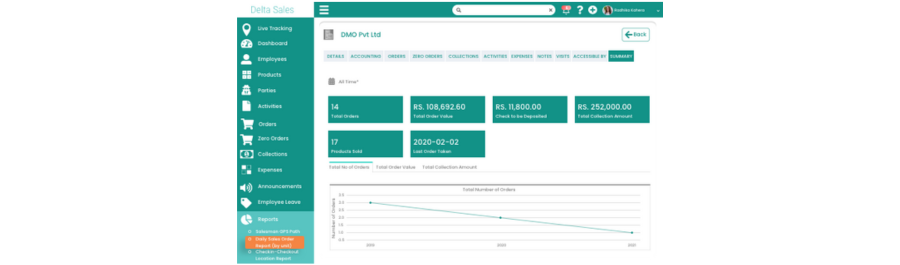
One of the most powerful advantages of route sales software is its ability to convert operational data into actionable insights. Every field transaction generates data that can be analyzed to optimize performance.
-
Transforming operational data into actionable insights
Route sales software captures data from every field transaction, enabling organizations to analyze performance trends and optimize sales execution, inventory management, and route efficiency. -
Real-time dashboards and comprehensive reporting
Managers access live dashboards and detailed reports covering sales trends, route performance, inventory turnover, and representative productivity for informed operational and strategic decisions. -
Support for strategic planning and forecasting
Accurate, real-time data enables better demand forecasting, territory optimization, and resource planning, supporting long-term growth and scalable distribution strategies. -
Elimination of delayed and incomplete reporting
Automated data capture removes reliance on manual, delayed reports, allowing leadership teams to make timely, confident decisions based on reliable and current information. -
Enabling sustainable growth through data-driven decisions
Data-driven insights help organizations scale distribution operations efficiently, minimizing risks while improving operational agility and competitive responsiveness. -
Role of automation in FMCG competitiveness
Industry focus increasingly highlights Why Van Sales Automation Is Essential for FMCG Brands, as automation strengthens decision-making speed, execution consistency, and overall market competitiveness.
Scaling Route Sales Operations Without Operational Complexity
As businesses grow, route sales operations become more complex. New territories, expanded product lines, and larger field teams demand systems that can scale without adding operational friction.
-
Increasing complexity with business growth
As route sales operations expand into new territories with more products and larger field teams, operational complexity increases, requiring scalable systems to maintain efficiency and control. -
Scalable system architecture for expansion
Route sales software supports growth by allowing easy addition of routes, users, products, and pricing structures without disrupting existing workflows or field operations. -
Cloud-based scalability and centralized control
Cloud-enabled platforms provide remote access, centralized data management, and flexible scaling, ensuring consistent control across expanding distribution networks. -
Faster entry into new markets
Scalable route sales solutions enable businesses to onboard new territories quickly, standardize execution, and accelerate market entry with minimal operational friction. -
Adaptability to changing demand patterns
Flexible systems help organizations adjust routes, inventory, and sales strategies rapidly in response to seasonal demand shifts and evolving customer requirements. -
Confident support for long-term growth initiatives
By eliminating system limitations, route sales software empowers leadership teams to pursue expansion strategies confidently while maintaining operational stability and service quality.
End-to-End Integration for Route-Based Distribution
For maximum impact, route sales software must integrate seamlessly with existing enterprise systems such as ERP, accounting, and CRM platforms. Integration ensures data consistency across departments and eliminates manual data entry.
-
Seamless integration with enterprise platforms
Route sales software integrates with ERP, accounting, and CRM systems, ensuring smooth data flow, operational alignment, and consistent information across all business functions. -
Elimination of manual data entry
Automated data synchronization removes repetitive manual entry, reducing errors, saving administrative time, and improving data accuracy throughout sales, finance, and inventory systems. -
Holistic operational visibility
Direct data flow into financial and inventory platforms provides a unified view of sales performance, stock movement, and financial outcomes across the entire organization. -
Improved forecasting and financial accuracy
Integrated systems enhance demand forecasting, revenue tracking, and financial reporting accuracy, supporting better budgeting and strategic planning decisions. -
Stronger supply chain coordination
Aligned data across systems improves coordination between sales, warehouse, and finance teams, enabling smoother replenishment, inventory planning, and order fulfillment processes. -
Compliance and audit readiness
Accurate, traceable transaction records support regulatory compliance and simplify audits by maintaining consistent documentation across all integrated enterprise systems.
Ensuring Data Security in Route Sales Operations
With increased digitization comes the responsibility to protect sensitive business and customer data. Route sales software incorporates security measures such as role-based access control, encrypted data transmission, and secure authentication.
-
Protection of sensitive business and customer data
Route sales software safeguards sensitive data through role-based access controls, encrypted data transmission, and secure authentication, minimizing the risk of unauthorized access or data breaches. -
Role-based access and controlled permissions
User access is defined by roles and responsibilities, ensuring employees view only relevant data, improving security while maintaining operational efficiency across field and management teams. -
Encrypted data transmission and secure access
Encryption protocols protect data exchanged between field devices and central systems, ensuring secure communication and preventing data interception during mobile or remote operations. -
Simplified regulatory and policy compliance
Automated documentation and standardized workflows help organizations comply with industry regulations and internal governance requirements with minimal manual effort. -
Audit trails and transaction traceability
Built-in audit logs record every transaction and system activity, enabling transparent traceability and simplifying internal audits and compliance verification processes. -
Increased confidence in digital transformation
Strong security and compliance frameworks reassure decision-makers, reducing risk concerns and enabling confident investment in route sales digitization initiatives.
Choosing the Right Route Sales Software
Selecting the right route sales software requires careful evaluation of business needs, operational complexity, and long-term objectives. Key considerations include ease of use, mobile functionality, customization options, and scalability.
-
Assessment of business needs and objectives
Organizations must evaluate distribution complexity, field operations, and long-term goals to ensure the selected route sales software aligns with current requirements and future growth plans. -
Ease of use and mobile functionality
User-friendly interfaces and strong mobile capabilities are essential to ensure rapid adoption by field teams and efficient execution of route sales activities. -
Customization and scalability capabilities
The software should support configurable workflows, pricing, and routes, allowing businesses to scale operations without system limitations or process disruptions. -
Real-time visibility and reporting strength
Prioritize solutions offering real-time reporting and detailed analytics to support informed decision-making, performance tracking, and operational transparency across field operations. -
Seamless integration with existing systems
Route sales software must integrate smoothly with ERP, CRM, and accounting platforms to ensure data consistency and eliminate manual reconciliation. -
Vendor expertise and ongoing support
Choosing a vendor with proven industry experience, reliable support, and continuous product enhancements ensures long-term value and successful implementation. -
Future-ready platform for growth and innovation
A well-selected route sales solution addresses immediate challenges while enabling innovation, digital transformation, and sustainable business growth over time.

Conclusion
Route Sales Software provides a comprehensive solution for optimizing field distribution by streamlining routes, enhancing sales productivity, improving inventory control, and enabling data-driven decision-making. By empowering field teams and equipping managers with real-time insights, it transforms route sales from an operational challenge into a strategic advantage.
Solutions like Delta Sales App enable organizations to digitize and unify route sales, van sales, and field operations on a single platform, ensuring consistent execution, scalability, and improved customer service across distribution networks. For B2B decision-makers seeking to improve execution, scalability, and customer satisfaction, investing in the right route sales solution is a critical step toward building a resilient and future-ready distribution network and Digitize your route sales today with Delta Sales App.