
The Ultimate Field Sales App Checklist for Managers

In today’s hyper-competitive market, empowering field teams with the right digital tools is no longer optional, it is a strategic necessity. Whether your organization manages on-ground sales representatives, merchandisers, van sellers, territory managers, or distributor sales teams, the effectiveness of your field sales app determines how well you can execute market strategies, improve productivity, and deliver customer satisfaction.
However, not all field sales solutions are created equal. Many apps offer limited capabilities, lack scalability, or fail to support real-time decision-making. To help managers make informed choices, this blog provides a comprehensive checklist that outlines everything a robust field sales app must include in order to drive efficiency, visibility, and performance.
User-Friendly Interface and Easy Onboarding
A field sales app should simplify and never complicate the work of on-ground teams. A clean, intuitive, and easy-to-navigate interface ensures that users spend less time learning and more time selling.
What to look for:
-
A minimal learning curve with simple workflows
The app should offer straightforward, intuitive workflows so field representatives can quickly understand processes, reducing training time and enabling them to start performing efficiently from day one.
-
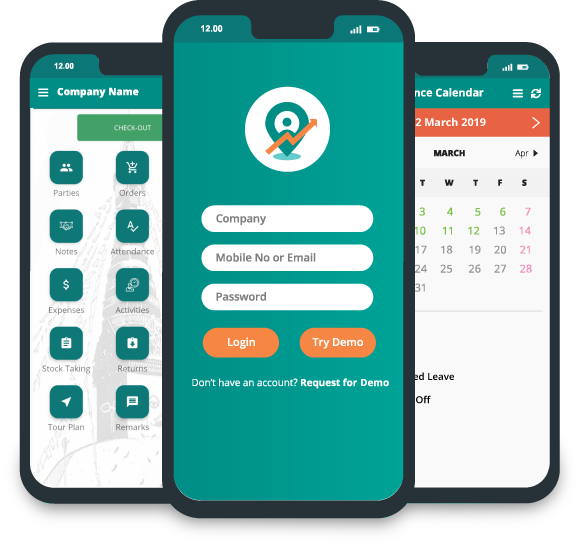
Easy-to-understand icons and navigation menus
Clear icons and well-structured menus guide users effortlessly through tasks, ensuring smooth navigation and minimizing confusion, especially for sales teams unfamiliar with digital tools.
-
Quick setup for new team members
New users should be able to install, configure, and start using the app within minutes, allowing rapid onboarding and ensuring minimal disruption to daily field operations.
-
Training guides, walkthroughs, and in-app tutorials
Built-in tutorials and visual guides help users learn features at their own pace, improving adoption and reducing dependency on managers or support teams for basic instructions.
Comprehensive Customer Information Management
Your field team is only as effective as the information they carry. A strong field sales app centralizes customer data so reps can make informed decisions during every visit.
Key elements include:
-
Customer profiles with visit history, orders, outstanding payments, and contact details
A complete customer profile helps sales reps understand past interactions, pending dues, buying patterns, and relationship status, enabling more informed discussions and tailored selling during every visit.
-
Geo-tagged customer locations for easy navigation
Geo-tagging ensures accurate customer location mapping so field reps can reach outlets faster, reduce travel time, and follow optimized visit routes without confusion or missed stops.
-
Detailed segmentation such as outlet type, channel, category, or tier
Segmenting customers by store type, business channel, or priority helps teams plan better, target the right outlets, personalize pitches, and execute differentiated sales strategies.
-
Notes and remarks for special instructions or relationship insights
Reps can record specific preferences, instructions, or past commitments, enabling smoother follow-ups, personalized service, and stronger long-term customer relationships.
Smart Territory and Route Planning
Poor planning increases travel time, reduces productive hours, and leads to low outlet coverage. A high-quality field sales app must include intelligent route and territory planning features.
Essentials to ensure efficiency:
-
Preassigned routes for daily, weekly, or monthly visits: Predefined visit routes help reps follow a clear schedule, maintain consistent coverage, and ensure every outlet is visited on time without missing important touchpoints.
-
Automated route optimization to reduce travel time: Route optimization calculates the most efficient path, minimizing travel distance and fuel use while increasing the number of productive visits reps can complete in a day.
-
Reminder alerts for missed or upcoming visits: Automatic alerts notify reps of pending, missed, or upcoming visits, improving adherence to plans and helping maintain consistent service levels across all assigned outlets.
-
Territory mapping for improved coverage and planning: Territory mapping visually organizes outlets within defined zones, enabling managers to plan coverage better, balance workload, and allocate resources effectively across regions.
Geo-Tracking and Live Field Visibility
Managers need real-time visibility to monitor productivity, improve compliance, and make informed decisions. A reliable field sales app provides accurate, real-time GPS tracking.
Your app should offer:
-
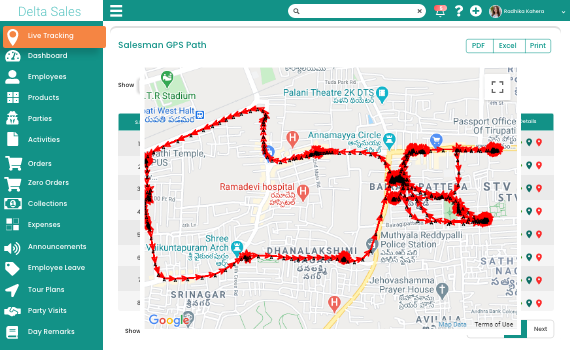
Live location tracking of each sales rep: Real-time GPS tracking allows managers to see where reps are during working hours, improving transparency, optimizing on-ground coordination, and ensuring teams follow planned routes.
-
Accurate visit verification through geo-tagging: Geo-tagged check-ins verify that reps visited the correct outlet at the correct location, preventing false reporting and ensuring complete accuracy in field activity data.
-
Start and end-day check-in/check-out: Location-based start and end-day logs help managers track working hours, ensure punctuality, and gain visibility into field team attendance without manual reporting.
-
Distance traveled and coverage reports: These reports show total distance covered and outlets visited, helping managers evaluate productivity, optimize routes, and identify opportunities to reduce unnecessary travel time.
Seamless Order Taking and Invoicing
Fast, error-free order taking is one of the biggest advantages of sales automation. A good field sales app should simplify order creation and speed up the entire sales cycle.
Important order-related capabilities:
-
Digital order booking with SKU-level visibility: Reps can place precise orders by viewing SKU-wise availability, pricing, and quantities, ensuring accuracy and preventing mistakes caused by manual entries or incomplete product information.
-
Product catalogs with configurable pricing, schemes, and discounts: A digital catalog displays updated product details, including custom pricing, schemes, and promotional offers, helping reps pitch effectively and apply correct benefits for each customer.
-
Real-time stock visibility at warehouse or distributor level: Instant stock updates prevent selling unavailable items, reduce order cancellations, and help reps suggest alternatives or upsell based on actual inventory levels.
-
On-spot invoicing and digital receipts: Reps can generate invoices instantly during the visit, share digital receipts, and complete transactions quickly reducing paperwork and speeding up the overall sales process.
Inventory and Stock Visibility
Nothing hurts customer satisfaction more than stockouts. Field teams need up-to-date inventory data to avoid missed sales opportunities.
A strong field sales app should provide:
-
Real-time stock levels: Up-to-date inventory information helps reps check product availability instantly, avoid promising out-of-stock items, and ensure accurate order-taking during customer visits.
-
Batch-level, SKU-level, and warehouse-level visibility: Detailed visibility across batches, SKUs, and warehouses enables precise order planning, supports compliance for sensitive products, and helps field teams recommend the right variations to customers.
-
Stock return and replacement options: Reps can record damaged, expired, or unsold returns and initiate replacements on the spot, improving customer satisfaction and maintaining smooth reverse logistics processes.
-
Automatic notifications for low-stock items: Alerts for low inventory help reps sell smarter, avoid stockouts, and prioritize promoting products with adequate availability to maximize sales and fulfillment accuracy.
Integrated Payment Collection
A digitized payment process increases accuracy, reduces risk, and supports financial transparency.
-1765886760.png)
Look for features such as:
-
Recording of cash and cheque collections: Field reps can log cash and cheque payments instantly, reducing manual errors and ensuring accurate tracking of daily collections for faster financial reconciliation.
-
Digital payment support (QR, UPI, wallets, bank transfers): Multiple digital payment options enable quick, hassle-free transactions, improve customer convenience, and reduce reliance on physical cash during field visits.
-
Auto-updated outstanding balances: The system automatically adjusts outstanding amounts after each payment, giving reps and finance teams real-time visibility into dues, reducing confusion, and improving collection efficiency.
-
Secure payment history records: All transactions are stored safely with time-stamped logs, ensuring transparency, preventing disputes, and allowing easy access to past payment information whenever needed.
Task Management and Daily Activity Monitoring
-
Managers assigning tasks such as follow-ups, merchandising checks, or order targets: Managers can assign clear, structured tasks to reps, ensuring daily priorities are understood and aligned with business goals for more organized and productive field execution.
-
Reps marking tasks as completed with time and location stamps: Reps can close tasks with geo-tagged proof, giving managers accurate visibility into completed activities and helping verify on-ground performance authentically.
-
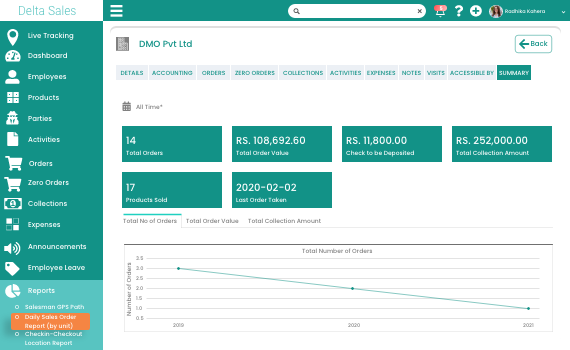
Automated daily activity reports: Auto-generated reports summarize visits, orders, payments, and completed tasks, saving time and giving managers a quick snapshot of each rep’s daily performance.
-
Alerts for pending or overdue tasks: Notifications remind reps of unfinished or delayed tasks, improving accountability, reducing missed activities, and ensuring timely completion of critical assignments.
Merchandising and Retail Execution Features
-
Photo capture for visibility and shelf audits: Reps can capture photos to document product displays, shelf presence, and store conditions, enabling managers to verify merchandising execution in real time.
-
Display compliance checks: The app helps ensure outlets follow brand guidelines for displays, signage, and placements, improving consistency and maximizing in-store visibility across all markets.
-
Tracking planogram implementation: Reps can record planogram adherence, helping brands maintain proper shelf layouts, product positioning, and visibility standards across different Retail Execution.
-
Out-of-stock and competitor activity reporting: Reps can instantly report stockouts, competitor promotions, or new launches, enabling brands to respond quickly and protect shelf share.
Communication and Collaboration Tools
-
In-app messaging or notifications: Instant in-app messages allow quick communication between managers and reps, ensuring instructions, updates, and clarifications are shared promptly without relying on external tools.
-
Broadcast updates for promotions or schemes: Managers can send mass announcements about new offers, pricing changes, or campaigns, ensuring every rep delivers accurate and consistent information during customer visits.
-
Document-sharing for guidelines and manuals: Teams can access important files product sheets, branding rules, schemes directly in the app, improving knowledge consistency and reducing confusion in the field.
-
Query and support channels: Built-in help channels let reps seek clarification or report issues instantly, reducing delays and improving overall field productivity.
Gamification and Motivation Tools
-
Leaderboards for sales targets: Leaderboards display real-time performance rankings, encouraging friendly competition and motivating reps to achieve higher sales and operational goals.
-
Badge rewards for milestones achieved: Reps earn badges for completing targets or tasks, providing recognition and boosting morale through reward-based motivation.
-
Productivity points and rankings: Point systems reward consistent performance, helping managers track efficiency and encouraging reps to maintain high productivity levels.
-
Incentive tracking modules: Reps can view their incentive progress, reward eligibility, and performance metrics, keeping them motivated and focused on goals.
Integration with ERP, CRM, and Accounting Systems
-
ERP for inventory and pricing synchronization: ERP integrations help sync inventory, pricing, and product data, ensuring reps work with accurate, real-time information during field operations.
-
CRM for customer history and pipeline tracking: CRM connectivity provides customer visit history, conversation logs, and pipeline status, enabling personalized interactions and better relationship management.
-
Accounting systems for payments and invoicing: Integrating with accounting software automates invoice updates, payment records, and outstanding balances, improving financial accuracy and reducing manual work.
-
Distributor management systems: DMS integration streamlines order flow, stock updates, and distributor-level operations, creating a seamless ecosystem between manufacturers, distributors, and field teams.
High-Level Security and Data Protection
-
Role-based access control: Access permissions can be assigned based on roles, ensuring each user sees only the information relevant to their responsibilities.
-
Encrypted data communication: Encryption protects sensitive customer and business data during transmission, reducing the risk of unauthorized access or cyber threats.
-
Secure cloud hosting: Robust cloud infrastructure ensures data reliability, system stability, and round-the-clock protection from breaches.
-
Multi-factor authentication: Additional verification layers prevent unauthorized access, strengthening the app’s overall security framework.
-
Activity logs and audit trails: Comprehensive logs track user actions, helping detect unusual behavior, ensure compliance, and maintain operational transparency.
Customer Support and After-Sales Service
-
Dedicated support team: A skilled support team ensures quick help during issues, reducing downtime and ensuring smooth field operations.
-
Live chat, email, or phone assistance: Multiple support channels offer flexible help options, ensuring users get timely assistance regardless of their location.
-
Quick resolution time: Fast issue resolution prevents operational delays and ensures uninterrupted usage of the field sales app.
-
Regular feature updates: Frequent updates provide new functionalities, performance improvements, and fixes, keeping the app modern and effective.
-
Training sessions and onboarding support: Training helps new users understand the system quickly, improving adoption and reducing learning challenges.
Conclusion
A field sales app is more than just a digital tool it is the backbone of modern field operations. From route planning and real-time tracking to order management, merchandising, communication, and reporting, the right app transforms how organizations manage and empower field teams.
If your business needs a smart, reliable, and industry-ready field sales solution, the Delta Sales App is a powerful choice. It offers complete automation, real-time insights, advanced tracking, and seamless execution helping your field teams perform at their highest potential every single day.
Ready to transform your field sales operations? Book a Delta Sales App demo today and see how smarter automation, real-time insights, and faster execution can power your team’s success.