
What is Horeca? Everything You Need to Know About the Industry

The HoReCa industry is one of the most important sectors in the global economy, playing a crucial role in hospitality, tourism, food service, and retail distribution. Whether you're dining at a restaurant, staying at a hotel, or attending a catered event, you're interacting with businesses that operate within the HoReCa ecosystem.
The HoReCa market was valued at USD 3.02 trillion in 2023, with revenue expected to reach USD 3.88 trillion by 2030. The HoReCa beverage market alone was valued at USD 155 billion with a CAGR of around 3.5% through 2032.
As consumer expectations continue to evolve and digital transformation reshapes business operations, HoReCa businesses are increasingly focusing on efficiency, customer experience, inventory management, and sales optimization to remain competitive.
In this guide, we'll explore what HoReCa is, how the industry operates, its challenges, emerging trends, and how technology is helping businesses achieve sustainable growth.
What is HoReCa?
HoReCa is an acronym for Hotels, Restaurants, and Catering, representing the broader food service and hospitality industry. It covers a wide range of businesses, including hotels, restaurants, cafés, pubs, bars, clubs, catering companies, and other food service establishments that serve customers directly.
The term HoReCa is commonly used to describe both the businesses operating within this sector and the professionals who work in it, such as chefs, restaurant managers, waitstaff, and hospitality staff. It is also widely used by manufacturers, distributors, and suppliers that provide products and services to these establishments. For example, global brands like Coca-Cola and Heineken often refer to hotels, restaurants, and cafés as HoReCa channels when distributing beverages and other products.
In simple terms, HoReCa encompasses the entire ecosystem of businesses involved in food service, hospitality, and catering operations.
Understanding the HoReCa Industry
The HoReCa industry operates as a complex ecosystem involving suppliers, distributors, manufacturers, hospitality providers, and end customers.
Businesses within this sector rely heavily on effective hospitality management, procurement, inventory control, and supply chain management to maintain profitability and service quality.
Unlike traditional retail businesses, HoReCa establishments require frequent replenishment of food products, beverages, consumables, and operational supplies. This creates a strong dependency on distributors and suppliers who can ensure timely deliveries and consistent product availability.
The industry's success often depends on its ability to balance operational efficiency with exceptional customer experiences.
Key Segments of the HoReCa Sector
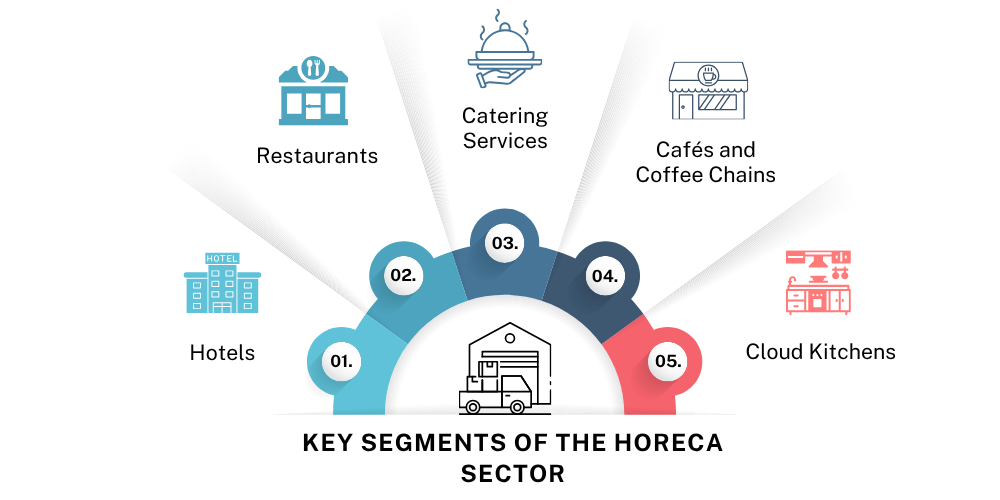
Hotels
Hotels provide accommodation, dining, event hosting, and recreational services. They require a steady supply of food products, housekeeping materials, beverages, and guest amenities.
Restaurants
Restaurants range from fine-dining establishments and casual dining outlets to quick-service restaurants and food courts. Effective inventory control and supplier management are essential for maintaining profitability.
Catering Services
Catering businesses provide food and beverage services for weddings, corporate events, conferences, and social gatherings. Their operations depend on precise planning, logistics coordination, and supplier relationships.
Cafés and Coffee Chains
Coffee shops and cafés have experienced rapid growth due to changing consumer lifestyles and increasing demand for convenient dining experiences.
Cloud Kitchens
Cloud kitchens operate exclusively through online ordering and food delivery platforms. Their success depends on efficient kitchen operations, inventory control, and order management systems.
Why the HoReCa Industry Is Important
The HoReCa sector contributes significantly to economic growth, employment generation, tourism development, and the overall expansion of the food service industry.
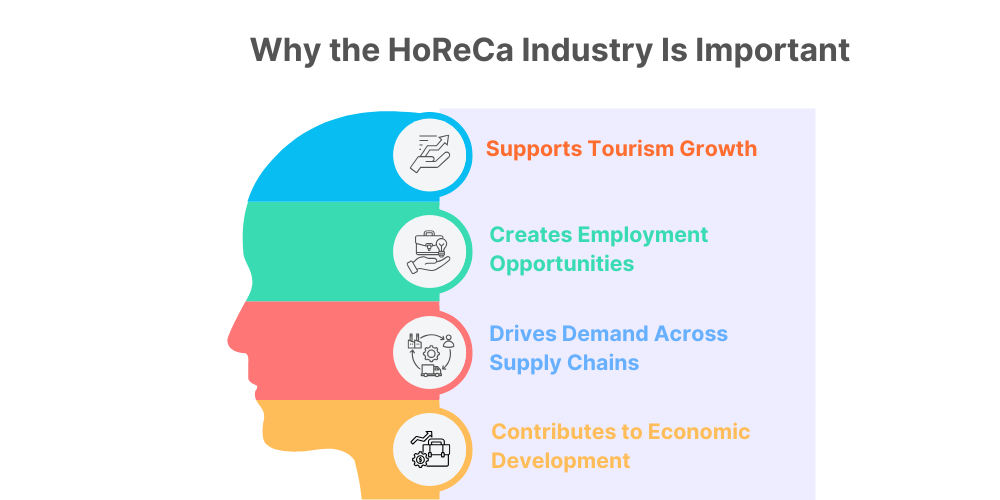
Supports Tourism Growth
Hotels, restaurants, and catering businesses are key pillars of the tourism and hospitality industry, attracting travelers and enhancing destination experiences worldwide.
Creates Employment Opportunities
The industry generates millions of jobs across hospitality management, food preparation, customer service, logistics, sales, and operational support functions.
Drives Demand Across Supply Chains
HoReCa businesses create demand for manufacturers, distributors, suppliers, and commercial food service providers, supporting multiple interconnected industries simultaneously.
Contributes to Economic Development
By generating revenue, increasing investments, and supporting local businesses, the hotel restaurant catering industry contributes significantly to economic growth.
How the HoReCa Business Model Works
The HoReCa business model revolves around delivering products and services that meet customer expectations while maintaining efficiency, profitability, and high service standards.
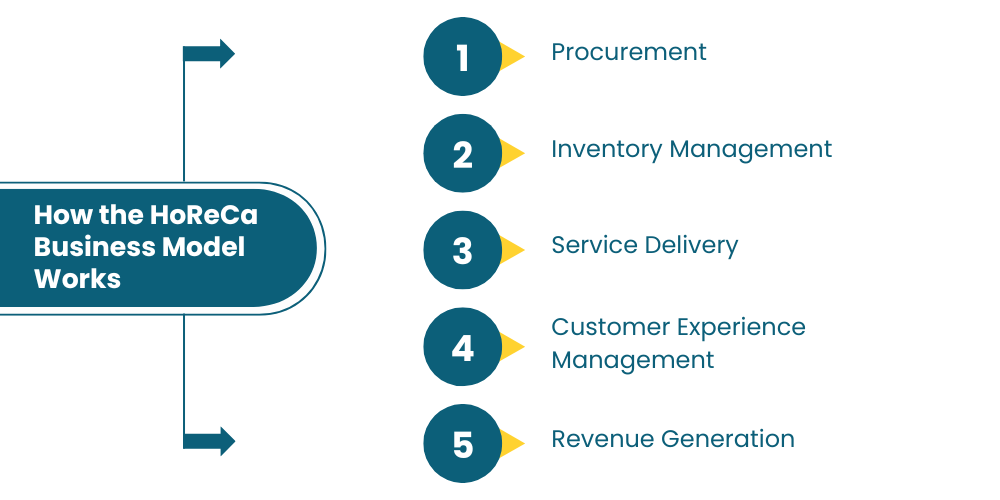
The typical workflow includes:
Procurement
Businesses source food ingredients, beverages, equipment, and consumables through effective procurement management practices to ensure uninterrupted operations and supplier reliability.
Inventory Management
An efficient inventory control system helps businesses maintain optimal stock levels, reduce wastage, prevent shortages, and improve operational efficiency.
Service Delivery
Hotels, restaurants, and caterers deliver products and services through multiple channels while ensuring consistent quality, timely service, and customer satisfaction.
Customer Experience Management
Strong customer experience management strategies help businesses increase customer loyalty, encourage repeat visits, and strengthen long-term brand reputation.
Revenue Generation
Revenue is generated through accommodation bookings, food sales, beverage sales, event services, and additional offerings that enhance overall profitability.
Major Challenges Faced by HoReCa Businesses
As the industry becomes more competitive, HoReCa businesses face several operational and market challenges that can impact growth, profitability, and customer satisfaction.
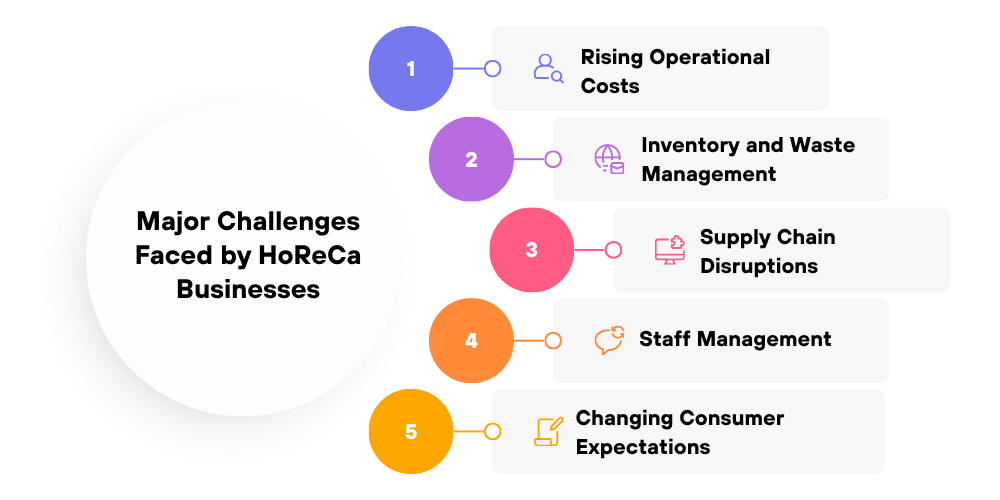
Rising Operational Costs
Increasing food prices, labor expenses, utility costs, and rental charges continue to affect profitability, making operational efficiency a critical business priority.
Inventory and Waste Management
Poor food inventory management can lead to stock shortages, product spoilage, unnecessary waste, and increased operating expenses across locations.
Supply Chain Disruptions
Unexpected disruptions in supply chain management and logistics operations can affect product availability, delivery schedules, and overall customer service quality.
Staff Management
Recruiting, training, and retaining skilled employees remains a challenge, particularly for businesses operating in the highly competitive hospitality sector.
Changing Consumer Expectations
Customers increasingly demand personalized experiences, digital convenience, faster service, and improved customer experience management throughout their journey.
Key Trends Shaping the HoReCa Industry
Rapid technological advancements and changing consumer preferences are transforming the HoReCa sector, encouraging businesses to adopt innovative strategies and modern solutions.
Digital Ordering and Online Delivery
The growth of online food delivery platforms and mobile ordering applications continues to reshape consumer behavior and purchasing patterns.
Sustainability Initiatives
Businesses are adopting eco-friendly packaging, waste reduction programs, responsible sourcing practices, and sustainable operations to meet environmental expectations.
Contactless Customer Experiences
Digital payments, self-service kiosks, QR code menus, and mobile ordering solutions are becoming increasingly popular among modern consumers.
Data-Driven Operations
Organizations leverage business intelligence analytics to improve decision-making, demand forecasting, operational efficiency, and customer engagement strategies.
Health-Conscious Consumer Preferences
Growing demand for healthier, organic, plant-based, and specialty food products is influencing menu development and purchasing decisions across businesses.
The Role of Technology in HoReCa Management
Technology is transforming nearly every aspect of HoReCa operations, helping businesses improve efficiency, reduce costs, enhance customer experiences, and make better decisions.
Inventory Management Systems
Modern inventory tools help businesses track stock levels, reduce waste, optimize purchasing decisions, and improve accuracy through advanced inventory management software.
Point-of-Sale (POS) Systems
A reliable POS management system streamlines billing, payment processing, sales reporting, and transaction management while improving operational efficiency and customer service.
Customer Relationship Management
CRM platforms support customer relationship management by helping businesses improve engagement, personalize experiences, increase retention, and strengthen customer loyalty.
Mobile Workforce Management
Technology enables managers to monitor field activities, deliveries, employee performance, and operations in real time through effective mobile workforce management solutions.
Business Analytics
Advanced business intelligence analytics tools provide insights into sales trends, customer preferences, operational performance, and growth opportunities for better decision-making.
Benefits of Digital Transformation for HoReCa Businesses
Digital transformation is helping HoReCa businesses modernize operations, improve customer experiences, and remain competitive in an increasingly technology-driven marketplace.
Improve Operational Efficiency
Digital tools automate routine processes, reduce manual work, optimize workflows, and improve productivity, helping businesses achieve greater operational efficiency across departments.
Enhance Customer Experiences
Technology enables personalized interactions, faster service, and seamless ordering experiences, strengthening customer experience management and increasing customer satisfaction levels.
Reduce Costs and Waste
Automated inventory tracking and process optimization help businesses minimize waste, control expenses, and improve profitability through better resource utilization.
Increase Revenue Opportunities
Digital platforms support online ordering, promotions, upselling, and customer engagement strategies that create new revenue streams and business growth opportunities.
Improve Inventory Visibility
Advanced inventory control system solutions provide real-time stock visibility, helping businesses reduce stockouts, prevent overstocking, and improve planning accuracy.
Streamline Supplier Management
Technology improves communication, procurement processes, and supply chain management, enabling stronger supplier relationships and more efficient purchasing operations.
Strengthen Business Decision-Making
Access to real-time data and business intelligence analytics helps organizations make informed decisions, identify trends, and improve overall business performance.
Organizations that embrace digital transformation in hospitality are often better positioned to compete, adapt to market changes, and achieve sustainable long-term growth.

How HoReCa Businesses Can Improve Sales and Distribution
Successful HoReCa businesses focus on optimizing procurement, inventory, sales processes, and supplier relationships to improve efficiency, profitability, and customer satisfaction.
Strengthening Distributor Partnerships
Building strong relationships with distributors helps ensure consistent product availability, better pricing, timely deliveries, and improved distribution channel management performance.
Automating Order Management
Implementing digital order processing systems reduces manual errors, speeds up fulfillment cycles, and improves operational efficiency across the supply chain.
Improving Inventory Planning
Accurate forecasting and effective inventory management software help businesses maintain optimal stock levels while reducing waste and inventory-related costs.
Expanding Product Offerings
Introducing new menu items, premium products, and specialty offerings helps businesses attract diverse customers and create additional revenue opportunities.
Enhancing Customer Engagement
Personalized marketing, loyalty programs, and improved service experiences strengthen customer relationships and encourage repeat purchases and long-term loyalty.
Using Data Analytics for Forecasting
Advanced business intelligence analytics helps businesses predict demand, identify sales trends, optimize purchasing decisions, and improve resource planning.
Implementing Field Sales Automation
Leveraging field sales automation solutions enables businesses to improve order collection, monitor sales activities, enhance productivity, and increase market coverage.
These initiatives help HoReCa businesses improve sales performance, streamline distribution operations, and maintain high service standards in a competitive market.
Conclusion
The HoReCa industry plays a vital role in hospitality, tourism, food service, and economic development. From hotels and restaurants to catering services and cloud kitchens, the sector continues to evolve in response to changing customer expectations and technological advancements.
As competition increases and operational complexity grows, businesses must focus on efficiency, customer satisfaction, inventory control, and digital transformation. Leveraging modern technology solutions can help organizations streamline operations, improve decision-making, and drive long-term growth.
Whether you're a hotel operator, restaurant owner, catering company, or supplier, understanding the HoReCa industry is essential for identifying opportunities and staying competitive in an increasingly dynamic marketplace.
To streamline operations and improve sales and distribution visibility, book a free demo of Delta Sales App today and explore how automation can support your business growth.