
What Should Managers Do When Reps Skip the Sales Process?

A sales process is supposed to keep field execution consistent. A rep follows the beat plan, reaches the right outlet, checks stock, talks through requirements, captures the order, logs the visit, and moves on to the next stop. Follow those steps consistently, and managers can compare territories, understand secondary sales, spot coverage gaps, and act on data they can actually trust.
The problem starts when reps begin skipping steps. A rep visits an outlet but doesn't check stock. Another takes an order without updating the retailer record. Someone quietly skips the low-volume outlets off the beat plan. Another logs several visits at the end of the day instead of in real time. On paper, the team can still look productive. In reality, the sales process is slowly drifting away from what management actually expects. Managers often respond by tightening supervision or demanding more reports, and that creates a different problem: reps end up spending more time proving they worked and less time actually selling.
The better move is figuring out why the process is being skipped, which steps are getting skipped most, and whether those deviations are actually hurting performance or not. Once a manager has that, they can simplify the workflow, coach the people who need it, and use field sales management software to make compliance something that's easy to monitor instead of something reps feel policed by.
Why Sales Reps Skip the Sales Process
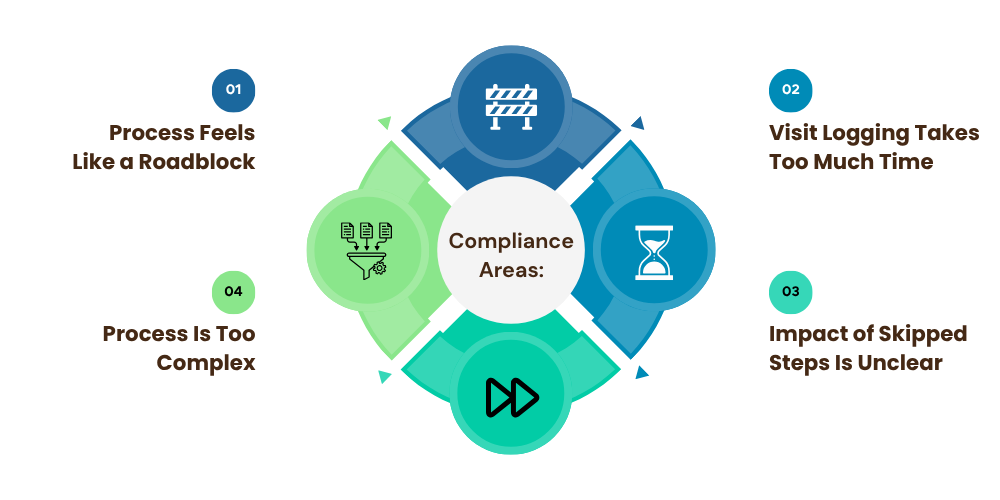
Reps rarely skip an established process for no reason. Most of the time it comes down to a process that feels too time-consuming, too complicated, or disconnected from what actually matters in the field. When a rep is focused on covering outlets, hitting targets, and handling the retailer conversation itself, any step that doesn't feel valuable turns into an easy shortcut. Understanding why that happens is what lets managers fix the actual process instead of just demanding stricter compliance and hoping it sticks.
-
The Process Feels Like a Roadblock, Not a Guide
A sales process can look perfectly sensible from an office desk and feel completely cumbersome once someone's actually in the field. Asking a rep to record several pieces of information after every outlet visit sounds reasonable in isolation. Multiply that across 30 or 40 stops a day, and those small tasks eat a real chunk of selling time. Once a process starts feeling like paperwork rather than something that helps selling, reps naturally start finding shortcuts around it. The real warning sign is when otherwise productive reps consistently skip the same administrative steps; that's a sign the process itself needs redesigning, not just stricter enforcement.
-
Sometimes the Process Itself Is Too Complex to Follow
Field sales rarely happen under controlled conditions. Reps deal with traffic, retailer availability, distributor instructions, stock problems, changing routes, poor connectivity, and unexpected customer requests all in the same day. A process loaded with too many mandatory fields, approvals, screens, or duplicate entries becomes genuinely hard to execute consistently.
That's especially true for FMCG teams. A rep might need to check several SKUs, discuss schemes, review distributor stock, capture an order, and move to the next retailer, one after another. If the system makes each of those steps unnecessarily slow, compliance eventually breaks down.
-
Reps Don't See How Skipped Steps Affect Outcomes
A rep might think, "I skipped the stock check, but I still got the order." The manager sees a completely different picture. Without the stock information, the business has no idea why a retailer cut back their order. Without visit notes, the next rep walks in blind about a concern that the retailer raised. Without accurate outlet coverage, the whole territory-level analysis stops being reliable.
When the link between the process and an actual business outcome isn't clear, compliance turns into a box-ticking exercise nobody believes in. Managers need to explain why each non-negotiable step exists and what real business problem it's actually preventing, not just insist that it's policy.
-
Visit Logging Is Too Tedious to Keep Up With in the Field
Manual visit reporting is one of the easiest parts of any field sales process to put off. A rep might remember to log visits at the end of the day, but by then a lot of detail is already incomplete or just wrong. Timing, location, retailer feedback, order information, and follow-up requirements, all of it gets hard to reconstruct hours later.
That creates a second problem for managers: the report can look complete while not accurately representing what actually happened. Real-time field sales tracking closes that gap by capturing activity right where it happens, not from memory at 8 pm.
Diagnose Before You Act: Is It a Will Problem or a Skill Problem?
Not every process failure deserves the same management response. A useful starting point is separating will problems from skill problems, and there's a third category worth watching too: situations where the market itself has genuinely changed.
-
Will Problems: Low Activity, Not Low Compliance
A will problem usually shows up as a broader pattern. Low activity across the board, unexplained gaps in territory coverage, repeated missed outlets, consistently late reporting, and weak follow-through. The issue isn't one skipped step here or there. It's that overall execution is falling below what's expected. Here, managers need to establish clear expectations, review the actual evidence, and address accountability directly, without leading with an assumption like "you're not working." Look at planned visits versus actual visits, orders, follow-ups, attendance, route movement, and territory coverage before drawing that conclusion.
-
Skill Problems: Reps Doing the Work but Missing Steps
A skill problem looks completely different. The rep is active; they're visiting retailers, generating orders, talking to customers, and covering the territory. But they consistently miss specific parts of the process. Maybe they're great at relationship selling but weak at documenting retailer feedback. Maybe they capture orders correctly but never update stock information. This is where coaching, not punishment, is the right move: show them the expected workflow, explain why each step actually matters, and check whether they can perform it independently once shown.
-
When It's a Market Shift, Not a Rep Problem
Sometimes the process is technically being skipped because the original plan just doesn't fit the territory anymore. A retailer changes their preferred ordering day. A distributor shifts delivery schedules. A new competitor moves into the territory. A route stops working because of road conditions or how outlets have clustered over time. If multiple reps in the same territory are independently deviating from the same process, that's worth investigating at the market level before pinning it on individual behavior.
Good field management allows for controlled flexibility. The goal was never perfect adherence to a plan that's gone stale. It's consistent execution of whatever activities actually drive sales and coverage right now.

What Skipping the Sales Process Actually Costs the Business
The visible problem might just be a missed step, but the actual business impact can spread a lot further than that. Skipped visits shrink territory coverage. Incomplete order data throws off planning. Inaccurate field reports make performance decisions unreliable across the board, not just for the one rep who cut a corner. Over time, small execution gaps can become lost sales, poor retailer relationships, higher operating costs, and unreliable management information. For a deeper look at the financial impact of operational inefficiencies, Visit to see: The Hidden Costs of Inefficient Field Sales Operations.
How to Identify Exactly Where Reps Are Deviating
Before correcting a rep, managers need to know exactly which step is getting skipped, how often, and why. Looking only at final sales numbers can hide process gaps happening upstream, during outlet visits, order capture, or reporting itself. A combination of field data, direct conversation, and actual observation is what helps managers pinpoint where the sales process is breaking down, and whether it's a one-off or a real recurring pattern.
-
Audit Visit and Order Data for Gaps
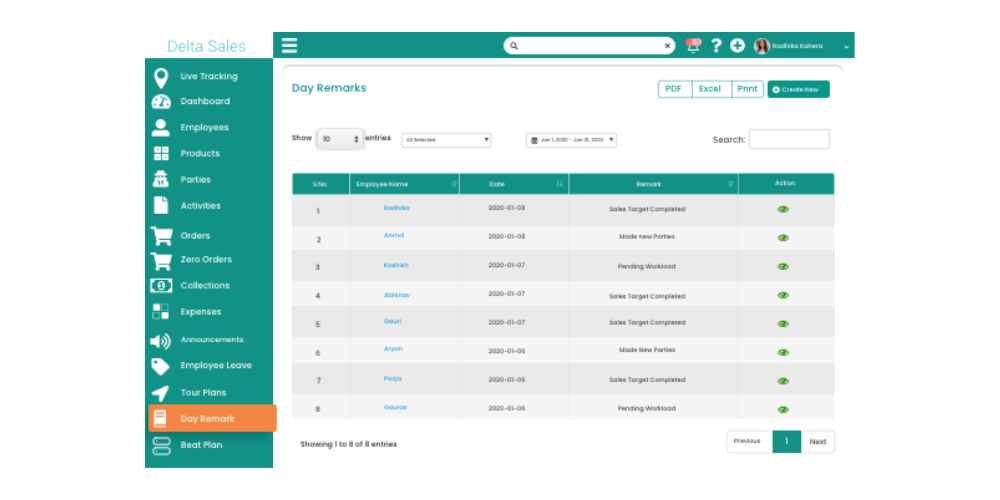
Start with the data the field team is already generating. Compare planned outlets against actual visits. Look at visit timing, order conversion, order quantities, retailer coverage, and how often visits produce no order at all. If a rep reports 35 visits but only 15 have any corresponding order or visit activity, that gap's worth investigating. It doesn't automatically mean 20 visits were fake; plenty of legitimate visits genuinely produce no order. It just tells you where to dig deeper. Managers should also cross-check the daily work logs against actual activity wherever they can. Reliable field data is what gives management a real basis for coaching, instead of a conversation built on hunches.
-
Shadow Reps and Compare Top vs. Struggling Performers
Spend time in the field with both strong and struggling reps. Don't just watch how they sell. Watch what they do in between the customer conversations. How do they prepare for the outlet? Do they check previous orders? Do they review distributor stock? How do they know which SKU needs attention right now? How much time goes into recording information afterward? Often the real difference between two reps isn't effort at all. It's the sequence and quality of their field execution. The top performers may already be running a more efficient version of the same process, and that's exactly what the rest of the team could learn from.
-
Watch for Personal or Performance-Related Signals Behind the Behavior
Process deviation sometimes signals a deeper issue underneath it. A rep who suddenly starts missing visits might be struggling with a territory change nobody's talked through with them yet. A previously reliable rep who starts submitting incomplete reports might just be overwhelmed by workload. A steady decline in order conversion can point to a market or customer problem, not poor discipline at all. Look at the trend over time rather than judging one unusual day out of context.
A Manager's Action Plan When Reps Skip Sales Process
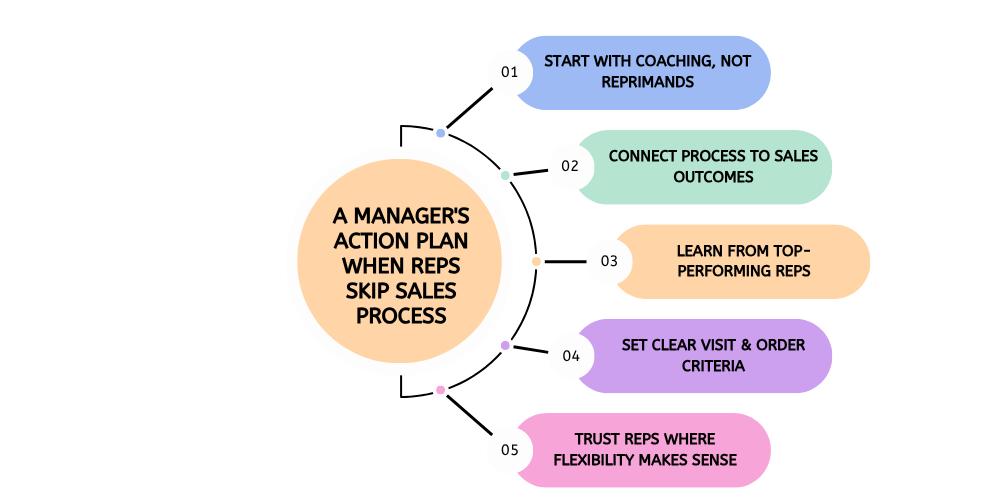
Once managers understand where and why reps are deviating from the sales process, the next step is to address the problem without creating unnecessary friction. A practical approach combines coaching, clear expectations, and enough flexibility for reps to handle real field conditions.
-
Start with a Coaching Conversation, Not a Reprimand
Start with the facts. Instead of "you never follow the process," get specific: "Your planned beat had 28 outlets, and 8 weren't visited last week. What happened?" That gives the rep real room to explain. If the reason's legitimate, fix the operational problem behind it. If it's a gap in understanding, coach them through it. If it's repeated, avoidable behavior, that's when accountability comes in. The distinction matters, because blanket punishment erodes trust without actually fixing what's broken underneath it.
-
Reconnect the Process to Outcomes: Missed Orders, Lost Retailer Trust
Reps are more likely to follow a process when they understand why each step matters. A stock check, for example, is not just another task to complete in an app. It can help a rep spot a potential stock-out before it affects the next order. A visit note is not simply another reporting requirement; it gives managers and other team members useful context about what happened at the outlet. Similarly, accurate order capture directly affects distributor fulfillment and the retailer’s experience.
Managers should make these connections clear. When reps can see how their daily actions influence secondary sales, stock availability, retailer relationships, and territory coverage, the process feels less like extra paperwork and more like part of doing the job well.
-
Codify What Your Top-Performing Reps Already Do Differently
Don't assume the official process is automatically the best one. Observe your high performers and write down the habits that actually keep producing results. Maybe they cluster nearby outlets more efficiently. Maybe they review previous orders before walking into the store. Maybe they prioritize high-potential retailers early in the day, when they're sharpest. Maybe they just spend more time on the accounts that matter and less on the ones that don't. Turn what's already working into the actual operating standard instead of leaving it as one rep's personal trick.
-
Set Clear Visit and Order-Completion Criteria for Every Stop
A completed visit should mean more than a GPS ping saying someone showed up. Depending on the sales model, a real completed outlet visit might mean a verified visit, a stock or SKU check, order capture where it applies, retailer interaction or visit notes, a follow-up action if one's needed, and any relevant collection or payment update. Not every outlet's going to generate an order, and that's fine. What actually matters is defining what good execution looks like, so managers and reps are both working against the exact same standard instead of two different ideas of what "done" means.
-
Know When to Step Back and Trust Reps in the Field
Over-management can be just as damaging as under-management. A field representative needs room to respond to real customer situations. If managers demand rigid adherence to every minor detail, reps may spend more energy satisfying internal reporting requirements than serving customers. Keep the non-negotiable steps limited to activities that protect sales, customer relationships, data quality, compliance, or operational visibility. Everything else should allow reasonable field judgment.
Using Field Sales Management Software to Track Compliance in Real Time
Technology should make the sales process easier to follow, not add another layer of admin on top of it. A field sales management platform gives managers real visibility into whether planned activities are actually happening, while cutting down the reporting burden sitting on reps.
-
Automate the Boring Parts: GPS Check-Ins Instead of Manual Reporting
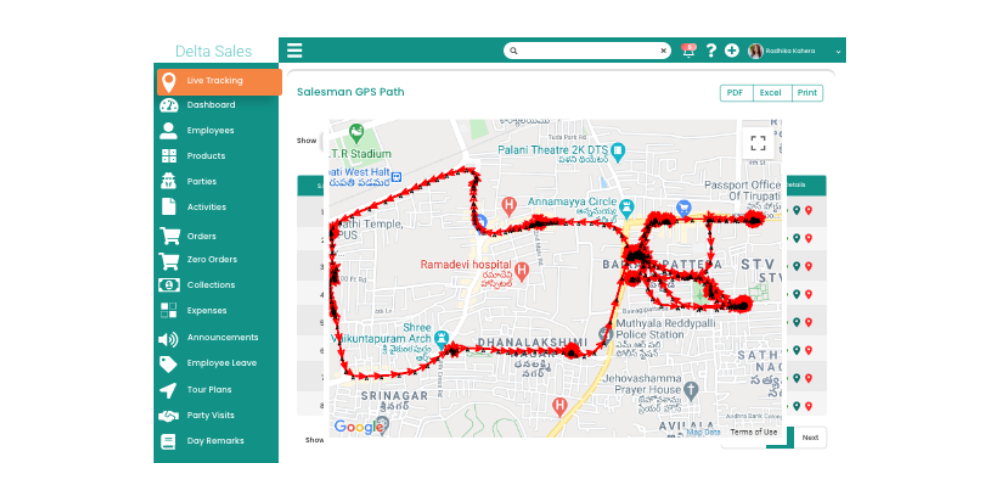
GPS-based employee tracking verifies where field activity actually takes place without requiring reps to manually explain every movement themselves. Instead of relying entirely on end-of-day reports, managers can review location-based activity, attendance, and visit information much closer to real time. That builds a far more reliable picture of territory coverage and catches unusual gaps earlier, before they turn into a bigger problem.
-
Mandatory Checklists at Every Visit (Stock Check, Order Capture, Visit Notes)
For genuinely important activities, digital workflows can bake the required steps into the visit itself. A manager can define exactly what needs to be captured at an outlet: stock availability, order details, visit notes, whatever matters most. The key here is moderation. Make every possible data point mandatory, and the system becomes unusable fast. Only require the fields where missing information would actually affect a real business decision.
-
Monitor Adherence via Dashboards
Managers shouldn't monitor compliance through a single number. Useful indicators to look at together: planned vs. actual visits, beat compliance percentage, outlet coverage, visit frequency, order conversion, average order value, no-order visits, visit duration, territory-wise activity, and attendance and field movement. The real value shows up when these get looked at together, not one at a time. A rep with fewer visits but strong order conversion can be genuinely outperforming someone with a high visit count and weak commercial outcomes. That's exactly why process compliance should support performance analysis, not replace it.
-
Mobile Logging That Takes Reps Seconds, Not Minutes, From the Field
The best workflow is one reps can actually complete while they're moving between outlets, not one they have to sit down and do separately. The mobile sales tool cuts down manual reporting by bringing visit tracking, order capture, customer information, attendance, and everything else into one workflow. Offline functionality matters a lot here, especially for teams working in areas with unreliable connectivity. A rep shouldn't have to abandon the process just because the network drops out for part of the day. Data gets captured in the field regardless and syncs back up the moment connectivity returns.
Conclusion
When reps skip the sales process, the instinct is usually to crank up supervision. More pressure doesn't necessarily produce better execution, though. What managers actually need to know is what's being skipped, why, and whether the deviation is even affecting commercial outcomes at all. The common thread across all of this is visibility. With the right field sales management software, managers can see planned versus actual visits, monitor territory coverage, review order activity, track field movement, and catch process gaps before they turn into recurring performance problems, instead of finding out three months too late.
Delta Sales App can support this approach by bringing field activity, attendance, GPS tracking, order reporting, beat planning, and sales analytics into one system. The aim is not to watch every move a rep makes. It is to give managers enough reliable information to coach effectively, protect important sales processes, and know when their teams need support versus accountability.
Give managers real-time visibility into field activities, visit compliance, orders, and team performance without adding unnecessary reporting work for reps. Book a free demo of Delta Sales App and see how a more connected sales process can help your team stay on track.
FAQs
1. Is skipping the process always the rep's fault?
No. A skipped step can result from poor training, an unnecessarily complex workflow, technical limitations, market changes, unrealistic beat plans, or individual accountability issues. Managers should diagnose the reason before deciding how to respond. If several reps skip the same step, examine the process itself before assuming the problem is individual behavior.
2. How does field sales tracking software prevent skipped visits?
Field sales tracking software can help managers compare planned and actual visits, verify field activity through GPS-based tracking, monitor territory coverage, and identify gaps in execution. It does not replace management or guarantee that every sales activity is completed. Its value is that it gives managers timely evidence about what is happening in the field instead of relying entirely on delayed manual reports.
3. What KPIs should managers track for beat plan compliance?
Useful KPIs include planned vs. actual visits, beat compliance percentage, outlet coverage, visit frequency, order conversion, productive visits, no-order visits, visit duration, and territory-wise performance. These metrics should be reviewed together. High activity does not automatically mean high productivity. Managers should look at whether the team's field activity is translating into better coverage, orders, retailer service, and sales outcomes.