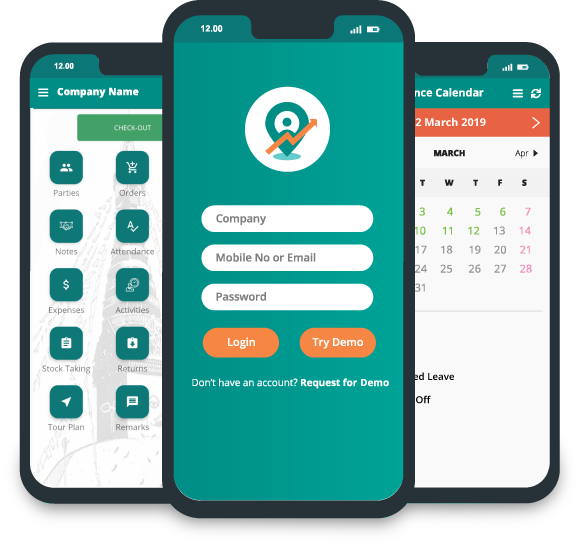

Why Is Data Accuracy Critical in Field Sales?
Bad data doesn't always look bad. It fits well into a spreadsheet. It can show up on a shiny dashboard. It can be put in a daily sales report and look legitimate.
The problem only appears when someone makes a decision based on it. In field sales, that can mean thousands of data points a day. A salesperson visits retailers, takes orders, checks stock, collects money, updates customer information, and reports on field activities. For large sales forces, these individual activities quickly become a major source of business intelligence.
But there’s a big difference between having sales data and having good sales data. A wrong record of a retailer visit, an incorrect order quantity, or a sales report that misrepresents field activity can have impacts that go far beyond that one record. The type of information managers receive can affect forecasts, inventory planning, territory decisions, sales targets, and revenue opportunities.
This is why data accuracy in field sales is not merely an administrative issue. It provides a platform for taking confident, timely, and well-informed business decisions.
What Does Data Accuracy Mean in Field Sales?
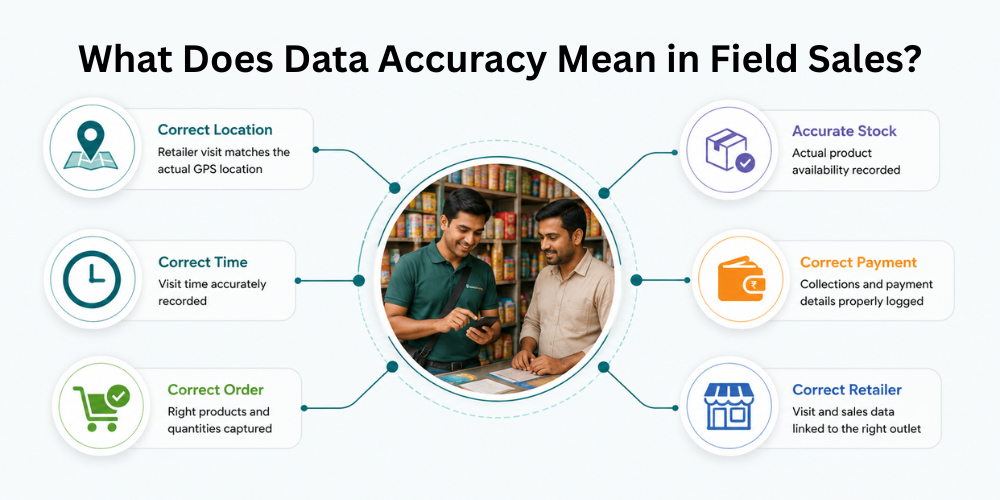
Data accuracy in field sales just means the information collected from field activity actually matches what happened. That covers a lot more than sales numbers alone. A field sales operation generates data on things like
-
Retailer visits and interactions
-
Visit locations and timings
-
Orders and order quantities
-
Product availability and inventory
-
Retailer information
-
Payments and collections
-
Sales representative attendance
-
Expenses
-
Customer feedback
-
Daily work activities
-
Territory coverage
For any of it to be useful, it has to be accurate, complete, consistent, and available when someone actually needs it. If a rep logs a visit, the record needs to show the correct retailer and the real time and place it happened. If an order gets placed, the product, quantity, price, and retailer info all need to match what actually got sold.
Why Accurate Data Matters More Than Ever
Field sales has increasingly relied on data to thrive. Sales managers tap into field insights to grasp how territories are performing, assess their sales representatives, keep an eye on retailer coverage, manage inventory, predict demand, and spot new opportunities. As sales teams grow and operations spread out over wider areas, it becomes tougher for managers to get a real feel for the market just by observing it. This is where data steps in to bridge that gap in understanding.
However, the true value of this insight hinges on the trustworthiness of the information. When field data is accurate, it empowers managers to swap out assumptions for solid evidence, enabling them to make informed decisions based on the actual happenings within their sales territories.
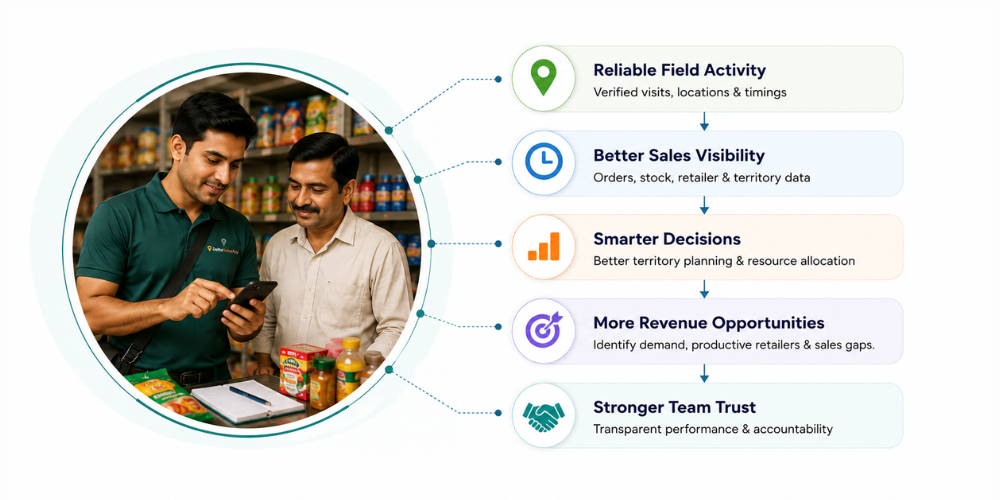
Better Business Decisions
Every sales decision runs on information. A manager weighing whether to expand coverage in a territory, push a product to more retailers, adjust targets, or shift resources around needs a real picture of what's actually happening, not a guess.
Accurate retailer-level data can show which territories are performing well, which need more attention, which retailers generate the most sales, which products are moving faster, where distribution gaps exist, which outlets are getting more or less productive, and how territories stack up against each other.
That kind of information feeds directly into territory management, sales forecasting, route planning, inventory planning, and distributor coordination. If the data shows a product doing consistently well in one territory, management can check whether the same opportunity exists nearby. Without accurate data, that kind of pattern stays invisible.
Good data also helps managers tell a one-off blip apart from a real market trend, and that distinction matters a lot when the decision on the other end affects targets, inventory, distribution, or where field resources get sent.
Revenue and Opportunity Impact
Good data can directly affect how companies identify and seize revenue opportunities. Suppose a retailer that usually buys a certain product has recently cut down its order quantity. The change is obvious as the sales team captures accurate order information over time. Managers can investigate whether the decline is due to competition, stock availability, changing demand, pricing, or some other factor. The same is true for the availability and distribution of the products. Reliable secondary sales tracking software can help companies to learn about product movement across retailers and territories. This can help to identify products with growing demand, retailers with increasing potential, and territories where sales coverage could be improved. Accurate information helps a company to:
-
Recognize high-value retailers
-
Identify shifts in purchasing trends
-
Increase product availability
-
Spot increasing demand
-
Rank sales opportunities
-
Enhance sales forecasting
-
Plan field resource allocation more effectively
-
Boost retailer coverage
In this sense, data accuracy is tightly linked to revenue visibility. When you trust your field data, you’re better positioned to see opportunities before they become lost sales.
Trust Between Managers and Field Teams
Data accuracy shapes the relationship between managers and reps, too. Managers need reliable information to judge field performance, and reps need a system that records their work fairly. When performance evaluation leans heavily on manually prepared reports, there's always a question mark over whether that report tells the whole story. We've covered the common reasons field sales teams submit inaccurate reports in more detail; manual entry, delayed submissions, and inconsistent formats are usually at the root of it.
A centralized sales force automation system fixes a lot of that. Attendance, retailer visits, orders, expenses, GPS locations, and other activities get captured the same way every time, so managers and field teams are working from the same set of facts instead of competing versions of the same day. That builds real transparency and accountability. For reps, it means their actual work is visible instead of buried in a report someone else wrote up. For managers, it means evaluating performance on evidence instead of assumptions. Over time, that builds real trust in the whole sales management process, not just faster reporting.
The Role of GPS Tracking in Ensuring Data Accuracy
Location plays a crucial role in understanding field sales activities. Sales representatives often visit numerous retailers in a single day, traversing vast geographical areas. Without insights into these locations, managers may struggle to grasp where field activities are genuinely occurring. GPS tracking provides essential geographical context to these activities.
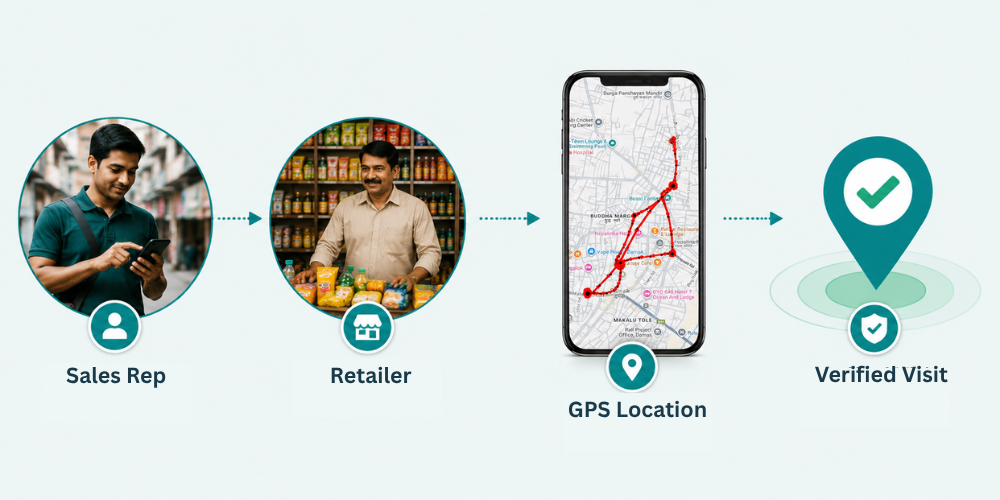
A GPS-enabled field sales tracking app can link retailer visits and other field tasks with specific location data. This empowers managers to confirm field coverage and gain insights into how sales representatives are engaging with their designated territories. Rather than being seen merely as a surveillance tool, GPS enhances the richness and relevance of the data gathered from the field, fostering a deeper understanding of sales dynamics.
-
Verified Visit Locations and Timings
A retailer visit means a lot more when a business can see both what happened and where it happened. GPS-enabled sales software captures location alongside the visit itself, giving managers a real picture of field activity instead of a secondhand account. That answers practical questions: which retailers were visited, where the visit actually took place, when it happened, which territories got covered, how actual activity compares to the planned route, and whether reps are actually hitting their assigned outlets.
That gets even more useful paired with beat planning and route management. A business can compare planned retailer coverage against what actually happened and spot the gaps in territory execution, tying sales planning and field execution together instead of leaving them as two separate things that never quite line up.
-
Eliminating Fake Check-ins
One significant advantage of using location-based verification is its ability to minimize unreliable check-ins. When a sales representative logs a visit to a retailer manually, it may not always reflect the truth. However, GPS data can serve as a helpful tool to confirm whether the visit actually took place at the intended location. It's important to note that not every field activity should be evaluated solely based on location; a sales visit encompasses much more than just arriving at a specific address. Still, incorporating location verification adds a valuable layer of accountability, enhancing the trustworthiness of visit data. For companies overseeing large field teams, integrating GPS tracking, attendance management, and retailer visit monitoring can simplify the process of verifying and analyzing field activities.
The Role of Reporting in Turning Accurate Data into Insights
Accurate data is just the starting point. While a business might gather countless trustworthy field records, it's essential to arrange and present this information in a way that resonates with managers, enabling them to take meaningful action. This is where effective field sales reporting plays a crucial role. Rather than viewing each retailer visit, order, and sales activity as isolated events, reporting systems can consolidate this data and highlight overarching trends. This shift allows managers to transition from simply asking, “What happened?” to exploring, “What does this mean for our business moving forward?”
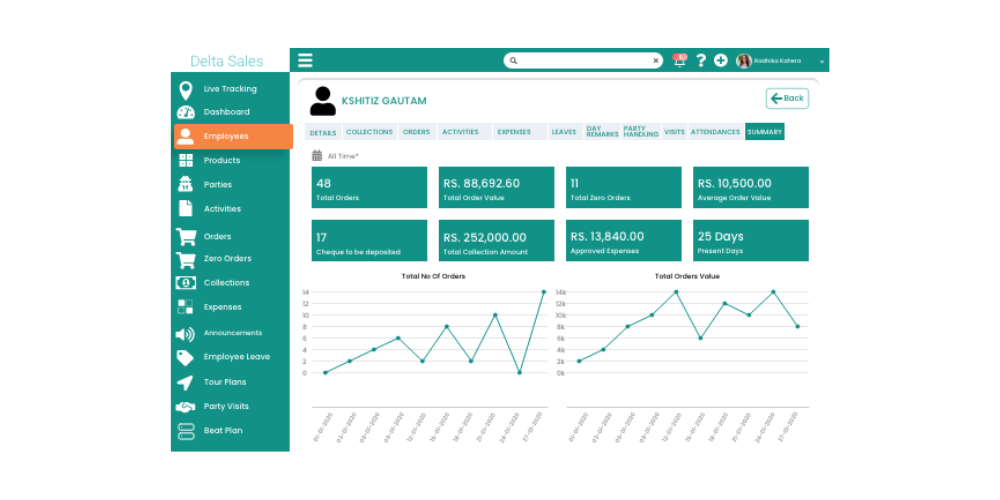
Real-Time Dashboards
Real-time dashboards give managers a current view of sales operations instead of one delayed by a day or a week. Field information shows up as it happens instead of arriving in a report typed up after the fact. Depending on the platform, that can mean visibility into sales performance, retailer visits, orders, product movement, attendance, territory performance, rep activity, payment collections, field coverage, and productivity.
That speed matters. Say sales in a territory are running noticeably below expectations. With timely reporting, a manager can dig into it while there's still time to fix something and might find that certain retailers weren't visited, a product's out of stock, or order volumes have shifted. Without that, the same problem often doesn't surface until the reporting cycle wraps up, by which point the week's already gone.
Automated Reports vs. Manual Entry
Manual reporting can be a time-consuming task, especially for businesses with a large sales team. Sales representatives often send in their information individually, managers work to merge various spreadsheets, and different teams may keep their own versions of reports. Each time information is transferred manually, there's a chance for inconsistencies to creep in. This is where automated reporting can make a real difference.
With field sales management software, information is captured seamlessly, allowing the system to organize field activities and create structured reports without the need for managers to repeatedly gather and consolidate the same data. This shift can lead to significant improvements in:
-
Speed of reporting
-
Consistency of data
-
Visibility into sales activities
-
Productivity of managers
-
Analysis of performance
-
Quality of decision-making
The benefits of automation extend beyond just cutting down on paperwork; it fosters a stronger link between what happens in the field and the insights that management can gain from it.
How Delta Sales App Combines GPS + Reporting for Accurate Field Data
Delta Sales App seamlessly integrates GPS-based field tracking with automated reporting, empowering sales managers to gain a clearer understanding of market dynamics. Rather than viewing location tracking, retailer visits, orders, and sales reports as isolated tasks, the platform weaves them together, enabling businesses to gather field insights, confirm activities, and transform data into actionable knowledge.
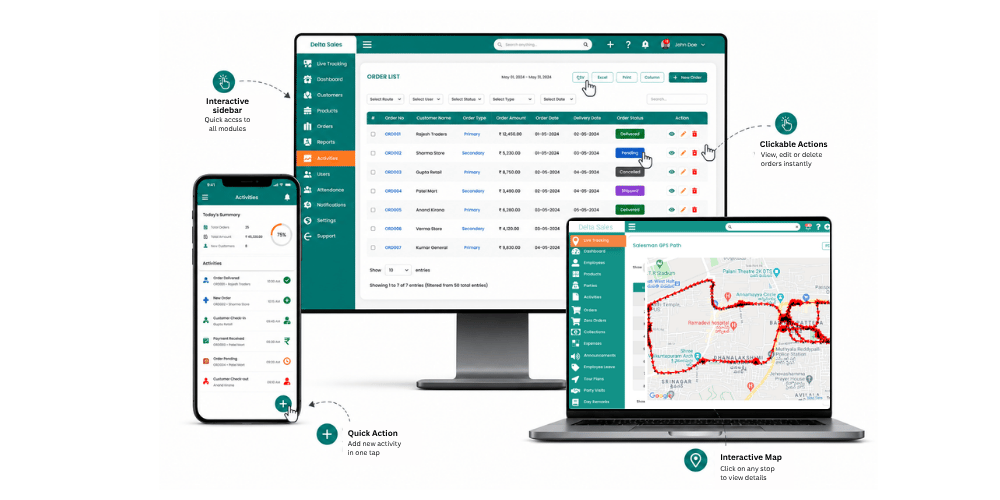
For companies overseeing FMCG sales teams, distributors, manufacturers, wholesalers, and extensive field operations, this unified approach simplifies the monitoring and analysis of daily sales activities, making it easier to stay connected with the pulse of the market.
-
GPS-Based Field Activity Tracking
Delta Sales App leverages GPS technology to enhance visibility into field operations and retailer engagements. This allows managers to pinpoint the locations of sales representatives and assess the effectiveness of territory coverage.
-
Verified Retailer Visits
Sales representatives can easily log their visits to retailers using the app, with location data providing valuable context for these interactions. This enables managers to keep more accurate and trustworthy records of field coverage and relationships with retailers.
-
Real-Time Sales Visibility
Field sales data can be visualized in centralized dashboards, providing managers with faster insights into orders, sales activities, retailer interactions, and territory performance.
-
Automated Sales Reports
Delta Sales App transforms the tedious task of manually consolidating spreadsheets into a streamlined process of generating automated reports. This allows managers to effortlessly track sales performance, activity levels, and other key metrics in the field, fostering a more intuitive understanding of their team's efforts and achievements.

-
Better Territory Management
When GPS data and sales activity insights come together, managers gain a clearer picture of territory coverage. This synergy enhances beat planning, optimizes route management, improves retailer engagement, and strengthens field team coordination.
-
Data-Driven Decision Making
The integration of verified field activities with centralized reporting empowers managers to go beyond just gathering data. They can spot trends, evaluate different territories, track performance, and make informed decisions based on trustworthy information.
Conclusion
The amount of information generated daily by field sales is huge. But the value of the data isn’t determined by the quantity of data collected. Its accuracy does.
Accurate retailer visits, orders, inventory information, payments, GPS records, and sales reports help managers understand what is really happening across their territories. That visibility allows you to make smarter business decisions, plan your sales more effectively, better manage your territory, and find revenue opportunities for your business. GPS tracking adds another layer of verification linking field activities to real-world locations. Automated reporting then converts that data into dashboards and insights that managers can use to take action more quickly.
Today, the goal for the field sales team is not to collect more data just to have more reports. Aim should be to get good field data and understand and use it quickly to make better decisions. Delta Sales App combines GPS tracking, retailer activity, sales management, and automated reporting to help businesses build a more connected, data-driven field sales operation.
Are you ready to enhance the accuracy and visibility of your field sales data? Book a free demo of the Delta Sales App to see how GPS tracking and automated reporting can help your sales team.


-1792906895-resized320.png)