
How to Automate Order Collection from Retailers?
In the FMCG industry, efficient order collection plays a critical role in maintaining a strong and responsive distribution network. Many brands continue to rely on phone calls, handwritten order books, or delayed data entry, which frequently results in missed orders, stock mismatches, and slower fulfillment cycles. As retailer expectations rise and competition heats up, manual processes make it difficult to scale operations effectively. To address these challenges, FMCG companies are increasingly relying on the Sales Order App to ensure faster ordering, greater accuracy, and real-time visibility throughout their entire sales ecosystem.
Automating retailer orders allows brands to streamline operations, improve accuracy, and ensure that products reach the market on time.
What Exactly Is Retail Order Collection Automation?
Retailer order collection automation is the process of using digital tools and software to capture, process, and manage orders from retailers without manual intervention. Instead of relying on phone calls, paper-based order books, or delayed reporting, orders are placed through mobile apps or digital portals and instantly synced with the central system.
This automation ensures higher accuracy in order entry, faster order processing, and complete visibility into retailer demand. It also allows FMCG brands to respond quickly to market needs, reduce operational delays, and build a more efficient and scalable distribution network.
Problems with Manual Order Collection
Manual order collection creates multiple challenges for FMCG brands and distributors, limiting sales growth and operational efficiency. Without a field sales automation solution, businesses struggle to maintain accuracy, visibility, and speed in their order management process.
1. High Risk of Order Errors
Inaccurate quantities, incorrect stock-keeping units, or overlooked pricing schemes are common outcomes of phone-based bookings and paper-based order taking. Order rework and retailer dissatisfaction result from these mistakes, which have an effect on FMCG order management.
2. Delayed Order Processing
Orders collected manually are usually entered into systems later, causing delays in processing and dispatch. This slows down the entire sales order automation cycle and increases the risk of stock-outs.
3. No Real-Time Sales Visibility
Without a field sales management app, managers lack real-time insights into orders, retailer demand, and rep performance. Decision-making becomes reactive instead of data-driven.
4. Missed Orders & Lost Sales
When retailers depend entirely on sales rep visits, any missed or delayed visit results in lost orders. The absence of digital order collection limits continuous sales opportunities.
5. Poor Inventory Planning
Manual order data is often incomplete or outdated, making accurate demand forecasting difficult. This affects inventory management for FMCG brands and increases excess stock or shortages.
6. Increased Operational Costs
Manual processes require more follow-ups, paperwork, and data entry, increasing administrative costs. Without a mobile sales app, sales teams spend more time on tasks that can be automated.
7. Limited Retailer Experience
Retailers expect faster ordering and transparency. Manual systems fail to provide order tracking, scheme visibility, or instant confirmation features that modern B2B ordering apps offer.
How to Automate Order Collection from Retailers
-
Digital Order Booking by Sales Representatives
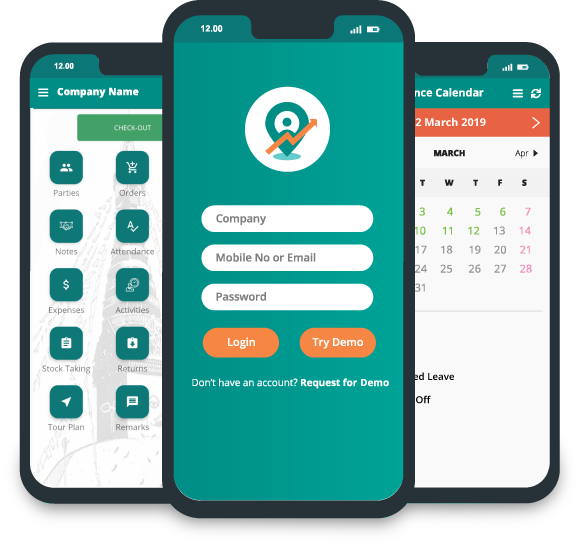
Field sales representatives can directly record retailer orders while in-store using a mobile sales app such as the DeltaSales App. The application ensures precise and consistent order entry by displaying product catalogs, prices, and active schemes.
Even in low-network areas, orders are perfect because they are instantly saved and synchronized when connectivity is available.
-
Self-Ordering Through a B2B Retailer App
Automation is not just for sales visits. A B2B ordering app allows retailers to place their own orders. Without having to wait for a sales representative, they can view ongoing schemes, track the status of their orders, and reorder stock whenever they want.
This lessens reliance on in-person visits and guarantees a steady flow of orders.
-
Real-Time Order Sync and Faster Fulfillment
Orders are immediately synchronized with the distributor or backend system upon placement. Shorter order-to-delivery cycles, improved inventory planning, and quicker processing are all made possible by this. Everyone in the supply chain uses the same, current data thanks to automated syncing.
-
Better Control with Credit and Payment Visibility
Automated order collection also improves financial discipline. Sales reps and retailers can view outstanding balances and credit limits directly in the system. This helps prevent over-crediting and reduces payment-related disputes.
Actionable Insights from Order Data
Automated order collection provides FMCG brands with real-time order data that can be transformed into actionable insights. With a field sales automation platform like DeltaSales App, businesses gain visibility that helps improve sales execution and distribution efficiency.
1. Retailer Ordering Patterns
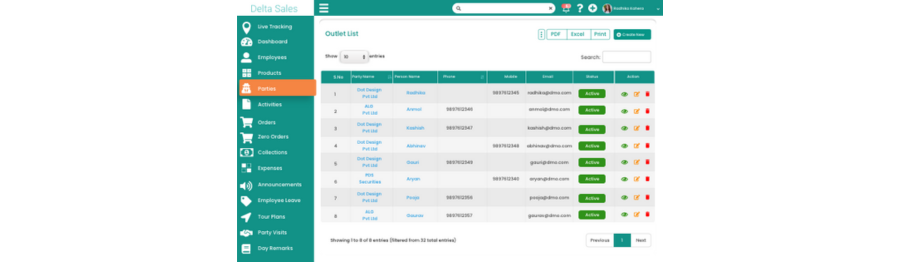
Order data shows the quantity and frequency of orders placed by each retailer. This enhances order collection efficiency, plans visit frequency, and maximizes retailer engagement.
2. Product Demand Trends
By analyzing product-wise order data, brands can identify fast-moving and slow-moving SKUs. These insights support better FMCG inventory management and reduce stock-out situations.
3. Territory-Wise Sales Performance
Managers can assess field sales performance across territories by using order data broken down by beat or region. This makes it possible to allocate resources more wisely and implement focused sales tactics.
4. Scheme & Promotion Effectiveness
Order tracking during promotional periods aids in determining which programs increase sales. Data-driven FMCG sales insights can help brands improve future offers.
5. Sales Representative Productivity
Coverage, order value, and visit efficiency are displayed in order data associated with sales representatives. This enhances accountability and performance management for the sales force.
6. Accurate Demand Forecasting
Consistent digital order data allows FMCG brands to forecast demand more accurately. This improves supply chain planning and ensures timely product availability.
How DeltaSales App Enables Order Automation
For FMCG brands, the DeltaSales App is an end-to-end field sales automation program designed to digitize and simplify retailer order collection. Faster, more accurate, and fully traceable order automation is directly supported by every feature of the platform.
1. Digital Order Booking Module
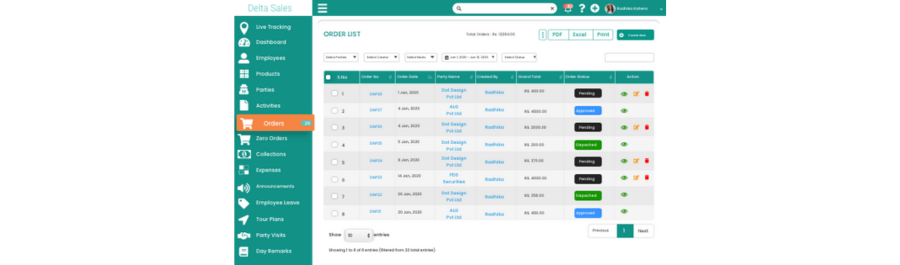
The Order Management feature allows sales representatives to book retailer orders directly from their mobile devices. With built-in product catalogs, pricing, and schemes, DeltaSales App eliminates manual errors and improves FMCG order accuracy.
2. Retailer B2B Ordering Portal
Through the Retailer App / B2B Ordering feature, retailers can place orders independently, view active offers, and track order status. This enables continuous retailer order automation even without a physical sales visit.
3. Offline Order Capture with Auto Sync
The offline functionality ensures orders can be captured without internet connectivity. Once online, data is automatically synced, supporting uninterrupted field sales automation in low-network areas.
4. Real-Time Order & Inventory Sync
DeltaSales App provides real-time data synchronization between sales teams, distributors, and management. This improves inventory visibility, reduces order delays, and accelerates fulfillment cycles.
5. Integrated Mobile CRM
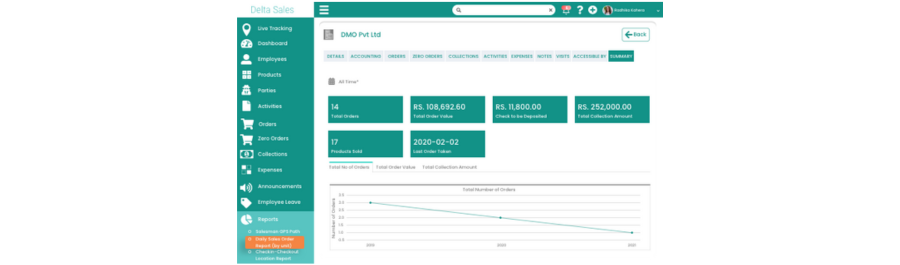
Order history, interaction notes, and retailer profiles are all kept in one location by the Mobile CRM feature. Personalized selling is supported, and retailer relationship management is strengthened.
6. Analytics & Performance Dashboards
With built-in Reports & Analytics, DeltaSales App provides insights into order trends, product performance, and territory-wise sales. These insights enable data-driven FMCG sales planning and demand forecasting.
Why Automating Order Collection Is Essential Today
In today’s fast-moving FMCG market, manual order collection struggles to meet the demands of expanding distribution networks and digitally aware retailers. Order collection automation helps brands improve speed, accuracy, and visibility across their field sales operations.
1. Faster Order Processing
Instant digital order capture and real-time backend system syncing are made possible by automated order collection. This guarantees faster order fulfillment and delivery and drastically cuts down on the processing time for sales orders.
2. Improved Order Accuracy
A digital order management system eliminates manual entry errors for quantities, pricing, and SKUs. Accurate orders reduce returns, rework, and disputes, which boosts overall FMCG sales efficiency.
3. Better Retailer Experience
Retailers gain the flexibility to place orders digitally, view live schemes, and track order status. A smooth ordering experience through B2B ordering apps strengthens retailer trust and long-term relationships.
4. Real-Time Sales Visibility
Automation provides managers with real-time insights into orders, sales activities, and demand trends across territories. This improves field sales monitoring, performance tracking, and faster decision-making.
5. Reduced Operational Costs
By eliminating paperwork, follow-ups, and manual data entry, field sales automation software reduces administrative workload. This helps FMCG brands optimize resources and lower operational expenses.
6. Scalable Sales Operations
Automated systems support higher order volumes without increasing manpower or complexity. This makes order automation ideal for FMCG brands looking to scale distribution efficiently.
7. Data-Driven Decision Making
Digital order data provides actionable insights into demand patterns, product performance, and sales trends. These insights enable more effective inventory planning, demand forecasting, and sales strategy optimization.

Conclusion
Automating order collection has become essential for FMCG brands that want to scale efficiently and remain competitive in a fast-moving market. Manual processes increase the risk of errors, missed orders, and delayed decision-making, while digital solutions like DeltaSales App enable faster order booking, real-time visibility, and smoother sales execution across the distribution network. By adopting automation, brands can improve operational efficiency, strengthen retailer relationships, and drive sustainable, data-backed growth.
Book your demo now and take the next step toward smarter sales operations.