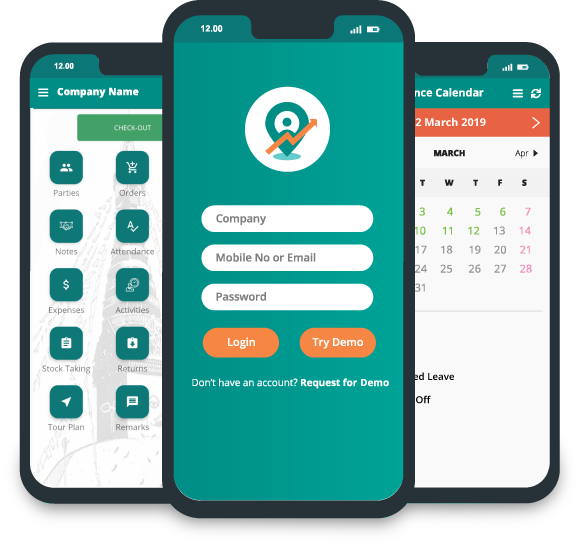

Field Force Management Software: Complete Guide for Sales Teams in 2026
Managing a field workforce has become increasingly complex in today's competitive business environment. Organizations operating across FMCG, pharmaceuticals, telecom, manufacturing, consumer goods, distribution, and service industries rely heavily on field teams to generate revenue, acquire customers, execute sales strategies, and maintain customer relationships.
However, managing employees who spend most of their time outside the office presents several operational challenges. Sales managers often struggle to monitor employee activities, track customer visits, verify attendance, ensure territory coverage, and evaluate performance accurately.
This is where the Field Force Management app plays a crucial role.
Modern businesses require real-time visibility into field operations to improve productivity, streamline workflows, reduce operational inefficiencies, and make faster business decisions. Field force management platforms provide organizations with the tools needed to track employee activities, automate routine tasks, monitor performance, and improve customer engagement through a centralized system.
In this comprehensive guide, we will explore everything sales teams need to know about field force management software, including its benefits, features, implementation strategies, industry applications, return on investment, and future trends shaping field operations in 2026.
What Is Field Force Management Software?
Field force management software is a technology platform designed to help businesses monitor, manage, and optimize the activities of employees working outside the office. These solutions provide real-time visibility into field operations while helping managers coordinate tasks, track attendance, monitor customer visits, and analyze workforce performance.
Traditionally, field teams relied on spreadsheets, phone calls, paper reports, and manual updates to communicate daily activities. These methods often created delays, reporting inaccuracies, and limited visibility into field operations.
Modern field force management platforms eliminate these challenges by digitizing and automating critical field processes.
Organizations use these systems to:
- Track employee locations
- Monitor customer visits
- Manage attendance
- Assign tasks
- Optimize territories
- Generate reports
- Improve accountability
- Enhance productivity
By consolidating field operations into a single platform, businesses gain greater control over workforce management while improving operational efficiency.
Why Field Force Management Software Is Essential for Modern Sales Teams
The expectations placed on field sales teams continue to increase. Customers expect faster responses, personalized interactions, timely follow-ups, and better service experiences. At the same time, organizations must improve productivity while controlling costs and maximizing resource utilization.
Without proper visibility, managing field teams becomes increasingly difficult.
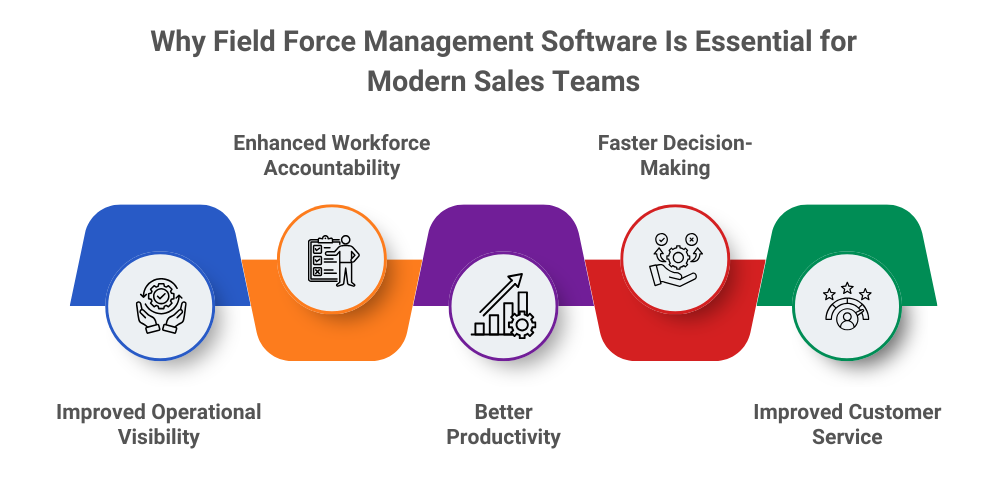
Improved Operational Visibility
Managers gain real-time insights into employee activities, customer visits, territory coverage, and overall workforce performance through field sales tracking app capabilities.
Enhanced Workforce Accountability
Automated activity monitoring helps organizations verify attendance, customer interactions, and task completion while improving transparency across field operations.
Better Productivity
By reducing administrative work and streamlining daily processes, businesses can improve workforce efficiency through sales force automation software solutions.
Faster Decision-Making
Real-time field data enables managers to identify issues quickly, reallocate resources, and make informed operational decisions without delays.
Improved Customer Service
Better visibility into customer interactions helps organizations improve response times, follow-ups, and relationship management using customer visit tracking systems.
How Field Force Management Software Works
Field force management software combines mobile applications, cloud platforms, GPS technology, reporting tools, and workflow automation to provide complete visibility into field operations.
Although features vary between solutions, most systems follow a similar workflow.
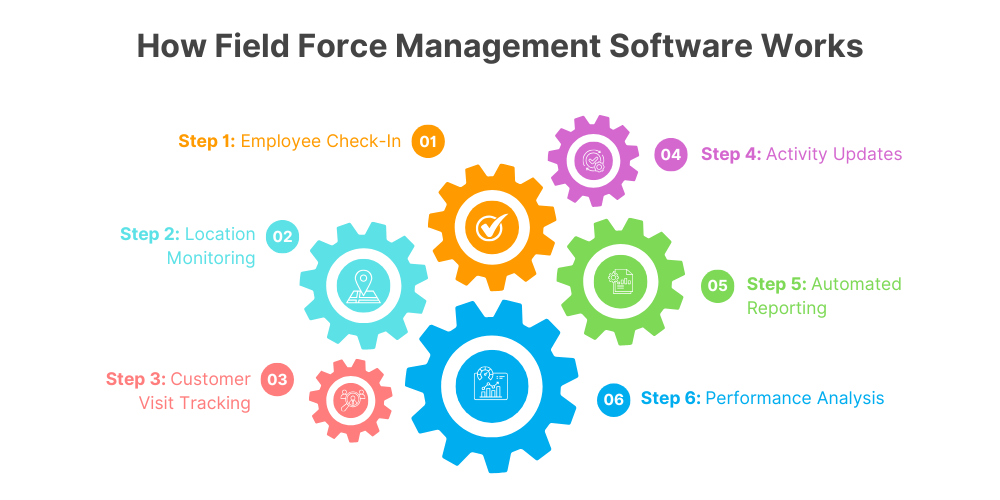
Step 1: Employee Check-In
Field representatives begin their day by checking into the mobile application. The system records attendance, location, assigned tasks, and work schedules, creating a reliable foundation for activity tracking.
Step 2: Location Monitoring
The software captures employee movements throughout the workday, helping managers monitor field activities through GPS tracking for field teams capabilities.
Step 3: Customer Visit Tracking
Customer visits are recorded automatically, allowing organizations to verify interactions, monitor schedules, and maintain accurate customer engagement records.
Step 4: Activity Updates
Field employees update completed tasks, orders, meetings, collections, and follow-ups through mobile devices, ensuring real-time operational visibility.
Step 5: Automated Reporting
The platform generates reports covering attendance, productivity, customer visits, and sales activities through automated reports and analytics.
Step 6: Performance Analysis
Managers analyze dashboards and reports to evaluate employee performance, territory coverage, productivity trends, and business outcomes.
Core Components of a Field Force Management System
A successful field force management solution combines multiple technologies that work together to improve workforce productivity and operational control.
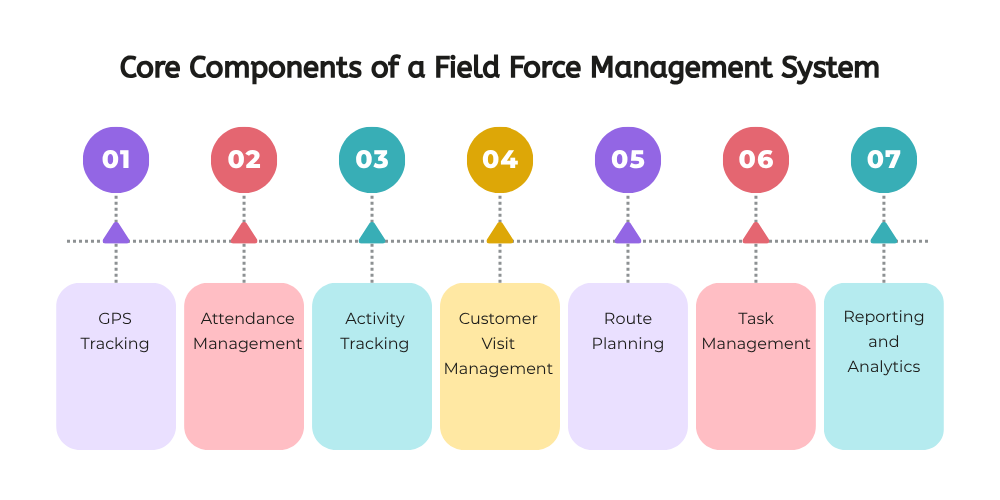
GPS Tracking
Provides real-time location visibility, helping organizations monitor field movements, customer visits, and territory coverage effectively.
Attendance Management
Automates attendance recording and work-hour tracking while improving workforce accountability and reporting accuracy.
Activity Tracking
Provides visibility into daily employee activities, helping managers evaluate productivity and task completion.
Customer Visit Management
Records customer interactions, visit outcomes, and follow-up requirements to improve relationship management.
Route Planning
Optimizes travel schedules and territory coverage, helping employees spend more time engaging customers and less time traveling.
Task Management
Enables managers to assign, monitor, and evaluate field activities while improving execution consistency.
Reporting and Analytics
Transforms operational data into actionable insights that support performance evaluation and business decision-making.
Benefits of Field Force Management Software
Organizations implementing field force management software often experience significant improvements across multiple areas of operation.
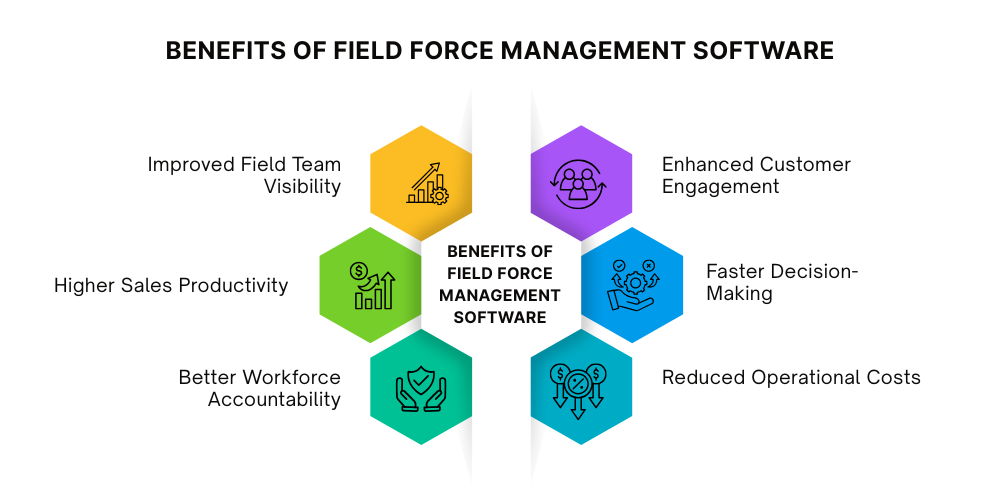
Improved Field Team Visibility
Managers gain complete visibility into employee activities, customer visits, territory performance, and workforce productivity through field workforce management technology.
Higher Sales Productivity
Automated processes reduce administrative burdens and enable field representatives to focus on customer engagement and revenue-generating activities.
Better Workforce Accountability
Activity tracking, attendance verification, and customer visit monitoring create transparency that encourages responsibility and consistent performance.
Enhanced Customer Engagement
Organizations improve customer interactions, follow-ups, and service quality through structured field sales management app processes.
Faster Decision-Making
Real-time data enables managers to respond quickly to operational challenges, customer requests, and performance issues.
Reduced Operational Costs
Optimized travel routes, improved scheduling, and automated workflows help businesses reduce unnecessary expenses and maximize resource utilization.
Key Features of Field Force Management Software
The effectiveness of a field force management solution largely depends on the features it offers. Modern businesses need more than basic employee tracking. They require a comprehensive platform that improves visibility, automates workflows, enhances customer engagement, and supports data-driven decision-making.
Below are the most important features organizations should evaluate before selecting a solution.
GPS Tracking
GPS tracking enables managers to monitor employee movements in real time, verify customer visits, improve territory coverage, and strengthen workforce accountability through GPS tracking software.
Attendance Management
Automated attendance tracking helps businesses record work hours, monitor employee availability, maintain accurate records, and improve workforce discipline using attendance management software.
Activity Tracking
Activity tracking provides visibility into daily field operations, helping managers monitor tasks, customer interactions, productivity levels, and performance trends through field activity tracking.
Customer Visit Management
Customer visit management helps organizations verify visits, record interaction outcomes, maintain customer histories, and improve relationship management through customer visit tracking software.
Route Planning and Territory Management
Optimized route planning reduces travel time, improves customer coverage, increases visit frequency, and enhances field productivity through route optimization software.
Real-Time Reporting
Real-time reporting provides instant access to operational data, helping managers make faster decisions and improve performance through sales reporting software.
Order Management
Order management simplifies order collection, order processing, and order tracking while improving sales execution through mobile order management.
Sales Automation
Automation eliminates repetitive administrative tasks and streamlines workflows, enabling field teams to improve efficiency through sales automation tools.
Performance Analytics
Analytics dashboards provide actionable insights into employee productivity, territory performance, and customer engagement through sales performance analytics.
Mobile Accessibility
Mobile applications enable field representatives to access customer information, update activities, and manage tasks from anywhere using mobile field force management solutions.
GPS Tracking in Field Force Management
Location visibility is one of the most valuable capabilities within modern field force management systems. GPS technology enables businesses to monitor employee movements, verify customer visits, optimize routes, and improve workforce accountability.
As field operations become increasingly distributed, GPS tracking plays a critical role in helping managers maintain visibility without relying on manual updates.
Why GPS Tracking Matters
GPS tracking provides accurate information regarding employee locations, customer visits, route adherence, and territory coverage, helping organizations improve field employee tracking capabilities.
Improves Territory Coverage
Managers can identify underserved regions, optimize territory allocation, and improve customer coverage using data generated through territory management app.
Enhances Workforce Accountability
Location-based tracking creates transparency by verifying field activities, improving operational control, and supporting workforce accountability through employee monitoring software.
Supports Route Optimization
GPS data helps organizations reduce travel time, improve scheduling, and increase customer visits by leveraging route planning software.
Enables Faster Decision-Making
Real-time visibility into field operations helps managers respond quickly to customer requests, territory challenges, and operational issues using live location tracking.
Attendance Tracking for Field Teams
Attendance tracking for field teams is a critical component of modern workforce management, especially for organizations where employees operate outside traditional office environments. Unlike desk-based roles, field employees begin their day in different locations, travel across territories, and interact directly with customers, making conventional attendance systems ineffective and unreliable.
Modern attendance tracking software enables organizations to record employee check-ins and check-outs through mobile devices, ensuring accurate time logging regardless of location. This eliminates dependency on manual registers or end-of-day reporting, which often leads to inaccuracies and compliance issues.
How Attendance Tracking Works in Field Operations
Field employees use mobile applications to mark their attendance at the start of the day. The system automatically captures timestamp, GPS location, and user identity, ensuring that attendance records are both accurate and verifiable. Managers can monitor workforce presence in real time and identify attendance patterns across teams and territories.
Key Benefits of Attendance Tracking for Field Teams
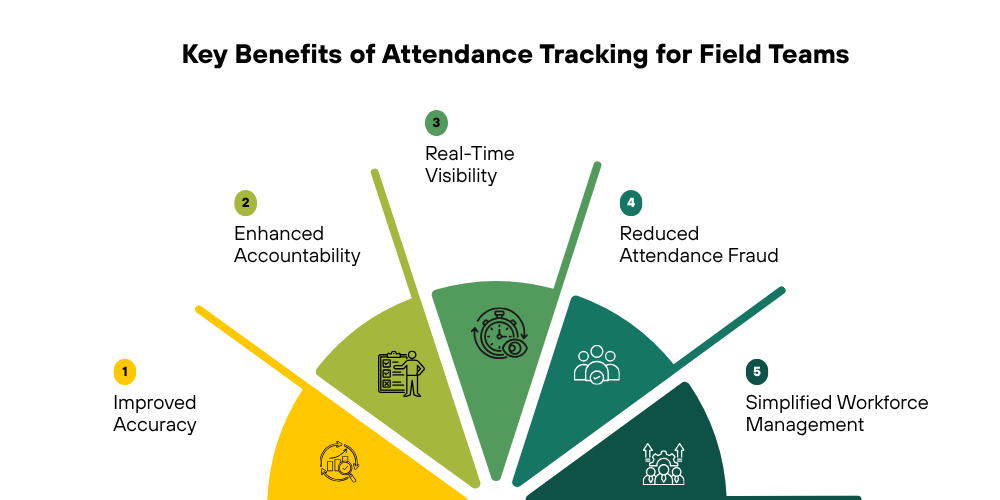
Improved Accuracy: Digital systems eliminate manual errors and ensure precise recording of work hours using field employee attendance tracking.
Enhanced Accountability: Employees are more responsible for reporting their work schedule, improving discipline and transparency.
Real-Time Visibility: Managers can instantly view who is active in the field and who is unavailable, improving operational control.
Reduced Attendance Fraud: GPS-based verification prevents false check-ins and ensures authentic attendance records.
Simplified Workforce Management: Automated logs reduce administrative workload and streamline HR processes.
Real-Time Reporting for Field Sales Teams
Real-time reporting for field sales teams is a critical capability that enables organizations to monitor sales activities, customer interactions, and workforce performance as they happen. In traditional systems, managers often rely on end-of-day or weekly reports, which delay decision-making and reduce operational efficiency. Modern real-time sales reporting software eliminates these delays by providing instant access to field data through mobile and cloud-based platforms.
With real-time reporting, field employees can submit updates immediately after customer visits, order placements, meetings, or task completion. This ensures that managers always have up-to-date information on field operations, allowing them to respond quickly to changes in the market or customer requirements.
How Real-Time Reporting Works in Field Operations
Field representatives use mobile applications to update their daily activities, which are instantly synchronized with the central dashboard. Managers can view attendance status, visit reports, sales orders, and performance metrics in real time using field sales reporting systems. This continuous data flow improves transparency and reduces dependency on manual reporting processes.
Key Benefits of Real-Time Reporting for Field Teams
Faster Decision-Making: Managers can take immediate action based on live data using real-time field visibility tools.
Improved Sales Performance: Instant insights help identify opportunities, track progress, and optimize sales strategies more effectively.
Better Workforce Monitoring: Supervisors can track employee productivity, territory coverage, and task completion without delays.
Enhanced Customer Responsiveness: Quick access to customer-related updates allows faster follow-ups and improved service quality.
Reduced Reporting Delays: Automated data synchronization eliminates the need for manual reporting and reduces administrative workload.
Field Force Management Software for FMCG Businesses
Field Force Management Software plays a crucial role in the FMCG (Fast-Moving Consumer Goods) industry, where field sales teams are responsible for managing retailers, distributors, wholesalers, and extensive market territories. FMCG operations are fast-paced, highly competitive, and distribution-driven, making real-time visibility and workforce control essential for business success.
Modern FMCG field force management software helps organizations streamline field operations, improve sales execution, and ensure consistent market coverage across large geographic areas.
Why FMCG Businesses Need Field Force Management Software
FMCG companies deal with high transaction volumes, frequent customer visits, and complex distribution networks. Without proper systems, it becomes difficult to track field activities, monitor performance, and ensure execution consistency.
Field force management solutions solve these challenges by providing centralized control over field teams, enabling managers to track visits, monitor orders, and evaluate performance in real time.
Key Use Cases in FMCG Field Operations
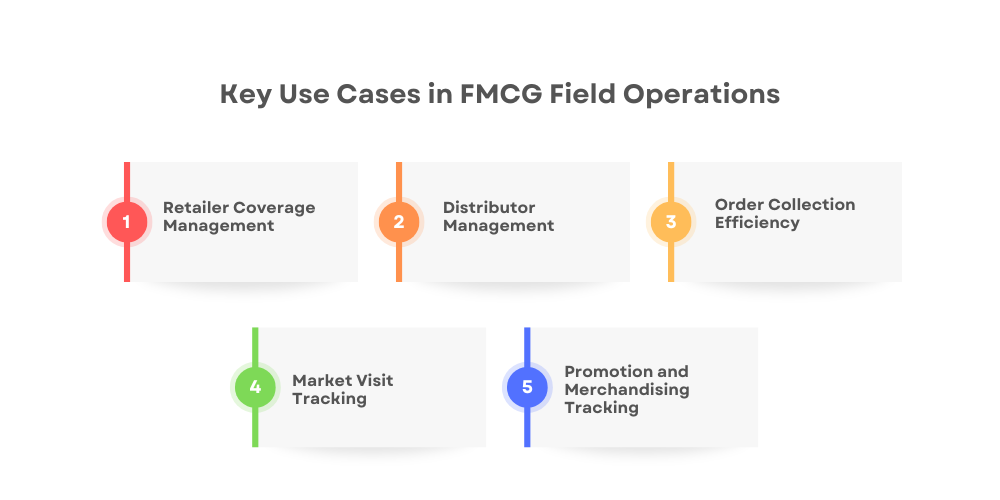
Retailer Coverage Management: Ensures sales representatives visit retailers regularly and maintain product availability through retail execution app.
Distributor Management: Helps FMCG companies monitor distributor engagement, stock movement, and secondary sales using distributor management systems.
Order Collection Efficiency: Simplifies on-ground order taking and improves accuracy through mobile order management tools.
Market Visit Tracking: Provides visibility into daily field activities, ensuring proper market coverage and route adherence.
Promotion and Merchandising Tracking: Helps businesses monitor in-store execution of promotional campaigns and merchandising activities.
Benefits for FMCG Businesses
FMCG organizations adopting field force management software experience improved visibility, better demand fulfillment, stronger retailer relationships, and increased sales productivity.
Improved Market Coverage: Ensures no territory or retail outlet is neglected.
Higher Sales Efficiency: Field teams spend more time selling and less time on manual reporting using FMCG sales automation software.
Better Inventory Visibility: Helps track product availability across distribution channels.
Stronger Execution Control: Ensures promotions, pricing, and merchandising strategies are implemented correctly.
Real-Time Decision-Making: Managers receive instant updates on sales performance and field activities.
Field Force Management Software vs CRM
Many organizations evaluating sales technology often compare field force management software with CRM platforms. While both solutions contribute to sales growth and customer management, they serve different operational purposes.
-1781673212.png)
Understanding the distinction helps businesses invest in the right technology and build an effective sales ecosystem.
What Is a CRM?
A Customer Relationship Management system is primarily designed to manage customer data, sales opportunities, communication history, and relationship-building activities through Mobile CRM app.
CRM platforms help organizations maintain customer records, manage pipelines, and track interactions throughout the sales cycle.
What Is Field Force Management Software?
Field force management software focuses on managing employees working outside the office. It helps businesses monitor field activities, attendance, customer visits, productivity, and territory coverage through field workforce management software.
Key Differences Between CRM and Field Force Management Software
Customer Management vs Workforce Management
CRM systems focus on customer relationships, while field force management software focuses on managing employee activities through field operations management.
Sales Pipeline vs Field Execution
CRM platforms track opportunities and deals, whereas field force solutions monitor actual on-ground activities using field sales execution software.
Customer Records vs Activity Tracking
CRM systems maintain customer information, while field force software tracks attendance, visits, routes, and productivity through activity tracking software.
Communication vs Visibility
CRM platforms improve customer communication, while field force management software improves operational visibility using real-time field monitoring.
When Businesses Need Both Solutions
Organizations with large sales teams often benefit from integrating CRM systems with field force management software. Together, they provide complete visibility into customer relationships and field activities through sales management technology.
How to Choose Field Force Management Software
Selecting the right field force management software is a critical decision that directly impacts sales productivity, operational efficiency, and overall business growth. With multiple solutions available in the market, organizations must carefully evaluate features, scalability, usability, and long-term value before making a choice.
The ideal field force management software selection process should align with your business size, industry requirements, and field team structure.
Define Your Business Requirements
Before evaluating software options, organizations must clearly define operational needs such as team size, number of territories, reporting structure, and sales workflow complexity. This ensures the selected system matches real-world field operations.
A well-defined requirement helps businesses avoid overpaying for unnecessary features or selecting tools that lack essential capabilities for sales team management software.
Evaluate Core Features
The effectiveness of any solution depends on its core functionalities. Businesses should prioritize features that directly support field operations, including GPS tracking, attendance monitoring, customer visit tracking, and real-time reporting.
A strong field sales tracking system should also support activity logging, order management, and performance analytics for complete operational visibility.
Check Ease of Use and Adoption
Even the most advanced system fails if employees do not use it consistently. The platform should have a simple interface, mobile-friendly design, and intuitive navigation.
High adoption rates are essential for successful implementation of mobile field force applications, ensuring field employees can easily update activities and reports.
Assess Scalability and Flexibility
As businesses grow, field operations expand across new territories and larger teams. The software must support scaling without performance issues.
Scalable workforce management software ensures smooth handling of additional users, regions, and data without requiring system changes.
Review Integration Capabilities
Modern field force systems should integrate with CRM, ERP, inventory, and accounting platforms. Integration eliminates data silos and improves operational efficiency.
A well-integrated sales ecosystem software ensures seamless data flow between departments and improves decision-making accuracy.
Analyze Reporting and Analytics
Reporting capabilities determine how effectively managers can interpret field data. Businesses should look for customizable dashboards, real-time insights, and performance analytics.
Strong sales analytics software helps organizations identify trends, optimize routes, and improve productivity across field teams.
Evaluate Vendor Support and Reliability
Reliable customer support, onboarding assistance, and training resources are essential for successful deployment. Vendors should offer ongoing updates and technical assistance.
Choosing a proven enterprise field force solution provider ensures long-term stability and better return on investment.
Compare Pricing and ROI
Cost should not be the only deciding factor. Organizations must evaluate long-term value, efficiency gains, and productivity improvements.
A well-chosen field force management platform should deliver measurable ROI through reduced operational costs, improved sales output, and better resource utilization.
Common Challenges in Field Force Management and How Software Solves Them
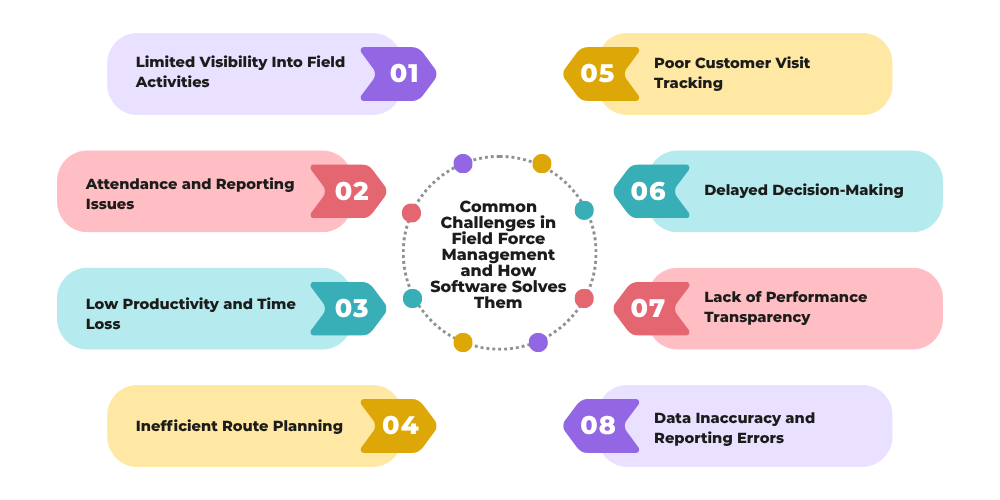
Managing a distributed field workforce is complex because employees operate across different locations, customer segments, and time zones. Without proper systems in place, organizations often struggle with visibility, accountability, productivity, and performance tracking. Modern field force management software solutions help overcome these challenges by digitizing and automating field operations.
Limited Visibility Into Field Activities
One of the biggest challenges is the lack of real-time visibility into employee movements and customer interactions. Managers often rely on manual updates, which are delayed and inconsistent.
Field force systems solve this by enabling live tracking, visit monitoring, and activity updates through real-time field tracking software, giving managers complete operational control.
Attendance and Reporting Issues
Traditional attendance systems are not designed for mobile employees. Field teams often work remotely, making accurate attendance tracking difficult.
Automated mobile attendance management systems ensure accurate check-ins, GPS-based verification, and real-time reporting, eliminating errors and manipulation.
Low Productivity and Time Loss
Field employees often spend significant time traveling, reporting, or performing non-sales activities, reducing productive selling time.
With automation and route optimization features in field sales productivity tools, organizations can reduce travel inefficiencies and maximize customer-facing time.
Inefficient Route Planning
Without optimized routes, field representatives may follow unstructured travel plans, leading to increased costs and reduced daily coverage.
Advanced route optimization software helps plan efficient travel sequences, reduce fuel expenses, and improve the number of customer visits per day.
Poor Customer Visit Tracking
Organizations often struggle to verify whether scheduled customer visits are actually completed and documented properly.
Modern systems enable GPS-based verification, visit logging, and real-time updates through customer visit tracking systems, ensuring accurate field execution.
Delayed Decision-Making
Manual reporting processes slow down data flow, preventing managers from responding quickly to operational issues.
Real-time dashboards and analytics in sales performance tracking software provide instant insights, enabling faster and more informed decision-making.
Lack of Performance Transparency
Without structured systems, evaluating employee performance becomes subjective and inconsistent.
Digital platforms offer measurable KPIs, automated reports, and activity tracking through field workforce analytics tools, ensuring fair and transparent performance evaluation.
Data Inaccuracy and Reporting Errors
Manual data entry often leads to errors, duplication, and missing information, affecting business decisions.
Automated data capture in digital field management systems improves accuracy, ensures consistency, and builds trust in reporting.
ROI of Field Force Management Software
Return on Investment (ROI) is one of the most important considerations when organizations adopt field force management software. Beyond operational improvements, businesses want measurable financial and productivity gains that justify the investment. A well-implemented field force management system delivers ROI across cost savings, revenue growth, and efficiency improvements.
Increased Field Team Productivity
One of the most direct ROI drivers is improved productivity. By reducing manual reporting, unnecessary travel, and administrative tasks, field teams can focus more on customer engagement and sales activities.
With field sales productivity software, organizations increase productive selling time, leading to higher conversions and improved revenue generation.
Reduced Operational and Travel Costs
Field operations often involve significant travel expenses, fuel costs, and inefficient route planning. Without optimization, these costs can quickly escalate.
Using route optimization and tracking tools, businesses can reduce travel distance, improve scheduling, and significantly lower operational expenses.
Improved Sales Performance
Better visibility into field activities allows managers to identify high-performing strategies, optimize territories, and improve customer coverage.
A strong sales performance management system helps organizations increase order frequency, improve conversion rates, and drive consistent revenue growth.
Lower Administrative Burden
Manual reporting, attendance tracking, and activity monitoring require significant administrative effort. Automation reduces dependency on manual processes.
With automated field reporting software, organizations save time, reduce errors, and allow managers to focus on strategic decision-making.

Better Customer Retention
Consistent visits, timely follow-ups, and improved service quality strengthen customer relationships and increase retention rates.
Using customer engagement tracking tools, businesses ensure better communication and stronger long-term relationships with clients.
Optimized Resource Utilization
Field force management software helps allocate resources more effectively across territories, ensuring balanced workload distribution and better coverage.
A workforce optimization platform enables managers to maximize output from existing teams without increasing headcount.
Faster Decision-Making and Revenue Impact
Real-time insights allow managers to take immediate action on underperformance, missed visits, or sales opportunities.
With real-time sales analytics software, businesses improve responsiveness, reduce delays, and accelerate revenue generation cycles.
Reduced Errors and Leakage
Automated tracking reduces errors in reporting, order collection, and attendance management, preventing revenue leakage.
A reliable field automation system ensures accurate data capture and improves financial control across operations.
Best Practices for Implementing Field Force Management Software
The success of any implementation depends not only on the software itself but also on how effectively organizations adopt and utilize the platform.
Following proven implementation strategies can significantly improve results.
Define Clear Business Goals
Organizations should establish measurable objectives before implementation to maximize value from field force management solutions.
Involve Employees Early
Employee participation helps improve adoption rates and reduce resistance toward field workforce automation initiatives.
Provide Structured Training
Comprehensive onboarding ensures employees understand features and workflows within mobile workforce management platforms.
Automate Key Processes
Businesses should automate attendance, reporting, and task management wherever possible using workflow automation software.
Monitor Key Metrics
Organizations should regularly evaluate performance indicators generated by field sales analytics systems.
Continuously Optimize Workflows
Regular reviews help identify improvement opportunities and maximize value from business process optimization initiatives.
How Delta Sales App Helps Manage Field Teams Effectively
Modern field sales operations require more than basic tracking tools. Businesses need a unified platform that brings together visibility, automation, reporting, and workforce optimization in one place. Delta Sales App is designed to simplify field force management by giving managers complete control over field activities while enabling sales teams to work more efficiently in real time.
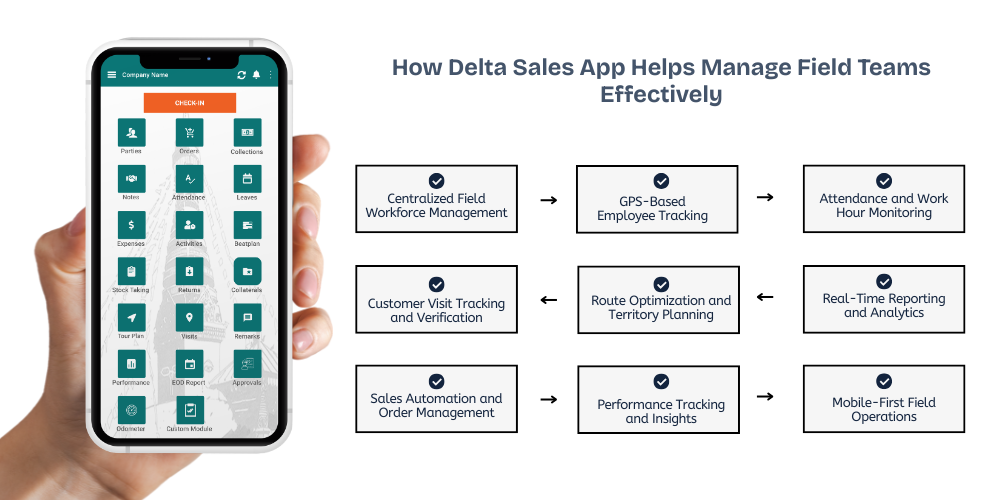
Centralized Field Workforce Management
Delta Sales App acts as a centralized platform for managing field teams, helping organizations streamline daily operations through field force management software capabilities. Managers can assign tasks, monitor activities, and track performance from a single dashboard.
GPS-Based Employee Tracking
The platform provides real-time location tracking, enabling businesses to monitor employee movements, verify visits, and improve territory coverage using GPS tracking for field employees.
Attendance and Work Hour Monitoring
Automated attendance tracking helps organizations record check-ins, work hours, and field presence accurately through attendance management software.
Customer Visit Tracking and Verification
Every customer visit is recorded with location, time, and activity details, ensuring complete transparency in field operations through customer visit tracking system.
Route Optimization and Territory Planning
Delta Sales App helps reduce travel time and improve efficiency by optimizing routes and improving territory coverage using route planning software.
Real-Time Reporting and Analytics
Managers gain instant access to field data, helping them analyze productivity, sales performance, and customer engagement through real-time reporting dashboard.
Sales Automation and Order Management
The platform automates key sales activities such as order collection, reporting, and follow-ups, improving efficiency through sales automation software.
Performance Tracking and Insights
Advanced analytics help managers evaluate individual and team performance, identify gaps, and improve outcomes using sales performance analytics tools.
Mobile-First Field Operations
The mobile application ensures field representatives can update activities, collect orders, and communicate seamlessly through mobile field force apps.
Future Trends in Field Force Management Software
The future of field operations is becoming increasingly data-driven, automated, and intelligent. Businesses adopting modern solutions are already witnessing significant improvements in productivity and decision-making.
AI-Powered Field Insights
Artificial intelligence will play a major role in analyzing field data, predicting sales opportunities, and improving decision-making through AI-powered field sales software.
Predictive Analytics
Future systems will forecast sales performance, customer behavior, and territory potential using predictive analytics tools.
Advanced Route Optimization
Next-generation systems will use real-time traffic and behavioral data to improve route efficiency through smart route optimization software.
Hyper-Automation of Field Tasks
Automation will extend beyond reporting to include task scheduling, follow-ups, and performance alerts through field sales automation platforms.
Deeper CRM Integration
Field force systems will integrate more deeply with CRM platforms to provide a unified customer and field view using integrated CRM solutions.
Enhanced Mobile Intelligence
Mobile apps will become smarter, offering offline intelligence, voice commands, and real-time suggestions through mobile field intelligence systems.
Final Thoughts
Field force management software has become a critical part of modern sales operations. It improves visibility, accountability, productivity, and decision-making across organizations of all sizes.
Businesses that adopt modern platforms gain a significant competitive advantage by optimizing field activities, improving customer engagement, and increasing operational efficiency.
Whether managing a small sales team or a large distributed workforce, investing in the right technology is essential for sustainable growth.
Ready to Transform Your Field Sales Operations?
Book a free demo today and experience how Delta Sales App can streamline your field operations, improve productivity, and provide real-time visibility across your entire sales team.