
The Ultimate Field Sales Operations FAQ: 50 Questions Every Team Should Know

Field sales remains one of the most effective ways for businesses to build customer relationships, expand market reach, and drive revenue growth. Whether you're managing FMCG distributors, pharmaceutical representatives, consumer goods sales teams, or B2B field executives, successful field sales operations require much more than simply sending representatives into the market.
Modern field sales management involves territory planning, visit scheduling, route optimization, attendance tracking, order management, reporting, performance monitoring, and technology adoption. As organizations grow, managing these processes manually becomes increasingly difficult, leading to missed opportunities, lower productivity, inaccurate reporting, and reduced visibility into field activities.
To overcome these challenges, organizations are increasingly adopting field sales management software and sales force automation tools that streamline operations and improve accountability.
This comprehensive FAQ guide answers 50 of the most commonly asked questions about field sales operations, helping sales leaders, supervisors, and business owners build more productive and efficient field teams.
Field Team Management
Field team management is essential for driving sales performance and ensuring efficient market coverage. It involves organizing field sales representatives, assigning territories, tracking performance, and providing regular coaching.
A well-managed field sales team helps improve customer relationships, increase productivity, and achieve sales targets while ensuring better visibility and accountability across field operations.
1. What is the difference between inside sales and field sales?

Inside sales professionals typically work from an office or remote location and interact with customers through phone calls, emails, video meetings, and other digital communication channels. Their primary responsibilities include lead generation, lead qualification, relationship nurturing, follow-ups, and closing deals without physical meetings. This model allows businesses to reach a larger number of prospects while reducing travel costs and increasing operational efficiency.
Field sales, also known as outside sales, involves representatives meeting customers in person within their assigned sales territory. A field sales representative regularly conducts customer visits at retail outlets, distributor locations, offices, warehouses, or project sites. Their role extends beyond selling and includes product demonstrations, merchandising checks, order collection, competitor analysis, and gathering valuable market intelligence. The face-to-face selling approach helps build stronger customer relationships and improves trust, which is particularly important in industries that rely heavily on personal interactions.
Key Differences Between Inside Sales and Field Sales
- Work Environment: Inside sales teams work remotely or from an office, while field sales teams operate in the market.
- Customer Interaction: Inside sales relies on digital communication, whereas field sales focuses on in-person meetings.
- Travel Requirements: Inside sales requires minimal travel, while field sales involves frequent travel across assigned territories.
- Relationship Building: Field sales typically creates stronger customer relationships through direct engagement.
- Market Visibility: Field sales representatives provide real-time market insights, competitor information, and customer feedback.
- Scalability: Inside sales is generally more scalable and cost-effective for managing large prospect volumes.
2. What is a field sales territory and how is it defined?
A field sales territory is a specific geographic area assigned to a sales representative or sales team for managing customer relationships, conducting sales activities, and ensuring effective market coverage. A well-defined territory helps organizations allocate resources efficiently, improve productivity, and maximize sales opportunities within a particular region.
Territories are typically defined based on several important factors, including:
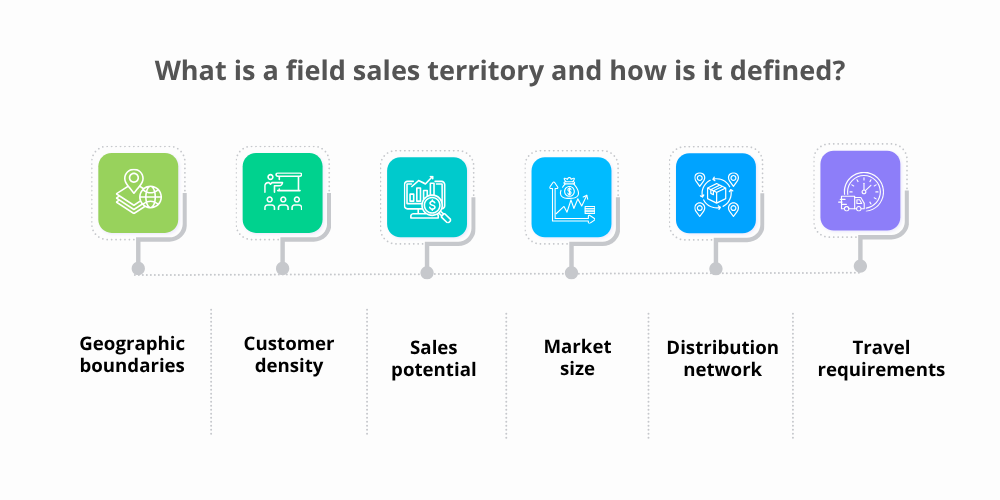
- Geographic boundaries to clearly define the area of responsibility
- Customer density and the number of active outlets
- Sales potential and revenue opportunities within the market
- Market size and growth prospects
- Distribution network and customer accessibility
- Travel requirements and route efficiency
For example, a company operating in Bihar may divide Patna into multiple territories based on outlet density and business potential. Through proper territory allocation, each sales representative becomes responsible for customer acquisition, relationship management, order collection, and business development within their assigned area.
Effective territory management app provides several benefits:
- Balanced workloads across sales teams
- Better customer coverage and engagement
- Reduced travel time and operational costs
- Increased field sales productivity
- Improved accountability and performance tracking
Poorly designed territories can lead to uneven workloads, missed opportunities, and inefficient field operations, making regular field sales planning and territory reviews essential for long-term success.
3. How many field reps does a company typically need per territory?
There is no fixed formula for determining how many field representatives a company needs per territory. The ideal team size depends on factors such as industry type, market potential, outlet density, visit frequency, and geographic coverage requirements. Effective field workforce planning ensures that territories are adequately staffed without overburdening sales representatives.
Several factors influence the required number of field reps:
- Number of Active Customers: Territories with a large number of retailers, distributors, or customers require more sales resources.
- Visit Frequency: Weekly visit schedules generally require more representatives than monthly coverage plans.
- Travel Distance: Larger territories increase travel time, reducing the number of productive visits a rep can complete.
- Product Complexity: Products that require demonstrations, training, or technical discussions often need more dedicated sales attention.
- Sales Targets and Market Potential: High-growth territories may require additional representatives to maximize opportunities.
Many FMCG and consumer goods companies design territories so that each rep can complete approximately 20–30 productive customer visits per day while maintaining service quality. Strong sales territory management helps ensure balanced workloads, better customer coverage, and improved sales productivity. As markets expand and customer demands change, companies should regularly review territory performance and adjust their field sales team structure accordingly.
4. How should a sales manager structure a daily field sales review?
A daily field sales review is an essential management practice that helps sales managers monitor team performance, improve accountability, and identify challenges before they impact business results. By reviewing daily activities, managers gain better visibility into field operations and can provide timely support to their teams.
An effective daily field sales review should include the following key areas:
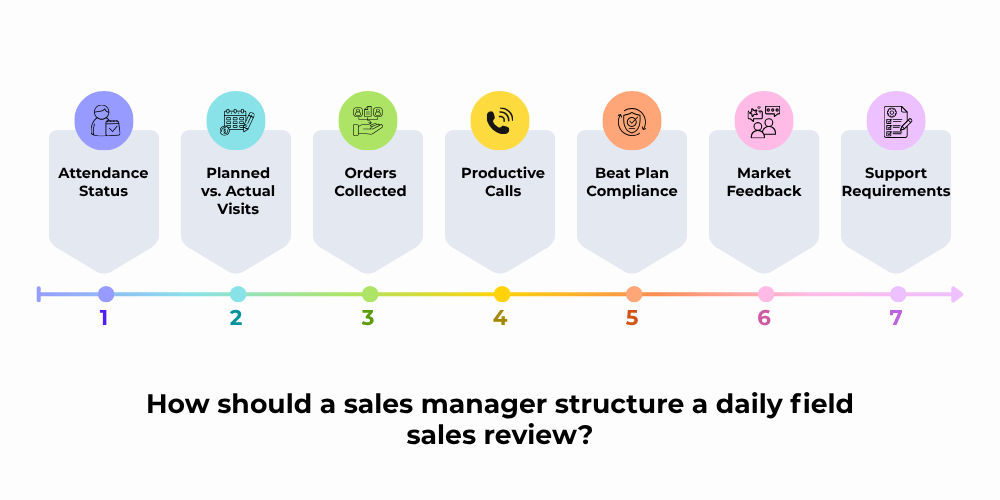
- Attendance Status: Verify which field representatives started work on time and identify any absences or attendance issues.
- Planned vs. Actual Visits: Compare scheduled outlet visits with completed visits to assess coverage and execution.
- Orders Collected: Review the number and value of orders generated during the day.
- Productive Calls: Measure customer visits that resulted in orders, follow-ups, or meaningful business discussions.
- Beat Plan Compliance: Ensure representatives followed their assigned routes and visit schedules.
- Market Feedback: Gather insights on competitor activities, customer concerns, stock availability, and market trends.
- Support Requirements: Identify obstacles preventing representatives from meeting targets and determine corrective actions.
Effective daily sales reporting should focus on coaching, guidance, and problem-solving rather than simply monitoring employees. Regular reviews help improve sales activity tracking, boost sales productivity, and ensure consistent field sales performance across territories.
5. What is a sales supervisor's role versus a field rep's role?
While both sales supervisors and field sales representatives contribute to business growth and revenue generation, their responsibilities differ significantly. A field sales representative focuses on executing sales activities in the market, while a sales supervisor is responsible for managing, guiding, and improving the performance of the entire team.
In simple terms, field representatives act as the frontline sales force responsible for market execution, while supervisors serve as leaders who drive sales coaching, performance improvement, and effective territory management. Together, both roles play a crucial part in achieving sales objectives and business growth.
6. How do you handle a field rep who is not meeting their visit targets?
When a field sales representative consistently misses visit targets, it should not automatically be viewed as poor performance. The first step is to identify the underlying cause and address the issue through proper analysis and support. Effective management focuses on improving field sales performance rather than taking immediate disciplinary action.
To understand the problem, managers should review key performance indicators and field activity data, such as:
- GPS movement reports
- Visit completion rates
- Productive call rates
- Travel patterns and route efficiency
- Daily activity and sales reports
After identifying the root cause, managers can implement corrective actions such as route optimization, additional product training, one-on-one sales coaching, territory restructuring, or workload adjustments. Regular monitoring and constructive feedback can significantly improve visit compliance and sales productivity. A supportive approach not only helps representatives achieve their targets but also boosts morale, engagement, and long-term performance.
7. What is a sales ride-along and when should managers do it?
A sales ride-along is a field coaching activity in which a manager accompanies a sales representative during customer visits to observe their performance in real-world selling situations. It is one of the most effective methods for evaluating field sales performance and identifying opportunities for improvement.
The primary purpose of a ride-along is not employee surveillance but professional development. Through direct observation and constructive feedback, managers can provide personalized sales representative training, improve customer visit management, and help team members enhance their selling effectiveness. Regular ride-alongs contribute to stronger field execution, higher productivity, and better overall sales results.
8. How do you set daily, weekly, and monthly targets for field reps?
Setting effective targets for field sales representatives is essential for improving performance, maintaining accountability, and achieving business goals. Successful sales target setting should be realistic, measurable, and aligned with overall company objectives. Targets should challenge sales teams while remaining achievable based on territory potential and market conditions.
Targets are typically divided into three levels:
Daily Targets
Daily goals focus on activity-based metrics and may include:
- Number of customer visits
- Orders collected
- Productive calls completed
- New outlet additions
Weekly Targets
Weekly targets help monitor market execution and often include:
- Territory coverage
- Customer engagement activities
- Promotional or scheme execution
- Outlet servicing compliance
Monthly Targets
Monthly goals are generally outcome-based and may include:
- Sales revenue achievement
- Volume sales targets
- New customer acquisition
- Market share growth
Before assigning targets, managers should evaluate historical sales data, seasonality, market opportunities, competitor activity, and territory conditions. Effective sales KPI tracking helps ensure targets remain relevant and achievable. While unrealistic goals can negatively impact morale and sales productivity, well-planned targets encourage motivation, improve field sales performance, and support consistent business growth.
9. What is the difference between activity-based and outcome-based sales management?

Activity-based and outcome-based sales management are two important approaches used to measure and improve sales team performance. While activity-based management focuses on the actions performed by sales representatives, outcome-based management evaluates the results generated from those activities.
Activity-based sales management tracks daily efforts and behaviors that contribute to sales success. In contrast, outcome-based sales management measures the actual business results achieved by sales representatives.
Both approaches are essential for effective sales performance management. For example, a representative may complete 30 customer visits but generate very few orders, indicating low effectiveness despite high activity levels. Similarly, a salesperson may achieve strong sales results with minimal activity, which may not be sustainable over time.
The most successful organizations combine sales activity tracking with outcome-focused sales KPI monitoring to gain a complete view of performance. Balancing both field sales metrics helps managers improve sales productivity, identify coaching opportunities, and make more informed business decisions.
10. How do you handle a territory when a field rep resigns suddenly?
A sudden resignation can create significant challenges for a sales organization, including disrupted customer relationships, reduced sales territory coverage, and potential revenue loss. To minimize these risks, businesses should have a well-defined field sales continuity plan that ensures uninterrupted service and smooth territory management.
An effective transition strategy should include the following steps:
- Temporary Territory Reassignment: Assign neighboring sales representatives to cover critical outlets and customer accounts until a replacement is hired.
- Prioritization of Key Accounts: Focus first on high-value customers and strategic accounts to maintain business continuity.
- Centralized Customer Data: Store customer information, order history, and interaction records in a shared system to prevent data loss.
- Route and Beat Plan Documentation: Maintain digital records of routes, visit schedules, and customer histories for easy handover.
- Accelerated Recruitment: Begin the hiring process immediately to reduce the duration of the vacancy.
Organizations that use customer relationship management tools and field sales management software can recover more quickly because essential customer and territory information remains accessible. Strong territory management practices help ensure that employee turnover does not negatively impact customer service, sales performance, or long-term business growth.
Visit Planning & Execution
Effective visit planning and execution are critical to field sales success. Even the most skilled sales representatives can struggle to achieve their targets if customer visits are poorly planned or territories are not managed efficiently. A structured approach to beat planning, outlet prioritization, visit frequency, and data collection helps businesses maximize market coverage, improve customer engagement, and increase sales productivity.
The following FAQs explain the key principles of visit planning and execution that enable field teams to operate more effectively.
11. What Is the Difference Between a Beat Plan and a Tour Plan?

Key Points:
- A beat plan helps ensure regular outlet coverage and daily route efficiency.
- A tour plan supports long-term travel planning, resource allocation, and market expansion activities.
12. How Do You Prioritize Which Outlets to Visit First in a Beat?
Not all outlets contribute equally to sales performance. Field teams should prioritize outlets based on revenue contribution, order frequency, market potential, and customer importance. High-value retailers and strategic accounts should generally be visited first, followed by medium and low-priority outlets. Proper outlet prioritization and customer segmentation improve retail coverage and overall sales productivity.
Key Points:
- Prioritize high-revenue and high-potential outlets first.
- Consider order frequency, customer importance, and business opportunities when planning visits.
13. What Is Outlet Classification (A/B/C) and How Is It Done?
Outlet classification is the process of categorizing customers based on business value and sales potential. Typically, A outlets generate the highest sales, B outlets contribute moderate sales, and C outlets generate lower sales volumes. Effective outlet classification helps improve retail outlet management and optimize market coverage.
Key Points:
- Outlets require the highest visit frequency and sales attention.
- Classification helps allocate resources and improve territory planning.
14. How Do You Handle Outlets That Are Always Closed During a Rep's Visit?
Repeatedly visiting closed outlets reduces field productivity and wastes valuable selling time. Managers should review visit history, identify outlet operating hours, and adjust schedules accordingly. Effective customer visit management helps improve visit optimization and ensures better outlet coverage.
Key Points:
- Reschedule visits based on actual outlet operating hours.
- Use historical visit data to improve route planning and reduce missed visits.
15. What Should a Field Rep Do During a Retailer Visit?
A retailer visit should involve more than simply taking orders. Effective retailer visit management includes building relationships, conducting merchandising audits, checking stock availability, collecting orders, and gathering market feedback. Strong customer engagement improves long-term business relationships and sales performance.
Key Points:
- Verify product availability, visibility, and promotional execution.
- Collect customer feedback and monitor competitor activities.
16. How Do You Calculate the Ideal Visit Frequency per Outlet Category?
Visit frequency depends on outlet category, sales volume, business potential, and customer needs. Through effective outlet segmentation, businesses can determine how often each outlet should be serviced. Proper visit frequency planning ensures balanced sales coverage while maximizing field sales productivity.
Key Points:
- A outlets may require weekly visits, while C outlets may only need monthly visits.
- Review customer buying patterns regularly to adjust visit schedules.
17. What Is a Productive Call Rate and How Do You Improve It?
A productive call rate measures the percentage of customer visits that result in a meaningful outcome, such as an order, follow-up opportunity, or business discussion. It is one of the most important indicators of sales effectiveness and field sales performance.
Key Points:
- Improve product knowledge and sales presentation skills.
- Focus on high-potential outlets to increase customer conversion rates.
18. What Data Should Be Captured During Every Outlet Visit?
Accurate field data collection helps businesses make informed decisions and improve sales execution. Every outlet visit should capture information related to orders, stock levels, customer feedback, competitor activities, and merchandising compliance. Effective customer visit tracking supports stronger sales analytics and better planning.
Key Points:
- Capture product availability, stock status, and order details.
- Record customer feedback and competitor activities for market analysis.
19. How Do You Manage Seasonal Changes in Beat Planning?
Customer demand often fluctuates due to festivals, weather conditions, promotions, and industry-specific trends. Effective seasonal demand planning and sales forecasting help organizations adjust beat plans and allocate resources more efficiently. Proper beat plan ensures that field teams can capitalize on seasonal opportunities.
Key Points:
- Increase visit frequency in high-demand periods.
- Adjust territory coverage based on seasonal buying patterns.

20. What Is a Missed Call and How Does It Affect Coverage Metrics?
A missed call occurs when a scheduled customer or outlet visit is not completed. Frequent missed outlet visits negatively impact territory coverage, customer relationships, and sales performance. Monitoring coverage metrics through field sales tracking systems helps managers identify service gaps and improve accountability.
Key Points:
- High missed-call rates often indicate route planning or workload issues.
- Reducing missed visits improves customer coverage and sales consistency.
Order Management & Reporting
Effective order management and reporting are essential for successful field sales operations. Accurate order processing, timely fulfilment, and proper reporting help businesses improve customer satisfaction, reduce operational errors, and maintain better inventory control. A structured approach to order tracking, returns management, fulfilment monitoring, and sales reporting enables organizations to improve efficiency and make informed decisions.
The following FAQs explain the key concepts of order management and reporting that help field sales teams streamline operations, improve visibility, and enhance overall sales performance.
21. What Is the Difference Between a Sales Order and a Delivery Order?
A sales order is a formal request placed by a customer for specific products and quantities. A delivery order is generated after the order is approved and authorizes the warehouse or distributor to dispatch the products. While a sales order initiates the transaction, a delivery order completes the order fulfilment process. Effective sales order management helps businesses improve accuracy, reduce processing errors, and streamline sales operations.
Important Distinctions:
- A sales order captures customer requirements and order details.
- A delivery order initiates product dispatch and supports efficient delivery order processing.
22. How Do You Handle Order Cancellations Placed from the Field?
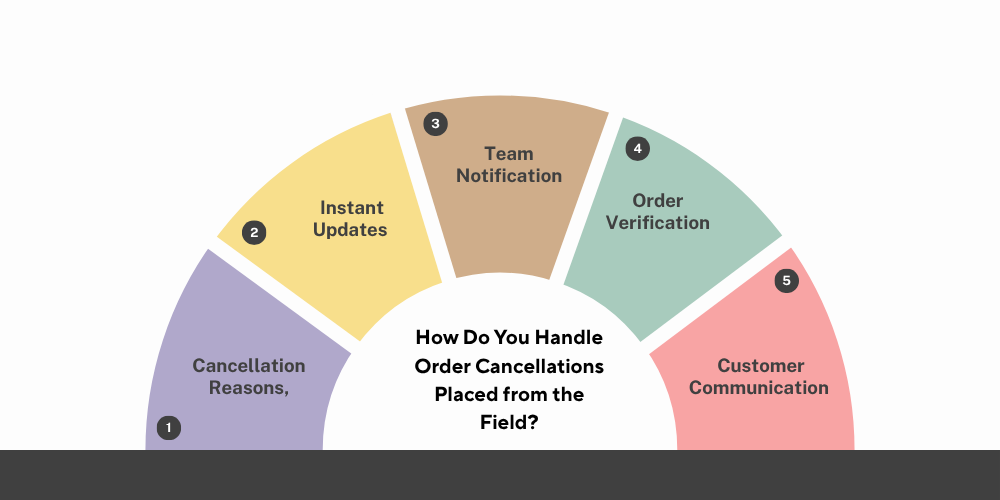
Order cancellations should be addressed quickly to avoid fulfilment errors and customer dissatisfaction. Effective order cancellation management helps businesses maintain accurate records and improve customer service. Sales teams should identify the reason for cancellation and update systems immediately. Proper order management ensures all stakeholders receive timely updates.
Best Practices:
- Record cancellation reasons for future analysis.
- Inform fulfilment teams immediately to prevent unnecessary deliveries.
23. What Is an Order Fulfilment Rate and How Is It Tracked?
The order fulfilment rate measures the percentage of customer orders delivered completely and on time. It is an important indicator of customer service quality and supply chain efficiency. Businesses monitor this metric to identify bottlenecks and improve operational performance.
What to Monitor:
- Percentage of orders fulfilled successfully.
- Product availability and inventory availability across locations.
24. How Do You Manage Returns and Damaged Goods Reported by Field Reps?
A structured returns management process helps businesses reduce losses and maintain accurate inventory records. Field representatives should document product conditions, quantities, and reasons for return. Effective damaged goods tracking ensures timely replacements and proper stock reconciliation.
Recommended Actions:
- Capture supporting photos and documentation.
- Reconcile inventory records promptly.
25. What Should a Good End-of-Day (EOD) Field Sales Report Include?
A well-structured end-of-day report provides managers with visibility into daily activities, customer interactions, and sales outcomes. Consistent daily sales reporting helps organizations monitor performance, identify challenges, and improve decision-making.
A Complete EOD Report Includes:
- Planned versus actual visits.
- Orders collected and productive calls.
- Customer feedback and market observations.
26. How Do Managers Verify That Field Reports Are Accurate?
Accurate reporting is essential for effective sales management. Managers can perform field report verification using geo-tagged records, timestamps, and customer confirmations. Modern GPS tracking systems provide additional visibility into field activities and help improve reporting reliability.
Verification Methods:
- Compare reported visits with GPS records.
- Review geo-tagged images and visit timestamps.
27. What Is Secondary Sales Data and How Does It Differ from Dispatch Data?
Secondary sales tracking measures products sold from distributors to retailers, while dispatch data records products shipped from the company to distributors. Understanding both metrics helps businesses evaluate actual market demand and improve sales distribution strategies.
Understanding the Difference:
- Dispatch data measures stock entering the channel.
- Secondary sales measures stock moving to customers.
28. How Do You Track Scheme Compliance at the Retailer Level from the Field?
Effective scheme compliance tracking ensures that promotional campaigns are executed correctly across retail outlets. Field representatives should verify displays, stock availability, and participation in retailer incentive programs to maximize campaign effectiveness.
Compliance Checks Include:
- Verification of promotional materials.
- Confirmation of retailer participation and execution.
29. What Is a Sales Variance Report and When Should You Review It?
A sales variance report compares actual results against planned targets and forecasts. Regular sales variance analysis helps managers identify performance gaps, while effective sales forecasting supports more accurate planning and decision-making.
Review Focus Areas:
- Revenue and volume variances.
- Territory-wise and product-wise performance gaps.
30. How Do You Reduce the Gap Between Orders Placed and Orders Delivered?
Reducing the gap between orders placed and delivered requires strong inventory planning and efficient supply chain coordination. Businesses that improve visibility across the fulfilment process can reduce delays, increase accuracy, and improve customer satisfaction.
Ways to Improve Delivery Performance:
- Strengthen inventory planning and demand forecasting.
- Implement real-time order tracking and fulfilment monitoring.
Attendance, Expenses & HR
Effective management of attendance, expenses, and HR processes is essential for successful field sales operations. Since field employees spend most of their time outside the office, organizations need reliable systems to track attendance, manage travel expenses, process leave requests, monitor overtime, and maintain employee productivity. A structured approach to workforce management helps improve accountability, reduce administrative workload, control operational costs, and enhance employee satisfaction.
The following FAQs explain the key concepts of attendance, expenses, and HR management that help businesses manage field sales teams more efficiently and effectively.
31. How Does GPS-Based Attendance Work for Field Employees?
GPS-based attendance allows field employees to mark attendance through a mobile application that captures their real-time location. This system helps organizations verify employee presence in the field and improve attendance accuracy. Modern attendance management system solutions reduce manual reporting and provide better visibility into employee movements.
How It Works:
- Attendance is recorded along with GPS coordinates and timestamps.
- Managers can verify employee locations through location-based attendance records.
32. What Is a Field Allowance and How Should It Be Structured?
A field allowance is a reimbursement or fixed payment provided to employees to cover work-related travel and daily expenses incurred during field activities. A well-designed field allowance policy helps employees perform their duties without financial burden while ensuring proper expense management.
Common Components:
- Daily travel allowance for local movement.
- Reimbursement for meals, lodging, or other approved expenses.
33. How Do Companies Prevent Fake Attendance from Field Reps?
Organizations use technology-driven solutions to eliminate attendance fraud and improve accountability. Features such as GPS verification, geo-tagging, selfie attendance, and geofencing attendance help ensure that attendance records accurately reflect employee presence in the field.
Prevention Measures:
- Enable location validation during attendance marking.
- Use geo-tagged photographs and timestamps for verification.
34. What Is the Average Travel Time Loss in a Field Sales Day?
Travel time loss refers to the amount of time field representatives spend moving between customer locations instead of engaging in selling activities. Excessive travel reduces field sales productivity and limits customer coverage. Efficient route optimization can significantly reduce travel-related inefficiencies.
Factors That Influence Travel Time:
- Territory size and customer density.
- Traffic conditions and route planning effectiveness.
35. How Do You Manage Leave Applications for Field Sales Teams Efficiently?
Managing leave requests efficiently ensures that customer coverage and sales activities continue without disruption. Modern leave management systems allow employees to apply digitally while enabling managers to review and approve requests quickly. Effective workforce planning helps minimize operational gaps during employee absences.
Best Practices:
- Use digital workflows for faster approvals.
- Arrange temporary coverage for critical territories.
36. What Is the Policy for Expense Reimbursement in Field Sales?
Expense reimbursement policies define how field employees can claim work-related expenses and the documentation required for approval. A clear expense reimbursement policy improves transparency and ensures compliance with company guidelines. Proper expense reporting also helps organizations control operational costs.
Typical Reimbursable Expenses:
- Travel and transportation costs.
- Accommodation and approved business expenses.
37. How Do You Handle Field Reps Who Inflate Travel Expense Claims?
Inflated expense claims can increase operational costs and reduce trust within the organization. Businesses should establish clear reimbursement guidelines and use expense verification processes to validate claims. Digital travel expense management systems can compare reported expenses against actual travel activity.
Control Measures:
- Verify claims using GPS movement records.
- Require supporting receipts and documentation.
38. What Is a Field Sales Incentive Structure and How Should It Be Designed?
A field sales incentive structure rewards employees for achieving specific performance goals. Effective sales incentive programs motivate employees, improve productivity, and align individual performance with business objectives. A well-designed field sales incentive structure should be transparent, achievable, and performance-driven.
Important Elements:
- Rewards based on sales targets and productivity.
- Incentives linked to customer acquisition and territory growth.
39. How Do You Track Overtime for Field Employees?
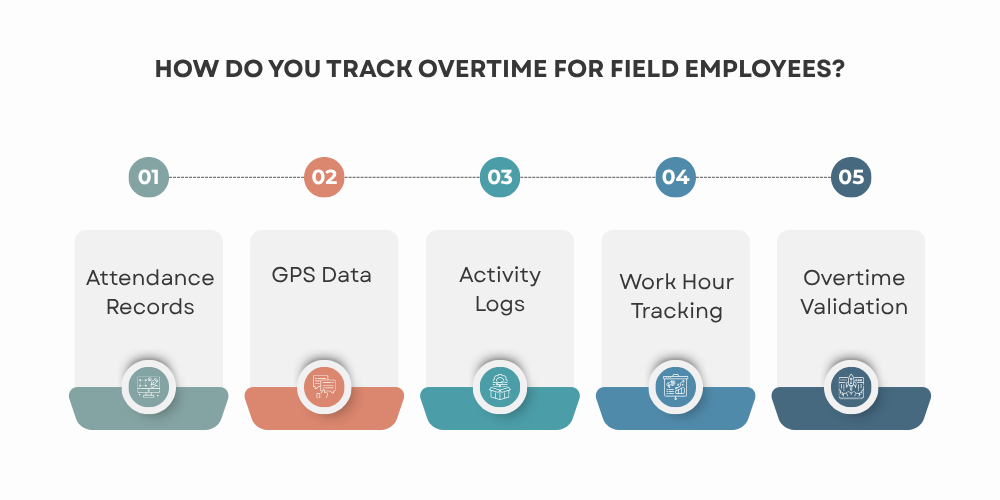
Tracking overtime helps organizations monitor work hours, ensure compliance, and compensate employees fairly. Modern overtime tracking systems use attendance records, GPS data, and activity logs to measure additional working hours accurately. Proper workforce management ensures transparency and prevents disputes.
Tracking Methods:
- Compare attendance records with standard work schedules.
- Use mobile activity logs to validate overtime hours.
40. What Are the Most Common Causes of Field Sales Team Attrition?
Field sales attrition occurs when employees leave the organization due to dissatisfaction, limited growth opportunities, or workplace challenges. Understanding the causes of employee attrition helps businesses improve retention and maintain a stable workforce. Strong field sales employee engagement strategies can significantly reduce turnover.
Common Reasons for Attrition:
- Unrealistic targets and excessive workload.
- Limited career growth and inadequate incentives.
Technology & Adoption
Technology plays a crucial role in modern field sales operations by improving visibility, productivity, communication, and decision-making. However, implementing a field sales app is only successful when employees actively adopt and use the system. Businesses must ensure that their field teams have the right devices, proper training, secure data management, and seamless software integrations. A structured approach to technology adoption helps organizations maximize the value of their investment, improve user engagement, and achieve better operational outcomes.
The following FAQs explain the key concepts of technology adoption and field sales software implementation that help businesses improve efficiency and drive long-term success.
41. How Do You Get Field Reps to Adopt a New Sales App?
Successful adoption of a new sales app depends on simplicity, training, and demonstrating value to users. Employees are more likely to embrace technology when it makes their work easier and improves productivity. Effective sales app adoption strategies focus on user engagement, training, and ongoing support. Strong field sales automation implementation helps reduce resistance to change and encourages long-term usage.
Adoption Strategies:
- Provide hands-on training and practical demonstrations.
- Highlight time-saving benefits and productivity improvements.
42. What Is the Minimum Smartphone Requirement for Field Sales Apps?
Most modern field sales applications are designed to work on standard Android smartphones with sufficient processing power and internet connectivity. Businesses should ensure devices meet the minimum specifications required for smooth operation. Proper mobile device compatibility improves user experience and supports reliable field sales app performance.
Basic Requirements:
- Android operating system with adequate RAM and storage.
- GPS capability and internet connectivity for field operations.
43. How Does Data Sync Work When a Field Rep Has No Internet?
Many field sales applications offer offline functionality that allows representatives to continue working without an active internet connection. Data entered during offline usage is stored locally and automatically synchronized once connectivity is restored. Effective offline data synchronization ensures uninterrupted operations and reliable field data management.
How Offline Sync Works:
- Data is temporarily stored on the device.
- Information syncs automatically when internet access becomes available.
44. What Happens to Field Data if a Salesman's Phone Is Lost or Stolen?
Modern field sales systems store business information on secure cloud servers rather than solely on employee devices. If a phone is lost or stolen, organizations can remotely restrict access and recover information from backups. Proper data security management and cloud data storage protect valuable business information from unauthorized access.
Protection Measures:
- Enable remote logout and device access controls.
- Store critical data securely on cloud-based platforms.
45. How Secure Is GPS Location Data Collected from Field Employees?
GPS location information is generally protected through encryption, access controls, and secure storage systems. Reputable field sales platforms implement strict GPS data security standards to safeguard employee information and maintain compliance with privacy regulations. Effective location data protection ensures that only authorized personnel can access tracking information.
Security Features:
- Encrypted storage and transmission of GPS records.
- Role-based access controls for location data visibility.
46. What Integrations Does a Field Sales App Need with ERP or Accounting Software?
Integrations help businesses eliminate duplicate data entry and improve operational efficiency. A field sales app should connect with ERP, inventory, accounting, and order management systems to ensure seamless information flow. Effective ERP integration and accounting software integration improve reporting accuracy and business visibility.
Important Integrations:
- ERP systems for inventory and order management.
- Accounting software for invoicing and financial reporting.
47. How Do You Train a Field Team of 50+ Reps on New Software Quickly?
Training large field teams requires a structured and scalable approach. Organizations should combine classroom sessions, video tutorials, live demonstrations, and ongoing support to accelerate learning. Effective software training programs improve user confidence and support successful field technology adoption.
Training Approaches:
- Conduct group workshops and virtual training sessions.
- Provide quick-reference guides and support resources.
48. What Is Geofencing and How Is It Different from GPS Tracking?
Geofencing creates virtual boundaries around specific locations and triggers actions when users enter or exit those areas. GPS tracking continuously monitors employee movement and location. While geofencing technology focuses on location-based events, GPS tracking provides real-time visibility into employee activities.
Key Differences:
- Geofencing monitors entry and exit from predefined zones.
- GPS tracking provides continuous location monitoring.

49. Can Field Sales Apps Work on Low-End Android Phones?
Many field sales applications are optimized to function on low-end Android devices to support diverse field teams. Lightweight design, offline functionality, and efficient data processing help maintain performance on budget smartphones. Good Android app optimization improves accessibility and supports broader mobile workforce management.
Performance Considerations:
- Use applications optimized for low memory consumption.
- Ensure devices meet minimum operating system requirements.
50. How Do You Measure ROI After Implementing a Field Sales Management App?
Return on investment (ROI) measures the value generated from implementing a field sales management solution. Businesses should compare operational improvements, revenue growth, and cost savings against the software investment. Effective ROI measurement helps organizations evaluate the success of field sales management app and identify future optimization opportunities.
Key ROI Indicators:
- Increased sales productivity and order volumes.
- Reduced travel costs, reporting time, and operational inefficiencies.
Conclusion
Field sales operations go far beyond customer visits and order collection. From territory planning and outlet coverage to order management, attendance tracking, expense control, and technology adoption, every process contributes to overall sales performance and operational efficiency.
Organizations that implement structured field sales management practices can improve customer coverage, enhance team productivity, strengthen distributor relationships, and gain better visibility into field activities. By leveraging the right processes and technology, businesses can streamline operations, make faster decisions, and drive sustainable growth.
The insights shared in this guide provide a practical roadmap for optimizing field sales operations and building a high-performing sales team that consistently delivers results.
Ready to Transform Your Field Sales Operations?
Schedule your free demo today and see how Delta Sales App can help your team sell smarter and grow faster.