
Van Sales Automation: Revolutionizing FMCG Distribution on the Move
Van sales automation has become essential as FMCG distribution is defined by speed, scale, and precision. Yet, while consumer demand has become more dynamic and retail formats more fragmented, the execution of distribution especially at the last mile has struggled to keep pace. In many markets, vans remain the backbone of FMCG supply, carrying inventory directly to retailers and enabling instant fulfillment. However, without structure and visibility, this strength can quickly turn into an operational bottleneck.
Today, FMCG brands and distributors operate in an environment where every outlet visit, every SKU movement, and every billing interaction matters. To meet these demands, businesses are increasingly relying on Van Sales Management Software and integrated distribution management systems to bring discipline, transparency, and scalability to on-the-move distribution.
Why Van Sales Automation is Essential for FMCG Brands is now clear: it ensures accurate, real-time control over field operations while enhancing efficiency. Van sales is no longer just a method of selling, it has become a strategic execution layer that directly impacts growth, profitability, and brand reputation.
What Is Van Sales Automation?
Van sales automation refers to the digitization and system-driven execution of the entire van sales lifecycle from route planning and inventory loading to order booking, invoicing, delivery confirmation, and reporting.
Instead of relying on disconnected tools or end-of-day reconciliation, automation captures every transaction at the moment it occurs. Field teams operate through mobile applications, while managers access real-time dashboards that reflect actual ground-level activity. Automation does not replace human judgment; it strengthens it with accuracy, consistency, and visibility.
Modern teams often digitize orders with a Sales Order Management App to streamline order capture, reduce errors, and accelerate the order-to-cash cycle.
Core Components of a Modern Van Sales System
A modern van sales system connects field operations with back-office management in real time, using a mobile app, a management dashboard, and ERP/accounting integration.
Key Components:
-
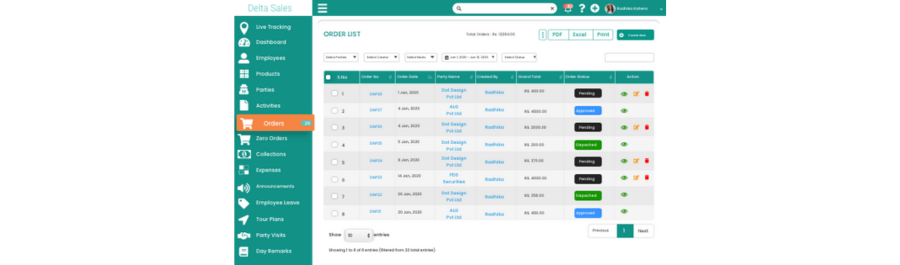
Order and Billing Management: Allows instant order creation, e-invoice generation, and receipt printing on portable devices, reducing errors, accelerating the order-to-cash cycle, and improving accuracy for both sales staff and management.
-
Mobile App for Field Reps: Empowers sales representatives with a portable mobile office, enabling order booking, inventory management, payments, and customer interactions efficiently, even in challenging field conditions or remote locations.
-
Digital Product Catalog: Provides complete access to all products, pricing, active promotions, and schemes, ensuring accurate order placement, enhanced upselling opportunities, and consistent communication of offerings to retailers in the field.
-
Inventory Management: Tracks van stock levels in real time, preventing overstocking or stockouts, facilitating timely replenishment, and giving field teams full visibility of available products during every retailer visit.
-
Payment Collection: Supports seamless recording of cash, cheque, card, or UPI payments on the spot, ensuring transparent and accurate financial tracking, faster reconciliation, and improved accountability for field transactions.
-
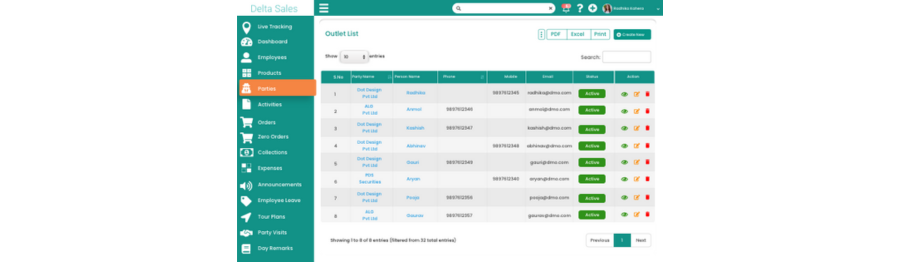
Customer Management (CRM): Provides detailed customer profiles, purchase histories, and the ability to capture new insights like complaints or competitor activities, enabling sales teams to personalize service and strengthen relationships.
-
Offline Mode: Ensures the app functions fully without network connectivity, allowing uninterrupted sales operations, with all data automatically synchronized once the connection is restored, even in remote or low-coverage areas.
Understanding the Van Sales Model in FMCG
Van sales is a direct-to-retailer distribution model where sales representatives carry inventory in vehicles and sell products during outlet visits. Orders are fulfilled instantly, invoices are generated on the spot, and products are delivered immediately.
This model is particularly effective in FMCG environments where retailers prefer quick replenishment, flexible ordering, and minimal waiting time. Food and beverages, dairy, personal care, and household essentials commonly rely on van sales to maintain shelf availability and respond to fluctuating demand.
However, the same immediacy that makes van sales effective also makes it complex. Each van functions as a mobile warehouse, billing counter, and sales office combined creating significant operational challenges if not managed systematically.
Key Challenges in Traditional Van Sales Operations
Traditional van sales encounter significant challenges due to manual, paper-based processes, limited inventory visibility, inefficient routing, and lack of real-time data. These issues result in errors, wasted time, stockouts or overstock, and difficulty tracking sales and payments.
Key Challenges:
-
Manual & Paper-Based Processes: Relying on paper orders, invoices, and manual data entry leads to mistakes, delays, and lost sales opportunities, reducing operational efficiency in fast-paced markets.
-
Poor Inventory Management: Limited or no real-time visibility into van stock causes miscalculations, resulting in stockouts or excess inventory, which increases carrying costs and impacts sales fulfillment.
-
Inefficient Route Planning: Without route optimization, field teams travel longer distances, increasing fuel costs, wasting time, and reducing the number of productive outlet visits per day. Route Sales Software can solve this by creating optimized beats.
-
Lack of Real-Time Data: Managers cannot monitor sales, payments, or stock levels instantly, delaying critical decisions, affecting performance tracking, and reducing responsiveness to market changes.
-
Payment & Credit Issues: Manual cash or cheque collection is slow, while tracking customer credit limits is challenging, risking delayed payments or bad debt accumulation.
-
Limited Customer Insights: Sales representatives often lack immediate access to customer history, pricing, and promotions, hindering personalized interactions, cross-selling, and adoption of marketing schemes.
-
Sales Target Misalignment: Individual sales objectives may not align with overall company goals, impacting new product launches, promotional schemes, and achieving strategic sales targets.
-
Operational Inefficiency: Managing orders, deliveries, and last-mile distribution manually adds complexity, slowing down the entire supply chain and affecting timely order fulfillment.
How Automation Transforms On-the-Go FMCG Distribution
In FMCG markets, traditional manual processes slow down van sales operations and increase errors. Automation streamlines every step, providing speed, accuracy, and real-time control for field teams and managers alike. Key benefits of automation include:
-
Data-Driven Route Planning: Automation optimizes sales route planning, enabling representatives to visit high-potential outlets efficiently, reducing travel time, fuel costs, and maximizing daily coverage.
-
Real-Time Inventory Updates: Van stock levels are tracked instantly, preventing stockouts or overstocking, ensuring the right products are available at the right place and time.
-
Improved Order Accuracy and Billing: Digital tools automatically apply pricing, schemes, and taxes while generating invoices instantly, reducing errors and minimizing manual reconciliation.
-
Enhanced Field Productivity: Sales teams spend less time correcting mistakes and reconciling paperwork, allowing them to focus on selling and strengthening retailer relationships.
-
Actionable Analytics and Insights: Managers gain real-time visibility into sales, stock movements, and market trends, enabling informed decisions and proactive operations management.
-
Predictable Growth and Efficiency: Automation turns last-mile distribution into a strategic advantage, improving operational efficiency, retailer satisfaction, and overall business performance.
Impact on Inventory Accuracy and Stock Visibility
Inventory accuracy is one of the biggest determinants of profitability in van sales operations. Automation enforces discipline by digitally recording every stock movement from warehouse dispatch to van loading to outlet-level sales and returns.
Field teams know exactly what stock is available. Warehouses gain clarity on replenishment cycles. Leadership gets a single source of truth without manual reconciliation. This visibility reduces stockouts, minimizes expiries, and improves working capital efficiency.
Enhancing Route Planning and Beat Optimization
Route efficiency directly affects sales productivity and operating costs. Automated systems analyze historical sales, outlet frequency, and geographic constraints to design optimized beats.
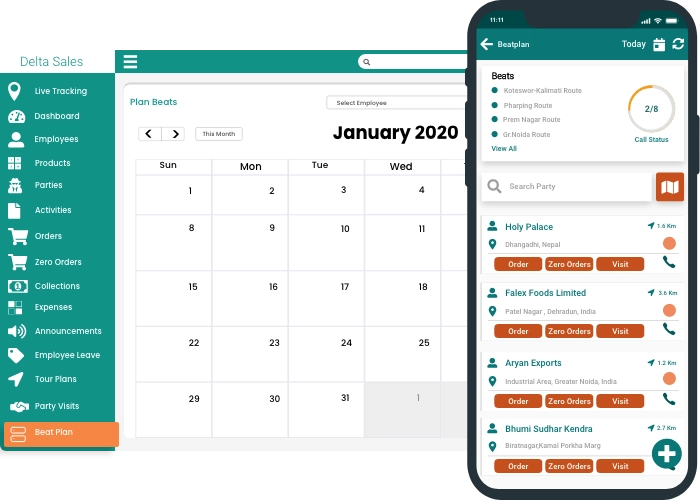
Sales representatives cover more productive outlets in less time. Fuel costs decrease. Visit consistency improves. Over time, route intelligence becomes a competitive advantage rather than an operational guess.
Improving Order Accuracy and Billing Efficiency
Billing accuracy is critical to retailer trust. Manual invoicing introduces unnecessary friction and increases the risk of disputes.
With van sales software, pricing, schemes, and taxes are applied automatically. Invoices are generated instantly and recorded digitally. This improves transaction speed, reduces errors, and strengthens retailer relationships at the point of sale.
Data-Driven Decision Making in Field Distribution
Every field interaction generates data. Automation converts this data into actionable insights highlighting top-performing routes, slow-moving SKUs, high-potential outlets, and execution gaps.
Managers no longer rely solely on experience or intuition. Decisions related to promotions, manpower allocation, and assortment planning are backed by real performance metrics captured directly from the field.
Integration with Broader Distribution Management Ecosystems
Van sales does not operate in isolation. To deliver real value, it must integrate seamlessly with accounting systems, ERPs, and supply chain platforms.
When aligned with a centralized distribution management ecosystem, van sales becomes a synchronized extension of the broader distribution network. Orders flow without friction, stock updates reflect instantly, and financial reconciliation becomes faster and more accurate.
How Delta Sales App Can Revolutionize FMCG Operations
While automation defines the future of van sales execution, its real-world impact depends on how effectively it is implemented at scale. This is where purpose-built FMCG platforms play a critical role.
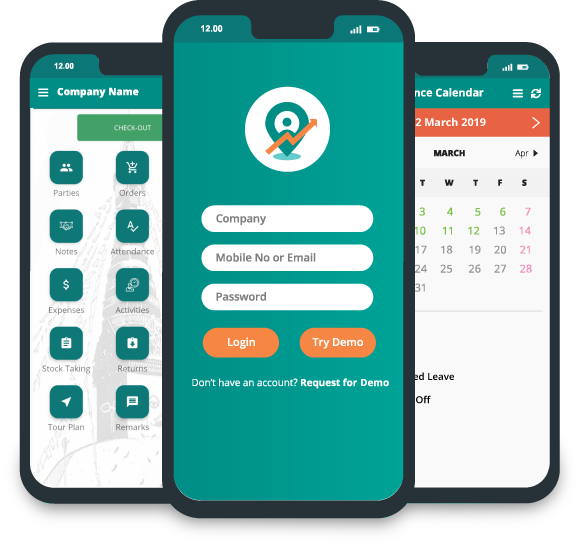
Delta Sales App is a comprehensive field sales and distribution solution designed specifically to address the operational challenges faced by FMCG brands and distributors. By enabling structured execution, real-time visibility, and data-driven control, it helps businesses move from reactive selling to predictable, scalable growth.
Simplified Sales and Order Management
Delta Sales App enables real-time order taking, accurate pricing and scheme application, and instant invoicing eliminating manual errors and post-visit reconciliation.
Effective Expense Management
Distributors can track salaries, fuel costs, vehicle maintenance, and shared expenses in a structured manner, improving cost control and profitability visibility.
Real-Time Stock and Inventory Management
Live inventory tracking across vans and depots reduces stockouts, overstocking, and wastage while improving demand forecasting.
Credit and Claims Monitoring
Structured tracking of credits and claims ensures timely collections, transparency, and stronger retailer relationships.
Enhanced Field Team Productivity
Route optimization and in-store execution tracking help sales teams work more efficiently and execute promotions consistently.
Data-Driven Analytics and Reporting
Detailed dashboards provide actionable insights into sales performance, distributor efficiency, and market trends enabling informed decision-making.
-(1)-1766380738.png)
By unifying these capabilities, Delta Sales App strengthens automated van sales execution and aligns it seamlessly with broader distribution management goals.
Key Metrics to Track in Automated Van Sales Operations
Effective van sales automation relies on tracking the right metrics to optimize field execution, operational efficiency, and profitability. These key metrics can be grouped into four main categories: Sales Performance, Operational Efficiency, Inventory Management, and Customer Satisfaction.
1. Sales Performance Metrics
These metrics evaluate the effectiveness of sales activities and revenue generation:
-
Total Revenue / Sales Volume: Measures overall sales success, often analyzed per route, salesperson, or defined time period.
-
Average Order Value (AOV): Reflects the typical worth of each transaction and indicates the effectiveness of upselling and cross-selling.
-
Conversion Rate: Percentage of customer visits or leads that result in a sale, highlighting field team effectiveness.
-
Sales per Employee / Route: Evaluates individual or route-specific performance and productivity.
-
Revenue per Mile / Trip: Assesses the profitability of specific routes or journeys for better resource allocation.
-
Actual vs. Target Sales: Compares actual performance against goals to identify gaps and improvement areas.
2. Operational Efficiency Metrics
These metrics measure how effectively resources, time, and logistics are managed in the field:
-
Route Compliance: Tracks adherence to planned routes and schedules using GPS and geo-fencing to minimize deviations and delays.
-
On-Time Delivery Rate: Percentage of orders delivered within promised timelines, critical for customer satisfaction.
-
Time Spent on Effective Tasks: Measures the proportion of time dedicated to sales versus non-selling activities such as travel or paperwork.
-
Driving Costs: Monitors fuel consumption and mileage per vehicle to control variable costs and improve ROI.
-
Average Turnaround Time / Sales Cycle Length: Tracks time from order placement to delivery or initial contact to deal closure, reflecting operational efficiency.
3. Inventory Management Metrics
Effective inventory tracking is essential to prevent stockouts, reduce waste, and ensure product availability:
-
Inventory Turnover Rate: Indicates how quickly products are sold and replaced, reflecting efficient stock management.
-
Stock Levels / Van Replenishment Management: Monitors real-time inventory on each van to maintain availability of high-demand products.
-
Returned Goods Volume / Damage Claim Rate: Tracks returns or damages to identify potential issues in production, handling, or delivery.
-
Wastage / Expiry Tracking: Provides alerts for near-expiry stock to minimize losses and improve inventory utilization.
4. Customer Satisfaction and Financial Metrics
These metrics assess customer loyalty, satisfaction, and financial health:
-
Customer Retention Rate: Percentage of customers continuing business over time, reflecting loyalty and trust.
-
Payment Collection & Days Sales Outstanding (DSO): Measures the efficiency and speed of collecting payments; lower DSO improves cash flow.
-
Net Promoter Score (NPS) / Customer Satisfaction Score (CSAT): Gathers feedback to evaluate overall customer satisfaction and loyalty.
-
Customer Acquisition Cost (CAC): Tracks the cost of acquiring new customers, which should be balanced against lifetime value for profitability.
The Future of FMCG Distribution on the Move
The future of FMCG distribution is increasingly digital, intelligent, and connected. Traditional manual processes are giving way to automated van sales systems, real-time inventory tracking, and data-driven route optimization. As technology integrates with field operations, distributors gain unprecedented visibility into stock levels, sales performance, and customer behavior, enabling faster decision-making and proactive problem-solving. Businesses can anticipate demand patterns, reduce wastage, and ensure timely replenishment, transforming last-mile distribution into a strategic advantage rather than a logistical challenge.

Moreover, the adoption of mobile-enabled sales automation and integrated distribution management platforms will redefine how FMCG companies engage with retailers. Field teams will operate more efficiently, leveraging predictive analytics to prioritize high-value outlets and optimize visits. Enhanced reporting and actionable insights will allow managers to focus on growth, not just operations. Ultimately, the evolution of on-the-move distribution will drive higher operational efficiency, stronger retailer relationships, and sustainable revenue growth, setting the standard for the next generation of FMCG supply chains.
Final Thoughts
In a market defined by speed, accuracy, and accountability, manual van sales models are no longer sustainable. Van sales automation enables FMCG businesses to execute consistently, scale confidently, and operate with complete visibility.
By combining intelligent systems, mobile execution, and integrated distribution management, organizations transform last-mile distribution into a growth engine powered by reliable van sales software.
Book a Demo with Delta Sales App Today and get ready to streamline your FMCG distribution and boost efficiency.