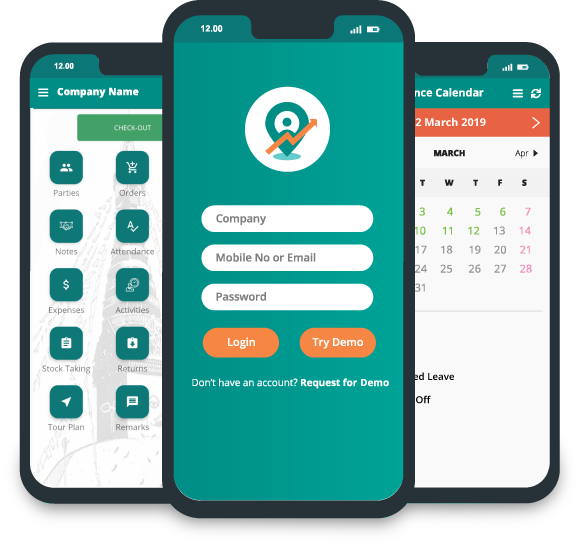

Why Field Teams Are Switching from Generic CRMs to Delta Sales App

Field sales has always been about execution: being on the ground, meeting customers, closing deals, collecting orders, and ensuring products move smoothly through the final mile. Nonetheless, many organizations still expect their field teams to use generic CRM software that was never intended for the realities of on-the-ground sales.
What worked for desk-based sales teams a decade ago no longer works for modern field operations. As markets become more competitive, distributors and brands are realizing a harsh truth: generic CRMs record data, but they don’t drive execution.
This is why an increasing number of field teams, especially in FMCG, distribution, retail execution, and B2B sales, are switching from generic CRMs to DeltaSales App, a purpose-built field sales execution platform.
In this blog, we’ll explore why generic CRMs fall short, what field teams actually need, and how DeltaSales App fills the gap.
What Are Generic CRMs?
Generic Customer Relationship Management (CRM) systems were originally designed to help businesses organize customer data, track leads, and manage sales pipelines. They work well for inside sales teams, relationship-driven selling, and desk-based operations where interactions happen over calls, emails, and meetings.
However, field sales operate in a very different environment. Sales representatives spend most of their time on the road, visiting multiple outlets, managing orders, checking product availability, and executing daily beat plans. In such scenarios, CRMs that focus primarily on data entry and deal tracking often fail to support real-world execution.
As a result, many organizations use powerful customer relationship management tools to store data but do not actively assist field teams in selling better or faster.
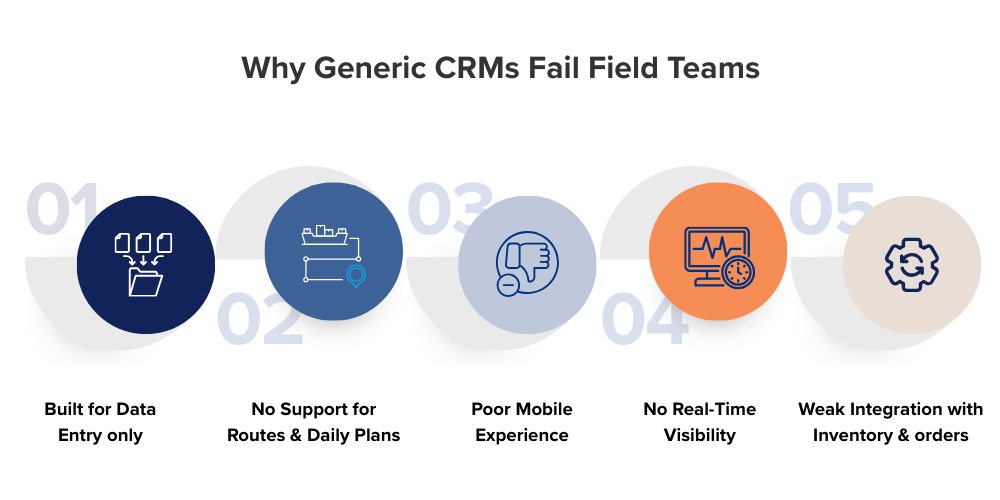
Why Generic CRMs Fail Field Teams
Generic CRMs were created for office-based sales teams, with a focus on leads, deals, and data capture. While this works well in a desk environment, field sales operations have very different requirements, which these tools do not address. Field teams require mobility, real-time updates, execution tracking, and inventory visibility, all of which generic CRMs frequently fail to provide.
Here’s a detailed explanation of the main limitations:
-
Built for Data Entry, Not Field Execution
One of the primary reasons field teams resist generic CRM systems is that these tools are frequently designed for desk-based users rather than on-the-go sales representatives. This mismatch causes daily friction in execution. Generic CRMs are designed to record what has already occurred rather than to enable what needs to happen next. Field teams spend more time entering data than they do selling.
-
No Support for Routes, Beats, and Daily Plans
Field sales maximizes coverage through structured beat plans, territories, and daily visit targets. Generic CRMs do not include route optimization, so reps frequently take inefficient routes between outlets, wasting time and fuel. Without visit sequencing, reps cannot prioritize high-value or high-demand outlets, and managers cannot track which locations were overlooked or underserved. This causes inconsistency in field execution and reduces overall productivity.
-
Poor Mobile Experience
Most generic CRMs were initially built for desktop users and later adapted for mobile. As a result, mobile apps are often slow, unintuitive, and do not have offline functionality. Field reps frequently work in remote areas with weak network coverage, making it difficult to access or update CRM data in real time. The inability to capture instant information delays reporting, disrupts order processing, and prevents managers from seeing the ground reality.
-
No Real-Time Visibility for Managers
Field reps often postpone CRM updates until the end of the day or even later, meaning the data managers see is outdated. This delay prevents timely interventions for missed visits, low-performing routes, or inventory shortages. Without real-time visibility, managers are unable to make actionable decisions, which has a direct impact on sales performance, service quality, and retailer satisfaction.
-
Weak Integration with Inventory & Orders
Field sales are closely related to stock availability, SKUs, and order placement. Generic CRMs typically do not integrate with inventory systems or order management tools. Reps may unintentionally try to sell out-of-stock items, resulting in customer dissatisfaction and additional back-and-forth with warehouses. For distributors who handle multiple SKUs across multiple outlets, this gap causes inefficiencies, lost sales, and strained manufacturer relationships.
What Field Teams Actually Need
Modern field teams operate in fast-paced, unpredictable environments in which execution is more important than record keeping. To succeed, they require tools that address the realities of on-site sales. Generic CRMs frequently fall short because they were designed for desk-based workflows rather than real-world field operations. Here's what field teams really need:
-
Execution-focused, not just record-keeping
Field sales is about taking action: visiting stores, placing orders, checking inventory, and gathering feedback. Teams require tools that enable and guide execution, rather than simply documenting previous activities. A system that only stores data does not assist representatives in making decisions or taking immediate action, whereas an execution-focused platform ensures that each visit, order, and customer interaction is meaningful and productive.
-
Mobile-first and offline-capable
Field reps spend most of their day on the road, often in areas with weak or no internet connectivity. Tools need to be mobile-first, optimized for smartphones and tablets, with the ability to work offline and sync data automatically when connectivity returns. This ensures reps can continue working without interruption, capture accurate data, and provide real-time updates to managers without network dependency.
-
Integrated with inventory, orders, and routes
Field operations are inextricably linked to inventory levels, SKUs, and order execution. Teams require tools that integrate seamlessly with stock management systems, allow for real-time order placement, and facilitate route planning. This eliminates errors such as selling out-of-stock products, avoids overstocking, and ensures delivery schedules are consistent with actual product availability. Integrating these functions reduces friction, saves time, and increases efficiency and customer satisfaction.
-
Designed for real-world field conditions
Field sales, unlike office environments, requires unpredictable travel schedules, multiple outlets, last-minute order changes, and a large number of SKUs. Tools must be intuitive, fast, and adaptable enough to deal with real-world complexities. Automated alerts, quick order capture, route optimization, and easy reporting are critical features that help reps perform efficiently and managers effectively monitor performance.
Delta Sales App: Built for Field Sales Reality
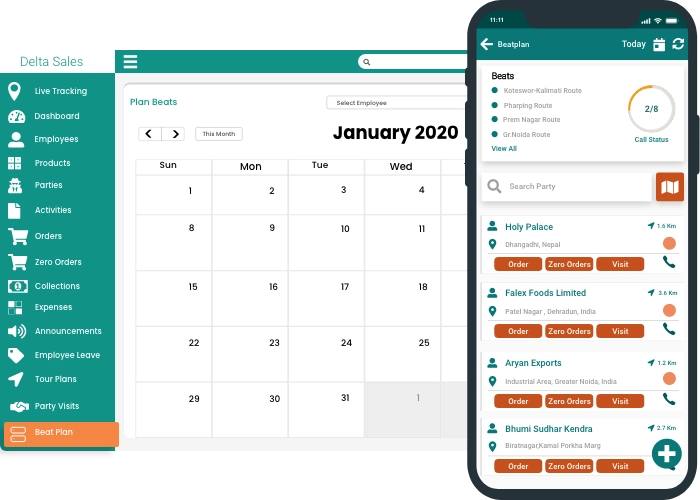
DeltaSales App is more than just another generic CRM; it is a purpose-built field sales execution platform that is tailored to the unique challenges of on-the-ground sales organizations. Unlike traditional CRMs, which prioritize data entry and deal tracking, DeltaSales App is designed around field sales workflows, allowing reps to focus on selling, delivering, and executing rather than dealing with complex, office-oriented software.
DeltaSales App transforms traditional sales operations by bringing technology in line with field sales realities. Managers have instant access to visits, orders, and inventory, while reps spend more time completing tasks and developing customer relationships. In essence, the platform transforms everyday field activities into measurable, efficient, and profitable operations, filling a gap that generic CRMs cannot.
Why Field Teams Are Choosing DeltaSales App
Field sales teams are increasingly switching from generic CRMs to DeltaSales App because it directly addresses issues that generic tools do not. Unlike traditional CRMs, which are designed for desk-based workflows, Delta Sales App is intended for real-world field execution, giving sales teams the tools they need to perform efficiently, stay organized, and deliver measurable results.
-
Designed for On-Ground Execution
Field representatives require a platform that guides their daily actions, not just a system for recording visits. The DeltaSales App allows reps to follow beat plans, complete assigned visits, place orders instantly, and track deliveries in real time. Reps can increase their productivity and spend more time interacting with customers by focusing on execution rather than record-keeping.
-
Mobile-First & Offline-Ready
Field sales do not wait for connectivity. The DeltaSales App's mobile-first interface enables reps to work on the go, with offline access ensuring that data can be captured anywhere and automatically synced when connectivity is restored. This eliminates delays and ensures that managers always have accurate, up-to-date data.
-
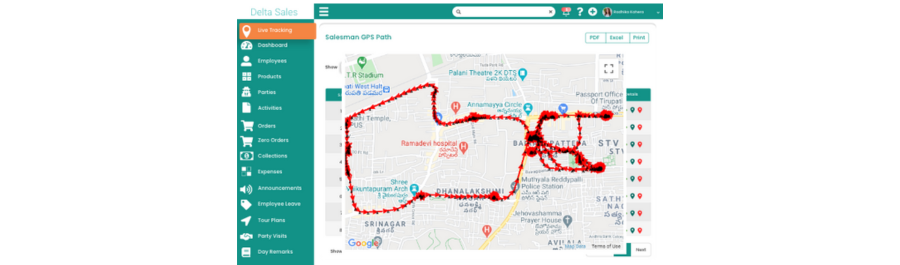
Real-Time Tracking & Visibility
Unlike generic CRMs, DeltaSales App provides real-time visibility into field activity, inventory levels, and order status. Managers can see which outlets were visited, which orders were placed, and how much stock was available across locations in real time. Real-time tracking eliminates delays, reduces errors, and ensures that both reps and managers are always working with the most recent data.
-
Route & Beat Plan Optimization
Unlike generic CRMs, DeltaSales App enables teams to plan the most efficient routes, sequence visits intelligently, and track outlet-level activity. This ensures maximum market coverage, fewer missed visits, and more efficient field operations.
-
Actionable Analytics, Not Just Reports
DeltaSales App provides actionable analytics rather than just reports, transforming raw field data into insights that drive better decisions. Its simple dashboards monitor rep productivity, outlet coverage, order trends, and product performance, giving managers a clear picture of how field teams are performing. Businesses can use these insights to optimize routes and increase efficiency.
-
Integrated Inventory & Order Management
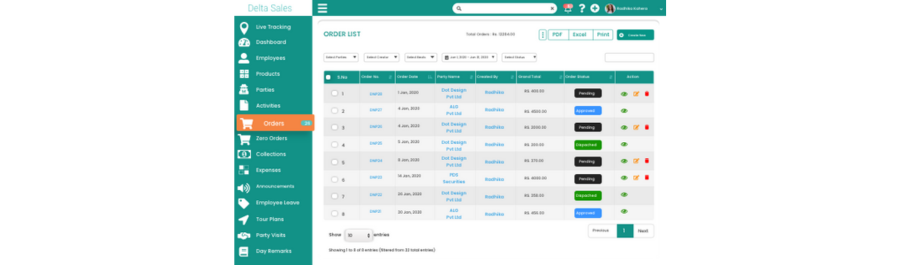
DeltaSales App combines CRM functions with inventory tracking, order placement, and route management, providing field reps with a unified platform to manage all critical tasks. Real-time stock updates prevent overselling, whereas integrated orders and deliveries reduce errors and increase customer satisfaction.
Generic CRM vs Delta Sales App: A Practical Comparison
|
Feature |
Generic CRM |
DeltaSales App |
|
Mobile-first design |
Limited |
Built for mobile |
|
Offline support |
Rare |
Yes |
|
Beat & route planning |
No |
Yes |
|
Inventory integration |
Weak |
Strong |
|
Real-time tracking |
Delayed |
Live |
|
Field productivity focus |
Low |
High
|
Why Is This Shift Accelerating?
The shift from generic CRMs to DeltaSales App is accelerating in 2026 because the dynamics of field sales have changed dramatically. As the market evolves:
-
Execution speed matters more
In today’s fast-paced market, distributors and FMCG brands cannot afford delays. Field teams need tools that allow them to capture orders instantly, optimize their routes, and complete visits efficiently. Generic CRMs often require manual updates or end-of-day reporting, slowing down decision-making. DeltaSales App provides real-time tracking, automated alerts, and mobile access, ensuring reps execute their plans quickly and managers can respond to market changes immediately.
-
Margins are tighter
Rising competition, inflation, and operational costs are reducing profit margins across industries. Distributors can no longer waste money on excess inventory, inefficient routes, or missed sales opportunities. Field teams use the DeltaSales app to minimize errors, reduce stockouts and overstocking, and make every visit count. This efficiency directly translates to increased cash flow, higher margins, and lower operational costs.

-
Customer expectations are higher
Retailers and end users expect accurate orders, on-time deliveries, and responsive service. Any delay, error, or stock mismatch can result in dissatisfaction and lost revenue. DeltaSales App enables field teams to meet these expectations by providing real-time order processing, integrated inventory visibility, and actionable analytics, ensuring that every interaction builds trust and encourages repeat business.
Conclusion
The field sales landscape is rapidly changing. Generic CRMs, which were designed for desk-based workflows, cannot keep up with the speed, complexity, and expectations of today's field teams. They fall short in terms of real-time tracking, execution-focused workflows, route planning, and inventory management, leaving distributors with inefficiencies, lost sales, and dissatisfied representatives.
DeltaSales App fills these gaps by offering a purpose-built, mobile-first solution tailored to field sales reality. The app's features include real-time tracking, actionable analytics, route optimization, integrated inventory and order management, and offline access, allowing reps to execute efficiently, managers to monitor performance, and businesses to increase revenue and customer satisfaction.
Stop forcing field teams to work around generic CRMs. Equip them with a platform built for real-world sales execution.
Start using Delta Sales App and transform your field sales performance.