
How Sales Leaders Can Reduce Fake Check-ins by Field Reps

You pay for salaries, bonuses, fuel, and reimbursements. You plan routes, assign beats, and provide your team with devices. But how do you know whether a sales representative actually visited a customer or simply checked in from a parked car or nearby street?
Fake field visits are one of the most common and costly issues in distributed sales teams. They distort analytics, ruin forecasts, undermine trust, and ultimately lead to lost sales and weakened client relationships. Real accountability starts with credible data, and that’s exactly what forward‑thinking sales leaders are now demanding.
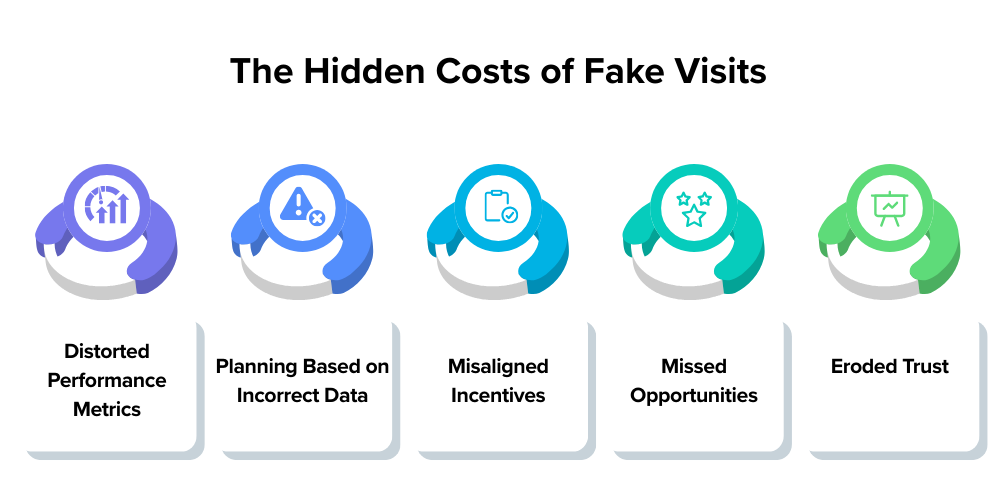
The Hidden Costs of Fake Visits
Fake field visits may seem minor, but their impact is far-reaching:
-
Distorted Performance Metrics
Fake check-ins give managers the impression that all stores or clients are being visited, when in fact, visits may not be occurring. This biases performance metrics, making it appear as if the team is achieving coverage or meeting targets when sales growth is actually flat. Managers may believe their teams are performing well, but underlying inefficiencies remain hidden, resulting in poor strategic decisions.
-
Planning Based on Incorrect Data
Sales leaders use field activity data to plan territories, daily routes, quotas, and follow-ups. When check-ins are incorrect, the data is faulty. Managers may allocate resources incorrectly, assigning reps to "covered" areas that are actually neglected, or set unrealistic targets based on inaccurate data. This results in wasted time, missed opportunities, and uneven coverage throughout the territory.
-
Misaligned Incentives
Many sales teams compensate representatives based on reported activity, such as the number of store visits. When fake check-ins occur, bonuses or recognition may be awarded to representatives who have not completed the work. Meanwhile, top performers who make actual visits may feel frustrated or undervalued, lowering morale and engagement. Misaligned incentives discourage genuine productivity and can cause internal friction.
-
Missed Opportunities
Fake check-ins indicate that actual field coverage is incomplete. Stores may go unvisited, product displays ignored, and potential sales opportunities missed. This reduces revenue, erodes relationships with key customers, and allows competitors to take your market share. Missing opportunities on multiple occasions can have a negative impact on growth over time.
-
Eroded Trust
Fake check-ins foster a culture of suspicion. Leaders may begin to doubt all field reports, including those from honest representatives, making oversight more difficult. Top-performing reps may believe their efforts are not recognized, lowering engagement and morale. This lack of trust can destabilize the team and make it more difficult to implement effective sales processes.
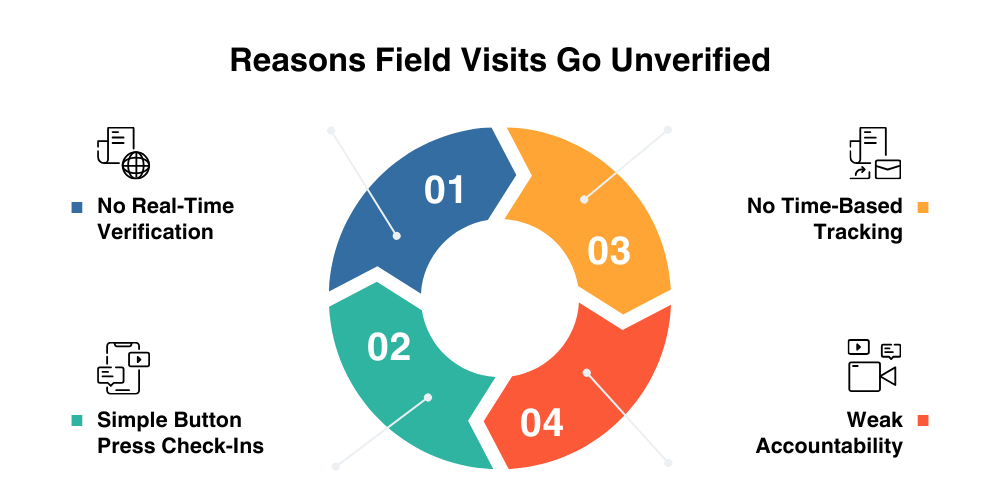
Common Reasons Field Visits Go Unverified
Understanding why fake visits happen is crucial for fixing the problem. Here’s a closer look at the main causes:
-
No Real-Time Verification
Manual check-ins, such as entering a visit on a spreadsheet or CRM at the end of the day, do not demonstrate that a representative was present at the customer location. Managers cannot confirm the authenticity of visits without live tracking. This delay allows false reporting to go undetected until it is too late.
-
Simple Button Press Check-Ins
Many outdated systems allow representatives to "mark a visit complete" with a single click. This makes it very simple to claim a visit without actually performing the associated tasks, such as checking inventory, updating orders, or interacting with the customer.
-
No Time-Based Tracking
Without measuring the time spent at each location, reps can make extremely brief or "drive-by" visits. Systems that do not track visit duration fail to detect anomalies, resulting in inaccurate reporting and missed sales opportunities.
-
Weak Accountability
When leadership oversight is inconsistent or metrics are not regularly monitored, reps are more likely to fabricate visits. If the consequences for fake check-ins are unclear, or data is never verified, reps have little incentive to be honest.
Warning Signs Your Team May Be Logging Fake Check-Ins
Detecting fake check-ins early is key to maintaining sales efficiency and accountability. Here’s what to look for:
-
Unrealistic daily visit numbers for some reps.
If some reps consistently log more visits than is physically possible, this is a major red flag. Over-reporting may indicate that visits are being staged to meet activity targets rather than resulting in genuine customer engagement.
-
Visits logged without orders, photos, or follow-ups.
Every legitimate field visit should result in some activity, such as taking orders, photographing merchandise, or documenting follow-up steps. Check-ins that lack these supporting elements suggest that the representative did not actually visit the customer.
-
Large gaps in territory coverage despite reported activity.
If certain areas consistently show little to no verified visits despite reported check-ins, it indicates that coverage is uneven or fabricated. This can lead to missed sales opportunities and poor market penetration.
-
Metrics inconsistent with inventory or CRM data.
When reported visits do not correspond to inventory updates, order fulfillment, or CRM entries, it indicates possible misreporting. Discrepancies between field activity and backend systems are a strong indication that check-ins are fraudulent.
Strategies to Reduce Fake Field Visits
To prevent fake check-ins, technology, processes, and accountability must all be combined. Here's how sales leaders can ensure that each field visit is genuine and productive:
-
Use GPS-Verified Check-Ins
Real-time GPS tracking ensures that representatives are physically present at the customer's location before accepting a check-in. This prevents representatives from falsely recording visits from outside the store or while in transit.
For example, a rep tries to mark a store visit complete from their car. GPS verification prevents the check-in from registering until they are at the correct location.
-
Set Geo-Fencing Boundaries
Geo-fencing enables managers to define digital perimeters around each outlet. Check-ins are only valid if completed within the designated area, which prevents falsified entries and ensures accurate coverage.
For example, a store has a geo-fence measuring 50 meters. Reps can only check in if they physically enter this boundary, making it impossible to fake a visit remotely.
-
Require Proof of Activity
To make check-ins meaningful, require reps to submit photos, orders, or customer notes for each visit. This adds a layer of verification and ensures that the visit contributes tangible results.
For example, a representative takes a photo of the product display and uploads it as an order. The system confirms the check-in, and managers know the visit was genuine.
-
Monitor Time Spent Per Visit
Tracking how long reps spend at each location can help identify unusually short visits. Extremely short check-ins may indicate "drive-by" visits or fabricated activity, which managers can then investigate.
For example, a legitimate visit typically lasts 15-20 minutes. A two-minute check-in generates an alert for review.

-
Implement Real-Time Dashboards
Managers need instant visibility into field operations. Real-time dashboards display check-ins, routes, and activity, allowing leaders to intervene quickly if patterns suggest fake visits.
For example, if a manager notices a rep skipping specific stores or logging unusual patterns, he or she can follow up right away rather than waiting for end-of-day reports.
-
Transparent Reporting & Rankings
Publishing verified activity reports and rankings promotes accountability and fair competition. Reps understand that all visits are monitored and measured, which reduces the incentive to falsify check-ins.
For example, verified reports highlight top performers based on actual activity, encouraging the entire team to maintain honesty and accuracy.
How Delta Sales App Solves Fake Check-Ins
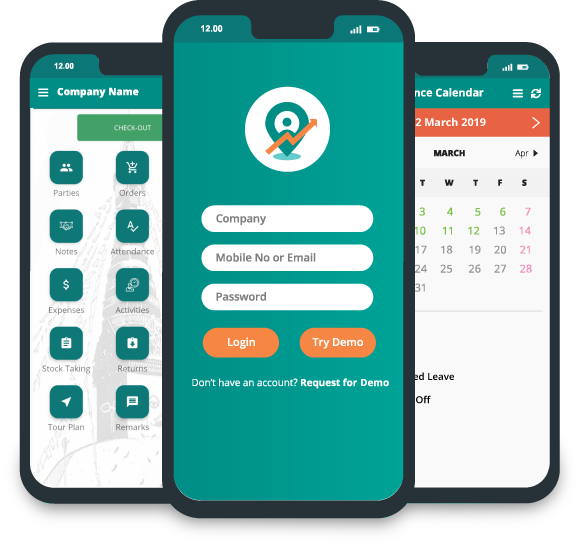
Modern tools like DeltaSales App are designed to stop fake check-ins while increasing overall productivity:
-
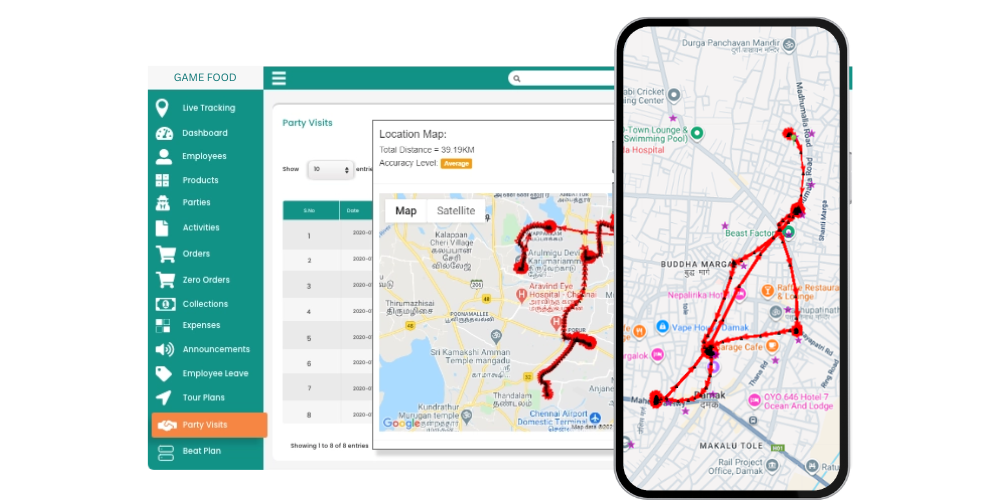
Live GPS Tracking
The DeltaSales App provides real-time GPS tracking for all field visits, ensuring that sales reps are physically present at their assigned customer locations. This verification eliminates any ambiguity about whether visits actually occurred and allows managers to trust the data they are seeing.
-
Automatic Reporting
Manual reporting is time-consuming and prone to errors, which allows for inaccurate or fabricated entries. The DeltaSales App automatically records all activities, such as check-ins, orders, and follow-ups, in real time. This ensures that all data is reliable, consistent, and readily available for decision-making.
-
Photo & Order Validation
DeltaSales App supports photo verification, order recording, and detailed activity notes to make every visit more meaningful. This verifies every check-in and prevents sales reps from marking visits as completed without completing the necessary tasks, ensuring that field activity is aligned with business objectives.
-
Route Optimization & Offline Mode
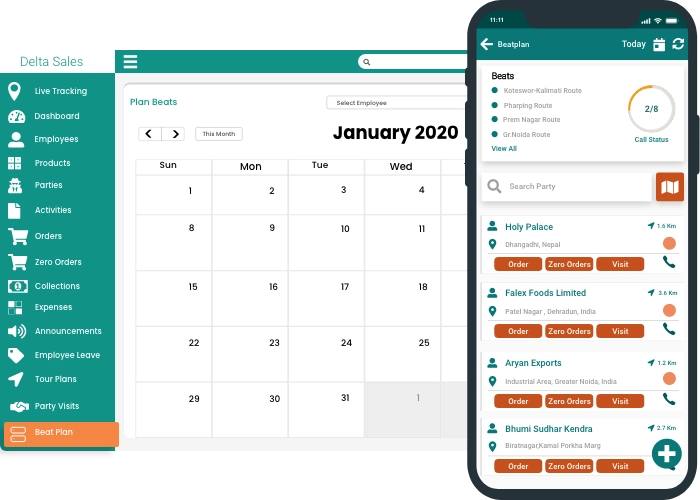
The app directs sales reps to the most efficient routes, reducing wasted travel time while increasing customer coverage. Even in areas with poor connectivity, reps can log visits, capture orders, and submit data offline, which will sync automatically when internet access is restored. Offline functionality and route optimization ensure that no visits are missed while preserving accountability and data integrity.
-
Analytics & Insights
The DeltaSales App generates actionable analytics by tracking patterns in field activity such as visit frequency, duration, and coverage. Managers can detect anomalies, possible fake check-ins, and inconsistencies in performance metrics. These insights enable more informed decision-making, better territory management, and increased overall sales productivity.
The Impact of Verified Check-Ins
Implementing verified check-ins transforms field sales operations by ensuring that every reported visit is accurate, meaningful, and productive. Tools like DeltaSales App provide sales leaders with real-time visibility and accountability, creating measurable improvements across multiple areas of performance.
Teams that adopt tools like DeltaSales App report:
- Significant Reduction in Fake Visits
With GPS verification, automated reporting, and activity validation, the number of forged check-ins is significantly reduced. This ensures that all reported field activity accurately reflects actual work, providing managers with reliable data and reducing time spent chasing false reports.
- Increased Genuine Customer Engagement
When check-ins are verified, sales representatives can spend more time focusing on genuine customer interactions rather than fabricating visits. Verified activity ensures that outlets are properly covered, follow-ups are completed, and customer needs are met, resulting in increased orders, revenue, and satisfaction.
- Fairer KPIs & Incentives
Verified check-ins ensure that performance evaluations and incentive programs are based on actual work completed, not inflated or fabricated data. This encourages fairness throughout the team, rewards genuine effort, and motivates reps to maintain consistent productivity.
- Higher Morale & Trust
Accurate reporting promotes a culture of accountability and transparency. Honest reps feel recognized for their genuine efforts, and managers regain trust in their team's reporting and performance metrics. This builds trust between leadership and field staff while reducing internal friction caused by misaligned incentives.
- Better Resource Utilization
Managers can use verified data to more efficiently optimize routes, territories, and coverage. This eliminates wasted effort and ensures that resources are directed where they are most needed and improves overall operational efficiency without necessarily increasing headcount.
Conclusion
Fake field visits are more than an inconvenience; they quietly reduce productivity, revenue, and team morale. Sales leaders must use technology, process improvements, and accountability frameworks to ensure that each reported visit corresponds to actual work.
Organizations can eliminate fake check-ins, improve performance, and regain control of their field operations by implementing GPS verification, geo-fencing, proof-of-activity tasks, and real-time analytics, particularly with tools like the DeltaSales App.
Get Started with Delta Sales App and stop managing reports and instead manage reality. Upgrade your field sales operations today and make every visit count. Improve productivity, accuracy, and revenue in real time.